
How Birdwatching Can Bring You Joy-Embracing Retirement
Volume 8-Give Birdwatching a Try/Project FeederWatch Starts Soon
New: You can now listen to my articles!!
Welcome back for another article to help you settle in and enjoy retirement. I recently wrote an article about birdwatching and how observing and feeding birds is a great hobby to pursue individually or as a family. Want to give it a try? Let’s dive a little deeper into how to get started on this hobby.
Every year in the Fall, I get excited once again to start feeding and observing birds. I have been enjoying this hobby for over 50 years, however, I never seem to grow tired of it. I normally don’t feed birds in the summer, but I still continue to observe them around the yard and also anywhere I travel. This gives me a break and helps to save money in the summer months. Birdwatching is a great hobby and feeding birds gives you a great opportunity to see the birds up close and personal. As I wrote in my first article regarding embracing retirement, hobbies are crucial to the success of your retirement.
Getting Started
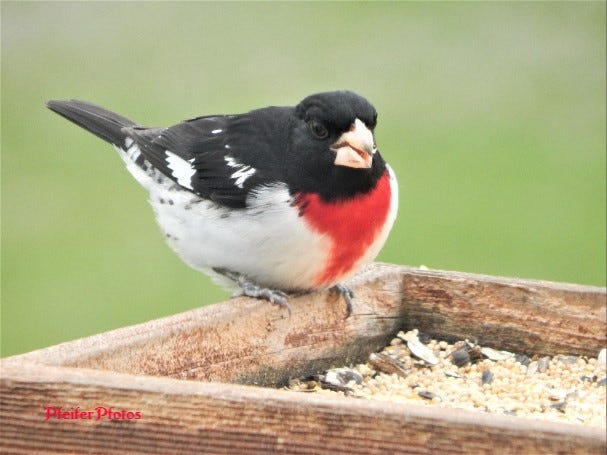
First of all, for those on a limited budget (many retirees), birdwatching can be enjoyed on a relatively small budget. I suggest starting with a single feeder and one type of seed. There are 3 main types of feeders; platform, tube, and chalet. Depending on your house and yard, I would recommend choosing one that can be placed so it can be viewed from a window. You can hang them or pole mount, whichever works the best for you. To me, getting nice photos of the birds is one of the best parts of this hobby. A platform feeder is a good first feeder since it accommodates all sizes of birds. A tube feeder, for example, is mostly for smaller birds.
I generally used an all-purpose seed mix that appeals to a wide variety of bird species. These mixes normally contain sunflower seeds, millet, and cracked corn. I would recommend starting this way to keep it simple and less expensive. I generally use an economy mix which is very inexpensive. You can spend a lot of money on premium seed mixes but they aren’t really necessary. Keep it simple especially at first.
Upping Your Game
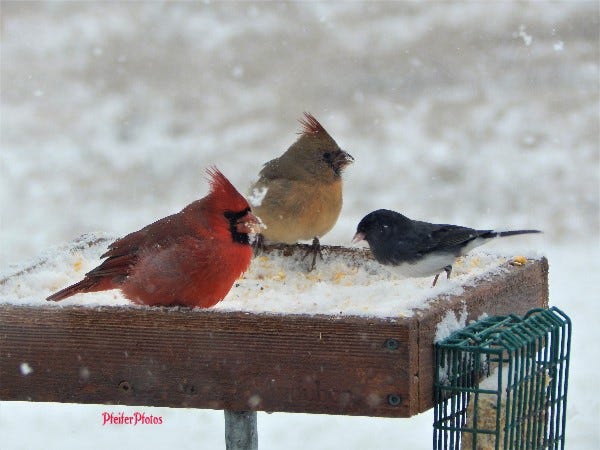
You can always add more feeders over time if you have room in your yard. I have four feeding stations, each with different types of feeders. I have suet at 3 of the stations which is a great draw, especially during the winter. Woodpeckers especially enjoy suet as do other birds including Chickadees. One of my feeders is for Nyjer seed, also known as thistle seed, which attracts finches mostly. This feeder is specifically designed for these tiny seeds.
Project FeederWatch
Project FeederWatch begins on November 13th and runs through early April. This citizen science project involves counting for two consecutive days of your choice each week, or less often if desired. Your counts can then be entered online. So signup today!
I have participated in this project for many years. Project FeederWatch began during the winter of 1987–88 with over 4,000 participants. Today, more than 20,000 people participate across the US and Canada. So join today and let the counting begin! The fee to participate is $18 each year. The data obtained is incredibly useful as it monitors the numbers and locations of bird species across the United States and Canada. The project is operated by the Cornell Lab of Ornithology and Birds Canada. It is sponsored by Wild Birds Unlimited.
As I said above, you can participate in this project as much or as little as you want. It’s up to you. It is fun to observe and count the birds and is a great family activity. It also gives you many opportunities to photograph birds, and you can even enter your photos in contests held by Project FeederWatch.
Bird Cams
For the ultimate in birdwatching, The Cornell Lab of Ornithology has links to quite a few live bird cams in the U.S. and other countries. These are fascinating to watch. My favorites are the Cornell FeederWatch Cam in Ithaca, NY and the Birds Canada Cam from Ontario, Canada. If you get a chance take a look they can be fascinating to watch!
Conclusion
If you have never tried birdwatching, I encourage you to give it a try. If you already have, you can always add more feeders to try to attract more bird species. Or try to improve your bird photography, which is always a challenge. I will write another story on bird photography and some tips on how to get quality photos. Stay tuned.


