avatarAvi Kotzer

Free AI web copilot to create summaries, insights and extended knowledge, download it at here

3640

Abstract

e”), or as part of an <b>usufruct</b> deal.</p><p id="54f7">This is the Roman <b>servitude</b> I mentioned at the top of the article. And by servitude I don’t mean slavery or serfdom, but rather “a right by which something (such as a piece of land) owned by one person is subject to a specified use or enjoyment by another”, as Merriam-Webster explains in <a href="https://www.merriam-webster.com/dictionary/servitude">entry 2</a>.</p><p id="b65f">Under the Roman <i>ususfructus</i>, the landowner granted the tenant the right to collect not only its <i>emblements</i>, but also its fructus, the natural products of the property. This left the owner with nothing else but the property itself, a term known as <i>nuda proprietas</i>. Literally, “naked property”.</p><p id="b2a9">Today this type of ownership can be seen in certain European countries, when apartment owners sell their homes under the condition that the new owner cannot actually take over the place until the previous owner dies or decides to leave. This offers people the opportunity to buy properties for less money (since owners tend to sell them for less), but gambling on the fact that said owner will actually die in time for the buyer to get some use out of the property.</p><p id="7b59">There was a famous case in France in which this plan backfired spectacularly on a 47-year-old man who bought a house from a 90-year-old woman:</p><div id="e9d4" class="link-block"> <a href="https://www.chicagotribune.com/news/ct-xpm-1995-12-27-9512280029-story.html"> <div> <div> <h2>WOMAN, 120, OUTLIVES LAWYER IN 30-YEAR BID FOR HER HOUSE</h2> <div><h3>A lawyer who gambled in a 1965 property deal that an elderly woman would soon die, only to see her live to become the…</h3></div> <div><p>www.chicagotribune.com</p></div> </div> <div> <div style="background-image: url(https://miro.readmedium.com/v2/resize:fit:320/0*-SzBgtczY9x_vfkU)"></div> </div> </div> </a> </div><h2 id="8aa9">Oui, the people</h2><p id="3ca9">In September of 1789, Thomas Jefferson suffered from one of his periodic and violent headaches, which was usually followed by a burst in intellectual activity. This time around he ended up writing the sentence “…the earth belongs, in usufruct, to the living”, possibly influenced by conversations with the doctor who took care of him.</p><p id="5967">Read in its simplest metaphorical sense, what Jefferson meant was that human beings have the right to use the earth for their own benefit and derive profit from it. By specifying “the living”, Jefferson also was establishing his criterion that the lives and beliefs of past generations should not take eternal hold on the current generations.</p><p id="08fc">Innovation and change are the only way to grow.</p><p id="fdd7">This belief and the writings of the Marquis de Lafayette and Nicolas de Condorcet also influenced Jefferson’s thoughts regarding what is today considered — perhaps unfairly — the most sacred document in the United States: the Constitution.</p><p id="7664">Turns out Jefferson may have been partial to the reality that future generations might not want to live by the same rules as the previous ones, and so might need to change the nation’s frame of government.</p><p id="0aaa">Which is why Article Five, which describes the process by which the Constitution can be amended, may indeed be the single most important piece of text within that document. It reads:</p><blockquote id="2432"><p>“The Congress, whenever two

Options

thirds of both houses shall deem it necessary, shall propose amendments to this Constitution, or, on the application of the legislatures of two thirds of the several states, shall call a convention for proposing amendments, which, in either case, shall be valid to all intents and purposes, as part of this Constitution, when ratified by the legislatures of three fourths of the several states, or by conventions in three fourths thereof, as the one or the other mode of ratification may be proposed by the Congress; provided that no amendment which may be made prior to the year one thousand eight hundred and eight shall in any manner affect the first and fourth clauses in the ninth section of the first article; and that no state, without its consent, shall be deprived of its equal suffrage in the Senate.”</p></blockquote><p id="70b4">So far, thirty-three amendments have been approved by Congress and sent for ratification by the states; twenty-seven have been ratified. The first ten, adopted and ratified simultaneously, are collectively known as the <a href="https://www.archives.gov/founding-docs/bill-of-rights"><b>United States Bill of Rights</b></a>.</p><p id="f418">Interestingly, the Founding Fathers may have unintentionally created an “inner contradiction” with the inclusion of Article Five. This is sometimes known as Gödel’s Loophole, since philosopher Kurt Gödel claimed to have discovered it, although he never actually revealed what it was.</p><p id="685b">His claim was that the constitution could be manipulated to turn the U.S. into a dictatorship. Many experts think he was referring to Article Five. If an amendment were passed to amend Article Five itself, it could conceivably be easier to pass amendments, a situation which eventually might be taken advantage of by clever politicians to set up an autocratic ruler.</p><p id="9a4f">Well, discussing <i>emblement</i> took us on a voyage that started with old Roman laws and ended up on how to game the current system in order to legally create a dictatorship in America. But this doesn’t seem to matter to the editors of the Spelling Bee, because they still decided that the word <i>emblement</i> is a <a href="https://www.merriam-webster.com/words-at-play/dord-a-ghost-word"><b>dord</b></a>.</p><p id="8471">You can check out my previous entry on another <b>dord </b>here:</p><div id="67e2" class="link-block"> <a href="https://readmedium.com/guiro-43d0b018438f"> <div> <div> <h2>Guiro</h2> <div><h3>This gourd will get you into the rhythm of things</h3></div> <div><p>medium.com</p></div> </div> <div> <div style="background-image: url(https://miro.readmedium.com/v2/resize:fit:320/0*9EDd11XIwf1qIfYz.jpg)"></div> </div> </div> </a> </div><p id="5274">*What the heck is a <b>dord, </b>you ask? Here’s the answer:</p><div id="a595" class="link-block"> <a href="https://www.merriam-webster.com/words-at-play/dord-a-ghost-word"> <div> <div> <h2>'Dord': A Ghost Word</h2> <div><h3>One of the questions people like to ask lexicographers is this: Can you sneak something into the dictionary? Can you…</h3></div> <div><p>www.merriam-webster.com</p></div> </div> <div> <div style="background-image: url(https://miro.readmedium.com/v2/resize:fit:320/0*tar1dX6ROG6L8UFS)"></div> </div> </div> </a> </div></article></body>

Emblement

What does Roman land servitude have to do with the Constitution? Read on!
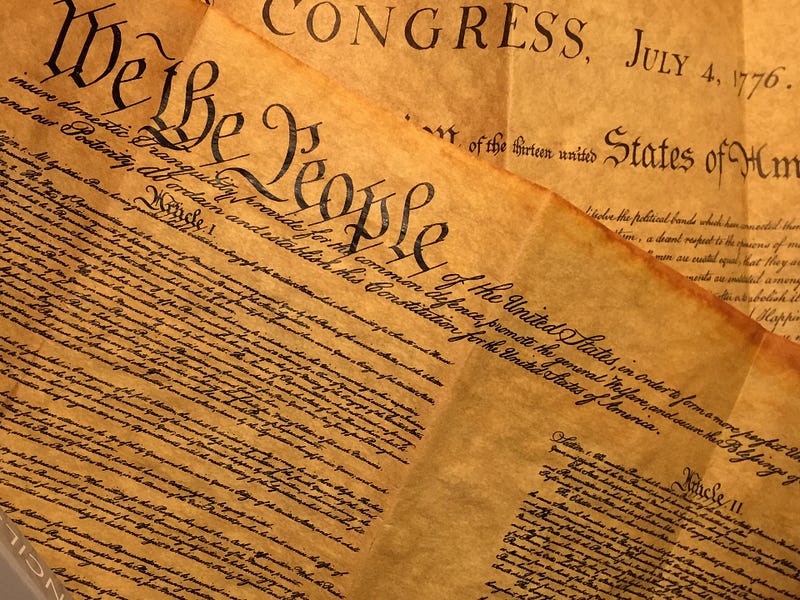
Image by Lynn Melchiori from Pixabay

Today’s New York Times Spelling Bee letters:
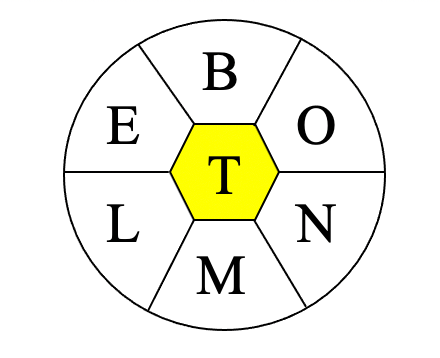
Art: Iva Reztok

B, E, L, M, N, O, and center T (all words must include T)

Merriam-Webster says…
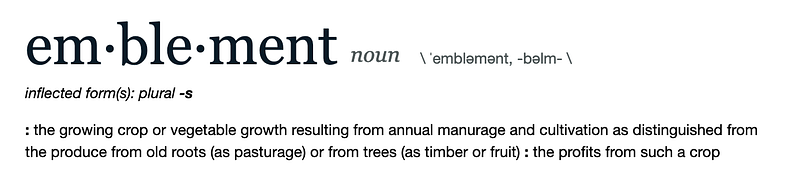
Credit: merriam-webster.com

Silly little dictionary! Don’t you know emblement can’t possibly be a word if the New York Times says it ain’t?

For further fascinating facts, check out the Spelling Bee Master.

What’s your favorite dord* from today’s puzzle?

My Two Cents

The first thing you might notice when you look at the letter wheel is that today’s letters spell Belmont, which is also a pangram (a word that has all seven letters). Unfortunately, Belmont is a proper noun, a name, so it does not count as a word under the rules of the Spelling Bee game.

Rule of (very old) law

The word emblement came to the English language from the Middle English emblayment and embloyment, from Middle French emblaement, from emblaer to sow a field with grain.

Under common law, if a landowner leased property, its emblements belonged to the tenants, who had the right to harvest and use the crop as they saw fit. This might seem simple and straightforward today, but one must remember that hundreds of years ago landowners used to be even more abusive than they sometimes are today.

Plus, the main benefit of an emblement came when farmers lost their lease or the owners lost their property. In those cases, the tenants were legally protected and could still harvest anything that had already been planted. When you think about it, this offered tremendous protection to people who were traditionally in very precarious economic positions.

As the dictionary explained, emblement is any crop resulting from cultivation, “as distinguished from the produce from old roots (as pasturage) or from trees (as timber or fruit)”. That latter part of the definition is known as fructus naturalis, a term that originates with the eponymous ancient Roman law, sometimes simply called Fructus.

Besides fruit and timber, Fructus may have included milk and wool taken from animals roaming the property. The right to fructus was the land owner’s, who could give it up under contract, if they so desired, or as part of an agreement known as pro cultura et cura (a reward for “for cultivation and care”), or as part of an usufruct deal.

This is the Roman servitude I mentioned at the top of the article. And by servitude I don’t mean slavery or serfdom, but rather “a right by which something (such as a piece of land) owned by one person is subject to a specified use or enjoyment by another”, as Merriam-Webster explains in entry 2.

Under the Roman ususfructus, the landowner granted the tenant the right to collect not only its emblements, but also its fructus, the natural products of the property. This left the owner with nothing else but the property itself, a term known as nuda proprietas. Literally, “naked property”.

Today this type of ownership can be seen in certain European countries, when apartment owners sell their homes under the condition that the new owner cannot actually take over the place until the previous owner dies or decides to leave. This offers people the opportunity to buy properties for less money (since owners tend to sell them for less), but gambling on the fact that said owner will actually die in time for the buyer to get some use out of the property.

There was a famous case in France in which this plan backfired spectacularly on a 47-year-old man who bought a house from a 90-year-old woman:

Oui, the people

In September of 1789, Thomas Jefferson suffered from one of his periodic and violent headaches, which was usually followed by a burst in intellectual activity. This time around he ended up writing the sentence “…the earth belongs, in usufruct, to the living”, possibly influenced by conversations with the doctor who took care of him.

Read in its simplest metaphorical sense, what Jefferson meant was that human beings have the right to use the earth for their own benefit and derive profit from it. By specifying “the living”, Jefferson also was establishing his criterion that the lives and beliefs of past generations should not take eternal hold on the current generations.

Innovation and change are the only way to grow.

This belief and the writings of the Marquis de Lafayette and Nicolas de Condorcet also influenced Jefferson’s thoughts regarding what is today considered — perhaps unfairly — the most sacred document in the United States: the Constitution.

Turns out Jefferson may have been partial to the reality that future generations might not want to live by the same rules as the previous ones, and so might need to change the nation’s frame of government.

Which is why Article Five, which describes the process by which the Constitution can be amended, may indeed be the single most important piece of text within that document. It reads:

“The Congress, whenever two thirds of both houses shall deem it necessary, shall propose amendments to this Constitution, or, on the application of the legislatures of two thirds of the several states, shall call a convention for proposing amendments, which, in either case, shall be valid to all intents and purposes, as part of this Constitution, when ratified by the legislatures of three fourths of the several states, or by conventions in three fourths thereof, as the one or the other mode of ratification may be proposed by the Congress; provided that no amendment which may be made prior to the year one thousand eight hundred and eight shall in any manner affect the first and fourth clauses in the ninth section of the first article; and that no state, without its consent, shall be deprived of its equal suffrage in the Senate.”

So far, thirty-three amendments have been approved by Congress and sent for ratification by the states; twenty-seven have been ratified. The first ten, adopted and ratified simultaneously, are collectively known as the United States Bill of Rights.

Interestingly, the Founding Fathers may have unintentionally created an “inner contradiction” with the inclusion of Article Five. This is sometimes known as Gödel’s Loophole, since philosopher Kurt Gödel claimed to have discovered it, although he never actually revealed what it was.

His claim was that the constitution could be manipulated to turn the U.S. into a dictatorship. Many experts think he was referring to Article Five. If an amendment were passed to amend Article Five itself, it could conceivably be easier to pass amendments, a situation which eventually might be taken advantage of by clever politicians to set up an autocratic ruler.

Well, discussing emblement took us on a voyage that started with old Roman laws and ended up on how to game the current system in order to legally create a dictatorship in America. But this doesn’t seem to matter to the editors of the Spelling Bee, because they still decided that the word emblement is a dord*.

You can check out my previous entry on another dord* here:

*What the heck is a dord, you ask? Here’s the answer:

Language
Laaw
Histor
Us Constitution
Spelling Bee
Recommended from ReadMedium