
Diversity | Immigration
El Paso: Enthusiastic Journey to Draw Near to Separated Children
Circling the holding center
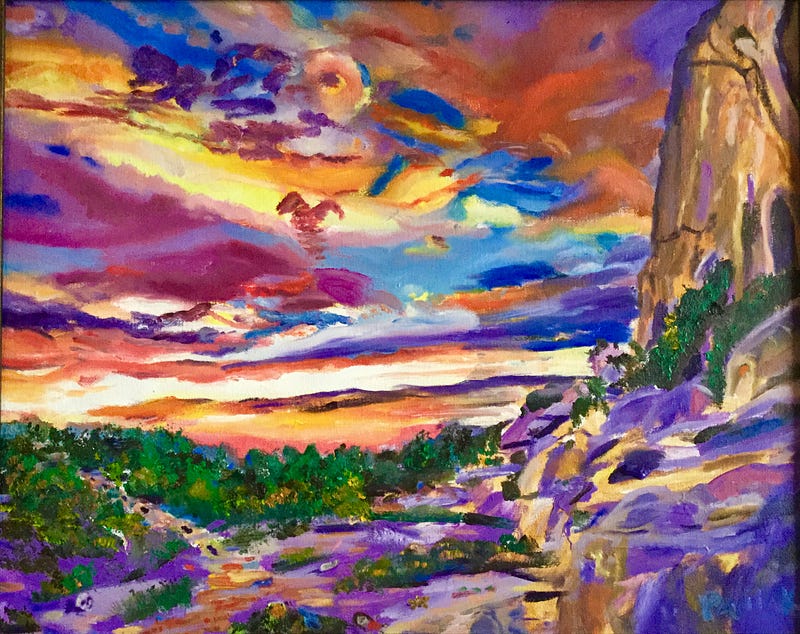
I drove from Eloy, Arizona toward El Paso drawn by a passion to get closer to the children in detention. Looking up, I was at times scared by the black descending clouds. It rained and they passed. The changing cloud colors and fabrics called to me as they created collages across the sky.
The HUGS project brought me to El Paso
My interest in El Paso began when out-of-the-blue a woman named Betsy Lewis called me saying she had seen a poem I’d posted on-line, “Have I Told You How Much I Love You”.
“It reminded me of the children in cages,” she said.
She added, “I imagine handing small cards to the children through the barbed wire fencing.”
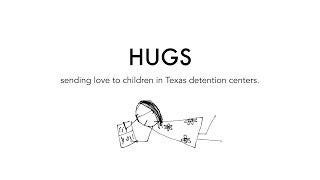
We brainstormed on how to get cards to children. If only we could hug these children. We decided to call our project HUGS. Who would give these children hugs with no mother or father, no siblings, although also detained, permitted to touch or hug them?
It was Katie Hudak, of Diocesan Migrant and Refugee Services (DMRS) of El Paso who was the first to open the door to our HUGS. When I’d phoned her she said their legal team would be able to give the cards to children in three detention centers with whom they had contracts.
People from various parts of the world, including artist Denise Daffara of Australia, began sending artful and bi-lingual messages geared to children pre-verbal to late teens who had been separated from parents and caregivers. “V”TOON (Virtues Facebook and YouTube) originator Scott Feraco coordinated with Katie Hudak who was enthusiastic about his idea of creating superhero coloring pages, “Elige virtudes y mantén vivos tus sueños!” (Choose virtues and keep your dreams alive!). Nadia Colby translated them.
Short quotes explaining virtues like “Courage” and “Hope” highlighted the superhero characters’ actions. Kids separated from family in detention colored them and adults and kids from other cities colored them and sent them to the kids.
Visiting Katie at the Diocesan Migrant and Refugee Services
Katie Hudak had been my ongoing phone companion and guide for HUGS since July, 2018. After eight hours of driving I got lost in El Paso; I was too late to visit her at Diocesan Migrant and Refugee Services (DMRS).
The Baha’is of El Paso hosted me oh so bountifully. A man named Joshua picked me up the next day to escort me to DMRS. He was a strongly-built man with many tattoos, a veteran.
After entering the humble building of the Diocesan Migrant and Refugee Services I finally met Katie in person. She introduced me to the lawyers and legal caseworkers in offices throughout the simple building. We had a chance to visit over lunch at a nearby restaurant. She showed excitement at just receiving an envelope with colored Spanish “¡Elige virtudes…” coloring pages in the mail; I handed her a big brown envelope with cards to add to them.
Tastes of El Paso
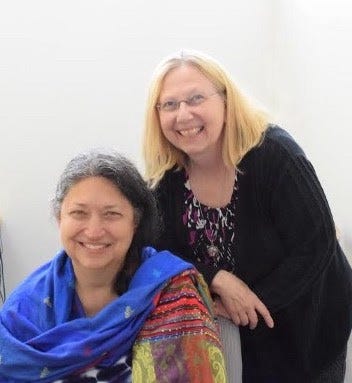
Joshua picked me up and introduced me to “the best” bakery in El Paso. Bowie Bakery. He helped me pick out pastries including bear claws with sweet cheese inside. I can’t recall if I ate two or wanted to.
As we drove to Murchison Overlook, Joshua told me that hundreds of people cross the U.S.-Mexico border to and from El Paso to do business daily. As I looked through the binoculars on a large stand I could see a park in Juarez, Mexico. “El Paso was rated the second safest city in the country,” he told me. I was surprised.
“It used to be the first.”
Jericho Walk around a detention center
During three days in El Paso, I grew to know Joshua more and saw what he was made of. This father of three treated me to a breakfast of eggs, tortillas, and pastries in his home where I later met his wife and children. Joshua was a man who strengthened my faith as we talked during drives.
Together we faced the frustration of finding the parking for a large conference about asylum seekers at the University of Texas, El Paso. After finally arriving, I played with his young daughter who came with us, in the back of the large auditorium. Afterward, we planned to go on a “Jericho Walk” around a detention center.
People have participated in Jericho walks since 2011 in cities around the country. While other walks and protests have taken place, the Jericho Walks were started by the New Sanctuary Coalition.
We walked around this aquarium size slab of a center where migrant and refugee families and caregivers are brought with children, before the children are to be separated from them within three days.
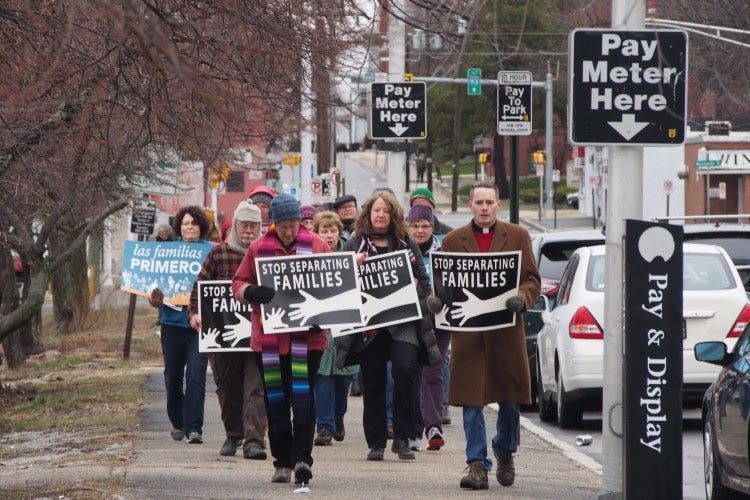
We walked together, people of various faiths, backgrounds and migrant advocacy organizations around the ominous building. I chatted with a friendly woman wearing the Moslem Hijab from New York, and with a Native American from Las Vegas.
Walkers held signs showing support for the families. Joshua held the sign I’d painted that morning that said: “The earth is but one country, and mankind its citizens,” a quote from Baha’u’llah.
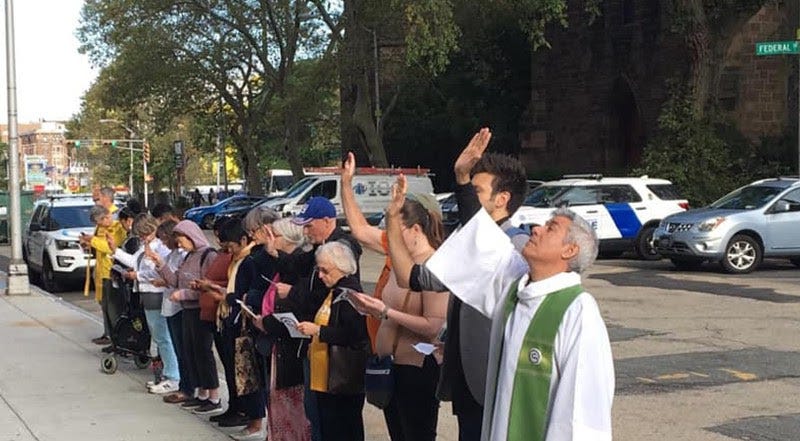
Like Joshua in the Bible, who circled the wall of Jericho seven times, we circled the complex before stopping in front of it. Aloud we said prayers for the families in Spanish and English, reading from half-sheets of paper that had been handed out.
Our voices rang with conviction that facing that detention center amplified. Then we made a loud noise with soft hopes that the walls might come down.
Perhaps the people inside would hear us and wonder at the possibility that there were people in the U.S. who cared about them.
Later Joshua and I stopped by Annunciation House, where a number of immigrant families receive hospitality. This organization has been remediating the suffering of hundreds of thousands of migrants, immigrants and refugees in the border region of El Paso with hospitality, food, shelter and clothing since 1978.
We were not allowed to go in to ensure the families’ privacy. A volunteer from California met us outside. She told us the volunteers help with the practical daily life matters like laundry and meals. At that time they needed more volunteers.
El Paso is still in my heart, and not just because of the bear claws filled with cheese at Bowie Bakery.
Conditions for detained chidden and adults
Unfortunately, due to the pandemic, Katie informed me recently that the DMRS legal team is no longer allowed into the detention centers; they can no longer hand the “HUGS” cards to the children.
Also due to COVID concerns, according to a July 28, 2020 article by ABC News, Judge Dolly Gee of California in June had ordered the release of children 100 children from three detention centers by July 17, 2020. Judge Gee’s was trying to follow the terms of the “Flores settlement” based on a legal case in 1985, which resulted in an updated agreement in 1997.
This agreement requires the federal government to place children with a close relative or family friend “without unnecessary delay,” and for those in custody for a length of time assumed to be reasonable, which is a maximum of 20 days — to be kept in the “least restrictive conditions” possible.
The ordered release date for the children of July 17 was postponed until July 27, and has not, as of this writing, been put in effect. The release is complicated by legal arguments including another judge disputing releasing the children’s parents. The article reported that at least forty children and adults with COVID-19 were recently brought to family detention centers in Texas despite the order.
The articles linked in this story reveal inhumane treatment of asylum seekers associated with the “pilot program” in 2017 which considers the people crossing the border of the U.S. seeking asylum to be criminals. The Southern Poverty Law Center reported in June of 2020 that Amnesty International found that 6,022 families had been separated between 2018 and 2019 under this program. By now it is over 7,000.
Reports from doctors and lawyers observing the children — some of the only observers allowed in centers cloaked in secrecy, detail insufficient mats for the children, who in some centers sleep on the floor, lack of access to showers and soap and in some cases tooth-brushes, children caring for children even unrelated to them, solitary confinement for people with COVID where little care is provided, and predictions of long term mental, emotional and physical health impacts for these children related to trauma.
In a letter from a mother who was detained, published in the article “Read this letter from a mother locked up at a Texas detention center who is separated from her children”, the mother describes conditions in the “kennel” in which she was held.
She disclosed that she and the other mothers were told their children would be adopted. Like the other mothers, she did not know where her children were after the separation.
“All the mothers were crying in anguish,” she wrote in Spanish. “…There are women with children 3 months old and the babies cry from hunger and cold, it makes you sad to see these tiny, defenseless babies.., the pregnant women faint, and also the women who cannot stand the pain of not knowing anything about their children, where they are.
Hearings?
For the waiting parents who are to be granted hearings, there is a shortage of administrative judges, long delays, and barriers to even participating in hearings for asylum that, if attended, in most cases are turned down. For the asylum seekers banished to border towns in Mexico, in tents or moving place to place to find shelter, it is uncertain if they will even receive the notice of their hearings.
For most of those waiting interminably, their chances of being granted asylum seem about as possible as those of winning the lottery. But in reality, the chances are better than that. I was told that 98% of asylum seekers were turned down in El Paso so 2% are granted asylum. Articles I read told of different odds; some judges turning down up to 98% of the cases but others turning down less.
On the Jericho Walk, a man told me that he and others “companion” migrants by attending the hearings. They are human witnesses. He said that one of the administrative judges told him after a hearing that the situation reminds him of Nazi, Germany.
Hope that “Have I Told You How Much I Love You” poem may reach separated children
I understand if this is a hard article to read; I feel stuck energy in my throat as I pause, and then continue writing. While personally, my own part involves sadness, it is molecular compared to the universe of sadness these families face.
Forgive me then for a moment of saying that on a personal level, I feel bad that I did not get the poem “Have I Told You How Much I Love You”, to the separated children in three detention centers when I had a chance. Due to lack of confidence, holding back because it was precious to me, and losing a colorful copy of it that I’d calligraphed in El Paso, the poem sat in my draft box. This was the poem that Betsy Lewis had read, which reminded her of the “caged children” and inspired the HUGS project.
I have a hope that by the poem (click below this article) being published on October 18, 2020, in “ILLUMINATION — Curated” on Medium.com, a door may open. HUGS cards, the virtues coloring pages, and copies of “Do You Know How Much I Love You” may be able to reach separated children.
I dream that someone will put the poem to music, a wonderful singer will sing it, and a caseworker in detention centers will play it for the children. For some moments children might feel less abandoned. They might consider — those whose hearts have not become cynical or magnetized in anger — that someone cares. Maybe they will hide it in their shirts or midst their few belongings.
Of course, the cards, pages, and poems are no substitute for being with their mamas and papas face to face, hugs to hugs. They are an atom size gesture in comparison. But as Mother Teresa said,
If you want a love message to be heard, it has got to be sent out. To keep a lamp burning, we have to keep putting oil in it.

Afternote:
I applaud the hundreds of volunteers, people of conscience, and organizations that are working tirelessly towards solutions for migrants, asylum seekers, and refugees. These are the champions. I hope you and I can be among them.


