Eight Big Climate Ideas — Projects 1–3
Potential Mitigation Strategies for Taking the Sharpest Edges off Climate Change
Ah, the End Times.
As with everything else, we’re carving our identities in the face of climate change. “I’m a prepper,” we declare. “I’m an optimist!” Or maybe, “I’m just gonna sit back and watch.”
Even a potentially extinction-level event can’t stop us from planting our flags and digging in our heels. Cracking our knuckles to get busy explaining to others why hope is the only solution, or doom, or nothing at all. Everybody’s an expert.
Of course, it goes the other way, too, with people defining and categorizing us based on the information we present. Any scintilla of hope or positivity, and you’re a Pollyanna. A shared sense of despair, and you’re a doomer, dragging the rest of us down with you.
But that’s the internet. Probably the worst place to talk about something as consequential as anthropogenic climate change, and yet here we all are.
For now.
I read a lot of good stuff, don’t get me wrong. Indi.ca’s recent piece about colonialists managing to pillage resources, enslave millions, kill millions more, and on nothing but renewables — that was a good one. Theo Priestly recently wrote how the exponential nature and tipping points of climate change render us helpless to do anything — it will take the Earth thousands of years to sort itself out.
Meanwhile, Anthony Signorelli finds optimism in the pragmatic, and long-time climate writer Tess Schlesinger writes about adaptation.
We can find fault with both sides, we can suspect the grift. But while so much “optimism” often feels like propaganda to keep us buying and burning, I don’t doubt the cash value of fear, either.
Me, I’ve had my times shouting doom from the rooftops. But then I see everybody else shouting doom, I’m standing knee-deep in it, and I tend to want out. To keep looking. To not settle on some static idea of how all of this is going to go.
Where I tend to always come back, though, my center (if I have one), is All Hands on Deck. In all the chaos, endless bad news, and lack of climate action consensus — what matters most? What’s the true decision to make?
And then I think of people now, and in the near and far future, suffering the increasingly terrible effects. Enduring floods, starving through droughts, and collapsing from non-survivable wet-bulb temperatures. Migrating to countries closing their doors. Food shortage, war.
No, renewables won’t solve it all. Even if we stopped producing heat-trapping gasses everywhere in the world, this instant, there is X amount of change baked into the system.
I know all the reasons why human beings would probably fuck up even a seemingly utopian world of limitless clean energy, still treating each other and the planet like garbage. It gets downright spiritual, with some cultures even having a word for it — wetiko. That thing in man, not unlike original sin, that’s the source of all our colonialism and conquesting. For more on that, though, talk to a tribal elder. Or a priest.
For my purposes here, even if it’s an unwinnable fight, it still feels like the only answer is to try. The loss of dozens of coastal cities around the world from sea level rise, blistering heatwaves so bad they eventually wipe out millions at a time, the sheer suffering of it all; babies screaming as the world burns (not to get too dramatic about it). The only answer is to try everything we can, even if the solutions aren’t perfect. Even if they’re not panaceas. Even if some people scream they’re “socialist” or “totalitarian,” if they sound too science-fiction, too impossible, too for-profit, or not profitable enough.
I haven’t made my mind up about these “eight big ideas,” no. But I’m reporting them because the person I spoke to, who laid this out for me, obviously cares. Because if one piece of one idea sparks an idea in someone, and that leads to something else, and that leads to — you get the idea.
Not to mention that with all the reading I do, from copious books on disasters in the offing to the growing climate coverage from “papers of record” like The New York Times, to articles on Medium — potential solutions are scarcely reported. Reporting on the calamity is easy. Presenting ideas that could help slow things down, buy us a little time, and save a few million lives — that’s hard.
Okay. So, about a year ago, a man commented on an article I’d written and suggested we get in touch. What followed were many emails and multiple online chats. It resulted in this article, my most-read to date:
I don’t include his name because it doesn’t matter. He doesn’t need people hassling him if they don’t like something they read. (If you don’t like something, talk to me.)
It was obvious to me very early on that this person was more knowledgeable than anyone else I’d met when it came to climate change. That’s what matters. And that his personal mission, he told me, was to get these potential solutions out far and wide, to get them in front of governments, to bend the ear of billionaires and entrepreneurs. Which is what he’s doing.
My contribution, for now, is to share here the “Eight Big Ideas,” he laid out for me, things he thinks could move the needle in some significant way.
I’m only including three of the ideas in this first article because they get a bit more dense as they go. And I’m leaving them in the order he’s laid them out for me, revising only lightly for clarity.
I look forward to your thoughts.
Without further ado:
EIGHT BIG PROJECT IDEAS
These eight specific prospective projects relate to funding and financing measures aimed at climate stability and biodiversity conservation. Six on climate, one on biodiversity conservation, and one on community health outreach.
The argument is that these are all “must-have” initiatives, more effective than anything that has yet been put in play and must be organized — regardless of who does so, or whether you or I or anyone we know are involved in convening them or spurring them on or contributing to them.
Big Idea 1: Build 200 to 300 cleantech Gigafactories.
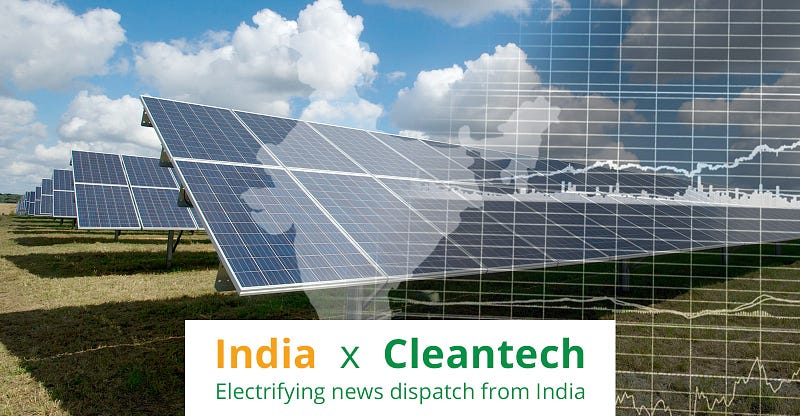
In Gujarat, a state along the western coast of India, a vertically integrated “Gigafactory complex” is being built. The complex will pump out 25 gigawatts of solar photovoltaic panels per year, as well as related kits, including vast amounts of battery packs; green hydrogen production equipment; power electronics; etc.
The complex is being built by one of India’s most powerful conglomerates: Reliance Industries, which is controlled by the extremely well-connected billionaire Ambani family.
If the world were to build 200 to 300 factories of the same scale, located at suitable production sites on every inhabited continent, and run them for 10 to 15 years, at the end of that time period, every region on Earth would enjoy energy abundance at a similar level of Western Europe today, almost entirely based on clean renewable energy.
The Gigafactories would necessarily vary in their equipment production priorities; nearly all would produce solar PV panels, and some would also produce wind turbines or blades, EV supercharger equipment, compressed CO2 energy storage equipment, EV rickshaws, etc.
So let’s challenge and inspire the world to build those 200 to 300 Gigafactory complexes. Part of doing that is to develop proposals for regionally suitable financial and regulatory mechanisms for building the factories AND for installing the equipment.
The World Bank has the convening power (and the in-house expertise) to look after that component; however, the impetus to get the Gigafactories built will also necessarily involve entrepreneurial corporations, celebrity businesses (Tesla Corp’s upcoming White Paper on clean energy Gigafactories will be a key contribution), NGO think-tanks (WRI, RMI, etc.), UN agencies, media outreach, high-visibility celebrity proponents, competitions amongst jurisdictions keen to host Gigafactories, and so on.
Big Idea 2: Repurpose coal-fired power station sites as renewable energy power generation sites.
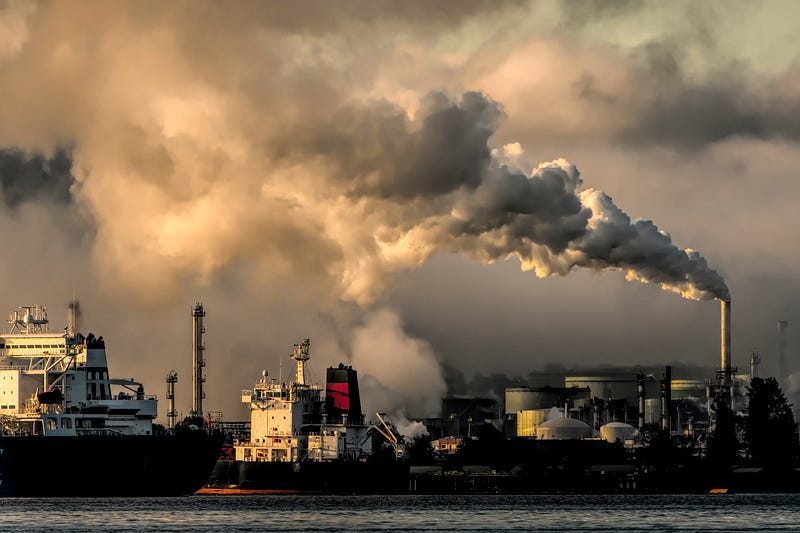
Overcoming the resistance to moving away from burning coal will require (in essence) bribing the owners and operators of coal-fired power stations to co-purpose and repurpose their sites.
Where suitable conditions exist, this means repurposing toward becoming hybrid wind + solar + enhanced geothermal + energy storage equipment deployment sites.
The sites will then become increasingly capable of delivering 24/7 on-demand dispatchable electricity that’s based less and less on burning coal and more and more on renewable (mostly wind and solar) power generation.
This will involve providing concessional financing for these corporations to build new renewable energy capacity nearby and integrate it into their power mix, along with retraining their staff, plus preferential access to nearby land on which to set up wind and solar farms, etc. In other words, we need to offer a transition package so attractive that these corporations’ decision-makers would have to be fools to reject them!
Currently, there are about 2,120 coal-fired power stations in the world. The idea is to create a standard offer, mediated perhaps by a single organization (albeit with regionally specific deal variations). A first step will be to convene stakeholders to develop a dozen or so pioneer example transition projects from which to learn.
There is an existing institutional mechanism that has been emerging over the past couple of years that is aimed at achieving agreements with national governments to transition away from coal. It’s called the Just Energy Transition Partnerships (JETP).
The practical goal of “Big Idea 2” is to inspire the JETP to ramp up its level of ambition and seek a comprehensive solution that moves all 2,120 coal-fired power stations (more than half of which are in China) to transition away from coal ASAP.
We’d want to do something similar with gas-fired power stations, too. A deeper dive into that is yet to come.

Big Idea 3: Set up a Global Carbon Dioxide Removal Fund (Global CDR Fund).
Let’s design an institutional mechanism for funding the active removal of CO2 from the atmosphere and oceans and permanent re-sequestration of that carbon (i.e. remove it from the carbon-climate cycle).
Let’s eventually ramp up (by mid-century) to a global effort to take back out all the CO2 we’ve put into the atmosphere since the beginning of the industrial revolution.
Soon enough, anyway, to prevent the Greenland, West Antarctic, Wilkes Basin et al ice sheets from destabilizing and leading to an irreversible climate/cryosphere feedback loop which will eventually lead to several meters of sea level rise and the loss of our great coastal cities and lowlands.
Some ideas for how a global CDR financial mechanism could work are:
(i) re-allocation of dormant Special Drawing Rights from the IMF SDR accounts of rich countries to a global CDR fund to the tune of XDR 100 billion per annum over a ten-year period,
(ii) in tedious negotiations likely to require a decade or two to secure agreement, get rich countries to agree on applying a small Ecosystem User Fee or carbon price per ton of primary commodities produced within or imported into participating rich countries, e.g. a 2% surcharge.
The first option (i) could be an interim solution to raise money for an interim CDR fund while the second solution (ii) is painfully and slowly negotiated. Getting agreement on (i) would involve far fewer people in the decision-making process and would likely be achievable much more quickly.
A precedent for (i) has recently emerged in the form of the IMF’s new Resilience and Sustainability Trust and a call, issued under the rubric Bridgetown Agenda, for IMF and WBG to increasingly pay attention to funding global commons priorities.
More soon.
TJ