
Effective Communication: Medium Matters
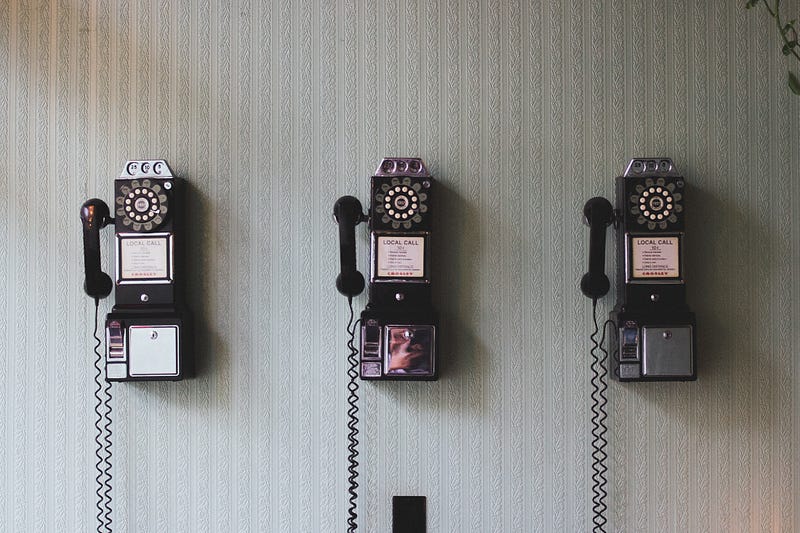
To meet your audience where they are, choosing the right medium can make all the difference.
Effective communication is not just about the message or the way it’s delivered; the medium used to convey the message is also crucial. The type of communication medium you choose can significantly impact how your message is received, understood, and acted upon.
There are so many options when it comes to communication media. Article, email, video, podcast, television, movie, phone call, slide deck, meeting. Just to name a few. I’m not going to exhaust these today, but I am going to touch on them in terms of more generic forms of communication and when they make sense. More to come of specifics involved in communicating in all of these forums.
Verbal Communication
Verbal communication is the most common type of communication, and it involves the use of spoken words to convey a message. This can be done face-to-face, over the phone, or through video conferencing. Verbal communication is effective when the message is complex or emotional, as it allows for tone, pitch, and emphasis to be used to convey meaning.
Often the most effective forms of verbal communication are those where you can actually see and interact with your audience in real-time. Examples include in-person presentations, meetings (in-person or virtual), phone calls, etc. These forums allow for immediate feedback, which can help clarify any misunderstandings or address any concerns.
Additionally, verbal communication can be one-way (movies, podcasts, webinars, voicemails). All of these forms are valid communicators as well, and sometimes preferred depending on your topic or size of the audience. If you’re hoping to reach people all over the world, or want to teach on a topic that doesn’t immediately require interaction, then these forms are for you.
Written Communication
Written communication involves the use of written words to convey a message. This can be done through emails, text messages, articles, or press releases. Written communication is effective when the message is straightforward and does not require immediate feedback. Additionally, written communication allows for the message to be edited and revised before it’s sent or published, which can help ensure that the message is clear and concise.
As a writer (and introvert), I’m partial to written communication whenever possible. Often written communication is a great option when you want to get your point across uninterrupted. Or if you have a story to tell that is more than 1 to 2 minutes long. But still, it’s important to remember that attention spans are short — provide your readers with outlines, subheadings, and bullets to make sure you’re “heard” and understood.
Nonverbal Communication
Nonverbal communication involves the use of body language, facial expressions, and tone of voice to convey a message. This can be done face-to-face or through video conferencing. Nonverbal communication is effective when the message is emotional or when the words used may not accurately convey the intended meaning. Additionally, nonverbal communication allows for immediate feedback, which can help address any misunderstandings or concerns.
Nonverbal communication often gets lost in text messages or emails. Places where we’d like to convey emotion or humor — and it's ineffectual. It’s important to consider the subtext of your point when using written forms of communication. Often it will be misunderstood if you’re not careful. And these subtexts or emotions can be clearly portrayed if you’re in front of your audience, rather than behind a screen or piece of paper.
Visual Communication
Visual communication involves the use of images, graphs, charts, and videos to convey a message. This can be done in presentations, reports, or through social media. Visual communication is effective when the message is complex and requires data or statistics to be conveyed. Additionally, visual communication can be used to engage the audience and make the message more memorable.
Visual communication is powerful. It can charge emotions in ways the written word can’t. A picture truly can be worth a thousand words — so choose the right picture to tell your story. A lot of the population are visual learners, and charts, graphics and photos help to ensure your message is remembered by your audience.
How to Choose
So, which communication medium should you use? Often we don’t get to choose. Perhaps our boss put the meeting on the calendar, or you’re giving a Ted Talk. These are amazing forums that you should use to your advantage. But often we do have a choice. Choose wisely.
If you’re lucky enough to get a choice consider your audience. You need to meet them where they are. For example, if you’re communicating with a remote team, video conferencing or written communication may be the most effective. On the other hand, if you’re communicating with a client, verbal communication may be the best option to build a personal relationship.
Also, make sure that you are clear on your own goals. The goal of the communication will also impact the type of communication medium you should use. For example, if the goal is to inform or educate, visual communication may be the most effective. On the other hand, if the goal is to build a personal relationship, verbal or nonverbal communication may be the best option.
Maybe a combination of media will be most effective. For example, you may need to use visual aids during a presentation to help convey complex information. Alternatively, you may need to follow up a written communication with a phone call or video conference to address any concerns or questions.
You have countless options for communication media out there. Choose wisely, choose effectively. A sales pitch or a technical presentation is unlikely to have the desired outcome if your media isn’t appropriate. Effective communication is reliant on an effective form.
Like what you read? Want to hear more from me? Subscribe to my email list here!
If you’d like to read from all medium writers, click here to join! Your membership supports me and all of the writers you read! You’ll also get full access to every story on Medium.com.