
25 Fascinating Facts About Human Anatomy That You Probably Didn’t Know
Men’s testicles hang low so that sperm does not die, a full head of hair is strong enough to hold two elephants, and much more
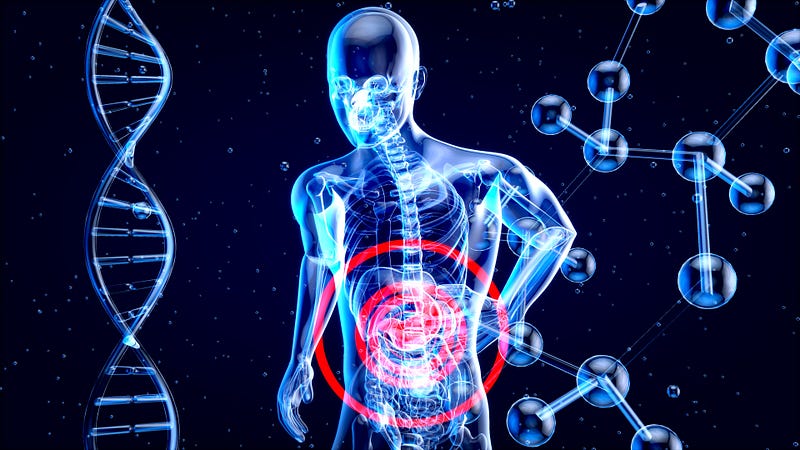
The human body is a fascinating thing that even to this day we still don’t know much about. Here are 25 of the most interesting facts that we do know.
The average brain has 86 billion neurons and 860 trillion connections
The current consensus is that the average brain likely has 80 to 90 billion neurons, and as each neuron has the capability of connecting up to 10,000 other neurons, that makes for a potential of 800 to 900 trillion connections a.k.a. synapses (synapses are the things that allow neurons to connect to each other) — the estimated mean is 86 billion neurons and 860 trillion connections.
In total, this allows the human brain to be able to process as much as 74 gigabytes of information a day — the equivalent of sixteen 4k movies — and to be able to store as much as the equivalent of as much as 2.5 petabytes (2.5 million gigabytes) of digital memory over a lifetime — the equivalent of 27,500 4K movies.
It also gives the brain raw processing power of the equivalent of likely upwards of 1 exaflop, which is the equivalent of a computer being able to conduct 10,000 trillion calculations a second. To put this into perspective, the average computer is only capable of 100 million calculations a day, and even the most powerful supercomputers on Earth — believed to exist in China — can only barely touch this level.
The craziest thing of all though is that it is capable of doing all this using just 10 watts of power — the amount needed to power a standard lightbulb — whereas the supercomputer needs more energy than a skyscraper building to run.
We have two types of sweat glands, eccrine and apocrine — the former is for sweating, the later for mate attraction purposes
Eccrine glands release salty water and as such are odorless and open directly onto the skin’s surface, whereas apocrine glands open into the hair follicle and release oils and as such are the ones that cause body odour.
The eccrine glands operate all over our body and their main function is temperature control. They work by secreting the salty water to the surface of the skin where heat is removed through evaporation. They also have other functions like aiding in the removal of unwanted substances along with helping to keep the skin hydrated by releasing things like potassium and sodium.
The apocrine glands operate in our armpits, the areola of our breasts a.k.a. the dark-coloured skin that surrounds our nipples, our perineums a.k.a. the area between our genitals and our anus, and in our ears and our eyelids. Their main function is the release of pheromones — so when they are activated we secrete a fluid containing pheromone-like compounds. This means that the stinky smell that we all try to avoid makes us attractive — or used to.
This is why apocrine glands are not activated until the hormonal changes of puberty. Because they are not for sweating per se, they are for attracting mates — which is why adrenaline activates them i.e. whenever we have adrenaline rush they are activated. This is why stress, sexual stimulation, anxiety, pain and fright can make us stinky, we are releasing pheromones.
In terms of how many of the glands we have, by adulthood, we have an average of 3 to 5 million of them, with the majority being eccrine — more than any other animal in the animal kingdom. This is why technically we are the smelliest creatures in the animal kingdom.
The smallest muscle in the human body is the stapedius muscle — located in the ear
The stapedius muscle is the smallest skeletal muscle in the body, with it measuring just 6 to 11 millimetres in length, and 2 to 3 millimetres in width. Its job is to control the vibration of the smallest bone in our body, the stapes (also known as the stirrup bone) which is located in the middle part of our ear canal.
The stapes is one of the bones which allows us to hear by capturing sound vibrations, this is why the stapedius muscle is so important. It is one of the intratympanic muscles, which are muscles that exist to regulate sound, and its job is to help protect the inner ear from loud noises.
So if a really loud noise hits us, the muscle contracts to try to limit the amount of noise entering our ears by restricting how much the stapes bone can vibrate.
However, the muscle is notoriously slow to react hence why it is so easy for our ears to become damaged through sudden loud noise.
The myometrium, found only in females, is arguably the most powerful muscle in the body
The least used muscle in the human body, the myometrium, or the uterine muscle, is argued by many to be the most powerful human muscle.
Its sole purpose is to help women push the baby out, and the pressure and power it exerts during labour is the strongest force exerted by any muscle in the body, with it being capable of pushing a child out with a force of upwards of 120 newtons.
However, some argue that it is the masseter muscle — the jaw muscle — that is the most powerful due to it being able to exert the most pressure. The world record for the strongest bite is 975 pounds of force, which was achieved in 1986 by Richard Hofmann, and the average bite is 200 pounds of force.
Many counter-argue that the myometrium muscle on a pound-for-pound basis is more powerful. In a way, the argument is whether a truck that can push more weight or a car that can smash into something with more impact is the more powerful. Whatever, both are very powerful muscles.
The pinky finger and the thumb are the most important fingers on the hand
The thumb is the most important finger on the hand, as it accounts for over 40 percent of all functions. So it is the finger you least want to lose. But, not far behind it is the pinky finger a.k.a. the little finger.
The pinky finger may be the weakest finger on our hand by a long distance, but without that finger, our grip strength would decrease by as much as 50 percent — through adaptation this can be reduced to 20 to 30 percent. Basically, the main muscles that form a solid grip in our hands are connected to our thumb and our little finger. The middle fingers exist more for dexterity purposes and to allow us to form a solid fist. That means if you are going to lose a finger, your middle finger and your index finger would do the least damage, whereas your thumb and your little finger would do the most.
We all have our own unique tongue print
It is well known that everyone has their own unique set of fingerprints; however, what is not well known is that we also have our own unique tongue print.
No jokes, there are even people researching the possibility of using tongue prints as a form of biometric identification.
The chin is strictly a human thing
As crazy as it may seem humans are the only species on Earth that have chins, even chimpanzees and gorillas don’t have them. The current consensus is that we evolved to have chins due to the invention of cooking.
So because we no longer needed to chew through raw meat and plants, we no longer needed big mouths or teeth, and eventually this — added to the increase in the size of our brains — led us to form chins.
On a side note, this evolution also rendered our wisdom teeth worthless. We used to have three sets of molars, but now we only have two due to having smaller mouths, the wisdom teeth are leftover remnants of those third sets of molars i.e. from when we had bigger mouths.
Blushing is caused by the opening of blood vessels and even our stomach lining blushes
When we are embarrassed or self-conscious our sympathetic nervous system is activated and as such adrenaline is released.
This causes blood vessels to dilate i.e. open up. This leads to improved oxygen delivery throughout the body — just like as happens when we enter fight or flight mode.
As a result of the blood vessels opening up, the muscles in our face relax, and as such the veins fill with blood. This causes the red appearance in our cheeks.
But it is not just our face that turns red due to this increased blood flow, other parts of us do as well — including our stomach lining.
It’s believed blushing exists to notify others that we are embarrassed or uncomfortable or both. The consensus is it’s likely we evolved this response to avoid confrontation when either we have said something we shouldn’t have, or another has said something they shouldn’t have.
So it’s a way of expressing a faux pas without risking escalation to violence. We can only utilise this function because we have evolved to have visible faces whereas other animals still have their faces covered with hair — hence, why only humans blush.
Men’s body mass is typically made up of 40 to 44 percent of muscle, whereas women’s is made up of 31 to 33 percent
In terms of skeletal muscle mass compared to body mass, information is heavily lacking in this area; however, current studies — the most reliable being a 2000 study by the Journal of Applied Sciences — show that males on average have 40 and 44 percent when between the ages of 18 and 35, whereas females typically have 31 and 33 percent.
This means that males typically carry 30 to 40 percent more skeletal muscle mass on a pound-for-pound basis than females i.e. so compensating for height and weight differences.
However, the difference is greater in the upper body versus the lower body, with males typically having 40 percent more in the upper body, and 33 percent more in the lower body, and at the extreme levels, males are capable of achieving up to 75 percent more muscle mass in the upper body area, and upwards of 50 percent more in the lower body.
The only area there is near enough parity is in the facial muscles area, though males do have more powerful jaw muscles.
Men’s body mass is typically made up of between 17 and 24 percent of essential fats, women’s is typically made up of between 24 and 31 percent
The bare minimum amount of essential body fat needed for survival in males is 2 to 5 percent, whereas in females it is 10 to 13 percent, and on average fit and healthy males typically have between 6 and 17 percent body fat, whereas fit and healthy females typically have 14 to 24 percent.
That means severe health consequences can be felt if females drop below 10–13 percent, and males below 2–5 percent, though in many those consequences will begin to be felt at slightly higher levels.
The difference in the levels of essential body fat required between males and females is due to the fact that females carry children and males do not i.e. because the female body is geared towards childbirth it requires a higher fat content to operate than the male body does.
Humans have 22 pairs of autosomes and one pair of sex chromosomes (XX or XY) — but the sex chromosomes program the autosomes
Research has shown that humans have 22 pairs of autosomes and one pair of sex chromosomes. Autosomes are the same in both males and females i.e. they are chromosomes that have no sex.
However, they are read differently based on sex. That means on a cellular level technically every cell has a sex. This leads to profound differences between males and females — at least on a cellular level.
Because of this, when it comes to cellular make-up, though a male human is 99.9 percent similar to every other male, and a female human is 99.9 percent similar to every other female, males and females are only 98.5 percent similar to each other.
That means a human of the male sex — at least on a cellular level — is more similar to a male chimpanzee than they are a female human, and vice versa a human of the female sex is more similar to a female chimpanzee than a male human.
Note: the difference between males and females on a cellular level is why males are more susceptible to certain diseases and disorders, for example, like autism, and Parkinson’s disease, and females others, like panic disorders and autoimmune diseases.
The only organ in the human body that can to an extent regenerate is the liver
The liver is the only organ in the human body that can to an extent regenerate itself. This is how people are able to donate part of their liver while still alive, the liver is capable of regrowing the part that gets removed.
Not just that, the part that is donated will grow once inside the recipient’s body, boosting the chances of the donation being successful.
Yup, the liver has one hell of a cool superpower.
But that’s not its only superpower. The liver is also the only part of our body that, as we age, does not slow down when it comes to cell regeneration. That means no matter what our age, our liver will always be just under three years old.
The cornea — a part of the human eye — is the only part of the human body that has no blood supply
The cornea — unlike every other body part in the human body — gets its oxygen directly from the air. To go with that, it also has the fastest healing tissue in the human body, with most abrasions healing within 24 to 72 hours.
To put this into perspective, skin wounds typically take 3 to 14 or longer to heal, and even wounds to the mouth take at least 3 days but more often up to a week or more. Not just that, but a skin wound will leave a scar, and often a mouth wound will as well, however, the cornea never scars.
This is because the cornea does not grow new tissue, instead, the tissue stretches to fill the wound.
Men’s testicles hang below their bodies because sperm dies at body temperature
The testicles need to be 34°C to make healthy sperm — that’s 3°C cooler than body temperature (37°C). Because of this, testicles need to hang at a distance away from the body.
Yep, if you’ve ever wondered why men have such an own goal weakness by having their testicles hanging outside their body, it is because if they did not hang outside the body, there could be no sperm.
Basically, the way it works is the cremaster muscle (the muscle that controls the testicles) typically will be relaxed which is what allows the testicles to hang low. By hanging low they are able to retain a temperature of 34°C.
However, there is a caveat, if they get too cold, the muscle contracts and pulls the testicles closer to the body. So men’s testicles shrivel up when they are cold because they are seeking the warmth of the body to bring them back up to temperature.
It should be said that the cold won’t kill sperm, just hinder the production of new sperm. Heat, on the other hand, does kill sperm. This is why rather crazily things like hot baths, Jacuzzis, saunas, and even tight underwear — which press the testicles against the body — can actually mess with men’s fertility.
That means yes, if a man is trying to get a woman pregnant, he needs to keep his balls away from hot places, and one of those hot places will be his own body. Crazy, but true.
On a pound-for-pound basis, bones are actually stronger than steel — and humans have 206 of them
A block of bone a cubic inch in size, so the size of a matchbox — if it was of the same density as steel — could theoretically support up to 8.6 tons in weight — approximately the weight of five pickup trucks.
Crazily, that would make it 5 times stronger than steel. However, because bones lack density — they need to be flexible for movement purposes — in the real world steel is superior.
In terms of how many we have, we are born with 300. However, as we grow many of those bones fuse together and by the time we reach adulthood we only have 206.
What is crazy though, is the fact that 52 of them are located in our feet — 26 in each foot — which means 25 percent of the bones in her body are located in our feet.
You don’t bang your funny bone, your funny bone hits your ulnar nerve
Ever bang your funny bone and felt that horrible tingly feeling? It doesn’t happen for the reason many think. Firstly, the name “funny bone” comes from the humerus bone, which connects the shoulder to the elbow — you can probably guess why it got the nickname funny bone.
The humerus bone is classified as a long bone (long bones are hard, dense bones that provide strength, structure, and mobility) and is the longest bone in our arm. Its purpose is to provide support for our shoulder and a variety of other movements in our arms and is connected to 13 muscles — including the triceps and pectoral muscles.
On to why we get the tingly feeling. It’s not actually because of the humerus bone per se, what happens is if a person bangs their elbow in just the right spot, their humerus bone hits their ulnar nerve — the nerve responsible for telling the brain about sensations in the ring and pinky fingers.
This nerve does not like being hit by a bone and so inevitably does not respond well, hence, the tingly feeling we get. So that feeling we get is not because we have hit our funny bone, it’s because our funny bone has hit our ulnar nerve.
Pubic hair releases pheromones and thus contains our signature smell
Nobody really knows why we have pubic and what its fundamental purpose is, after all, why did the hair in those places grow so thick, making our pubic hair the thickest in the animal kingdom?
One theory is that the hair increases our signature scent and thus increases our chances of attracting a mate — or at least would have done in the distant past i.e. before we discovered good hygiene and shaving.
To explain, sebaceous glands are higher in places where we have pubic hair, like down below and on men’s faces (facial hair is technically pubic hair), this leads to an increase in sebum which carries pheromones.
Because these areas are so rich in sebum, and thus pheromones, it gives pubic hair — and thus the areas with pubic hair — a distinct smell. That smell is a person’s signature smell.
And the thicker the hair the stronger the smell, and the stronger the smell, the better the chances we will be able to — or would have been able to — attract a mate.
Yep, that means if you have ever wondered why some people are so drawn to… certain smells from certain body areas… and items that have such smells… now you know. Maybe.
A full head of hair could hold up two elephants
Human hair is crazy strong, and though a single strand can only carry a weight of up to 100 grams, a full head of hair is capable of supporting a weight of 12 tons — that’s 12,000 kilograms, or the weight of two elephants.
The secret to its strength is that hair strands have a shaft with a three-layered structure of which the middle layer is made of keratin fibers — really strong fibres which can also be found in fingernails as well as in animal hoofs and claws. This structure is simply physics at its best and makes hair exceptionally strong.
That means yep, despite appearances, your hair is one hell of a piece of genius engineering.
Stomach acid is capable of dissolving steel
Stomach acid, due to it having a pH level of typically between 1 and 2, is in the same category as battery acid, which is capable of dissolving steel.
Yep, that’s why acid reflux is painful. However, rather crazily it does not dissolve plastic, which is why when you swallow plastic it comes out the other side in exactly the same shape it came in.
The reason for this is because of the way acid works in general, it does not melt things, it reacts with them. The reason it does not dissolve plastic is simply that it has no reaction to plastic but with things like metal and bone and teeth, it does react, hence, why it can dissolve all of the latter but not the former.
Your small intestines are longer than your large intestines
The small intestines, if they were stretched out, would measure approximately 9 to 16 feet long, and the large intestines, if they were stretched out, would measure 4 to 6 feet long.
Even crazier, the absorptive surface area of the small intestine is believed to be upwards of 250 square meters, which is the size of a tennis court; the absorption area of the large intestine is estimated to be about the size of half a badminton court.
Food goes through the small intestine first, where the majority of the nutrients in everything will be absorbed, what remains then passes into the large intestine, which absorbs water from the remaining indigestible residue, as well as absorbing any other nutrients and vitamins, before passing it out as waste through the rectum.
Fibre especially makes its way into the large intestine simply because it takes longer to digest. This is why people who have high fibre diets release more waste products than those who don’t.
The reason intestines are so long is that it helps to make certain that we draw the maximum benefit from the food that we eat. So by compressing the food through such a small tunnel, and having that tunnel be so long, it helps make certain that we absorb as much of the nutrients in our food as possible.
So the extra length helps make certain that we complete the digestion and subsequent absorption process to the maximum level, and thus get the most from our food.
The average person’s heart will beat 3 billion times over their lifetime
The muscle with the most endurance in the human body is the heart, which is also the most used muscle in the body. The normal resting heart rate for an adult is between 60 and 100 beats a minute, though athletes, due to having superior cardiovascular ability, typically have resting heart rates of 40 beats a minute — a slower rate usually means a more efficient heart function.
What this means is that typically a person’s heart will likely beat upwards of 40 million times a year, meaning that by the time a person reaches 80, it will have beat approximately 3 billion times.
In beating that many times, it will have made certain that over the course of a person’s life, that blood will have been consistently pumped around the body through the vast network of blood vessels — so arteries, veins and capillaries — that exist within us all.
In terms of this vast network, in the average body of an adult, if this vast network was stretched out, it would measure nearly 100,000 miles — nearly half the distance to the moon.
So the human heart pumps blood through a network that measures upwards of 100,000 miles long, and it does this non-stop for the entire duration of a person’s life. Yep, it is one hard-working organ.
Human blood is never blue — it just sometimes looks blue when viewed through the skin
Your blood may look blue when you look at it flowing through your veins; however, looks can be deceptive. The oxygen-rich blood that flows through our arteries and capillaries is bright red.
But, even after giving up its oxygen to your bodily tissues, it does not turn blue, it in fact becomes dark red. So it starts bright red, then it gives up its oxygen and becomes dark red, then it heads back to our heart, fills up with oxygen, and becomes bright red again. Never at any point does it turn blue.
The reason it looks blue through our veins is due to the way that different wavelengths of light penetrate our skin. Basically, only high-energy blue can make it to our veins and then back out to our eyes.
So it’s not that our blood is blue, it’s just that our skin traps all the other waves of light meaning only the blue waves reach our eyes. This makes look blue when viewed through our skin, even though it is still red.
The Amygdala, which is part of the brain, is what makes us feel fear, anger and anxiety — and it can be removed
A surgical procedure designed to help stop people with epilepsy from having seizures called selective amygdalohippocampectomy, due to the fact that the Amygdala is removed during it, leads a person to largely stop feeling emotional responses such as fear, anger, and anxiety.
The Amygdala is the part of our brain that allows us to feel fear, anger, and anxiety. Because it can be removed, it means technically fear, anger, and anxiety are not required for us to be conscious.
This means rather crazily it may be possible to switch off all our emotions and still remain conscious and self-aware. However, it would be highly un-recommended for a person to do even consider testing whether this is possible — as any person who has had their Amygdala removed will likely attest.
The average human body has 37.2 trillion cells
Nobody knows for certain how many cells the human body has, but the current consensus is that most people will have somewhere between 30 and 40 trillion, with 37.2 trillion believed to be the mean.
The majority of the cells in our bodies are red blood cells, which make up over 80 percent of our cell count, yet constitute only 4 percent of total body mass. Fat cells on the other hand on average make up 18 to 24 percent of body mass, yet only contribute approximately 0.2 percent of total cell count. Muscle mass makes up typically 30 to 40 percent, it only contributes approximately 0.4 percent to cell count.
Note: if you add the many viruses and bacteria that we have in our bodies, which amount to somewhere between 35 and 45 trillion, our total cellular count is somewhere between 65 and 85 trillion.
The human body produces an average of 3 to 4 million new cells a second, which equates to an average of 260 to 345 billion new cells a day
As crazy as it may seem, the present consensus and evidence say that we produce 3 to 4 million new cells a second, with 3.8 million believed to be the mean. In terms of which cells get replaced, different cells replace themselves at different rates and some don’t replace themselves at all.
For example, red blood cells live for approximately four months and so every four months have been completely replenished, while white blood cells live typically for up to a year so take a year before being completely replenished.
Bones take the longest to be fully replenished, typically taking 7 to 10 years, while brain cells last an entire lifetime and many of the cells, if they do die, don’t get replaced. For example, neurons in the cerebrum cortex don’t get replaced when they die.
This means that sadly, unlike popular belief, we don’t get a new body every 7 to 10 years. However, because 80 percent of the cells in our bodies are red blood cells, after 4 months we have typically replaced the vast majority of our bodies. At least on a cellular level. And after 10 years we have replaced the vast majority of our cells.
Alas though, that does not mean we have a near new body, just an older one with slightly fewer cells overall than we had 10 years prior.
That’s all from me, thanks for reading! If you enjoyed this post, you may also enjoy the following:
30 Fascinating Facts About Humans That You Probably Didn’t Know
30 Things That Happen To Our Bodies As We Grow Older
Seven Fascinating Science Facts That Will Blow Your Mind
To learn more about me see this link, to support me click the link below:


