
Earth’s gold deposits may soon run out
Some see it as the best investment of capital, for others it is an element that pushes science forward. Still others see it as a symbol of social status. People have delighted in gold bullion for thousands of years, but not everyone knows where this precious metal came from on our planet. How did gold originate? How much of it is on Earth, and can its deposits be depleted?
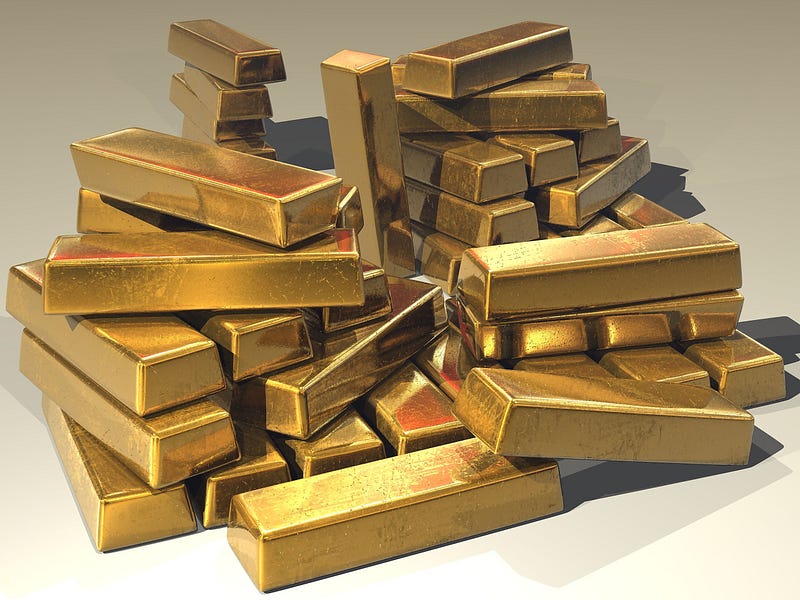

The state of modern science makes it possible to answer many difficult questions. We know how coal was formed and how oil was formed. However, can we tell how gold was formed? Scientists believe that this element has been present on Earth actually since the beginning of its existence. Does this mean that gold has an extraterrestrial origin? Yes, this is precisely the assumption that should be considered correct. The gold that we value and desire so much was created in the most extreme conditions of outer space.
What do we know about the formation of gold?
Heavy elements were formed under the most extreme conditions that prevailed in the young Solar System during the formation stage of the planetary system. This also applies to gold. Does this mean that this extremely valuable metal “came” to Earth from space? Exactly yes, by the way, just like the other elements that formed our globe.
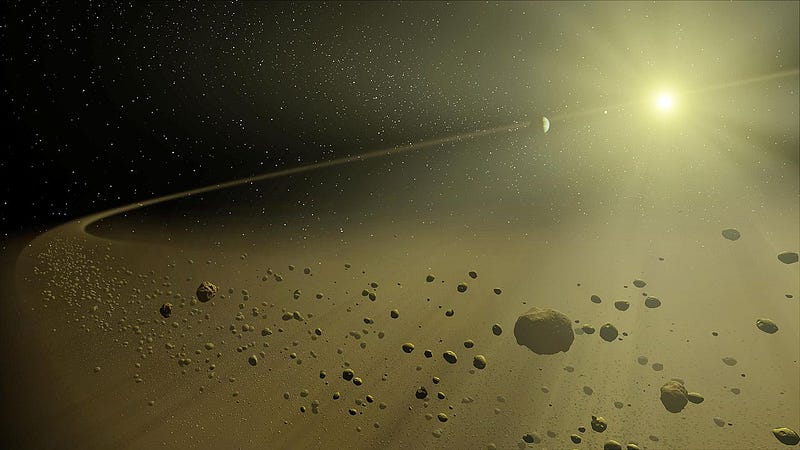
Gold has been present on Earth since the beginning of its existence. Many billions of years ago, the solar system was just a nebula of gas and dust, stretching many light years. When a supernova explosion occurred, there was a concentration of matter that began to form dense clusters. The gas reached an incredibly high temperature and pressure, and as a result began to attract other particles. The result was the formation of a protoplanetary disk, in the center of which the Sun was formed.
Under these extreme conditions, heavy elements were formed. Spinning with the disk, they collided with each other and merged, forming planetozymals — the seeds of future planets. During the formation of the Earth, gold and other heavy elements flowed into the nucleus.

At this point it is worth recalling how the Earth is built. Our planet has three layers: nucleus, mantle and crust. Modern technology does not allow us to overcome the boundary of the upper crust, so it is obvious that the extracted gold does not come from the nucleus of the planet. So where did it come from in the higher layers?
Some of the gold found its way to Earth in the aftermath of the Great Bombardment
When Earth was still a young planet, there was great chaos in the Solar System. Anyway, chaotic nature in the cosmos is not unusual, because an orderly planetary system does not exist, or at least humanity has not discovered one. However, it is worth knowing that in the early stages of the formation of the solar system, collisions of celestial bodies occurred with exceeding frequency.
When the young Earth was just taking shape, a massive meteor shower fell on its surface. In astronomy, this event, which took place shortly after the formation of the Moon, is referred to as the Great Bombardment. What does rocky material falling from space have to do with gold? Well, a great deal.
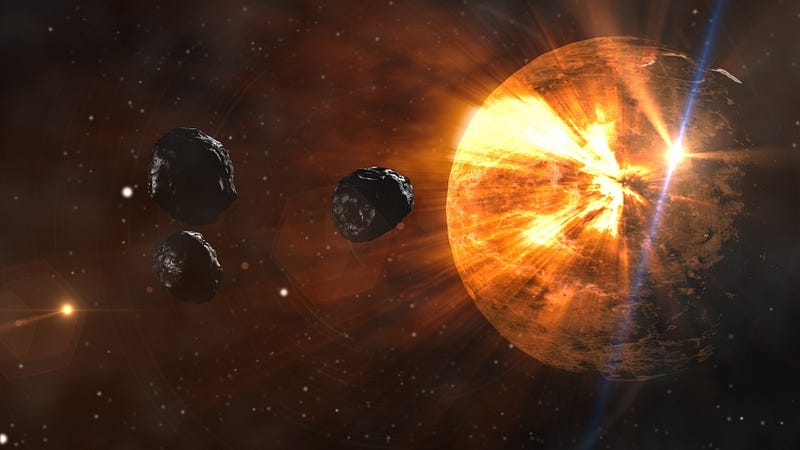
The meteorites and asteroids that bombarded our globe were formed from light elements that were pushed far out into space during the early formation of the Solar System. Subjected to Jupiter’s gravitational influence, they began to head toward Earth, and along the way attracted the matter they encountered. Falling to Earth, they brought with them many heavy elements, including gold, which enriched the mantle of the nascent planet.
Where did the gold come from in the Earth’s crust?
However, this theory does not explain why gold is found in the crust, the shallowest layer of the Earth, where it is available to us. Nor does it show why this precious metal is concentrated only in certain areas of our planet. To be able to explain this, we again have to go back to the most ancient times.
Between 300 and 180 million years ago, there was only one continent on the globe — Pangea. The separation of the continents occurred due to the rise of a stream of heated matter, called the mantle plume. The earliest to separate were South America and Africa.
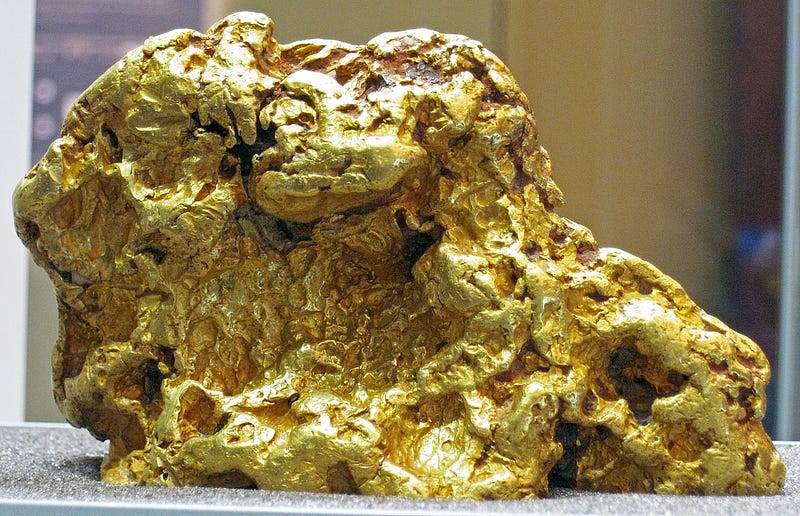
How is this phenomenon related to the gold present in the crust? The plume rose throughout the mantle, and as a result, tectonic plate movements began. These plates began to overlap, as a result of which some metals were able to penetrate higher and concentrate in certain areas of the crust. It is worth mentioning that as a result of this process, the mantle itself became richer with additional gold deposits. During the ascent of the plume, chemical conditions were created that were favorable for the formation of further deposits.
_4_(16848647509).jpg)
Who discovered gold and when?
There is no clear answer to the question posed above. What is certain is that gold is among the earliest known metals, because its luster and characteristic color made it easy to spot in river gravels.
Scientists have no doubt that gold was known and used as early as the Chalcolithic — the transition period between the Stone and Bronze Ages. This is proven by archaeological finds that have been uncovered in the Balkans. Excavations have uncovered gold artifacts that are dated to the 4th century BC.
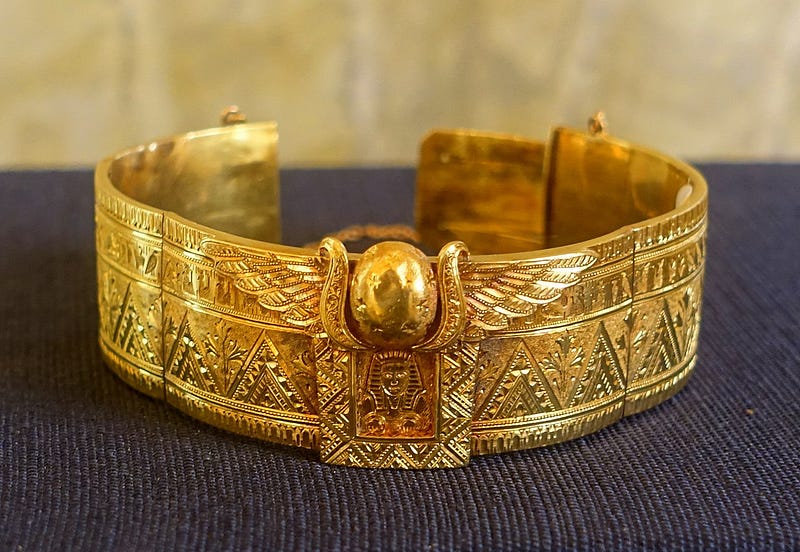
Gold was also known and processed by the inhabitants of ancient Egypt. Most likely, one of the most gold-bearing areas in the region was Nubia. Scientists express the belief that in ancient Egypt about 1,000 kg of gold were mined annually. It was the Egyptians who first developed a method for smelting gold. This took place in 3600 BC.

Where does gold occur?
The resources of gold available to us are slowly being depleted. This does not mean that there are no more gold-bearing areas on Earth. As many as 70 countries around the world are mining this metal.
Among the largest gold miners are:
- China,
- Russia,
- Australia,
- United States,
- Canada.
Africa is also an area rich in gold. In terms of mining on the Black Continent, Ghana leads the way, ranking 6th in the world (in 2021). Other major African producers include South Africa, Mali, Burkina Faso and Côte d’Ivoire.
The top ten global gold miners, just after Ghana, include: Brazil, Uzbekistan, Mexico and Indonesia.
Mentioning gold-bearing areas, it is also worth pointing out Argentina’s Patagonia. Gold mines there began operations as early as the 19th century and are still being exploited today.
How much gold is there on Earth?
The current state of science makes it impossible to say how much gold is contained in the deepest layers of our planet. According to scientists, there are so many precious metals in the core alone that their volume would allow covering the entire surface of our planet with a 4-meter layer. However, it should be emphasized that we are talking about more than just gold.
Most likely, there is also a huge concentration of gold in the Earth’s mantle. However, in the context of mining, this is of no importance, at least for now. This is because modern technology does not allow us to reach the deeper layers of the globe.
How much gold has been mined so far? The figure for 2021 is 201,296 tons. At the same time, it should be noted that as much as two-thirds of this value was mined by 1950. The largest share of the global stockpile is jewelry (46.3 percent). The second is coins and gold bars (22 percent), and the third is central bank reserves (17 percent). All the rest is gold used in industry, including electronics.
How much gold is left to be mined? This is a difficult question. The results of various studies indicate that the remaining reserves are about 53,000 tons. This means that if the rate of extraction remains similar to the current one, the metal’s reserves will be exhausted in about 20 years.
Scientists are convinced that huge reserves of gold lie beneath the surface of the oceans, but it would not be profitable to extract them now. However, one cannot pass over the fact that this valuable metal is found not only below the surface of the bottom, but also in the water itself. According to experts, one liter of salt water contains a 13-billionth of a gram of gold. Not much? Yes, but only on a unit scale. Considering the volume of all salt water, it is easy to conclude that there are 20 million tons of this bullion in it.

How is gold extracted?
Extracting gold from salt water is not possible for the time being, at least not on a large scale. So miners are left with conventional methods.
During the gold rush, the precious ore was extracted by placing gold-bearing soil in a special bowl. When combined with water, the lighter material poured out of the vessel, and the heavier gold particles remained. However, this method is too inefficient to be used on an industrial scale.
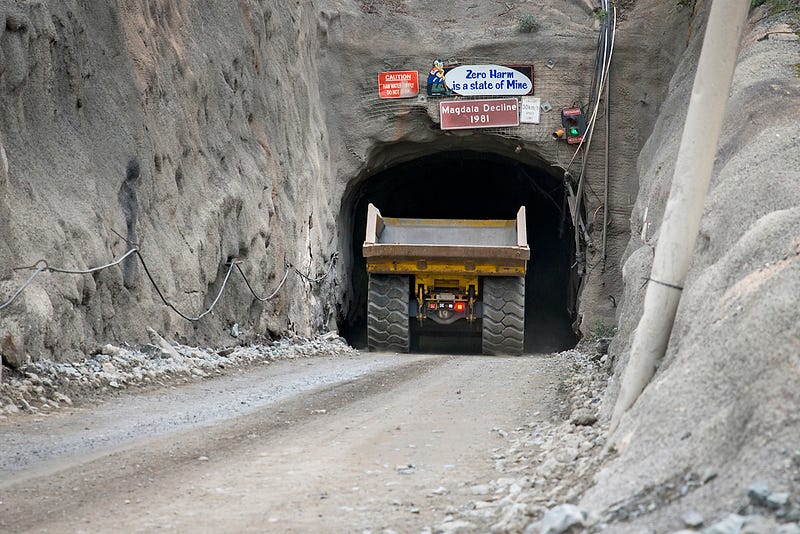
The largest part of the world’s mining is carried out using mining techniques, in open-pit and traditional mines. In the first instance, miners blast the rocks using explosives. The fragments thus crushed go to special mills. Next, the gold ores go through classifiers, then potassium cyanide is added to them. Using an electrolysis reaction (or by using aluminum or zinc), gold is precipitated from the resulting solution.
Asteroids may also contain a lot of gold and other valuable resources. Such objects could become one of the targets of space mining in the future. NASA is already preparing a mission to an asteroid made of valuable metals.
Cool that you made it to the end of this article. I will be very pleased if you appreciate the effort of creating it and leave some claps here, or maybe even start following me. It would be nice if you also left a tip! Thank you!