avatarAvi Kotzer

Free AI web copilot to create summaries, insights and extended knowledge, download it at here

4873

Abstract

f Ads’.</h2><p id="e5e8">A developer at Jyllands-Posten pointed me to a setting in <i>the</i> performance measuring tool, <a href="http://www.webpagetest.org/">WebPageTest</a>.</p><p id="b8c3"><i>(WebPageTest is <b>what you use</b>, when you do performance tests. <b>SpeedCurve is actually based on WebPageTest</b> — and the most important things in SpeedCurve are the automated tests and a much better design/UI, at least some of the parts — I’ll get back to that.)</i></p><p id="ac27">What you have to do, before you do a WebPageTest test, is to ask WebPageTest to <b>remove the letters ‘PTST’ from the user agent string</b> (which every browser uses to identify itself):</p><figure id="f815"><img src="https://cdn-images-1.readmedium.com/v2/resize:fit:800/1*XitVzBWd_DGzCIjccWOjHw.jpeg"><figcaption></figcaption></figure><p id="e364"><i>(I’ve written <a href="http://ebudvikling.dk/blog/2016/02/15/et-flueben-i-webpagetest-kan-betyde-meget-for-din-performance-maaling/">a blog post in Danish</a> about this nifty little feature.)</i></p><p id="31bb">‘PTST’ is the culprit in all of this. When our ad technology provider AdTech (<a href="http://oneadserver.aol.com/">now a part of AOL</a>) sees a browser with these four magic letters in the user agent, it withholds the ads from rendering. The reason: <b>To avoid wasting ad displays on tests</b>. Which makes sense, when you think about it.</p><p id="a021">Run a test on WebPageTest with this checkbox checked and you get <i>everything</i>. And that’s what we want. I’ve seen tests where the<b> ‘fully loaded’</b> time (the browser is saying “I’m totally done with loading this site now”) <b>multiplied by 5</b>; that’s a 400% increase! In the same test the <b>total number of requests was multiplied by 3</b> (200% increase).</p><p id="1f8d">Oh, and our <b>SpeedIndex</b> value (an expression of how fast the first screen view/viewport loads) <b>increased by 30%</b> in a test.</p><p id="24ab">But while WebPageTest can give us the correct data, <b>it can’t automate it</b>. We could do something via <a href="https://sites.google.com/a/webpagetest.org/docs/advanced-features/webpagetest-restful-apis">the WebPageTest API</a>, but this is something we want to avoid, so as to not have too many products and service to monitor and maintain.</p><p id="8a91">We then went back into SpeedCurve, but there was no feature to allow this. But… in the ‘Enterprise’ edition of SpeedCurve you are allowed to use <a href="https://sites.google.com/a/webpagetest.org/docs/using-webpagetest/scripting">the WebPageTest scripting language</a>. One of the things you can do here is <b>set the user agent, which is exactly what we wanted to do</b>.</p><p id="eefd">Documents were written, meetings were held, decisions were made. And we (across JP/Politikens Hus, that is Ekstra Bladet, Politiken and Jyllands-Posten) <b>signed up for SpeedCurve Enterprise</b>. O, how we thought we had it made.</p><p id="a842">We now saw SpeedCurve rendering the <i>entire frontpage</i>. Just like we wanted. And we <b>started lacking in the comparisons </b>in SpeedCurve, just as we had expected. Especially compared to the Danish Broadcasting Corporation (which has no ads, since they are funded through Public Service).</p><p id="2930">And the good times kept on coming. SpeedCurve announced that they would now support the <b>same browsers as you can choose between in the developer tools in Google’s Chrome browser</b>. A developer at Politiken tested this and yes, it meant we no longer had to script our user agent. This was a huge plus.</p><p id="3606">Just look at what happened once SpeedCurve updated the browsers and <b>started including ads</b>:</p><figure id="3451"><img src="https://cdn-images-1.readmedium.com/v2/resize:fit:800/1*qDl1ZCRvq4Df8XJ_-4E_1w.png"><figcaption></figcaption></figure><figure id="f16c"><img src="https://cdn-images-1.readmedium.com/v2/resize:fit:800/1*S0yQfx9Xvxm3BpTAXBSUTA.png"><figcaption></figcaption></figure><figure id="ca74"><img src="https://cdn-images-1.readmedium.com/v2/resize:fit:800/1*coOQm61VDAbkCz7rD7TFKA.png"><figcaption></figcaption></figure><figure id="8af5"><img src="https://cdn-images-1.readmedium.com/v2/resize:fit:800/1*bjoBX9-KatudVZE_IKPv_w.png"><figcaption></figcaption></figure><p id="bbdb">As you can see, ads have a…certain influence on our front page.</p><p id="767b">These two screenshots from SpeedCurve shows how big a percentage third party stuff (here; ads) take up of the front page:</p><figure id="db75"><img src="https://cdn-images-1.readmedium.com/v2/resize:fit:800/1*AoHX6PgiVGzvOWyyWKtOPg.png"><figcaption></figcaption></figure><figure id="2d69"><img src="https://cdn-images-1.readmedium.com/v2/resize:fit:800/1*rAHw9tS-CTQNzbV_B-zfIg.png"><figcaption></figcaption></figure><p id="4480">Notice those percentage numbers…</p><p id="51e5">When something takes up almost 80 p

Options

ercent of a websites requests and sites shouldn’t it also receive about 80 percent of the attention?</p><h2 id="4c1a">PSTS back in, ads back out</h2><p id="955b">Alas, it wasn’t to last. <b>SpeedCurve changed the browsers and reintroduced ‘PTST’ into the user agent string.</b> Therefore; no ads. We noticed this and went back to scripting the user agent. But that didn’t work either. Though it had earlier.</p><p id="6f31">I got in touch with the SpeedCurve folks. They told me they had fixed a ‘bug’ and that <b>a test browser should <i>always </i>label itself as such</b>, as Mark from SpeedCurve told me in an email:</p><p id="a423" type="7">WPT should always be identifying itself, even if the UA string has been set via scripting.</p><p id="276d">Instead he created <a href="https://github.com/WPO-Foundation/webpagetest/issues/606">an issue</a> with WebPageTest to allow the user to set the user agent (without ‘PTST’) in the scripting language. <b>Nothing has happened since April 25th.</b> Steve Souders (who is the closest you’ll come to a ‘Mr. Performance’) who also works at SpeedCurve has created <a href="https://github.com/SpeedCurve-Metrics/SpeedCurve/issues/62">an issue</a> with SpeedCurve itself to allow us to remove PTST via a checkbox, like in WebPageTest. <b>This issue was created on March 1st</b>.</p><p id="d119">We still had one shot left though: <b>Whitelist a browser with a ‘PTST’ user agent with our ad technology provider</b> to to allow the SpeedCurve test browsers to see the entire page rendered. Unfortunately, this is not possible since it is a “global setting across all client networks”. That means, it would have to be changed across all of the sites that use their technology. According to <a href="http://oneadserver.aol.com/">their own website</a> they have 74 countries with active clients.</p><p id="484c">I then asked if we could allow the browser through if we scripted the user agent to include the word “SpeedCurve”. In effect, <b>their block functionality would allow a browser through if <i>both </i>the words ‘PTST’ and ‘SpeedCurve’ are in the user agent string. But no dice:</b></p><p id="3ef4" type="7">As long as PTST is in the UA we will block it.</p><h2 id="c77f">Alternatives?</h2><p id="bb21">This is, obviously, a precarious situation for us to be in. <b>We can’t measure the performance of our entire site automatically</b>.</p><p id="0fdf">The logic step is to look at alternatives. So far I’ve only tried one: <a href="https://calibreapp.com/">Calibre</a> (which was suggested to me by the same colleague who suggested SpeedCurve). I even wrote to the guy behind Calibre up front to be sure that it would include ads. But the same result: A fast, lean website. Which just isn’t the truth ;-)</p><p id="5988">Until SpeedCurve (or WebPageTest) comes up with a change we <i>might</i> look at the initial no-no: <b>Running automated WebPageTest tests through their API</b>. As Jyllands-Posten’s developer suggested, <b>we might be able to get it up and running pretty fast <a href="http://calendar.perfplanet.com/2014/webpagetest-private-instances-in-five-minutes/">using Amazon</a></b>.</p><p id="9432">So… here we are. Thinking about what to do. Since we can’t automatically measure our entire page render, we can’t <i>really</i> do any performance budgets. We can’t measure any tweaks or changes, either. <b>We could do it via manually tests but that is the last way out.</b></p><p id="77b0"><i>(Also note: Performance budgets are really hard to do, once you’ve got ads in the mix. The load and performance of them vary a lot; week to week, day to day, hour to hour, even banner to banner. Also, the biggest influence on your performance is outside of your control. So ask yourself if a performance budget is the way to go.)</i></p><p id="fa04">If you made it all the way through this article and have either a trick (or a fully fledged automated performance test tool which include ads…) up your sleeve, <b>please leave a comment.</b></p><p id="3b36">Banner ads (and for us; the way they are found, delivered and rendered) are a huge performance culprit but we can’t automate the measurements of that fact. <b>We are stuck with manual tests in WebPageTest — or browser developer tools like those in Google Chrome.</b></p><p id="be1a">(I you found this post by Googling your own frustrations, know this: <b>You are not alone</b>.)</p><h2 id="4029">Update on June 14th, 2016:</h2><p id="d99c">Apparently this <b>isn’t a problem will all ad tech providers</b>:</p> <figure id="e652"> <div> <div> <img class="ratio" src="http://placehold.it/16x9"> <iframe class="" src="" allowfullscreen="" frameborder="0" height="undefined" width="undefined"> </div> </div> </figure></iframe></div></div></figure></article></body>

Dord

A frighteningly funny tale about a ghost word

Photo by Tamara Menzi on Unsplash

Today’s New York Times Spelling Bee letters:
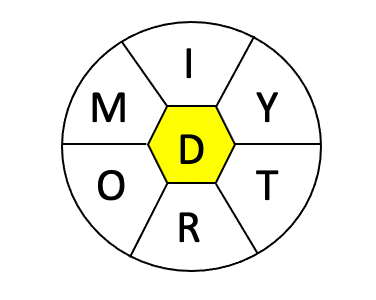
Art: Iva Reztok

I, M, O, R, T, Y and center D (all words must include D).

Merriam-Webster says…
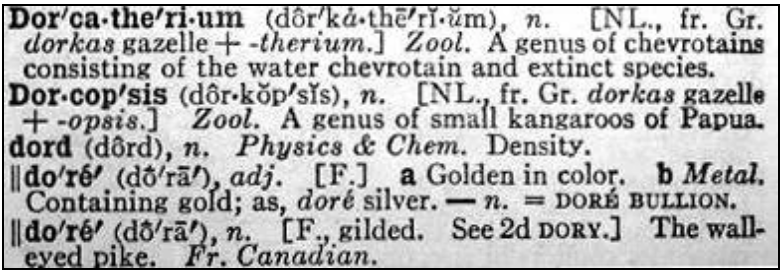
Credit: Webster’s New International Dictionary, Second Edition

Silly little dictionary! Don’t you know dord can’t possibly be a word if the New York Times says it ain’t?

For further fascinating facts, check out the Spelling Bee Master.

What’s your favorite g.n.a.w. from today’s puzzle?

My Two Cents

One word of my favorite words in the entire English language is dord. The only problem is…

it’s not a word!

But, but, but… what about that screen shot above, with the definition? It’s not from Getty Images or Pixabay or even *gasp!* Unsplash!

Did I just spend the last four hours carefully photo-shopping an slice of dictionary to make my case today? Have I gone completely off the deep end with my obsession with the stubborn editors of the Spelling Bee game?

Let’s just chillax and have some fun today. And maybe, just maybe, start the ball rolling on creating a new word. Or at least, bringing it back from the dead.

A lexicographer’s error

As Merriam-Webster explains, in 1934 the company decided to revamp the first edition of their world-famous dictionary. Webster’s New International Dictionary, Second Edition, which had involved years of work by more than 250 word experts and editors, was to become the largest, thickest, heaviest book ever to be printed en masse.

It would also become the number one cause of hernias and back sprains in high school students between World War II and the fall of the Berlin War.

Back in the day, potential dictionary entries were typed on 3 x 5 index cards. Chemistry editor Austin M. Patterson completed one of several cards for the letter “D” as an abbreviation. Namely, for “density.” This is a photo of the original one:
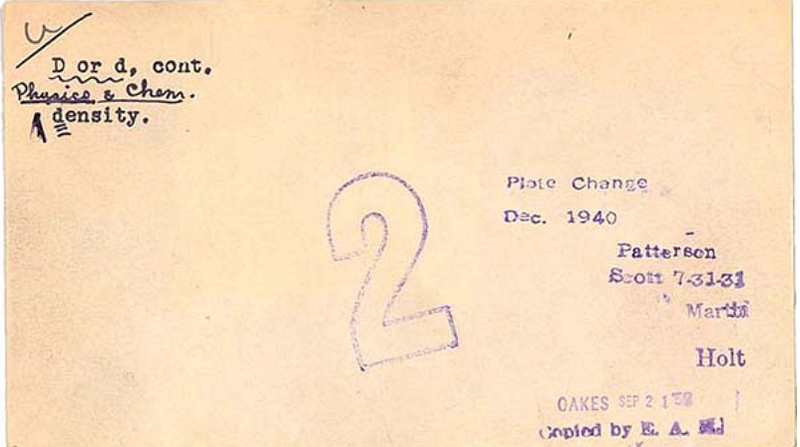
Credit: merriam-webster

There are two spaced in the entry; one between the “D” and “or”, the other between “or” and “d”. It should have been interpreted as “The letter D or the letter d, both abbreviations for the word ‘density’ ”.

But it wasn’t. The person who handled the card took it at face value and entered “dord” with “density” as its definition. No one knows how it got past editors and proofreaders, but the dictionary was published with this ghost word as an entry. It took five years for someone to discover the mistake, and then another eight for it to be corrected. When the 1947 printing of this Second Edition came out, “dord” had died a most inglorious death.

If you search online and in bookstores, you may find old editions with the entry. But you have to get the printings that came out between 1934 and 1946. It’s hard to find them in good shape, though.

Dawn of the dead… word

As it turns out, and technically-speaking, today (and only today) the editors of the Spelling Bee puzzle are correct.

I’ll admit it: “dord” is not a word. (Cue hysterical sobbing on my part.)

But it could be… with your help!

While I was thinking about what to write today, an idea popped in my head. Okay, it was more like it slapped me silly.

What if I could get Merriam-Webster to accept dord as a word again? Well, accept is a bit of a stretch, since it never really was a darling in any of their lexicographers’ eyes. In any case, I signed up to Change.org and created a petition for people to sign.

Now, I realize many online petitions address serious issues; by no means am I even hinting this is one of them. On the contrary.

With so much crap going on in the world, all I’m trying to do is lighten the load and brighten people’s lives with this. Maybe even put a smile on their faces as they head on over to sign.

So, please… stand up for dord! Sing the petition at the end of this article.

And in order to convince the editors of Merriam-Webster, I’ve proposed a new definition for the word, based on its history.

This is the entry I’m presenting for their consideration:

dord (dôrd) noun

inflected form(s): plural -s

1. a ghost word

2. a lexicographic error

Origin of DORD: English “D or d”, read as one word and included in Webster’s New International Dictionary, Second Edition.

Example sentence: Many people think the word “irregardless” is a dord, but it’s first known use has been documented back to 1795.

Together, we can turn dord into a meta word. A term that was once ghosted will mean “ghost word”. The definition for “lexicographic error” will actually be a former lexicographer error.

Below is the Change.org petition. Click and sign, you word-lover you. I dare you. I double-dare you. Go ahead, make my day…

Think about it this way. If you help me convince Merriam-Webster to remove the ghost status of the word “dord”, the editors of the New York Times Spelling Bee won’t be able to say: “Gee, Not A Word”.

And please check out my previous entry on words that g.n.a.w. at you:

Culture
History
Spelling Bee
Ideas
Inspiration
Recommended from ReadMedium