better mind-muscle connection.</p><div id="114e" class="link-block">
<a href="https://readmedium.com/build-more-muscle-using-the-mind-muscle-connection-78f86d115c6e">
<div>
<div>
<h2>Build More Muscle Using The Mind-Muscle Connection</h2>
<div><h3>It’s not how much weight you lift, but how you lift the weight.</h3></div>
<div><p>medium.com</p></div>
</div>
<div>
<div style="background-image: url(https://miro.readmedium.com/v2/resize:fit:320/1*Nd067KlR6k0lYbCnWatXpw.jpeg)"></div>
</div>
</div>
</a>
</div><p id="3b59"><b>Front squats</b> with a barbell will change a person’s centre of gravity slightly from a standard back squat, utilising more stabilising muscles and engaging the core. The movement can also be loaded with a lot of weight, creating more of a stimulus for adaption/muscle growth.</p><h1 id="22af">Smith Machine Squats</h1><p id="9300">The <a href="https://en.wikipedia.org/wiki/Smith_machine"><i>Smith Machine</i></a> is a piece of equipment that will be found in most gyms, invented in the 1950s. It is a counterbalanced <a href="https://en.wikipedia.org/wiki/Barbell">f</a>ixed bar within steel rails that only allows for a near-vertical movement path.</p><p id="1d1c">The big problem with this machine forces people to use its fixed bar path which isn’t biomechanically natural.</p><figure id="9d0a"><img src="https://cdn-images-1.readmedium.com/v2/resize:fit:800/1*RGHZSbuFoOL1ezGwlpITQg.png"><figcaption>Image source: <a href="https://upload.wikimedia.org/wikipedia/commons/0/0c/Squats-2-2.png">Wikimedia</a></figcaption></figure><p id="7eb2">How people move up and down is determined by individual factors such as height, mobility and flexibility.</p><p id="bff8">Over time, heavy loads can lead to joint overload and eventual injuries, especially for our knees.</p><p id="0e42">Another reason why the Smith machine should be avoided is that it doesn’t activate our stabilizing muscles as well as free weights. A <a href="https://journals.lww.com/nsca-jscr/fulltext/2009/12000/a_comparison_of_free_weight_squat_to_smith_machine.23.aspx">2009 study in the Journal of Strength and Conditioning Research</a> found that a Smith Machine activates our stabilising muscles on average 43% lower than free-weight squats.</p><p id="04b1">Moreover, <a href="https://umu.diva-portal.org/smash/get/diva2:1475450/FULLTEXT01.pdf">2020 research indicates</a> that hamstring activation in a Smith machine squat is far less than a free-weight squat as they’re never fully contracted.</p><p id="ea4c">Weak hamstrings can lead to knee issues as they help stabilise the knee joint during the squatting movement. As the smith machine squat requires has to lean back into the bar, the knees take extra stress.</p><p id="ecda">Finally, there is <i>little transfer between using the Smith Machine and athletic training for sport. Athletes should use free weights for <a href="https://www.researchgate.net/publication/322901416_The_Use_of_Olympic_Lifts_and_Their_Derivatives_to_Enhance_Athletic_Sporting_Performance_A_Mental_Model"></a></i><a href="https://www.researchgate.net/publication/322901416_The_Use_of_Olympic_Lifts_and_Their_Derivatives_to_Enhance_Athletic_Sporting_Performance_A_Mental_Model">movement pattern practice</a>.</p><p id="d8f6" type="7">“The free weight squat may be superior to the Smith machine squat for training the major muscle groups of the legs and possibly would result in greater strength development and hypertrophy of these muscle groups with long-term training.” — Schwanbeck et al., 2009</p><p id="e7d8"><b>Alternative exercise:</b> The<b> <a href="https://www.masterclass.com/articles/barbell-squat-guide">barbell squat</a> </b>is the best exercise we can use to train our legs. It hits a large number of large muscle groups, it’s a natural movement, and we can load it will heavier weights.</p><p id="50f1"><a href="https://journals.lww.com/nsca-jscr/fulltext/2009/12000/a_comparison_of_free_weight_squat_to_smith_machine.23.aspx">Research indicates</a> activation of the <a href="https://www.physio-pedia.com/Quadriceps_Muscle#:~:text=The%20quadriceps%20femoris%20is%20a,anterior%20compartment%20of%20the%20thigh.">quadriceps</a>, hamstrings, <a href="https://aclandanatomy.com/multimediaplayer.aspx?multimediaid=10528181#:~:text=The%20one%20muscle%20that%20extends,%2C%20semitendinosus%2C%20and%20biceps%20femoris.">knee extensors and flexors</a> and <a href="https://www.sciencedirect.com/topics/neuroscience/plantar-flexors#:~:text=THE%20ANKLE%20AND%20FOOT,-David%20J.G.%20Stephen&text=are%20hinge%20joints.-,The%20plantar%20flexors%20are%20the%20flexor%20hallucis%20longus%20and%20brevis,toes%20at%20the%20PIP%20joints).">ankles plantar flexors</a> are higher during free weight squats than with a Smith Machine.</p><h1 id="5884">Good Mornings</h1><p id="24a2">The Good-morning can strengthen the lower back to prevent injury when properly applied. However, the problem is, that it often isn’t and that can result in severe lower back injuries.</p><p id="fb5a"><a href="http://www.chasingthefrog.com/reelfaces/brucelee.php">Bruce Lee famously suffered a severe back injury in 1970</a> doing Good-mornings with weights and an inadequate warm-up.</p><p id="ae5a">The Good-morning gets its name from resembling bowing at the waist to say, “good morning.” I have also heard that it’s because the movement is similar to the sun rising in the morning. Either way, the movement begins with the barbell on the upper back like a back squat, then bending at the hips to bring your torso down nearly to parallel with the ground.</p><figure id="4650"><img src="https://cdn-images-1.readmedium.com/v2/resize:fit:800/1*WDEToVhbWROojaXJRWOmZw.png"><figcaption>Image via <a href="https://upload.wikimedia.org/wikipedia/commons/a/a1/Good-mornings-1.png">Wikimedia</a></figcaption></figure><p id="4db7">This position at the bottom of the movement when your torso is near parallel with the ground is when we risk injury, as the bar places significant pressure on your lumbar spine (<a href="https://www.spine-health.com/glossary/erector-spinae#:~:text=The%20erector%20spinae%20muscles%20are,cervical%20sections%20of%20the%20spine."><i>erector spinae</i></a><i>) </i>in the<i> </i>lower back — especially if we load the bar with a lot of weight.</p><p id="5550" type="7">“Good Mornings are a good exercise for specifically conditioning lumbar-thoracic flexion and extension of the back, but for all level of performance, good lifting technique is required when approaching near maximal effort to avoid acute injury or long-term damage.” — Schellenberg et al., 2013</p><p id="5456">Newbies are especially at risk of lower-back injuries, as the exercise requires conditioned lower back strength and proper technique to stabilize the back.</p><p id="b430">Moreover, many people don’t have the necessary<a href="https://www.physio-pedia.com/Thoracic_Manual_Techniques_and_Exercises#:~:text=Thoracic%20extension%20involves%20concurrent%20posterior,on%20the%20opposite%20side%20separate."> thoracic extension</a> to do the Good-morning movement properly.</p><p id="7e9b"><b>Alternative exercise:</b> <a href="https://www.coachmag.co.uk/exercises/leg-exercises/3720/romanian-deadlifts-unlock-your-leg-muscles"><b>Romanian deadlifts</b></a> will also provide a lot of activation of the glutes and hamstrings. Although not perfectly safe, it provides far less injury risk on the lower back than Good-mornings.</p><h1 id="8a44">Crunches</h1><p id="ca05">The classic abs exercise: the crunch. We lay on the ground, knees bent, and lift our upper bodies off the ground to contract our “abs”.</p><figure id="164f"><img src="https://cdn-images-1.readmedium.com/v2/resize:fit:800/1*YcbAeaXl25dQJ-AOxOB3lw.jpeg"><figcaption>Image via <a href="https://live.staticflickr.com/65535/51263712952_0383112b9e_b.jpg">Flickr</a></figcaption></figure><p id="68d7">The crunch spawned many pieces of crappy workout equipment sold on late-night infomercials in the 1990s.</p><p id="938e">The thing is, it’s probably a complete waste of your time to do a single crunch. There are a couple of reasons:</p><p id="b1d6"><b>First</b>, you’ll probably never see your abs, because you have a layer of fat over them. No offence! With such high obesity rates and a very low body fat level required to properly see your abs, proportionally, very few people have “abs”. For visible abs, body fat must be around 8–12% for men and 14–18% for women.</p><p id="2e9e">You’re better off dedicating that time to cardio to burn that body fat or exercises that work out other muscle groups that are more visible.</p><p id="8e2d"><b>Second, </b>they’re a low-quality movement in terms of activation of core muscles.</p><p id="a440">A <a href="https://www.acefitness.org/about-ace/press-room/press-releases/246/american-council-on-exercise-ace-sponsored-study-reveals-best-and-worst-abdominal-exercises/?utm_source=Rakuten&utm_medium=10&ranMID=42334&ranEAID=TnL5HPStwNw&ranSiteID=TnL5HPStwNw-JoXtexkVY3ub6Art_e3NDw&irclickid=xDCRAEziBxyIT4aWHW14WzlPUkD05wUN%3Az8KWE0&irgwc=1&utm_source=Affiliate&utm_campaign=12960&clickid=xDCRAEziBxyIT4aWHW14WzlPUkD05wUN%3Az8KWE0&utm_content=Online%20Tracking%20Link_984595&utm_medium=Impact&utm_channel=Affiliate_Marketing">2001 study from American Council on Exercise</a> compared 13 popular abs exercises and equipment and found the traditional crunch one of the least effective.</p><p id="c99e">Apart from the <a href="https://www.kenhub.com/en/library/anatomy/rectus-abdominis-muscle#:~:text=Rectus%20abdominis%2C%20informally%20known%20as,way%20to%20the%20pubic%20bone.">rectus abdominis</a> (lower abs), many of the other core muscles are neglected. Your goal is to strengthen and stabilize your core, for which there are better alternatives.</p><p id="54b1"><b>Third,</b> it’s easy to do crunches wrong and risk injury.</p><p id="6021">People can often think quantity is better than quality, especially when workout plans have people doing hundreds of sit-ups.</p><p id="3e8e">However, crunches can exert strain and pressure on your lower spine. Many of us already have spinal issues/discomfort from bending over so much at the computer or smart device. People with back problem
Options
s/injuries should avoid crunches completely,</p><p id="75eb"><b>Alternative exercise: <a href="https://www.coachmag.co.uk/exercises/abs-workout/3657/3a-hanging-leg-raise">Hanging leg raises</a> </b>are fantastic at targeting both the upper and lower rectus abdominis (abs), while also providing better activation of the <a href="https://biologydictionary.net/oblique-muscle/#:~:text=Oblique%20muscle%20refers%20to%20two,ribs%20to%20the%20iliac%20crest."><i>oblique muscles </i></a>than many other abs exercises. Because you’re hanging from a bar, they also have the added benefit of providing your forearms with a great workout, increasing grip strength.</p><h1 id="13d4">Decline Bench Press</h1><p id="4fad">The bench press is probably the most popular exercise for men in the gym. “How much do you bench?” is often the first question when testing your manhood with gym bros,</p><p id="9889">A common variation is the decline bench press, where the bench is lowered below parallel around 15–30 degrees, for a bench press.</p><figure id="4c90"><img src="https://cdn-images-1.readmedium.com/v2/resize:fit:800/1*FkXdnFORvCjGspVaObXTig.png"><figcaption>Image via <a href="https://upload.wikimedia.org/wikipedia/commons/e/ea/Decline-bench-press-2.png">Wikimedia</a></figcaption></figure><p id="1656">The common idea is that it targets the lower chest better than the traditional flat bench. However, this is a myth, as various studies indicate similar activation for the Pectoralis Minor (lower chest) between a flat and decline bench, but less activation of the upper chest with a decline press.</p><p id="1608">The shape of our chest is largely genetic, so we’re better off doing exercises that focus on the Pectoralis Major (upper chest) and minor for more muscle activation overall.</p><p id="7156" type="7">“Generally, the 6-RM loads were greater with a wide grip and a flat bench position, compared with the other variations of grip widths and bench positions. “— Saeterbakken et al., 2017</p><p id="cc64"><b>Alternative exercise: the</b> <b>flat bench press </b>allows us to lift the most amount of weight for a press, and therefore gives the most activation of the chest muscles. More activation means more chest growth overall, including the lower chest.</p>
<figure id="e78b">
<div>
<div>
<img class="ratio" src="http://placehold.it/16x9">
<iframe class="" src="https://cdn.embedly.com/widgets/media.html?src=https%3A%2F%2Fwww.youtube.com%2Fembed%2FrT7DgCr-3pg%3Ffeature%3Doembed&display_name=YouTube&url=https%3A%2F%2Fwww.youtube.com%2Fwatch%3Fv%3DrT7DgCr-3pg&image=https%3A%2F%2Fi.ytimg.com%2Fvi%2FrT7DgCr-3pg%2Fhqdefault.jpg&key=a19fcc184b9711e1b4764040d3dc5c07&type=text%2Fhtml&schema=youtube" allowfullscreen="" frameborder="0" height="480" width="854">
</div>
</div>
</figure></iframe></div></div></figure><h1 id="e892">Behind the Neck Overhead Press</h1><p id="a199">The overhead press is one of the best exercises we can do to build muscle and increase strength in our upper body. Essentially, we lift a bar from shoulder height to full lockout above our head.</p><figure id="a38f"><img src="https://cdn-images-1.readmedium.com/v2/resize:fit:800/1*w16UAm4L_0yKQHQtsuyAvw.png"><figcaption>Image via <a href="https://upload.wikimedia.org/wikipedia/commons/b/bf/Barbell-upright-rows-1.png">Wikimedia</a></figcaption></figure><p id="83bd">However, the behind-the-neck variation places unnecessary strain on our neck, shoulders, and rotator cuff.</p><p id="04fa">There is an extra risk going behind the neck with an overhead press comes because we have to externally rotate our arms outward, putting the rotator cuff in a compromised and weak position.</p><p id="51bd">Good posture and trunk stability are key to this exercise, but many of us have tight and protracted shoulders with poor flexibility and mobility, due to our jobs on computers or being slouched over our phones daily.</p><p id="c33c">Avoiding the ‘‘high-five’’ position of the behind the neck press will help reduce the chance of shoulder injuries when overhead pressing.</p><p id="46f2" type="7">“Joint-related disorders included anterior shoulder instability that was often postulated to be the result of the high-five position that is assumed during exercises such as behind the neck military press and latissimus pull-downs. Biomechanically, the high-five position may lead to overstretching of the anterior shoulder tissue leading to excessive anterior translation and thus instability.” — Kolber et al., 2010</p><p id="6542">For people with normal trunk stability and the ability for a full range of motion, the behind the next press should be a safe movement. However, this doesn’t mean it has any advantages over other shoulder exercises.</p><p id="e9d3">When compared to the traditional overhead press, we’re still targeting the same muscles behind the neck, but we can’t lift as much weight with this variation, meaning there’s less overloading potential for growth.</p><p id="db19">Therefore, it’s safer to be avoided.</p><p id="c771"><b>Alternative exercise:</b> the traditional <a href="https://www.youtube.com/watch?v=PueYjByCYgA"><b>Overhead press</b></a> allows us to load more weight than the behind-the-neck variation, meaning we get better strength improvements and muscle gains over time.</p><h1 id="60cd">Behind The Neck Lat Pull-Down</h1><p id="0a62">Another behind-the-neck exercise that places the rotator cuff under stress is the behind-the-neck pull-down.</p><p id="1d65">A variation on the lat pull-down, the exercise got its name from primarily targeting the <a href="https://en.wikipedia.org/wiki/Latissimus_dorsi_muscle"><i>latissimus dorsi muscle</i></a>. Seated at the machine, we hold the bar hanging down and pull it down towards our body, then slowly release it to a full stretch.</p><figure id="4f19"><img src="https://cdn-images-1.readmedium.com/v2/resize:fit:800/1*oPY2Wld-cj9CDmJJ6GJtxQ.png"><figcaption>Image via <a href="https://paulogentil.com/pdf/S60.pdf">Signorile et al., 2002</a></figcaption></figure><p id="75f4">Due to its “high-five” hand position, the exercise requires good shoulder mobility and should be avoided by anybody with shoulder problems.</p><p id="14ed" type="7">“The combination of shoulder external rotation, abduction, horizontal abduction, and excessive cervical spine flexion during the behind the neck latissimus pull-down was blamed for 1 reported case of temporary arm paralysis from brachial plexus injury.” — Durall et al., 2001</p><p id="3056">Moreover, as well as having an increased chance of injury, the behind-the-neck variation is less effective than the traditional lat pull-down. A <a href="https://paulogentil.com/pdf/S60.pdf">2002 study in the Journal of Strength and Conditioning Research</a> found lower lats activation when compared to pulling to the front of the chest.</p><p id="5121">Therefore, you should probably avoid the behind-the-neck lat pull-down.</p><p id="088a"><b>Alternative exercise: </b>the<b> <a href="https://www.coachmag.co.uk/chest-exercises/182/how-to-do-the-lat-pull-down">Lat pull-down</a></b> “provides some mechanical advantage, allowing greater loads to be moved during these exercises than when the bar is pulled posteriorly (to the back of the neck)”.</p><p id="99d8">With less chance of injury and the ability to lift heavier loads to provide more activation to the target muscle, it’s a no-brainer to pull the bar to the front of the chest for a pull-down.</p><h1 id="0501">Conclusion</h1><p id="c916">In this article, we have explored ten exercises that you should probably avoid in the gym. These exercises either provide an injury risk, provide poor activation of the target muscle, or are just unnecessary.</p><p id="84be">The ten exercises are: front raises, upright rows, dumbbell triceps kickbacks, squatting on Bosu/stability ball, Smith machine squats, good mornings, crunches, decline bench press, behind the neck overhead press, and the behind the head lat pull-down.</p><p id="5a3c">If your goal is to build muscle, increase your strength, or “tone”, I have provided alternative exercises that you’re far better off doing.</p><p id="9629">Good luck!</p><p id="809f"><b>Thank you for reading.</b></p><p id="2056">If you enjoyed the content, you might be interested in this article about the best isolation exercises that you should be doing to target each muscle group.</p><div id="a48b" class="link-block">
<a href="https://readmedium.com/the-best-isolation-exercises-to-build-each-muscle-group-63a4e0c2bb9">
<div>
<div>
<h2>The Best Isolation Exercises to Build Each Muscle Group</h2>
<div><h3>Build an aesthetic and muscular physique with these 13 exercises.</h3></div>
<div><p>medium.com</p></div>
</div>
<div>
<div style="background-image: url(https://miro.readmedium.com/v2/resize:fit:320/1*nzXSkLCDHH_kXW0KhQjv9A.jpeg)"></div>
</div>
</div>
</a>
</div><h1 id="9b51">Read More Medium Articles</h1><p id="a404"><i>Non-Medium members can only read 3 articles a month — become a Medium Member for unlimited access.</i></p><p id="25c1"><i>If you would like to read more articles like this one, <a href="https://brand-yourself-better.medium.com/membership"><b>sign up to become a Medium member</b></a><b> </b>for only<b> $5 a month.</b></i></p><p id="dc34"><a href="https://brand-yourself-better.medium.com/subscribe"><b><i>Subscribe</i></b></a><b><i> </i></b><i>to be notified when I publish new content.</i></p><div id="814f" class="link-block">
<a href="https://brand-yourself-better.medium.com/subscribe">
<div>
<div>
<h2>Receive an email whenever Daniel Hopper publishes a new article.</h2>
<div><h3>Receive an email whenever Daniel Hopper publishes a new article. Never miss an article. Get the article right to your…</h3></div>
<div><p>brand-yourself-better.medium.com</p></div>
</div>
<div>
<div style="background-image: url(https://miro.readmedium.com/v2/resize:fit:320/0*RNxk0iwleWcftJie)"></div>
</div>
</div>
</a>
</div></article></body>
Don’t Waste Your Time in the Gym on These 10 Exercises
Do you want to maximise strength gains and muscle growth in the gym, but avoid injuries? Then don’t do these exercises! (And some to do instead)
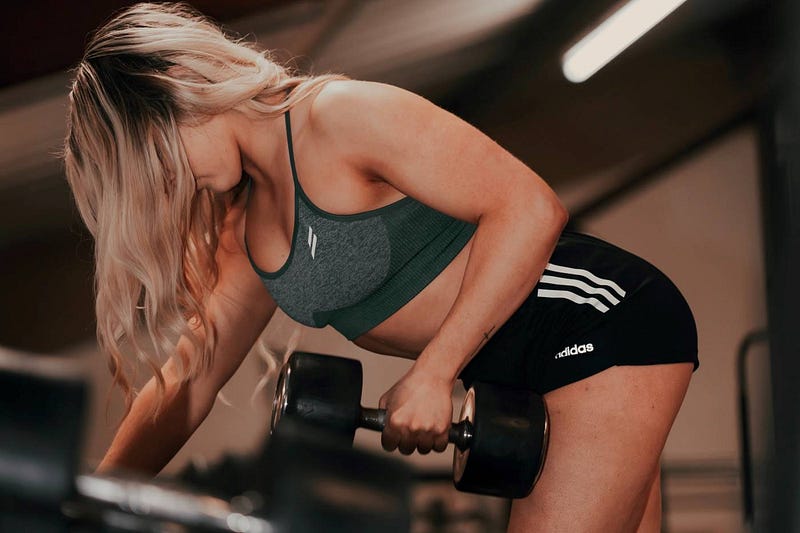
Our bodies are made up of dozens of muscles, big and small. Therefore, we need to do various exercises that best target individual muscles or muscle groups.
Before the internet, gym advice was passed down from gym bro to gym bro.
And this is still often the case — even though the internet now gives us all access to scientific information about best practices for dieting and exercise science, a lot of bad training advice is still passed down.
Many of us perform exercises in the gym that are inferior to alternatives and even put us at risk of injury.
But if you’re making enough effort to regularly get to the gym, you want to keep safe and maximise your results by doing the best possible exercises, right?
Here are ten exercises that you shouldn’t bother doing in the gym and some alternatives that are a better use of your time.
Front Raises
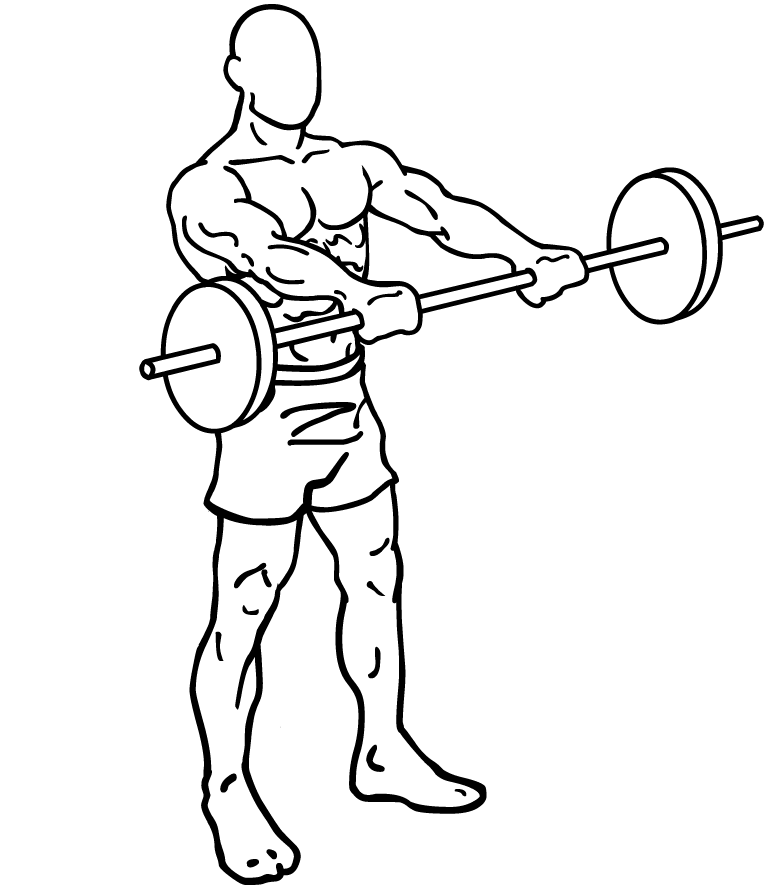
The first exercise that you shouldn’t bother doing in the gym is front raises.
A very popular exercise, the front raise is generally done with dumbbells or a barbell, lifting our arms into a horizontal position in front of us.
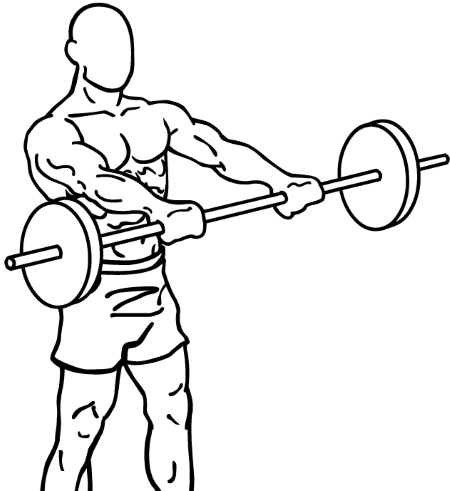
The front raise doesn’t make this list because it’s a dangerous exercise or has little effect on your muscles — instead, it’s because we’re already giving our anterior deltoid (front shoulder muscle) enough attention.
Many popular exercises such as the bench press or overhead press will provide a lot of muscle activation on the front deltoid. Moreover, many lifters focus their efforts on muscles they can see in the mirror, hence the front raise’s popularity.
Thus, many gym junkies end up with over-developed front delts relative to their side and rear delts.
The shoulder is split into three major muscles — the anterior on the front, the medial or lateral head on the side, and the posterior in the rear. We should train all three heads with the same amount of effort.
Alternative exercises: instead of doing front raises, focus that energy on overall shoulder development. Do lateral (side) raises for the medial head, and a bent-over fly or face pulls for the posterior (rear) head of the deltoid.
Upright Rows
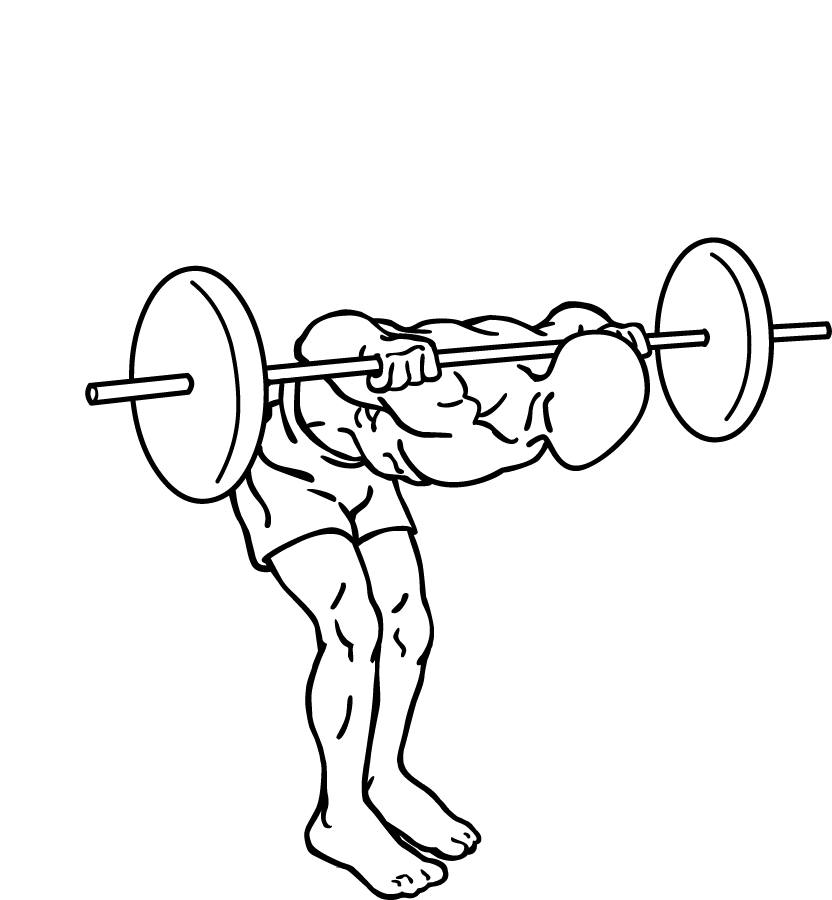
Another shoulder exercise that should be avoided is the upright row.
The upright row is performed by holding onto barbells (or dumbbells) with a narrow overhand grip, pulling the weight up to neck height with the elbows flaring out.
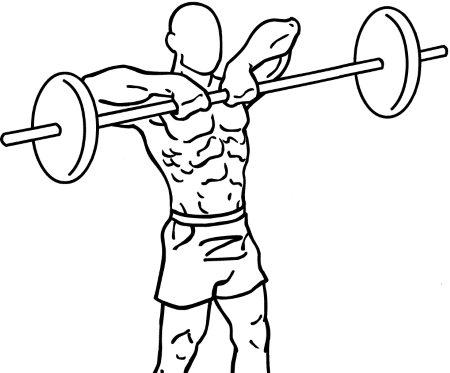
The upright row primarily targets the medial head (side) of our shoulders and the Trapezius muscle also receives some secondary stimulation.
The problem with the upright row is a high risk of injury.
As we raise the weight to our chin, our nerves are compressed because the movement places the shoulders into an unnatural position which is highly internally rotated and horizontally abducted (rolls the upper arm forward slightly).
Thus, our rotator cuff is placed in a compromised position. Furthermore, acrest of bone at the top of the humerus (upper arm bone) hits a bone projecting outward from the scapula (shoulder blade), causing impingement.
With a heavy load and repeated application over time, the upright row becomes a recipe for disaster.
Another exercise that may lead to subacromial impingement is the upright row. During this exercise the arm is maintained in an internally rotated position throughout the full range of elevation — Durall et al., 2001
Alternative exercise: thecable lateral raise is an exercise that will also effectively target the medial head of the deltoids, meanwhile it has far less risk and also places the muscle under more constant tension throughout the movement.
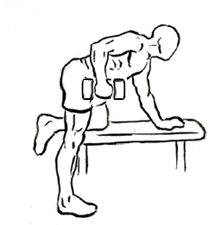
Dumbbell Triceps Kickback
A common but not very effective triceps exercise is the dumbbell triceps kickback. It is far more common for females to do this exercise, using a low weight for high reps to “tone” the muscle.
As its name suggests, the triceps are made up of three key muscles — the lateral head, medial head, and long head.
There are far better options for training the triceps.
The big problem with using dumbbells for kickbacks is that they don't place consistent tension on the triceps throughout the range of motion.
Our bodies are bent over horizontally and we bring the weight from in front of us to behind us and up, meaning that with this path of movement, gravity is only working against us at the very top of the movement. For the rest of the time, there’s no tension in the muscle.
Alternative exercise: The cable triceps kickback is a far better alternative to using dumbbells. With the cable variation, the resistance force pulls your arm forward rather than up and down, meaning there is tension on the triceps throughout the range of motion.
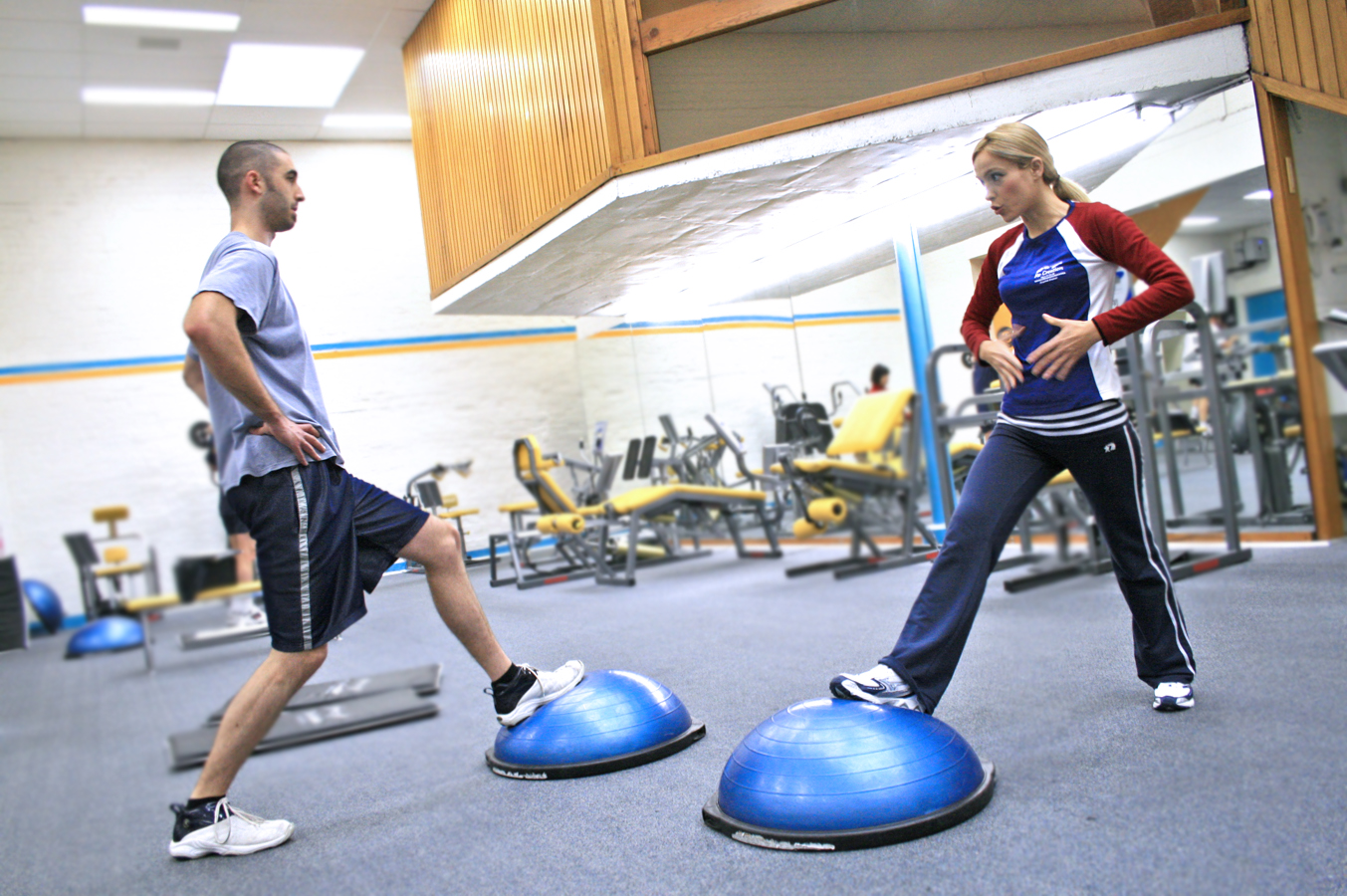
Squatting on a Bosu Ball
“Functional” training is all the rage in some circles. Hence, the Bosu ball is used to balance on whilst exercising.
Just in case you’re ever on a skateboard, wakeboard or pogo stick, you need to be stable, right?
Probably not.
They have some utility for rehab, but from a performance standpoint, if building muscle and/or strength is your goal, you shouldn’t be standing on an unstable device.
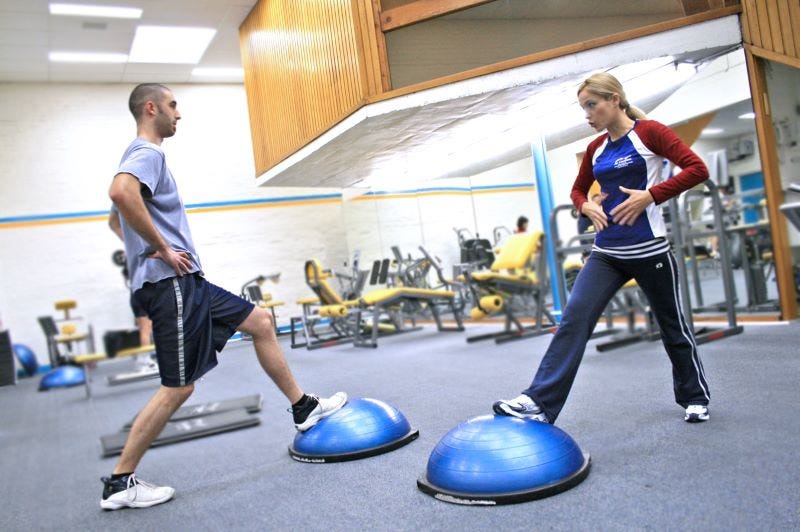
The lack of stability impairs a person’s force generation of power and velocity and provides an injury risk.
“From a performance standpoint, unstable devices should not be utilised when hypertrophy, absolute strength, or power is the primary training goal, because force generation, power output, and movement velocity are impaired and may be insufficient to stimulate the desired adaptions, especially in trained athletes.” — Behm et al., 2010
Alternative exercise: grounded Squats mean we’re stable, and therefore have more control over the movement and a better mind-muscle connection.
Front squats with a barbell will change a person’s centre of gravity slightly from a standard back squat, utilising more stabilising muscles and engaging the core. The movement can also be loaded with a lot of weight, creating more of a stimulus for adaption/muscle growth.
Smith Machine Squats
The Smith Machine is a piece of equipment that will be found in most gyms, invented in the 1950s. It is a counterbalanced fixed bar within steel rails that only allows for a near-vertical movement path.
The big problem with this machine forces people to use its fixed bar path which isn’t biomechanically natural.
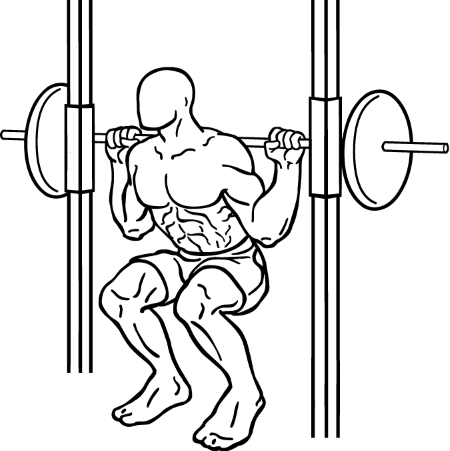
How people move up and down is determined by individual factors such as height, mobility and flexibility.
Over time, heavy loads can lead to joint overload and eventual injuries, especially for our knees.
Another reason why the Smith machine should be avoided is that it doesn’t activate our stabilizing muscles as well as free weights. A 2009 study in the Journal of Strength and Conditioning Research found that a Smith Machine activates our stabilising muscles on average 43% lower than free-weight squats.
Moreover, 2020 research indicates that hamstring activation in a Smith machine squat is far less than a free-weight squat as they’re never fully contracted.
Weak hamstrings can lead to knee issues as they help stabilise the knee joint during the squatting movement. As the smith machine squat requires has to lean back into the bar, the knees take extra stress.
Finally, there is little transfer between using the Smith Machine and athletic training for sport. Athletes should use free weights for movement pattern practice.
“The free weight squat may be superior to the Smith machine squat for training the major muscle groups of the legs and possibly would result in greater strength development and hypertrophy of these muscle groups with long-term training.” — Schwanbeck et al., 2009
Alternative exercise: Thebarbell squatis the best exercise we can use to train our legs. It hits a large number of large muscle groups, it’s a natural movement, and we can load it will heavier weights.
The Good-morning can strengthen the lower back to prevent injury when properly applied. However, the problem is, that it often isn’t and that can result in severe lower back injuries.
The Good-morning gets its name from resembling bowing at the waist to say, “good morning.” I have also heard that it’s because the movement is similar to the sun rising in the morning. Either way, the movement begins with the barbell on the upper back like a back squat, then bending at the hips to bring your torso down nearly to parallel with the ground.
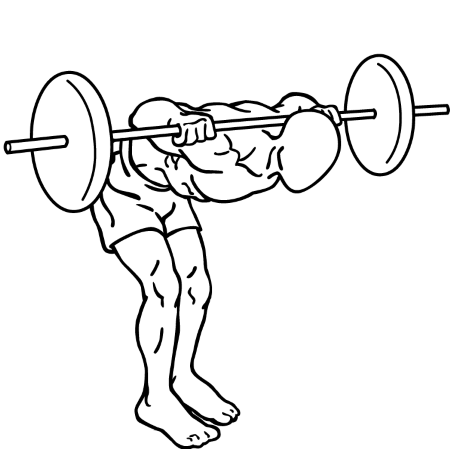
This position at the bottom of the movement when your torso is near parallel with the ground is when we risk injury, as the bar places significant pressure on your lumbar spine (erector spinae) in thelower back — especially if we load the bar with a lot of weight.
“Good Mornings are a good exercise for specifically conditioning lumbar-thoracic flexion and extension of the back, but for all level of performance, good lifting technique is required when approaching near maximal effort to avoid acute injury or long-term damage.” — Schellenberg et al., 2013
Newbies are especially at risk of lower-back injuries, as the exercise requires conditioned lower back strength and proper technique to stabilize the back.
Moreover, many people don’t have the necessary thoracic extension to do the Good-morning movement properly.
Alternative exercise:Romanian deadlifts will also provide a lot of activation of the glutes and hamstrings. Although not perfectly safe, it provides far less injury risk on the lower back than Good-mornings.
Crunches
The classic abs exercise: the crunch. We lay on the ground, knees bent, and lift our upper bodies off the ground to contract our “abs”.
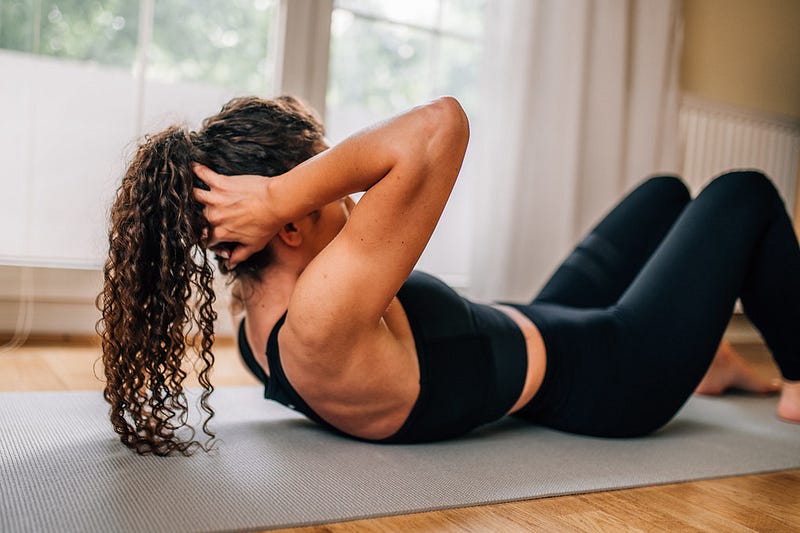
The crunch spawned many pieces of crappy workout equipment sold on late-night infomercials in the 1990s.
The thing is, it’s probably a complete waste of your time to do a single crunch. There are a couple of reasons:
First, you’ll probably never see your abs, because you have a layer of fat over them. No offence! With such high obesity rates and a very low body fat level required to properly see your abs, proportionally, very few people have “abs”. For visible abs, body fat must be around 8–12% for men and 14–18% for women.
You’re better off dedicating that time to cardio to burn that body fat or exercises that work out other muscle groups that are more visible.
Second, they’re a low-quality movement in terms of activation of core muscles.
Apart from the rectus abdominis (lower abs), many of the other core muscles are neglected. Your goal is to strengthen and stabilize your core, for which there are better alternatives.
Third, it’s easy to do crunches wrong and risk injury.
People can often think quantity is better than quality, especially when workout plans have people doing hundreds of sit-ups.
However, crunches can exert strain and pressure on your lower spine. Many of us already have spinal issues/discomfort from bending over so much at the computer or smart device. People with back problems/injuries should avoid crunches completely,
Alternative exercise: Hanging leg raisesare fantastic at targeting both the upper and lower rectus abdominis (abs), while also providing better activation of the oblique muscles than many other abs exercises. Because you’re hanging from a bar, they also have the added benefit of providing your forearms with a great workout, increasing grip strength.
Decline Bench Press
The bench press is probably the most popular exercise for men in the gym. “How much do you bench?” is often the first question when testing your manhood with gym bros,
A common variation is the decline bench press, where the bench is lowered below parallel around 15–30 degrees, for a bench press.
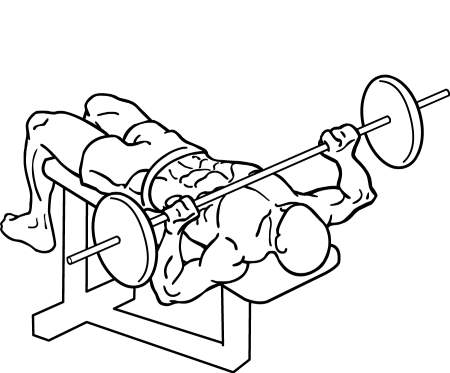
The common idea is that it targets the lower chest better than the traditional flat bench. However, this is a myth, as various studies indicate similar activation for the Pectoralis Minor (lower chest) between a flat and decline bench, but less activation of the upper chest with a decline press.
The shape of our chest is largely genetic, so we’re better off doing exercises that focus on the Pectoralis Major (upper chest) and minor for more muscle activation overall.
“Generally, the 6-RM loads were greater with a wide grip and a flat bench position, compared with the other variations of grip widths and bench positions. “— Saeterbakken et al., 2017
Alternative exercise: theflat bench press allows us to lift the most amount of weight for a press, and therefore gives the most activation of the chest muscles. More activation means more chest growth overall, including the lower chest.
Behind the Neck Overhead Press
The overhead press is one of the best exercises we can do to build muscle and increase strength in our upper body. Essentially, we lift a bar from shoulder height to full lockout above our head.

However, the behind-the-neck variation places unnecessary strain on our neck, shoulders, and rotator cuff.
There is an extra risk going behind the neck with an overhead press comes because we have to externally rotate our arms outward, putting the rotator cuff in a compromised and weak position.
Good posture and trunk stability are key to this exercise, but many of us have tight and protracted shoulders with poor flexibility and mobility, due to our jobs on computers or being slouched over our phones daily.
Avoiding the ‘‘high-five’’ position of the behind the neck press will help reduce the chance of shoulder injuries when overhead pressing.
“Joint-related disorders included anterior shoulder instability that was often postulated to be the result of the high-five position that is assumed during exercises such as behind the neck military press and latissimus pull-downs. Biomechanically, the high-five position may lead to overstretching of the anterior shoulder tissue leading to excessive anterior translation and thus instability.” — Kolber et al., 2010
For people with normal trunk stability and the ability for a full range of motion, the behind the next press should be a safe movement. However, this doesn’t mean it has any advantages over other shoulder exercises.
When compared to the traditional overhead press, we’re still targeting the same muscles behind the neck, but we can’t lift as much weight with this variation, meaning there’s less overloading potential for growth.
Therefore, it’s safer to be avoided.
Alternative exercise: the traditional Overhead press allows us to load more weight than the behind-the-neck variation, meaning we get better strength improvements and muscle gains over time.
Behind The Neck Lat Pull-Down
Another behind-the-neck exercise that places the rotator cuff under stress is the behind-the-neck pull-down.
A variation on the lat pull-down, the exercise got its name from primarily targeting the latissimus dorsi muscle. Seated at the machine, we hold the bar hanging down and pull it down towards our body, then slowly release it to a full stretch.
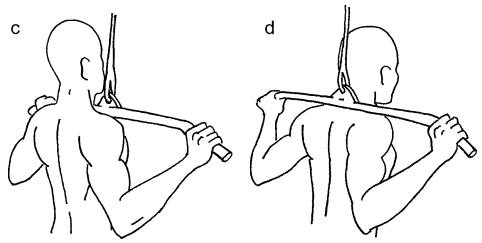
Due to its “high-five” hand position, the exercise requires good shoulder mobility and should be avoided by anybody with shoulder problems.
“The combination of shoulder external rotation, abduction, horizontal abduction, and excessive cervical spine flexion during the behind the neck latissimus pull-down was blamed for 1 reported case of temporary arm paralysis from brachial plexus injury.” — Durall et al., 2001
Moreover, as well as having an increased chance of injury, the behind-the-neck variation is less effective than the traditional lat pull-down. A 2002 study in the Journal of Strength and Conditioning Research found lower lats activation when compared to pulling to the front of the chest.
Therefore, you should probably avoid the behind-the-neck lat pull-down.
Alternative exercise: theLat pull-down “provides some mechanical advantage, allowing greater loads to be moved during these exercises than when the bar is pulled posteriorly (to the back of the neck)”.
With less chance of injury and the ability to lift heavier loads to provide more activation to the target muscle, it’s a no-brainer to pull the bar to the front of the chest for a pull-down.
Conclusion
In this article, we have explored ten exercises that you should probably avoid in the gym. These exercises either provide an injury risk, provide poor activation of the target muscle, or are just unnecessary.
The ten exercises are: front raises, upright rows, dumbbell triceps kickbacks, squatting on Bosu/stability ball, Smith machine squats, good mornings, crunches, decline bench press, behind the neck overhead press, and the behind the head lat pull-down.
If your goal is to build muscle, increase your strength, or “tone”, I have provided alternative exercises that you’re far better off doing.
Good luck!
Thank you for reading.
If you enjoyed the content, you might be interested in this article about the best isolation exercises that you should be doing to target each muscle group.