
Avoid These 7 Common Gym Mistakes When Trying to Build Muscle
Do you want to build muscle or what? Stop doing these things!
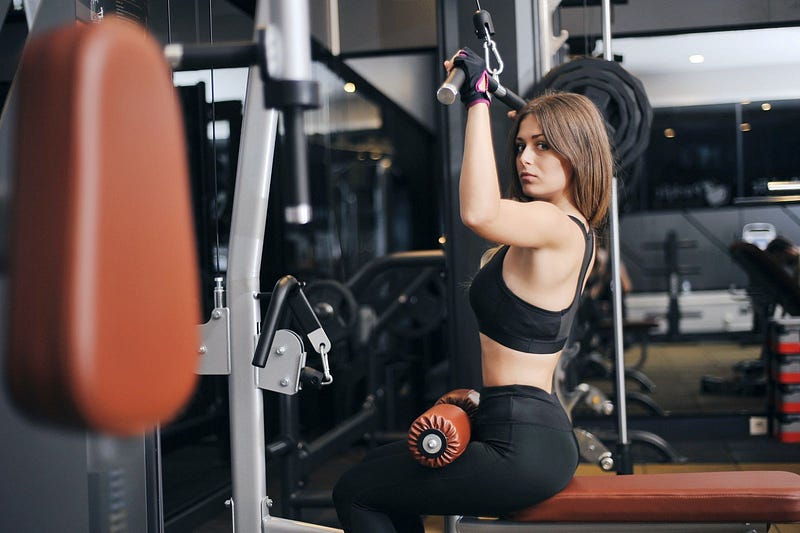
It can be a real struggle to build muscle, especially if you make common mistakes that many people make in the gym.
Have you been working out for a while but haven't built as much muscle as you'd like? Don't blame your genetics — everyone can build some muscle.
Part of the problem is that there is so much bad advice. Or, some people never seek advice.
But if you make these common mistakes, it makes it a lot harder.
Here are seven mistakes that many people make in the gym
Using fatigue or soreness to indicate workout quality
Feeling tired or sore can lead you to believe you have had an effective workout.
Think of this example.
You're a 100 sprinter. You run for 2000 metres, as fast as you possibly can over that distance. After, you feel exhausted and sore all over.
But was it practical to make you a better 100-metre sprinter? No.
Again, fatigue is a by-product of a workout rather than a direct stimulator for muscle growth.
Focusing on fatigue can mean you don't give yourself adequate rest between sets to be near your best and progressively overload.
The same goes for soreness, which often comes the day after a workout.
An example of soreness is after playing a sport for the first time after an extended break. It is often not a problem when you're young, but into your 30s and later, ouch…
And this soreness doesn't mean you're going to build muscle, and the same goes with a workout.
To grow muscle, you must stimulate hypertrophy through mechanical tension on a muscle group and train it close to failure in the 6–20 reps range, with enough volume (10–20 sets a week).
“Hypertrophy is an increase and growth of muscle cells. Hypertrophy refers to an increase in muscular size achieved through exercise. When you work out, if you want to tone or improve muscle definition, lifting weights is the most common way to increase hypertrophy.” — Healthline
Chasing the pump
Yes, the pump feels great — it's motivating, and you feel seven feet tall and bulletproof.
Here's what the world's most famous bodybuilder, Arnie, said about the pump:
“The greatest feeling you can get in a gym or the most satisfying feeling you can get in the gym is the pump….blood is rushing in to your muscles and that’s what we call the pump. …it feels fantastic. It’s as satisfying to me as cumming is, you know, as in having sex with a woman and cumming” — Arnold Schwarzenegger
But, a pump is superficial — it's not a driver of muscle hypertrophy (growth).
For example, you might do a set with really light weights for 50 reps, and it feels like the muscle is going to explode — it's tight and full. But this isn't going to stimulate muscle growth.
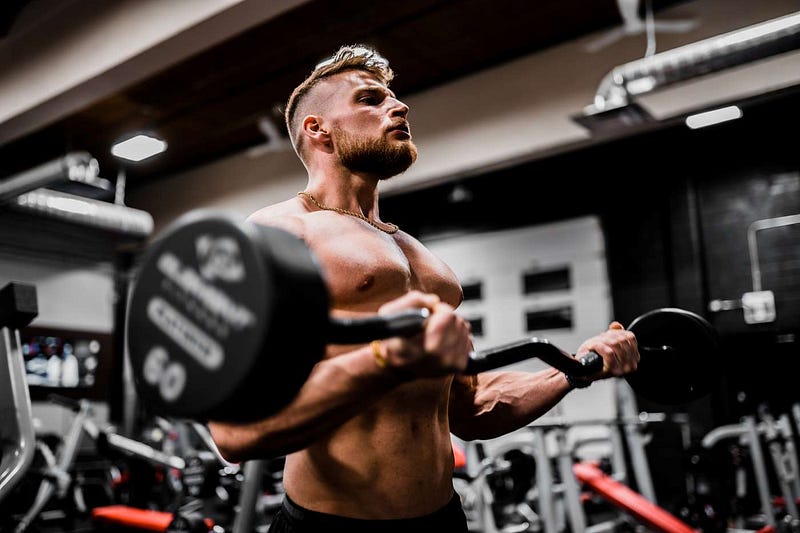
A pump is merely a by-product of a workout. It's not the end goal, so don't use it to gauge workout quality.
Not putting in enough effort in the gym
Turning up is not enough. Yes, it's better than those who don't turn up. But that's not enough to maximise your results.
Many people don't train hard enough. They plod around at a 5–7 effort level, talking to their mates and on social media. They end up looking the same, average or slightly better than average.
Every time, the effort needs to be at least an eight on nine out of ten. We must train close to mechanical muscle failure, which means training with only one or two sets left in the tank. Many people are finishing sets 5 or 6 reps short of failure.
However, we must be mindful to not train to fail every set. We need one or two reps left, not fatigued too quickly, and still exert maximum effort throughout the workout.
Muscle growth is the body adapting to the demands of the environment; stressing the muscles in our body to the point where adaption is required forces the muscle to grow bigger and stronger.
Don't be afraid to work out hard! It's like some people are scared to break into a sweat. Fearful of what people might think of them maybe. But, who cares? Nobody is paying attention to you anyway.
Not tracking your workouts and strength progress
How can you progress if you don't know where you are and how to improve?
We need to structure workouts to enhance their effectiveness. That's another conversation, but in short, a workout structure is specific exercises, rep ranges and the number of sets.
We design a workout to reach a goal. If that goal is muscle growth, we need to overload the muscle progressively, meaning lifting more weight or the same weight for more reps and getting stronger at an exercise.
“Progressive overload is when you gradually increase the weight, frequency, or number of repetitions in your strength training routine.” — Healthline
We need to track our strength objectively to improve on it and continuously overload our muscles enough to grow.
If you're serious about improving each week, write down each exercise and set, the weight, and ultimately how many reps you finished for each set. If you can continuously improve on last week, or more realistically, month to month, you'll build muscle.

It also helps to get better at an exercise to become more effective at damaging muscle fibres.
Mechanical tension on the muscle will vary with our technique — so, there's no point in getting "stronger" if we compromise the proper form required to lift more weight.
“Mechanical tension is created by using a heavy load and performing exercises through a full range of motion for a period of time. The time the muscle spends under tension provided by the external load (barbell, dumbbell etc) creates Mechanical Tension in the muscle.” — ION
Useless exercise variations
Similarly to not tracking your workout, too much variation means it becomes a lot harder to make progress with your strength.
People who sell fitness often use crazy exercises to draw your attention. Doing a standard bench press or squat is pretty dull to the Instagram generation. However, some crazy one-legged Swiss ball variations you have never seen before will.
Fitness influencers will often sell us the idea that they regularly do these crazy exercises to look the way they do. But, the reality is, that they progressively overload on the basic lifts, too.
Similarly, shocking your muscles isn't a thing. Our muscles don't recognise they're we're doing a slightly different exercise. By doing random exercises, we don't know the most effective weight and rep numbers to overload the muscle effectively. The only way you know how to do this is by doing the same exercises as last week.

The odd exercise variation is okay, but it becomes impossible to make tangible progress on your crucial lift if you vary your routine every week.
Not focusing on compound lifts
This mistake again ties in with many of the previous errors. If you don't get stronger at the compound lifts, you won't progressively overload, and you won't build muscle.
Do you see a theme developing here?…
If you're sucked in by all these crazy exercises and spend your time trying to master these, then you neglect the exercises that will make a difference in your physique.
A compound lift is an exercise that works for more than one muscle group at once. Yes, isolation exercises have their place. But focusing precious time and energy on these expecting them to make a significant difference to your overall physique, is not ideal.
The best exercises to incorporate into your routine to make a difference in your physique are:
- Squat
- Barbell Bench Press
- Deadlift
- Barbell Overhead Press
Ego Lifting
If you have spent any amount of time in the gym, you would have seen the people who jerk around a weight they don't seem able to handle correctly. It's about the numbers for them.
Your exercise form should only change very slightly when pushing near your limit.
However, many people sacrifice their form in the gym to lift as much weight as possible. Often, the weight is moved at a fraction of the usual range of motion for that particular exercise.
Optimal exercise technique is compromised so much that you're working against the key drivers of muscle growth — hypertrophy, progressively overloading and putting time under tension on the muscle.
Moreover, injury is far more likely because they put so much extra load on joints and other connective tissue. Our joints and precious muscle tissue need to be strengthened just like our muscles to adapt to larger loads.
Conclusion
Want to build muscle? In this article, I discussed some of the biggest mistakes people make in the gym when aiming to build muscle.
These mistakes are: using fatigue or soreness to indicate workout quality, chasing the pump, not putting in enough effort in the gym, not tracking your workouts, useless exercise variations, not focusing on compound lifts, and ego lifting.
If you are struggling with building muscle in the gym, hopefully, these tips will help you improve your routine.
Thank you for reading.
If you’d like some tips for building muscle, you might be interested in this article below about how I have gained over 40 pounds of muscle.


