
Don’t get dinged by ding letters:
The Rejection Queen spills the Beans
@Ruby Noir asks: Rejection is a huge part of the writing world. How do you handle rejection? Would you prefer to self-publish than risk it? Give examples from your life of times you’ve felt rejected and how you responded. Do you think you can keep fighting for publication after being told ‘no’ repeatedly or would you give up? Or if you’ve already gone through this — or are going through it — what was/is it like for you and what motivated/motivates you to keep going? Hw does your writing on Medium play into that? Does it help or hurt you in terms of feeling rejected? Explain.
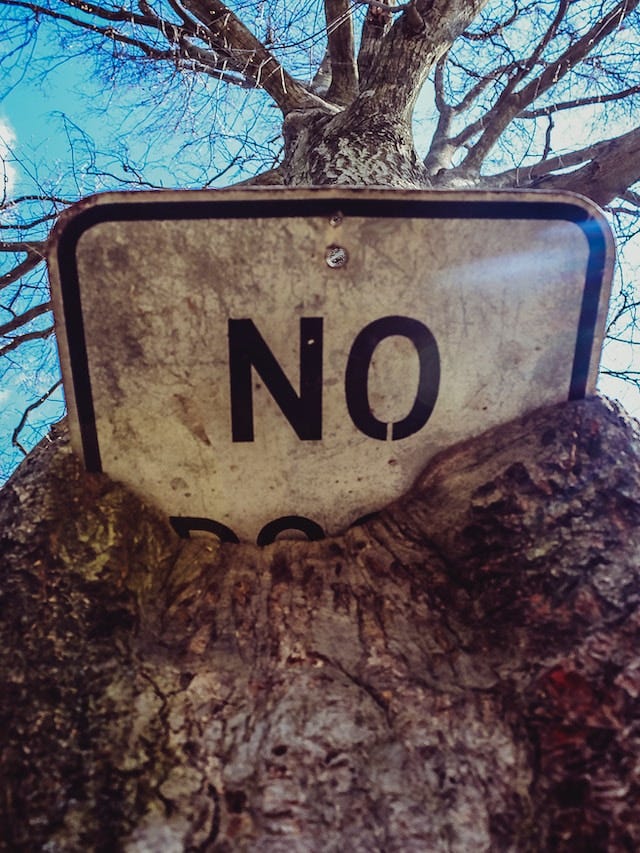
Unless you’re very wealthy or very brilliant, chances are you’ve probably gotten a ding letter or two. I should know because I’m the Rejection Queen!
My first ones came when I applied to Harvard, Princeton, and Stanford as an undergraduate. I was disappointed.
After all, when you’ve been constantly hearing throughout your adolescence that so-and-so’s son or daughter has straight A’s, soloed with local philharmonic orchestra, and got into Harvard/Yale/Princeton blah blah blah, you are bound to feel like an abject failure. (That’s one reason why parents should never compare their children to others!) It wasn’t until decades later that I realized that those lucky applicants were in fact sons and daughters of a Princeton professor while another attended a private school that served as a pipeline to the most prestigious colleges and universities: because that’s the way the Ivy+ operates (and it’s arguably much worse today!). But alas, neither my parents nor I knew any of these little secrets then. We decided I simply didn’t work hard enough.
But this despondency didn’t last for too long; after all, there’s always graduate school, right?
Flash forward slightly more than a decade later. After having completed a Master’s and dipping my toes into the corporate world, I decided I wanted to return to academe. And so, the application process started all over again. This time, however, I felt absolutely assured: I had done better, grade-wise and score-wise than before— now that I was certain I wanted to pursue English literature rather than halfheartedly pretend that I was interested in becoming a doctor as I did years ago to please my parents. I also knew I had done better than a number of those who had gotten into the same universities at graduate level. And not least, I thought of those professors whose published papers read almost like high school essays with their plodding subject-verb-object sentences. How on earth did they get into Yale? This time, the world was going to be my oyster.
Wrong. And this time around, I naturally felt much more bitter. I was even turned down by a university which had accepted me as an undergraduate. Was it my race? (There was already talk of discrimination against Asians in higher ed admissions during the 1990s.) Was it my age — 29: after all, the younger, the “more brilliant” you are, as our youth-oriented society decrees.
After the third rejection or so, I began holding up those thin envelopes to the light. As soon as I detected the words “we wish you luck in your next…” I would cross out my address and write “FUCK YOU — return to sender” with a bold Sharpie. In one instance, I added “4th-rate Ivy” to an Ivy address, and in another, I drew a little pile of poo because there was no space to write “4th-rate Ivy.” (Yes, I’m exchanging a little DUNG for your DING!) Years later, Mom and I would laugh over this.
But perhaps even more curious was my persistence. The more ding letters I got, the more doggedly I sent in those applications, going from near-world- class to world-class institutions. I finally decided to apply to la crème de la crème of all graduate schools for English literature — Oxford University — in May after that most recent rejection.
Not that I expected much — but I was absolutely determined to win. Surely someone would recognize my talent? I should add that I was not applying to Oxford solely for the prestige itself, but at least as much because I wanted to study with the foremost Romanticist who had supervised all the scholars I admired. She had just been appointed the first female head of one of its thirty-some colleges and had a reputation for extreme selectiveness in choosing her doctoral students.
In short, I was asking for a lot: a celebrity prof at the top-ranked program for English — after being turned down by 7 universities. It was as such I begged Mom to return home from Taiwan in August since that’s when I expected to hear about my application. This way, if I got depressed or worse, she would be by my side.
The day I received the news started as a none too propitious one: when I arrived at the library after a one-hour train ride, I realized I had somehow managed to forget the very book I was supposed to renew. What an idiot! I would have to return tomorrow. Then when I was about to board the train, I discovered that I had lost my transfer ticket. What a doofus! I was fortunate that the conductor let me on as he patted me on the shoulder, adding, “Everyone has bad days.” And naturally, when I got off the train, it drizzled. I had no umbrella and I had to walk three blocks to my building.
So imagine my reaction when I poked in the mailbox to find a pathetically skinny envelope from Oxford.
“Hey, Mom, another rejection!”
My first impulse was to take out a pen and scrawl my customary FUCK YOU, etc. before realizing that since it was trans-Atlantic, it would probably just be dumped.
Oh well, I sighed to myself — what’s new? Let’s see how Oxford phrases their rejections. As I opened the envelope, I caught sight of the words, “We are pleased…” Now I had to read the entire letter. I was not mistaken: it was an acceptance! Then in the following week, the famous Romanticist and head of Exeter college herself wrote to me, accepting me as a doctoral student. I couldn’t believe my luck.

And so in time, the Rejection Queen managed to pass her first year with flying colors, received a nomination for an international scholarship, won a graduate student award, before finally receiving her D.Phil (Ph.D.) without a hitch. Ha! I did it!
Nonetheless, every once in a while, bitter thoughts would cross my mind. You see, at Oxford, I happened to meet many other students from those very universities which rejected me. They had not only been accepted at several Ivies but were offered sizable stipends. Yet, nearly all of these Ivy+ graduates got “sent down” from Oxford or unofficially kicked out while others dropped out. Then I thought about those other graduates from the same universities who only got accepted at Oxford after multiple tries. Why did I have such poor luck?
But whenever those resentments flitter by— as they sometimes do whenever I’m in a bad mood— I ask myself, who cares? Their loss was my gain. I learned solid research and critical thinking skills. Perhaps that’s how I wound up getting my first proposal for a history/poli textbook accepted by a major academic trade press–even though I would be working in a different field from my Ph.D.
And perhaps that’s how I got the second book proposal accepted as well by a major university press, with the commissioning editor claiming that it was the best proposal he had ever read there. The only publisher which did reject a proposal only wrote to say that they never had much luck with literary studies while suggesting I try more prestigious publisher. (Ironically, I chose them because I was afraid to submit to a more prestigious one!)
So here’s some advice from me, the Rejection Queen: stop being discouraged by dings. Dings are like dung, dirty, stinky little things that you shouldn’t allow to trip you as you walk. Just wipe them off and keep striding confidently. If you have faith in the quality of your work and you’ve gotten solid feedback from the experts and gurus in your area (and yes, feedback is necessary because that’s how you learn!), just keep trying. Dings should never be regarded as Final Judgment on your abilities.
Lastly, when I say keep trying, I mean you should keep your options open — especially if you’re writing fiction. Let’s not forget some of the greatest writers in history have self-published at some point in their lives: Beatrix Potter, Mark Twain, Margaret Atwood, E.L. James, and Stephen King. There’s no shame in this. The only shame is giving up.
© Frances A. Chiu, September 11, 2023. All Rights Reserved.