
Don’t be a Boring Writer
Zorba The Greek: Allow a little madness — cut the rope and be free

Let’s start with a quotation by Nikos Kazantzakis
A man needs a little madness, or else… he never dares cut the rope and be free.
I have a workaholic colleague at the office who is extremely reserved, and boring. In the past three years, I never saw him going on a vacation. He never travels, never goes to the theatre, never laughs out loud. He has a routine life — home-office-home. His world is limited to this circle. But don’t get me wrong. I’m not telling this is a bad thing.
A few days ago I told him, Hey, Ravin. Have you watched the movie ‘Zorba The Greek’, the link I sent you?
Ravin shook his head, Not really. I don’t like old black & white movies.
It surprised me. I said, But it offers a lot. You can’t disqualify a movie by just telling it’s old and black & white.
Anyway, I hope you are not like my colleague Ravin. Because I’m going to tell you about an extraordinary movie ‘Zorba The Greek’ and how this movie may widen your perspective of life.
And if you are a writer, you’ll be a less boring person in the future.
Still with me? Let’s start now.
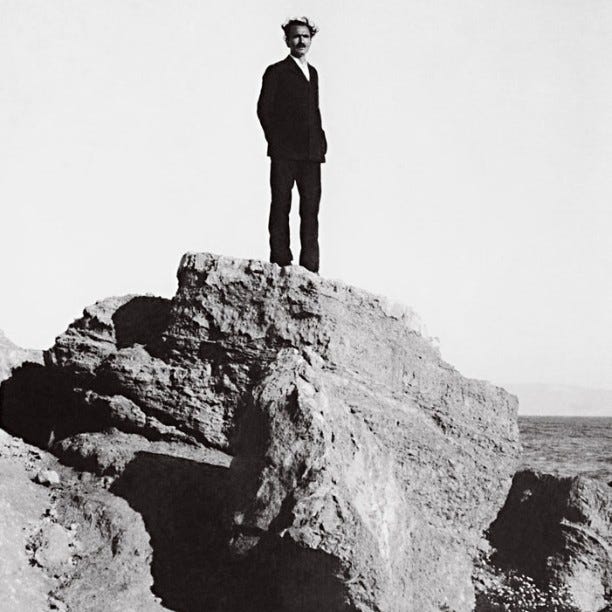
Who is Nikos Kazantzakis?
Before starting all this Zorba thing, we must know this man who created Zorba.
Nikos Kazantzakis was a prolific Greek writer nominated for the Nobel Prize in Literature in nine different years. His works include essays, novels, poems, tragedies, travel books, and the modern Greek translation of Divine Comedy, Thus Spoke Zarathustra and the Iliad.
Zorba The Greek is an adaptation of his 1946 novel The Life And Times Of Alexis Zorba. I love Kazantzakis for his extraordinary insights and thought-provoking quotes.
Life is trouble. Only death is not. To be alive is to undo your belt and *look* for trouble.
— Nikos Kazantzakis, Zorba the Greek

Well… Let’s talk about a writer
It’s raining.
A British-Greek writer Basil, with his whole lot of books, is waiting at the port of Piraeus, Athens. He is traveling to Crete to inspect an abandoned mine that his father owns.
But the ship must wait as a massive storm approaching and making it difficult to start the journey. Basil is trying hard to keep his books dry from the rain.
At one point, we find Basil in the waiting room — reading a book sitting on a bench with others. Then, we see our magic man Zorba appears in the scene.
He sees Basil, stares at him, comes closer, takes off his hat, and finally says — You’re traveling? Where to — with your permission?
Aren’t we all? Aren’t we all travelling in this long boring-exciting voyage called life?
Anyway, this is how Zorba meets Basil. Zorba is a free soul whereas Basil is a writer, a kind of reserved intellectual, formal, depressed man with thoughts and books — currently suffering from writer's block.
In this very first encounter, Zorba says to Basil, Take me with you? Will you? With great surprise, Basil asks, Why? Zorba answers promptly, Will no man ever do something without a why — just like that — for the hell of it?

Where lies the problem?
Basil agrees to take Zorba with him. As the rain continues, they went to a cafe to drink tea. There Zorba asks, You mister, what do you do?
Basil answers, I’m a writer. When asked what he writes, Basil Says, poetry, essays.
And we see that it doesn’t make any sense to Zorba. Zorba, the man who plays Santoor, laughs a lot and loves to dance, says to Basil, You think too much. That is your trouble. Clever people and grocers — they weigh everything.
Oh, dear reader! Don’t you think that’s our problem too?
Being writers, we think a lot. We assume we are the thoughtful ones and our writing must go to its rightful place. We believe we are the ones who need to produce a grave, heavy creative piece that will concentrate the voice of all people. We think we need to be heard, praised, and rewarded for what we produce.
Writers who think all the time about everything — make life a living hell. They lose the power to be overwhelmed by little beautiful things. They make simple things complicated. They don’t enjoy the very creative process.
We, like Basil, weigh everything.
During the voyage, when Zorba sees a dolphin in the river, he shouts with excitement but Basil remains calm and cold. Zorba then asks, What kind of a man are you? Don’t you even like dolphins?
Why Basil, the writer, lost excitement in life?
You may say, this is not the reality of every writer. But yes, in most cases, writers tend to lose interest in the excitement of life.
Writers feel comfortable to be in a spectator’s position. They want to observe and analyze and turn things into writing. They believe they will express better if they are not engaged. So, they become critical to everything that happens in life. They fear changes and become reluctant to join the excitement and thrill.
The same thing happened for Basil. His intellectual self becomes a burden to bear. He loses the feel and excitement that life offers as he has not written anything in three months.
But, after going to Crete, Basil’s approach to life starts to change. He gets himself engaged in day to day life. Zorba teaches him how to do that. Zorba with all his wit and fun — dance and music — teaches Basil that there is more in life. Despite all this pain and pressure, a man has more to rejoice — more to experience in life.
No, I’m not going to tell you everything
I request you to watch that movie. Watch how the transformation happens and what it takes to laugh out loud.
Change towards excitement, positivity, and joy — that’s life. Don’t be a typical person, and of course, don’t be a boring writer at all.
Feel the very existence of you and capture the feeling in your writing. Make connections through fun and joy by welcoming people and events to your life.
Free yourself from mundane. Allow a little madness and join the parade of life.
Don’t always play safe. A little madness is what can give you momentum. You will find joy, excitement, and a reason to continue the journey of life. And, for good writers, all these matters the most.
The last scene…
In the last scene of Zorba The Greek, we see the transformation of a writer named Basil as he wants to dance with Zorba that he never did before.
When their mine and timber project turns into a disaster, Zorba and Basil, ignoring all this, sit on the seaside and start eating lamb.
Basil now a changed man. He sees a lot in the last few days and understands that no matter how you think and try, life goes on in its own term. So, it’s important to enjoy every moment of it. No one knows what life will bring tomorrow. So, why worry?
While eating Zorba says, Damn it, boss, I like you too much now to say it. You’ve got everything except one thing — madness. A man needs a little madness, or else, he never cuts the rope and — be free.
Hearing this Basil stands up and a few moments later says, Teach me to dance — will you?
We see the movie ending with a dance — dance for friendship, life, and excitement.
Zorba The Greek
Zorba The Greek earned $23.5 million in Box Office though produced on a budget of only $7,83,000.
This 142 minutes Greek-American Comedy-Drama film first released on 14 December 1964, in Greece.
The movie was directed by Michael Cacoyannis where Anthony Quinn starred as Alexis Zorba and Alan Bates as Basil.

Time for some quotes…
Let’s see some quotes from Zorba The Greek.
- Everything is simple in the world. So, don’t go and complicate things!
- I didn’t come into this world to be a horse or an ox. Only animals live to eat.
- Clever people and grocers — they weigh everything.
- Every man has his folly, but the greatest folly of all … is not to have one.
- How could I, who loved life so intensely, have let myself be entangled for so long in that balderdash of books and paper blackened with ink!
- So few, in reality, are the true necessities of man.
I hope…
You will enjoy Zorba The Greek.
Don’t overthink anything. Don’t weigh too much. Enjoy the excitement and find joy in simple things.
Thank you for spending your time here.