
Don’t Argue With Your Parents, You Will be Accursed!
When a culture positioning kids to feel so defective against their toxic parents.
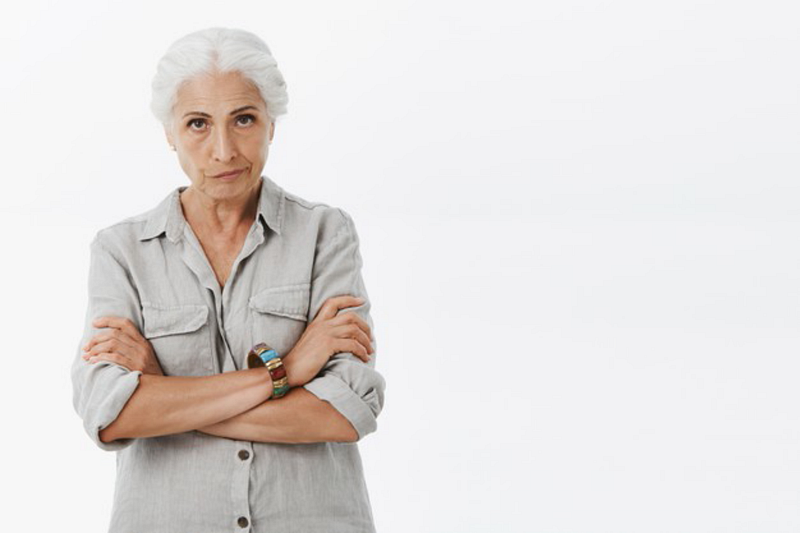
Talking about toxic parents, honestly, it feels a bit uncomfortable for me to open it up in my perspective, considering I was raised in a culture that’s strongly positioning our parents above all else.
It’s still a taboo to mention our parents are worse at something.
However, Medium’s writing atmosphere has encouraged me to convey some of my feelings. I have revealed a little about how my mom treated me unintentionally wrong when I was kid which can be categorized as toxic behaviors. You can read it here:
I know my mom didn’t really mean to hurt me at that time. She might be distressed to raise us (we're 10 kids at home then!) or she was too naive to understand that her treatments really give bad impact to us me, even till now.
However, besides I think it will become a lesson for other parents through my childhood experiences here, to be honest I still feel bad about it. I feel like disgracing my mom.
Yes, culture and religion in my country mostly requires children to be devoted to their parents. Parents always the figures who deserve a respect and obeyed, regardless they treat you well or not. We have to see them as the most righteous person and not worthy of being blamed.
In fact, the toxic parents are existed. However, we usually call this kind of parents more specified to their behavior, like authoritarian fathers, captious moms or the tough parents. These words will usually come out among the teen and their peers when gossiping how their parents treat them at home.
The authoritarian parents seems very popular issue in teenagers’ rants. Parents demanding their children to follow all their wishes and orders, thus have an impact on the consequences of punishment or sanctions if it’s not obeyed.
Some of them would choose to leave home as a protest. In some cases, we might have heard teenagers who need psychiatrist help. Mostly are suffered depression.
Absolutely, relationship pattern between children and parents who have very dominant role, as well as some other wrong parenting styles will impact on the child’s psychology.
There’s a statement that toxic parenting is a way for parents to educate and interact with children which usually done for positive purposes, such as to built strong mentality, discipline, etc. But in contrary, it even can destroy children’s ability to build healthy connections with family members, friends, and other individuals as it isn’t done adequately.
Four Types Of Toxic Parents
And about what kind of treatments that can be categorized as toxic parents, from what I have seen and also by my experiences, I found there are 4 toxic parenting types which certainly give huge impacts to kids’ mental growth.
The first is bluntly done only in purpose to hurt/control/intimidate their children. This kind of parents is like any antagonist parent’s figures we usually see in TV drama series (it was the stereotype of antagonist parents in my home country).
These parents are usually abusive in nature. Some others would have a personality disorder related to a psychology which tend to do/say hurtful things to anyone including their children. We can put the authoritarion parents in this type.
The second is people who become toxic parents because there is something that trigger such poisonous behaviors to occur. It could be due to workload stress, problem in marriage life, or competition between parents.
This parents usually have low mental endurance and failed to manage their emotion when facing any undesirable situations. They’re distressed and can be so easy fired when finding their children making even a little mistake or ruining their day.
A couple who show fights and troubled relationship in front of their children is also a toxic parents!
There is also the type of dismissive parents. They don’t have empathy to their children emotional state. It can be caused the parents themselves have trouble regulating their own emotions.
They may have difficulties to maintenance emotional closeness to their kids or they’re typical person who don’t want to be burdened by any obstacles or wanting to make thing easier only for them.
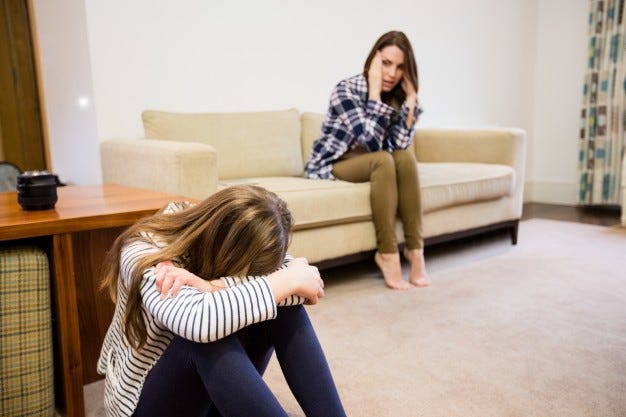
They will usually treat children’s feelings as unimportant thing or trivial. They’re ignorant to their child’s feelings and expecting the child’s negative emotions to disappear quickly.
And oftentimes, instead of helping to solve their kid’s struggles, they would just assure them that time will solve the issues.
The other type is an indirection toxic parent. They mostly do not realize that they’re performing a toxic parenting, e.g. when giving odd nicknames to their children (even for nicknames that have good connotations). Or they don’t aware that they have hurt their kids when comparing them to other children who are smarter at school.
They may argue that they don’t feel like they have done something bad to their children.
They do it without awareness that their actions can be poisoning the psychological state of the children. This is clearly same as dangerous as the three former types, even more because this kind of toxic treatments is barely visible!
Parents like this can appear normal. They meet children’s needs, not physically hurtful, and obviously wanting the best for their children.
Some cultures make it have had even worse impact on children mental growth!
Toxic parents is a popular term to describe the wrong parenting style that have the unhealthy impact to the children’s psychology.
In the liberal world, like in USA, where things are more permissive, kids may have the freedom to open up about their feelings and decide what they want, but what about children in the concervative culture where things more strict, custom and civility are still sustained?
In some culture, including in my country, it’s already attached to the assertion that “parents are always right”, even though they are also humans who have weaknesses, some shortcomings, and also still need to learn.
There are many families whose systematic way of functioning is to not argue with parents, speak up own opinion and emotions. In such families when there is any sign of disagreement both from parents or their children, the parents would seem to have more discretion to show their feelings, and in contrary, they would likely treat their children to shut down!
The shut down term here, has to do with keeping thoughts and feelings to oneself to show respect, also as not to hurt the feelings of other people in the family (in this case is their parents).
If they fight back, it is same like they will be hurting their parents who have been raising them since baby.
There’s a hereditary affirmation that having conflict and argument with parents is ascribed as a form of disobedience and will be labeled as accursed children that will block their life from any prosperousness to the future.
This situation may place the kids (to adults) in the dilemma. In one side they feel emotionally surpressed or feeling humiliated for being treated badly or unfairly by their parents, but in another side they’re expected to always respect their parents as who they are.
They have to accept what the things the toxic parents do without daring to speak up.
They would just let their parents mocking, insulting or giving a nickname they don’t really like and gradually accept it as a truth.
Some parents would use their privileges to control and demanding their children excessively, not appreciate their efforts, blame and overly criticize their children.
When the kids show an objection, they would leverage what has been done for these kids that would make they feel guilty and powerless in front of their parents.
The culture that emphasis and value the parent’s power above their kids as placing these kids on silence and give in about anything that might be deemed hurting their parents is exactly not the right thing to stay in this state.
In this unfair condition, each child must work hard to protect the feelings and well-being of their toxic parents. Absolutely, this comes at a great cost to the kid’s psychological state, even to their adult life.
Toxic parents can be categorized as a part of the bulliest! Grow up with toxic parents will impact the kid's emotional well-being even until they become adult person. And it will give very bitter experiences and effects for kids with special needs as what have happened to me.
They will lose self-confidence, unable or worry to make any decisions, suffering anxiety, become an easy irritably children, craving for attention, feels unloved, often blame themselves, feels confined, and the worse case is they can experience depression triggered by trauma which is called Post Traumatic Stress Disorder (PTSD).
Conditions that later arise are these children will find it difficult to control emotions, suffer disorders thinkings, and prolonged despair.
Last thoughts
Parents must aware with how they will educate and develop their kids’ mentality. Teach/form them to be person with integrity and can be open to any advices and positive critics, but have a strong standpoint to not let other people, including their parents to diminish them, overly dictate them or always placing them in the faulty state.
Of course, the important tradition to always respect our parents, still, it should be encouraged generation to generation, but do not make parents to misinterpret it by doing and controlling their children as they want. In fact, each kid has own passion, has different individual traits and different ways of responding.
Parents who respect to the child’s needs and are empathetic towards their emotion will develop healthy relationship between parents and their children, so that it will raise future generations with great mental health.
Thanks to The Good Men Projects with A Parent Is Born