Dogs in Ancient Egypt. Among the known names: Brave, Northern Wind, and… Useless.
Greyhounds, spitzes, mongrels, dachshunds — many breeds of dogs were already known in ancient Egypt. The dog was not just a helper in hunting during that time. Similar to today, it was also considered a human’s best friend.
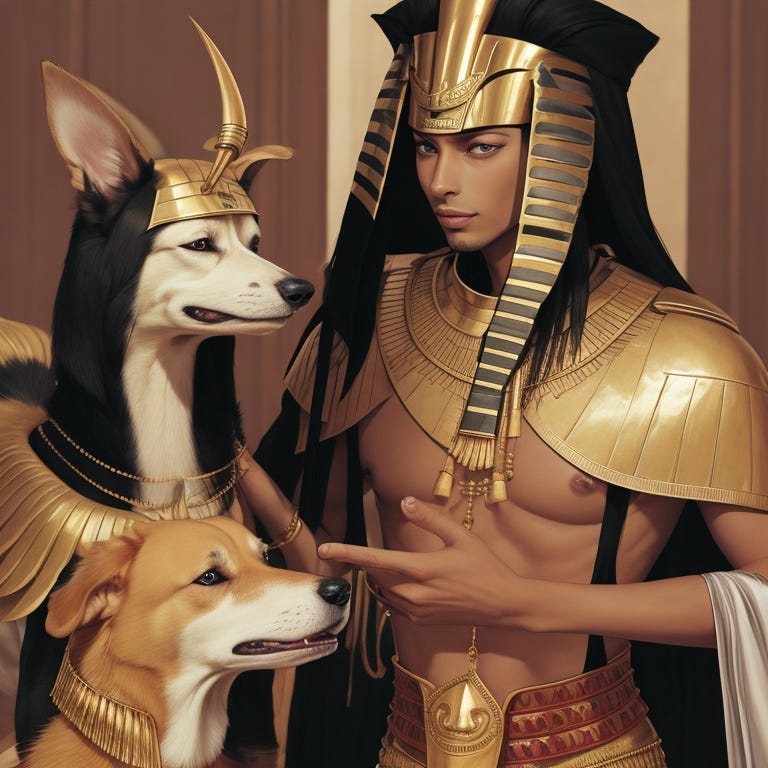
Ancient Egypt was a highly advanced civilization. However, domesticated dogs appeared there relatively late compared to Europe. In the Old Continent, quadrupeds had been accompanying hunters and gatherers for tens of thousands of years. Meanwhile, the oldest dog remains in Egypt date back around 7,000 years. They were found in graves.
How many dog breeds were there in Egypt?
Mainly from art, but also from a few findings in tombs, we know that the Egyptians were familiar with many dog breeds. They had various uses. Representations show dogs on leashes, sitting under their owners’ chairs, hunting. The Egyptians knew dogs resembling greyhounds or salukis, mastiff types, spitzes, short-legged ones, and mongrels. Dogs were most frequently used for hunting assistance. They were also employed as guards and shepherds.
Among the known dog names in ancient Egypt are Brave, Reliable, Northern Wind, or… Useless. The elite preferred hunting dogs like greyhounds and short-legged dogs similar to corgis or Jack Russell terriers.
Pharaohs also took their pets on their final journey. For example, in the tomb of King Amenhotep II in the Valley of the Kings, who lived 3,500 years ago, a well-preserved dog mummy was discovered. A few years ago, scientists from the University of Pennsylvania, while examining a human mummy from 2,300 years ago, were surprised to find a tiny puppy mummy in its legs.
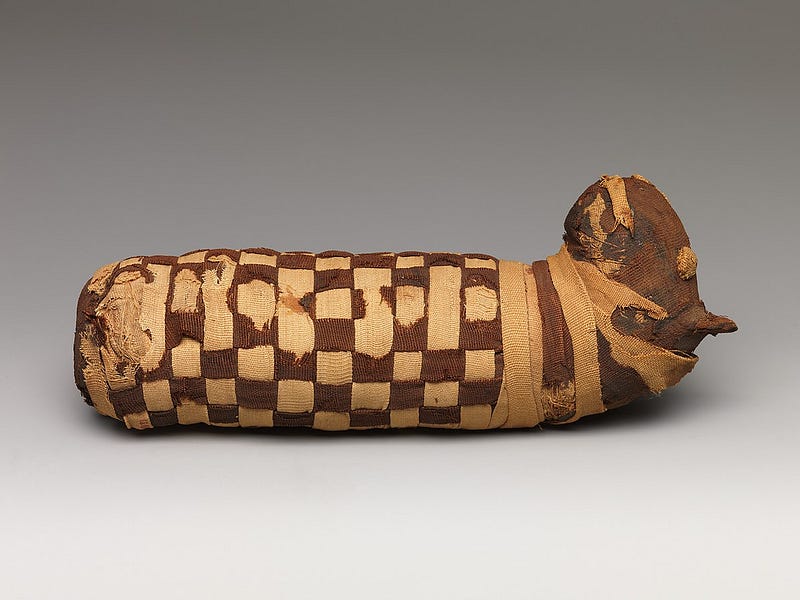

A burial site is also known from the Faiyum Oasis, where a man was buried along with several dogs in a cave. It’s interpreted as a shepherd’s grave. This implies that dogs were sometimes deliberately euthanized to accompany their master in the afterlife.
God Anubis. What does he have to do with a dog?
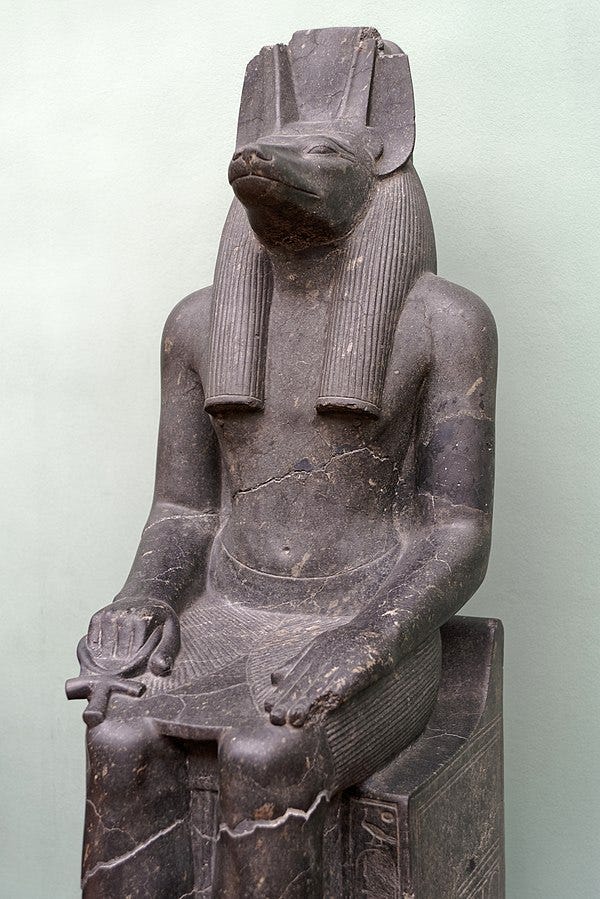
In the scholarly world, there’s a debate whether the god Anubis, responsible for guiding the deceased to the afterlife, was personified as a dog or rather a jackal. His image is difficult to interpret.
It could be the “dark” side of the dog, but researchers aren’t certain. Both dogs and jackals could have been frequent nocturnal visitors to cemeteries. Most scholars lean towards the version that Anubis is a jackal, although he strongly resembles archaic spitzes. These are currently existing breeds like the podenco or the Pharaoh Hound.
The Egyptians offered mummies of dogs as sacrifices to the god Anubis. The largest catacombs in which they were placed are known from the royal necropolis in Saqqara, south of modern-day Cairo. It is estimated that several million quadrupeds, mainly puppies, were interred there.

Healing role of dogs
In antiquity, in North Africa and especially in the Middle East, dogs served a healing role. Dog burials have been discovered in Egypt, situated on the outskirts of hospital cemeteries dating back around 2,000 years.
Burials like that of a child with a small dog lying on its stomach are also known from Tunisia. Researchers interpret this as possibly being related to the healing aspect — dogs taking the illness upon themselves. In the Middle East, at the temples of the goddess Astarte, dogs were kept in temples to lick wounds and disease-related changes. Presently, dogs are subject to cultural taboos by Muslims in the Middle East and are considered unclean.
Diseases of dogs in ancient Egypt
In ancient times, dogs suffered from similar diseases as they do today. Younger ones mostly suffered from limb or rib fractures, while older ones experienced gum diseases, tooth loss, oral inflammations, and spinal degeneration.
A few years ago, scientists announced the discovery of the oldest traces of bone cancer in a dog in Egypt. It was an osteosarcoma, which remains one of the most malignant and deadly cancers in dogs. The finding was made in a cemetery of domestic pets dating back 2,000 years in the port of Berenike by the Red Sea. It’s evident that the owner cherished the dog. They wrapped its body in a mat made of palm leaves and covered it with halves of a Cypriot amphora. This might have been a Pharaoh Hound or podenco-type dog.
Egyptians or Romans. Who were bigger dog enthusiasts?
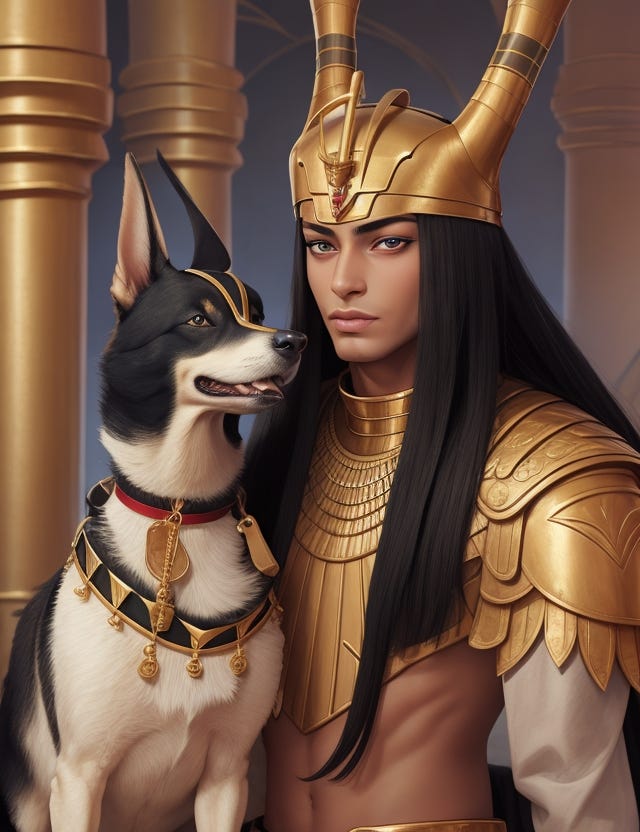
In the general perception, the significance of Egyptians in terms of their fondness for dogs is overestimated. The absolute dog enthusiasts were the Romans. Egyptians clearly preferred cats. Meanwhile, it was the Romans who wrote treatises on treating dogs, composed poems praising their character traits and practical values. From Pompeii, we know that there probably wasn’t a house without a dog.
Archaeologists are aware of dozens of Roman tombstones adorned with depictions of beloved dogs and epitaphs that still evoke emotion today:
“Passerby, if by chance you notice this monument while walking on the road, please do not laugh that this is a dog’s grave. Tears were shed over this, and his master personally built the tomb and carved these words on the gravestone.”
Attention all readers!
As content creators on Medium.com, we face minimal compensation for our hard work. If you find value in my articles, please consider supporting me on my “Buy Me a Coffee” page. Your small contributions can make a big difference in fueling my passion for creating quality content. Thank you for your support!