avatarChristine Vann, MSc.

Free AI web copilot to create summaries, insights and extended knowledge, download it at here

4626

Abstract

helps relieve tensions, and it helps with mental health. If they’re playing with their friends, they’re building social skills.”</p></blockquote><h2 id="1251">The ‘world’s worst mum’ on raising free-range kids</h2><p id="0d0b">This sentiment is something Lenore Skenazy, a New York-based writer, activist, and mum, gets on board with. When she wrote a blog post about allowing her then nine-year-old to find his way home on the subway without a phone or GPS tracking, she was vilified and labeled the <a href="https://www.washingtonpost.com/posteverything/wp/2015/01/16/i-let-my-9-year-old-ride-the-subway-alone-i-got-labeled-the-worlds-worst-mom/">‘world’s worst mum</a>.’</p><p id="fcdc">The resulting outrage prompted her to investigate why western parents needed to monitor their children everywhere they went. She wrote a book, Free-Range kids (now updated), and launched <a href="https://letgrow.org/our-mission/">Let Grow</a>, a movement for childhood independence. Lenore <a href="http://theguardian.com/lifeandstyle/2021/aug/16/let-them-be-kids-is-free-range-parenting-the-key-to-healthier-happier-children?CMP=fb_gu&amp;utm_medium=Social&amp;utm_source=Facebook&amp;fbclid=IwAR04bYcMTHOWAnCBVNcTzF8Xlj9iqtKfkWhoRE516lgi49Axk2XLX8s1tFc#Echobox=1629110615">says</a>:</p><blockquote id="b9f4"><p>‘I was concerned that it’s becoming weird to let your kids outside without either an adult, a cell phone, or a GPS of some sort. Kids spend four to seven minutes outdoors in unstructured, unsupervised time a day here in America.’</p></blockquote><p id="b873">Yikes, under ten minutes seems too short to be true, but how did we arrive at this point?</p><h2 id="be7c">Did we let our focus on safety at all costs get the better of us?</h2><p id="6bbd">So why do Skenazy and other experts reckon we’re almost afraid to leave our children unsupervised? Most offer a host of reasons. They mention a strong emphasis on safety. Also, parents might have convinced themselves that risks are higher now, but climbing trees and fences are not more dangerous than it used to be. However, traffic has certainly increased.</p><p id="83f4">Then there are media headlines terrifying parents by highlighting horrific child murder cases and ‘helpful’ posts on Facebook warning about potential child traffickers in the obligatory white van.</p><p id="1d5e">And capitalism; businesses are all too willing to capitalize on fears by selling stuff parents never needed before, like <a href="https://www.momjunction.com/articles/best-baby-knee-pads_00622647/">knee pads</a> for babies. Also, ubiquitous technology plays a large part in children staying home; research shows <a href="https://www.news-medical.net/news/20200120/Poll-8625-of-parents-agree-that-teens-spend-too-much-time-gaming.aspx">86 percent of parents</a> feel their child spends too much time gaming.</p><p id="6ab1">Lastly, parents and schools overschedule children, simply leaving not much time to play.</p><h2 id="5160">Has the pandemic changed things?</h2><p id="cd56">While for many kids, the pandemic brought hardship, other children thrived. Let grow <a href="https://www.journalofplay.org/sites/www.journalofplay.org/files/pdf-articles/13-1-Article-3-How-Children-Coped.pdf">surveyed</a> kids between eight and thirteen, around the same time, and found most described themselves as happy rather than sad, with 71% saying their parents allowed them to do more things alone. An <a href="https://www.irishtimes.com/news/education/less-school-and-more-play-has-benefits-for-children-study-finds-1.4281718">Irish study</a> questioning parents of over 500 kids age 1–10 found that 74% of children spend more time playing outside than before schools were closed.</p><p id="e577">However, these were done shortly after the pandemic hit, so it’s too soon to tell whether society will think differently about kids playing outside.</p><h2 id="0030">Benefits for kids playing outside</h2><ul><li>Freedom builds confidence and independence</li><li>Playing keeps them physically active</li><li>Kids learn how to solve problems, make decisions and assess risks</li><li>Playing with friends helps build social skills</li><li>Kids become more creative</li></ul><h2 id="a72d">Tips for parents: how to give your child more independence</h2><p id="d0b2">If you don’t know where to start, here are a few simple things you can do.</p><ul><li>Think about your child’s schedule, and scrap any activities that are not a life skill or a great source of enjoyment.</li><li>If you feel your child’s teacher is over-generous with homework assignments, talk to her to see if they can be reduced.</li><l

Options

i>If your child doesn’t have many friends close by, befriend parents in your street/estate with kids around the same age.</li><li>Download this free <a href="https://letgrow.org/wp-content/uploads/2021/07/LetGrow_Independence_Kit_2021.pdf">Let Grow independence kit</a>.</li><li>If playing outside is not feasible, sign up for nature classes.</li><li>Tone down your news and social media consumption; things aren’t as bad as they would have us believe.</li></ul><h2 id="37db">Conclusion</h2><p id="ef56">In today’s world, parents are more reluctant to send their children out to play. Experts say society’s all-consuming focus on safety puts pressure on parents to hover and monitor our children's every move. Add scary media headlines, warning posts on Facebook, screen time, traffic, capitalism, and it’s no wonder prisoners get more fresh air than our kids do.</p><p id="191a">But by keeping our children safe at all costs means, there is a risk we are bringing up kids that are physically unscathed by injury but are psychologically fragile.</p><p id="d7bf">Playing outside unsupervised provides numerous benefits for kids, think confidence building, keeping them physically active, learning how to problem-solve, and fostering creativity.</p><p id="f266">By following the tips outlined above, you can create space in your child’s life to go out and explore, and hopefully, just like my friend eventually did, you will learn to wave him off with a smile on your face.</p><h2 id="ab54">More by this author:</h2><div id="f80e" class="link-block"> <a href="https://readmedium.com/why-is-michelle-obama-always-authentic-discover-5-parenting-tips-from-her-unflappable-mum-5eb21b9294b2"> <div> <div> <h2>Why Is Michelle Obama Always Authentic? Discover 5 Parenting Tips From Her Unflappable Mum</h2> <div><h3>It’s all about raising adults rather than kids, according to ‘Becoming’.</h3></div> <div><p>medium.com</p></div> </div> <div> <div style="background-image: url(https://miro.readmedium.com/v2/resize:fit:320/1*_sjwqYAREVKi5cokVCbvhA.jpeg)"></div> </div> </div> </a> </div><div id="5704" class="link-block"> <a href="https://readmedium.com/want-to-help-your-girl-to-love-her-body-stop-doing-these-5-things-e0bc2a17a91b"> <div> <div> <h2>Want To Help Your Girl To Love Her Body? Stop Doing These 5 Things</h2> <div><h3>Growing up in our image-conscious society is challenging, so let’s prepare our daughters.</h3></div> <div><p>medium.com</p></div> </div> <div> <div style="background-image: url(https://miro.readmedium.com/v2/resize:fit:320/1*ALz6l6EnimJ126WHT4HJow.jpeg)"></div> </div> </div> </a> </div><div id="0558" class="link-block"> <a href="https://readmedium.com/do-you-want-to-stop-shouting-at-your-kids-try-these-ancient-inuit-methods-ac1fcaaa90d3"> <div> <div> <h2>Do You Want To Stop Shouting at Your Kids? Try These Ancient Inuit Methods</h2> <div><h3>The west doesn’t know best: no more power struggles with the Inuit guide to peaceful parenting.</h3></div> <div><p>medium.com</p></div> </div> <div> <div style="background-image: url(https://miro.readmedium.com/v2/resize:fit:320/1*7vaF9_amDF7pozbf-DLVVQ.jpeg)"></div> </div> </div> </a> </div><div id="16f4"><pre><span class="hljs-attribute">Further reading</span><span class="hljs-punctuation">:</span></pre></div><div id="a8f2"><pre><span class="hljs-attribute">https</span>://www.mdpi.com/<span class="hljs-number">1660</span>-<span class="hljs-number">4601</span>/<span class="hljs-number">18</span>/<span class="hljs-number">8</span>/<span class="hljs-number">4334</span></pre></div><div id="08ab"><pre><span class="hljs-attribute">https</span>://academic.oup.com/heapro/article/<span class="hljs-number">29</span>/<span class="hljs-number">1</span>/<span class="hljs-number">155</span>/<span class="hljs-number">571621</span></pre></div><div id="fc9a"><pre><span class="hljs-attribute">https</span>://www.journalofplay.org/sites/www.journalofplay.org/files/pdf-articles/<span class="hljs-number">13</span>-<span class="hljs-number">1</span>-Article-<span class="hljs-number">3</span>-How-Children-Coped.pdf</pre></div></article></body>

Does Our Obsession With Safety Jeopardize Our Kids’ Childhood?

Today’s parents were allowed to play outside without supervision at nine, but now it’s 11. What happened?
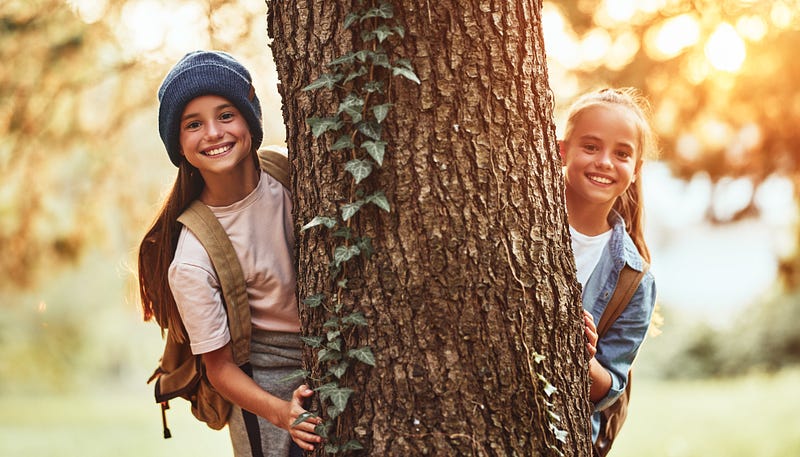
Image by Depositphotos.com

It was a conversation that irked me, but I couldn’t understand why. A few months ago, a friend told me about the first time her ten-year-old went out to play outside independently. Her heart was racing, she said, as she watched him through the window for an hour until he came home.

I agreed with her. The first time your child plays unsupervised is daunting for parents. In our culture, we hover over our children like drones. Safety at all costs comes at the expense of freedom for our children.

But shortly after our talk, I thought, hold on, the boy is ten. At that age, I was an outside veteran. So how did we get here?

UK kids are allowed out two years later than their parents were

Research shows today’s kids are only allowed to play outside, without supervision, at age 11, whereas their parents were out playing at age nine, on average. This study on play comprised 1,900 parents of children aged 5–11. It found that children played on average for 3 hours a day, with half of that outside. An expert, Dr. Tim Gill, said:

“Thanks to the pandemic, we all know what lockdown feels like. This groundbreaking study shows that British children have been subject to a gradual, creeping lockdown over at least a generation”.

Sadly, the UK is not alone in this, with 70% of US mums surveyed in 2012 said they played outdoors daily when growing up, compared to only 31% of their children being allowed to do so.

Irish children spent less time outside than prisoners

In 2016, the outcome of a survey on children’s play made media headlines when it turned out that Irish children played outside for less time than prisoners, who, as per UN Rights, are entitled to 60 minutes of fresh air daily. Dr. Carmel Brennan said,

“To be outdoors in the soil and out in the weather is critical to their well-being, but many young children don’t even get to be outdoors for an hour a day.”

She blamed the unwillingness of parents to send children out for fear of illnesses.
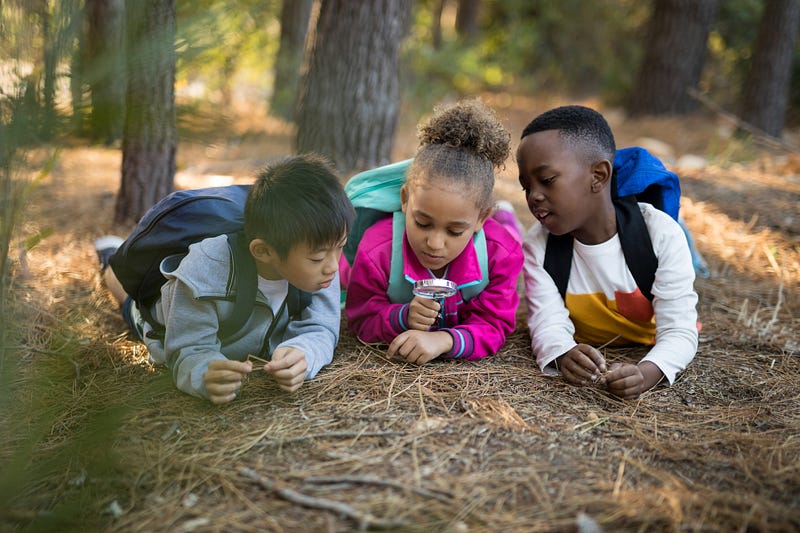
Image by Depositphotos.com

How does the lack of outdoor play affect children’s well-being?

According to Helen Dodd, Professor of child psychology at the University of Reading, playing outside provides mental and physical health benefits for children and teaches them essential life skills. When playing outside, they learn how to solve problems, make decisions and assess risks. Also, not having outdoor adventures may impact their mental health and well-being. She explains:

“Play is good for children in terms of expressing themselves. “It also keeps them physically active, it helps relieve tensions, and it helps with mental health. If they’re playing with their friends, they’re building social skills.”

The ‘world’s worst mum’ on raising free-range kids

This sentiment is something Lenore Skenazy, a New York-based writer, activist, and mum, gets on board with. When she wrote a blog post about allowing her then nine-year-old to find his way home on the subway without a phone or GPS tracking, she was vilified and labeled the ‘world’s worst mum.’

The resulting outrage prompted her to investigate why western parents needed to monitor their children everywhere they went. She wrote a book, Free-Range kids (now updated), and launched Let Grow, a movement for childhood independence. Lenore says:

‘I was concerned that it’s becoming weird to let your kids outside without either an adult, a cell phone, or a GPS of some sort. Kids spend four to seven minutes outdoors in unstructured, unsupervised time a day here in America.’

Yikes, under ten minutes seems too short to be true, but how did we arrive at this point?

Did we let our focus on safety at all costs get the better of us?

So why do Skenazy and other experts reckon we’re almost afraid to leave our children unsupervised? Most offer a host of reasons. They mention a strong emphasis on safety. Also, parents might have convinced themselves that risks are higher now, but climbing trees and fences are not more dangerous than it used to be. However, traffic has certainly increased.

Then there are media headlines terrifying parents by highlighting horrific child murder cases and ‘helpful’ posts on Facebook warning about potential child traffickers in the obligatory white van.

And capitalism; businesses are all too willing to capitalize on fears by selling stuff parents never needed before, like knee pads for babies. Also, ubiquitous technology plays a large part in children staying home; research shows 86 percent of parents feel their child spends too much time gaming.

Lastly, parents and schools overschedule children, simply leaving not much time to play.

Has the pandemic changed things?

While for many kids, the pandemic brought hardship, other children thrived. Let grow surveyed kids between eight and thirteen, around the same time, and found most described themselves as happy rather than sad, with 71% saying their parents allowed them to do more things alone. An Irish study questioning parents of over 500 kids age 1–10 found that 74% of children spend more time playing outside than before schools were closed.

However, these were done shortly after the pandemic hit, so it’s too soon to tell whether society will think differently about kids playing outside.

Benefits for kids playing outside

  • Freedom builds confidence and independence
  • Playing keeps them physically active
  • Kids learn how to solve problems, make decisions and assess risks
  • Playing with friends helps build social skills
  • Kids become more creative

Tips for parents: how to give your child more independence

If you don’t know where to start, here are a few simple things you can do.

  • Think about your child’s schedule, and scrap any activities that are not a life skill or a great source of enjoyment.
  • If you feel your child’s teacher is over-generous with homework assignments, talk to her to see if they can be reduced.
  • If your child doesn’t have many friends close by, befriend parents in your street/estate with kids around the same age.
  • Download this free Let Grow independence kit.
  • If playing outside is not feasible, sign up for nature classes.
  • Tone down your news and social media consumption; things aren’t as bad as they would have us believe.

Conclusion

In today’s world, parents are more reluctant to send their children out to play. Experts say society’s all-consuming focus on safety puts pressure on parents to hover and monitor our children's every move. Add scary media headlines, warning posts on Facebook, screen time, traffic, capitalism, and it’s no wonder prisoners get more fresh air than our kids do.

But by keeping our children safe at all costs means, there is a risk we are bringing up kids that are physically unscathed by injury but are psychologically fragile.

Playing outside unsupervised provides numerous benefits for kids, think confidence building, keeping them physically active, learning how to problem-solve, and fostering creativity.

By following the tips outlined above, you can create space in your child’s life to go out and explore, and hopefully, just like my friend eventually did, you will learn to wave him off with a smile on your face.

More by this author:

Further reading:
https://www.mdpi.com/1660-4601/18/8/4334
https://academic.oup.com/heapro/article/29/1/155/571621
https://www.journalofplay.org/sites/www.journalofplay.org/files/pdf-articles/13-1-Article-3-How-Children-Coped.pdf
Parenting
Motherhood
Life Lessons
Wellbeing
Mental Health
Recommended from ReadMedium