
Does Money Buy Happiness?
Discovering the Complex Relationship Between Money and Happiness.
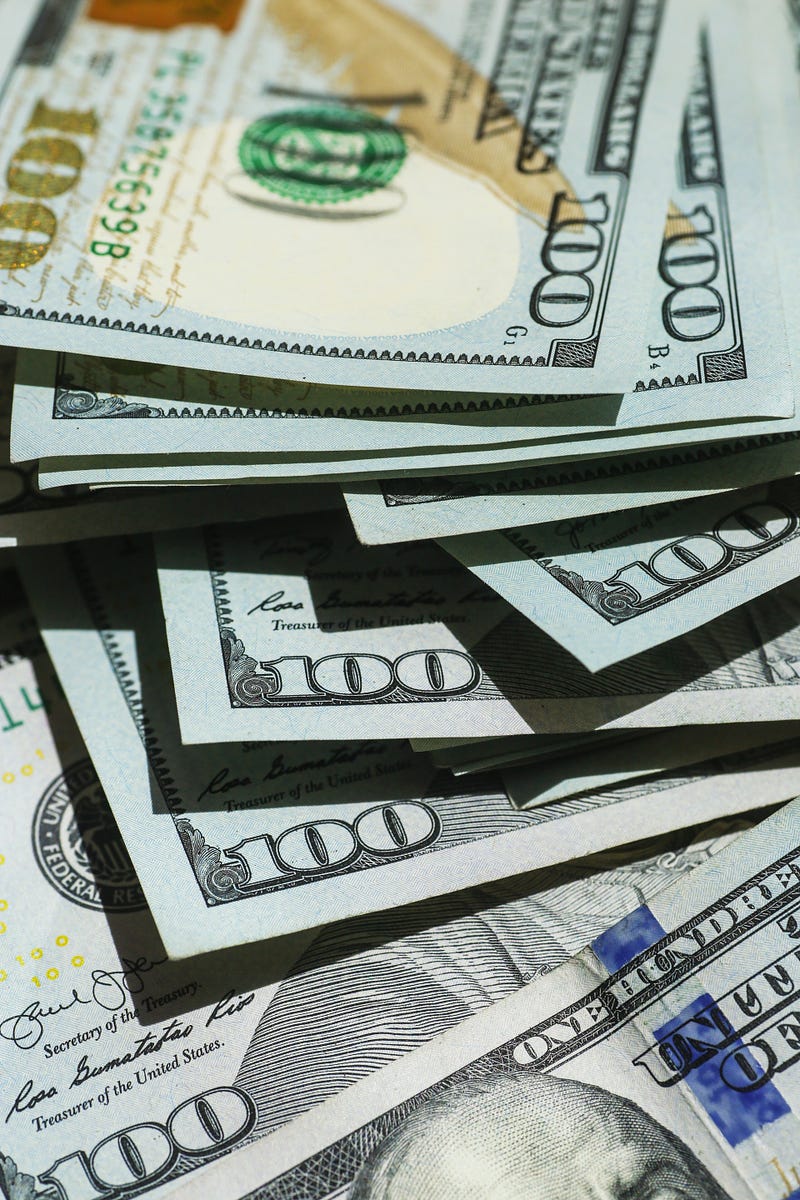
DOES MONEY BUY HAPINESS?
It’s a question philosophers, economists and social scientists have grappled with for decades. For many around the world it does, Research had previously produced conflicting results, leaving its solution unclear.
Foundational research by Daniel Kahneman and Angus Deaton of Princeton University, released in 2010, indicated that daily happiness climbed as annual income increased, but above $75,000 it leveled out and happiness peaked. In contrast, research by University of Pennsylvania’s Matthew Killingsworth that was released in 2021 discovered that happiness increased steadily with wealth well past $75,000, without any signs of a plateau. After joint efforts it was demonstrated that within that overall trend, a subset of dissatisfied people in each income bracket exhibits a rapid rise in happiness up to $100,000 per year, after which it plateaus.
It has been said that We’ll be happier if we spend money on an experience rather than a material possession, such as traveling or dining out rather than purchasing the most recent item we spy on social media. When they spend money on experiences rather than things, for instance, people report feeling more grateful.
On the other hand, we can probably all recall instances where we spent money on an experience that turned out to be unsatisfactory. Perhaps you spent a lot of money on expensive event tickets in an effort to go, only to discover the day of the event that you’d much rather spend a relaxing evening at home. Or perhaps you went out to dinner with a friend at a nice restaurant only to discover that the discussion was being overshadowed by your friend’s desire to post the meal to Instagram.
How can Money improve your lifestyle:
Basic Needs and Financial Security: When money is used to provide necessities like food, shelter, clothing, and healthcare, it is true that it can, in some cases, buy happiness. People might not be happy without these necessities because of the stress and uncertainty brought on by unstable financial situations.
Relative Income: People frequently evaluate their lifestyle and income in relation to those in their social circles or the general population. This can result in the “hedonic treadmill,” when people continuously adjust to their better financial situations, maintaining relatively consistent happiness levels despite more wealth.
Non-material elements: Relationships, personal fulfillment, health, and a feeling of purpose are just a few examples of the many non-material elements that have an impact on happiness. These elements, which are not directly linked to wealth, frequently have a bigger effect on overall satisfaction.
Phycological factors: Individual variations in personality, mindset, and values also significantly influence how money influences happiness, according to psychological factors. While some people prioritize non-material aspects of life, others are more materialistic and find greater satisfaction in wealth.
More income may mean more stress and less fun
On the contrary, Higher wages have been linked in other research to higher stress levels, a higher risk of divorce, and a lower likelihood of enjoying small-scale hobbies.
According to Ed Diener, a researcher who has spent more than 30 years studying wellbeing, a higher income may be associated with more work, less free time, and weaker social ties. In other words, people may make tradeoffs in other areas of wellbeing that outweigh the advantages of having more money. Although having more money can give us greater control over our time, the majority of us don’t use it to purchase more free time or enjoyable activities to do with friends and family.
Materialism makes people unhappy, Humans are not always aware of what makes us joyful! We believe that money will make us happy because our culture places such a high value on it, so we pay little attention to what is actually happening. Think on these details:
The joy that comes from buying things is usually fleeting and eventually fades. For instance, we might be overjoyed to get a larger car, but with time, we come to take it for granted. Additionally, we are still responsible for making monthly automobile payments, which may limit our alternatives for enjoyable activities like trips and dining out. We raise our expectations accordingly. As our income goes up, we feel we need more expensive things, and those higher aspirations use up almost all of our gained income. We raise our expectations accordingly. Our increased expectations consume practically all of the additional income we have as we feel we need more expensive items. To put it another way, we nearly exclusively spend our raises on more costly versions of the goods we already own. Our desires might be insatiable; as we acquire more, our desires grow. This may result in significant debt and all the associated difficulties. More materialism is linked to a number of detrimental outcomes, including decreased self-worth, increased narcissism, decreased empathy, and more tense interpersonal connections.
Final remarks:
In some ways, I can claim that money does buy happiness since when I received my first pay, I was ecstatic and spent it on both experiences and things. For myself, I would rather be unhappy and wealthy than somewhat content but impoverished. I can tell you that it is not enjoyable being stuck in those low kind of days. To put simply, In order to cover your fundamental needs, you don’t have to pay as much attention to making money as you do when you already have it. Your mind will be freed up as a result to truly appreciate life’s experiences. We have greater sense of our lives when we have money.
LET ME KNOW YOUR THOUGHTS.
I am MUSA AYAZ. I write about poetry, tech, business and self-improvement, and interesting trending topics to revolutionize writing in a way you have never seen before.
Runner up on Promptly Written Poetry Competition (2023).
Follow me: Medium.com/@musaayaz
E-mail me: [email protected] for work.
My previous article:https://readmedium.com/how-i-made-100-in-just-2-months-80f725285b7c?sk=df2c08dee1769b45d99ec9c9e1b3fb42
MY E-COMMERCE STORE:https://shoplyte.net