
Does Mental Illness Prevent Us From Experiencing Loving Relationships?
How can we enjoy a partnership when we feel like an emotional burden?
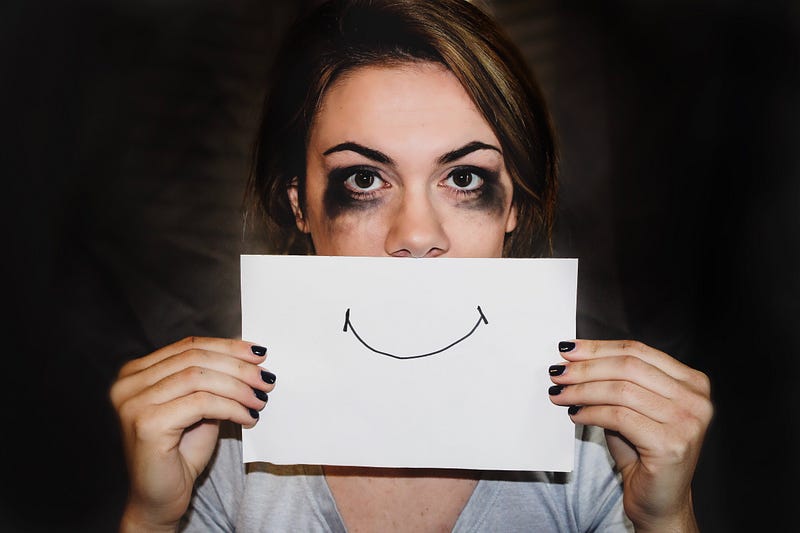
I was 16 the first time I saw a therapist. My parents had finally noticed that the downward spiral I had hit at 12 was not one I was going to come out of without intervention. My anxiety was so high, I could hardly function at school. I wouldn’t eat all day until I got home and then I’d consume 2,000 or more calories in one sitting, which caused me to gain over 50 pounds during my sophomore year. I was afraid of everyone. I had no ambition, no drive. I did nothing but complete my homework, eat, sleep, and scribble away in my notebooks.
My new therapist diagnosed me with depression and anxiety. Little did I know, that would be the first of dozens of therapists and only the beginning of my journey with mental health.
When I started dating my first serious boyfriend at the age of 19, I was in one of the worst periods of depression I’ve ever experienced. My beloved uncle had just died unexpectedly at the age of 49 and I was devastated. I couldn’t pull out of that hole.
I didn’t tell my boyfriend about my earlier diagnosis — I figured I had every right to be depressed and anxious. I was grieving. But I questioned whether or not I could handle being in a relationship. I could see what a burden I was on him, emotionally speaking. I had a hard time getting out of the house and spent hours sitting in the dark, listening to sad Carly Simon songs.
I went on birth control at that time and the disruption to my hormonal system made me fall even deeper into the pit. All I could think was: Am I too broken to sustain a relationship?
I went on antidepressants at several points in my life, including just before I left for Santa Fe at the age of 25. I couldn’t tell any of the people I was dating. I felt so ashamed — like I was the only person who was struggling to make it through a normal day.
Further, it was such a challenge to be on those pills when I was determined to explore my sexuality. I could barely come on that medication. Between that and my low self-esteem, I never made waves when one of the guys I was dating didn’t bother to return the sexual attention I was giving to him.
I was so frustrated that eight months later, I weaned myself off the pills. It felt like I had only two choices: be less depressed than normal and unable to orgasm, or be able to enjoy incredible orgasms (alone or with others) and be somewhat deeply depressed. Eventually, I chose the latter.
[Trigger warning: This section contains a brief mention of suicidal behavior.]
My last partner was the only man I’ve been with who knew every detail about my struggles with mental health. He knew about my history with eating disorders, my BDD, my depression, my anxiety. Not only that, but he saw it all. You can’t spend seven years with someone and hide that sort of thing.
He wasn’t the most sympathetic person. He’d been raised by two rural, extremely conservative parents who didn’t believe in things like depression or anxiety. To his family, these were psychological constructs conceived of by weak people who couldn’t face the real world. And when I say “people,” I mean “women,” because they didn’t believe men had these kinds of problems. Men were strong enough to handle whatever the world threw at them.
He never called me out on this, but he also made it clear it wasn’t a subject we could talk about. He just didn’t believe it was real, not even after he found me in the closet, curled up in a ball, his pistol in my hand. I already knew by then that he didn’t think I was a strong person — it was as simple as that in his mind.
All those years later, I still had the nagging feeling that I would never be able to have a relationship because of my mental health struggles.
For most of my life, I believed this was a gender issue. I knew so many women like me who suffered from anxiety, depression, and a host of other mental health challenges. I, like my ex, didn’t consider mental health to be an issue for men, except for veterans who suffered from PTSD — an “acceptable” mental health challenge, unlike these other issues that seemed to be just a product of some kind of inherent brokenness. The stigmas were so deeply entrenched within me, that I saw nothing but shame around my own issues, and assumed that it was a marker of something wrong with me.
Then one day, when discussing my struggles, one of my friends said, “You know your ex suffered from depression, right?”
I looked up at her so fast, I almost pulled a neck muscle. “Huh?”
She listed off about a dozen facts: he hated it when I opened the curtains in the house, he slept until 1:00 or 2:00pm on his days off, he never went out except to see his dad or my brother (his best friend at the time), he seemed angry and bitter most of the time, he drove recklessly, he drank too much, he often didn’t groom himself very well… The list went on and as I began looking back, I realized that yes, he had been struggling with depression and anxiety, too.
He just never would have admitted it because it would have overwhelmed him and his family members with shame.
I looked back and realized I had dated a lot of men who were struggling with mental health — there was heavy drinking (with frequent blackouts), binge shopping (yes, men can burn through a credit limit just as fast as a woman, thank you very much), drug abuse, violent behavior, unstable moods, and more.
My first boyfriend, I also realized with shock, was, I suspect, deeply depressed and dealing with other mental health issues. It took me months of living with him to recognize that he was an alcoholic, a drug addict, and an abuser. Even still, I didn’t correctly identify these things as mental health issues until I was in my 40s.
So yes, despite what we might have grown up believing and supposedly observing, men actually struggle with mental health issues, too.
It’s no surprise that this is news to some of us. Even respected national agencies report mental health occurrences across the gender spectrum in a way that perpetuates the myth that women are more likely to suffer from mental illness than men.
According to the National Institute of Mental Health, “While mental illnesses affect both men and women, the prevalence of mental illnesses in men is often lower than women.” Incredibly, no context is given to this over-simplified statement. Similarly, the Anxiety and Depression Association of America states, “From the time a girl reaches puberty until about the age of 50, she is twice as likely to have an anxiety disorder as a man… Women are also more likely to have multiple psychiatric disorders during their lifetime than men.” Once again, no context is given to clarify these assertions.
Thankfully, the Mayo Clinic delves much deeper into this subject, recognizing that there is far more to this story.
The higher rate of depression in women isn’t due to biology alone. Life circumstances and cultural stressors can play a role, too. Although these stressors also occur in men, it’s usually at a lower rate. Factors that may increase the risk of depression in women include: Unequal power, …work overload, …[and] sexual or physical abuse.
According to the World Health Organization (WHO):
Gender determines the differential power and control men and women have over the socioeconomic determinants of their mental health and lives, their social position, status and treatment in society and their susceptibility and exposure to specific mental health risks…
Gender specific risk factors for common mental disorders that disproportionately affect women include gender based violence, socioeconomic disadvantage, low income and income inequality, low or subordinate social status and rank and unremitting responsibility for the care of others.
Further, they highlight an issue we don’t seem to talk about when it comes to mental health: the gender bias.
Gender bias occurs in the treatment of psychological disorders. Doctors are more likely to diagnose depression in women compared with men, even when they have similar scores on standardized measures of depression or present with identical symptoms.
Female gender is a significant predictor of being prescribed mood altering psychotropic drugs.
As I discovered over the years, my worry that I would never be able to have a “normal” relationship with my mental health issues was quite a ways off from the deeper issue.
I’ve known so many women who have struggled, as I have, to feel normal. We’ve worried that we were an emotional burden on our partners. We’ve felt like something about ourselves was inherently broken. We’ve struggled with feelings of guilt and shame.
As it turns out, we haven’t been given the full story.
What’s really going on is that we are all susceptible to mental health issues — and that includes everyone on the gender spectrum. Men tend to ignore mental health problems, or refuse treatment, according to the Mayo Clinic, and this, in addition to existing gender biases create an environment in which women are “over-represented” when it comes to depression diagnoses.
This is good and bad news.
For one thing, it means that those of us who have wondered about our ability to have a relationship while dealing with mental health issues can start to let this unnecessary worry go. We aren’t the only ones dealing with this! Our male partners are, as well, even if they don’t, won’t, or can’t admit it.
But therein lies the bad news: We might be the only one in the relationship willing (or able) to work on our mental health. The illusion that we are alone in this might persist.
It’s frustrating. This is where we find ourselves shadowboxing with the patriarchy. Who do we fight to dismantle these gender biases and make it socially acceptable for men to speak freely about their mental health?
Right now, that might be too big a question. But we can start where we are.
Women dealing with mental health issues can shrug off this heavy cloak of shame and guilt that we carry. We are not emotional burdens to our partners. We are not inherently flawed or ultimately unlovable. We are not incapable of being in a loving relationship.
And we all can remember to look out for one another. In relationships, we have the privilege to know another better than perhaps any other person in our lives. With that privilege comes the responsibility to uplift one another, protect one another, help one another.
Don’t be afraid to speak up about mental health within a relationship. Don’t be afraid to gently approach your partner if you see signs of depression, anxiety, or anything else. If it’s a man in whom you’re seeing this behavior, you might be the only person who has ever directly asked him whether or not he’s struggling.
Maybe it’s the simplest of actions that will eventually dissolve the mental health gender gap and help us see ourselves as what we really are: People who deserve love — flaws and all.
© Yael Wolfe 2019


