
DAY 6 OF 30 OF THE JUNE DEEP THOUGHT WRITING CHALLENGE
Does Learning More Actually Make You Know Less?
Examining a potential knowledge paradox, or is it?
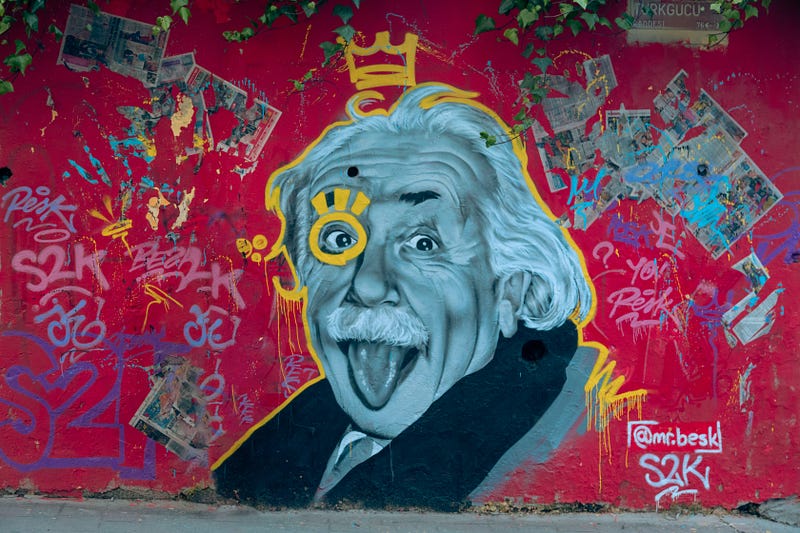
Today’s challenge is to think about a quote that has been attributed to the likes of Socrates, Aristotle, and Albert Einstein. I need to first consider if I believe in the phrase, “The more you learn, the less you know,” and at first glance, this would seem like a paradox. Then I think about it more.
When we’re super young, we’re at a blank slate and we learn the things that we take in from our environment. At that age, we don’t know what we don’t know. It’s not like we’re fully aware of the amount of knowledge that we haven’t gained access to yet. At that point, we feel like we know a lot because we are sponges. We absorb the knowledge that we take in from school.
Here’s the first problem, what are we being taught? You could learn as much as you want when you’re young. If you’re being taught historically incorrect or inaccurate material that you have to try to unlearn later, it’s hard to do because of how you were conditioned. Many people don’t process new information as an adult as easily as others do. I personally try to keep an open mind because we always get new information.
We learn that new information and then we also try to figure out what else we don’t know or even what we know correctly. It gets us into that mindset that we have so much to learn. The information that we are already set up with opens us to possible new information on top of that preexisting information. We are now trying to learn all of the new information and that can turn into a rabbit hole of information we never had access to before.
I’m not talking about conspiracy theories and the like. I’m talking about new advances in science, technology, and education, along with other disciplines, that are always coming out. We are constantly learning new information. That new information gets processed by someone who is learning as more information to learn.
As humans get more knowledge and become “smarter,” we realize that it could be almost impossible to retain all of that information. We know less of that pie than we thought we did when we were younger. I think that’s the real heart of the conversation around the saying, “The more we learn, the less we know.”
We’re not really saying that we’ve learned less over the years, it’s just that the more we learn, the more we figure out that there’s so much more to learn out there. I am a lifelong learner. I am a self-proclaimed nerd. I’m always trying to learn new things, unlearn outdated information, and enrich my life with knowledge. There is still so much that I don’t know.
Does that mean that I’ve wasted my life learning or does this just mean that there’s still a world of information for me to get to? I like to think of it as the latter. I admire people who have advanced educational degrees. I don’t necessarily view them as smarter, just more educated and with more specialized knowledge in their respective fields.
Sure, there are really brainy people who have Master’s and Doctorate degrees but intelligence is much more complicated than years of education and a piece of paper. People who have those degrees aren’t necessarily smarter but I do have a good vibe with many of them as they understand their specialties much better than I ever would and offer me interdisciplinary insights that I’d never thought I needed.
I myself am a self-proclaimed polymath who didn’t get an advanced education. I feel like I can keep up with people in conversations on many topics. I don’t feel lesser for not having a higher degree. Some people don’t need advanced degrees to be smarter. My intelligence levels have been tested previously and I’ve tested high in many different intelligences. According to a piece of paper, I would be considered highly intelligent.
Does that make me think that I know nothing or less according to the original quote? No, of course not. Do I think we should discredit people with advanced degrees because of that also? No, I think that we all have something to contribute to society although their expertise is more specialized and better suited to contribute in those ways.
I’ll find many people with those degrees agreeing with me that the more you learn, the more you understand what you’re deficient in. No one person will ever acquire the entire encyclopedia or catalog of human knowledge and that’s okay.
Learning more makes you want to learn even more when you find out new things you want to learn. Learning is an ever-evolving and ongoing lifelong process. I’ll always have a passion for learning. The more I learn, the more I want to learn stuff that I didn’t know I want to learn. I guess, what I’m saying in a roundabout way, is that these brilliant minds are certainly on to something here.
Autistic Widower (“AJ”), Brett Jenae Tomlin, Vidya Sury, Collecting Smiles, Trisha Faye, Karen Schwartz, NancyO, Katie Michaelson, Bernie Pullen, Michelle Jimerson Morris, Amy Frances, Julia A. Keirns, Ravyne Hawke, Pamela Oglesby, Harry Hogg, Tina, Pat Romito LaPointe, Brandon Ellrich, Misty Rae, Karen Hoffman, Susie Winfield, Vincent Pisano, Marlene Samuels, Ray Day, Randy Pulley, Michael Rhodes, Lu Skerdoo, Pluto Wolnosci, Paula Shablo, Bruce Coulter, Ellen Baker, Leigh-Anne Dennison, Jennifer Marla Pike, Carmen Ballesteros, Marlana, MSW, Patricia Timmermans, Keeley Schroder, Jerry Dwyer, Teisha LeShea, Ruby Noir, and myself, The Sturg.


