
Dear Writers: Does it matter whether your favorite writer is a goddamn liar?
All writers tell lies. Only some of us make a living off them.
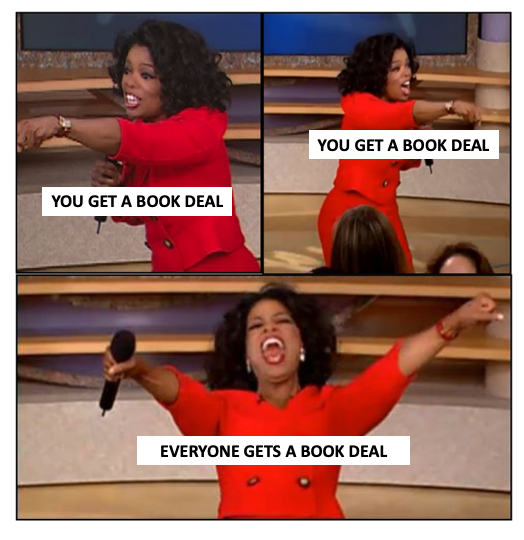
I don’t mean the kind of lies we tell in stories, because I think most writers, readers, and pretty much anyone else but Aubrey Plaza will agree that the best fiction expresses an inviolate truth. And that’s only because Aubrey secretly writes fan fiction under the pseudonym -REDACTED-.
The strange thing about fakes is that once they’re exposed, that’s all they’re known as. James Frey, for example, published A Million Little Pieces as a memoir. Now we all read it as fiction. I was working at Borders Books & Music (RIP) when the scandal around him erupted. The book was already a critical darling thanks to Oprah — but then The Smoking Gun (the real one, not the figurative one we’re all looking for) published an exposé that sent his agent and his publisher running for the hills.
SEE ALSO: TWELVE TOUGH STORYTELLING TRUTHS FROM STEPHEN KING
It’s one thing if an author keeps the loot and quietly withdraws into a quiet life of being vaguely recognized and eventually demonized on Twitter, but Frey didn’t simply retire with millions. To tell the truth, if not for one or two fortunate encounters and his own rebound from a new rock bottom, he’d likely be penniless.
Instead, James now runs a transmedia production company called Full Fathom Five, responsible for incredible NYT best-sellers (and equally incredible articles from New York and New York Mag on how he treats collaborators). Even those treated well don’t necessarily stay. One former colleague of mine worked with him for a brief time — but left when they began to consider how that collaboration would affect their own reputation.
Through it all, the dark shades of Frey’s exposure linger so starkly that when another potential selection by Oprah was revealed to be a fraud — Misha Defonseca made a fortune off claiming that she was a Holocaust survivor (see “Raised By Wolves”) — the author was called the new James Frey.
ALL WRITERS TELL LIES
James Frey isn’t the first writer to survive a scandal and use the sensation of their involuntary unmasking as the foundation for a career built on the truth of their lies. Jonathan Swift — the author of Gulliver’s Travels — went so far as to have an aide copy the book in his handwriting before delivering it for publication. The “memoir” was, after all, a thinly veiled attack on the Whigs. The literal separation of his own hands from the writing of the book meant that if the Whigs took him to court, he could honestly say he’d had no hand in writing the thing.
That, of course, is a small lie. Yes, Franklin W. Dixon and Nancy Drew were not real people but a long line of various ghostwriters still in production to this day. George Eliot was famously a popular Victorian male author who was secretly a woman. The famous mystery author Ellery Queen was actually two people, neither of which was named Ellery or Queen.
And yet more modern con-authors — pronounced like “auteur” (it’s my word, I make the rules) — have told lies I can’t help but feel leave a lasting harm. Somehow, it feels more personal.
AJ Flynn told lie after lie (after lie) about his background in order to build the career that led to the publication of The Woman in the Window, and yet with all of the fire around JK Rowling articulating such clearly transphobic positions, one of the most absurd parts of the story is AJ’s claim that The Cuckoo’s Calling — submitted pseudonymously by JK Rowling so as to test the merit of her storytelling without the privilege of her fame — had been published on his recommendation.
I mean…what?
SEE ALSO: How YA authors and online sleuths got a book pulled from a New York Times bestseller list (special thanks to Phil Stamper)
Lee Israel — immortalized by Melissa McCarthy in the movie Can You Ever Forgive Me? — drafted such expertly forged lost letters from literary icons that she sold an estimated 400 of them before she was prosecuted not because she’d sold convincing fakes, but because of the forgeries she was putting in library and museum files while she absconded with the originals. They had no value to her, though I’m sure she was sentimental. She needed original letters so that she could copy their signatures perfectly. Those signatures were vital in convincing readers they were true — but if she’d just been honest about the progeny of her fake letters, would she not simply have been seen as a pioneer of fan fiction?
PATHOLOGICAL LIARS
I can’t help myself. I shouldn’t feel like those stories being fakes changes what I took away from them. Like so many authors say when exposed, the impact of their book came from the power of the story. Even Oprah said as much in the early days of the Frey Fallout when she called in to Larry King’s interview with James Frey to say the only truth that mattered was whether the story had helped any readers overcome addiction.
Believing whether a story is true or false shouldn’t affect whether that story transformed us into better people or even just brightened our day a little — and yet to me it feels like it does.
I know I’m not alone. I logged onto Twitter once or twice last year and let me tell you…
So why, despite all of that, do most of these people still have a career? Why, despite all of that, are most of these people thriving beyond imagination?
WHY ARE WE SO DAMN FORGIVING?
The reason, I think, is because virtually everyone in the publishing community (aside from those pesky people who collect books but never read them) comes to it through a profound and intense intellectual curiosity. We cannot help but want to know more, to see more, to understand more, to feel more. The experience itself is the reward.
SEE ALSO: HOW EMPATHY DRIVES OUR BEST CREATIVE WORK
Shocking reveals invoke a sense of epiphany and transformation. Our lives suddenly feel more complete, even if that cataclysm devastated all we thought we knew about a person.
So when we discover a treasured author has in essence conned us — we don’t necessarily want to be friends with the person anymore. But as far as their fiction?
Now we know we’re in the hands of a master. In the words of the Nolan brothers speaking through Michael Caine, we simply want to be fooled.
THE END
Thanks for reading!
If you enjoyed this article, please follow me here and go to my Patreon to support me writing more content like this.
If you want help telling your own story, please go to Stephenie Edits


