
How To Fraudulently Sue Your Publisher For Millions (and win!!)
It takes a wolf to catch real prey
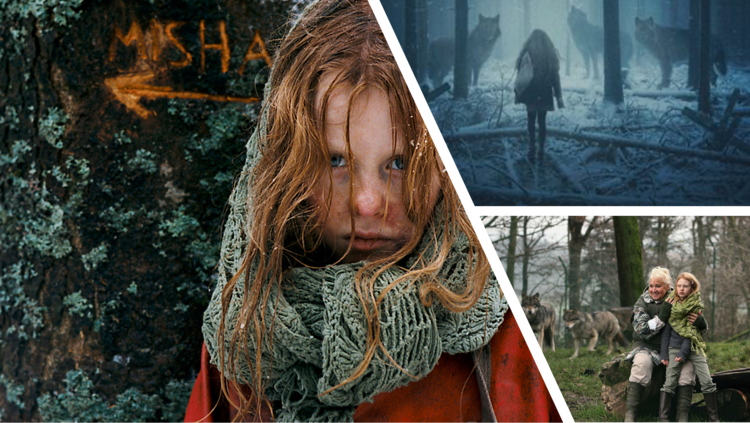
You Can’t Handle The Truth
While the phrase “raised by wolves” is one used often to denote children who don’t listen to their parents and have poor habits or manners…there are records of children who are said to have actually been raised by wolves. Called feral children, these individuals were raised in isolation — sometimes on purpose, sometimes not — and therefore [took] on the habits of the animals with which the human child was living. — Sam Slaughter
No one knows where the next big book will come from. The slush pile? A sequel from a treasured author? A muffled pitch from behind your barista’s face mask?
How about from the tragic story of a Holocaust survivor raised by wolves?
People think it’s hard to get into publishing, and it is…but it also isn’t. All you need is a great book. Well, that and a little serendipity. Even a publisher dominating best-seller lists still wants the same thing. We want stories that move us. That move others. That change how we live.
So when you find one that moves you, that moves others, that changes how you live — wouldn’t you move mountains to publish that book?
Then again, maybe you shouldn’t.
Misha and the wolves
It took a long time for Misha Defonseca to tell her story. Almost as though it were too traumatizing to relive in the way we all must when telling the story of our lives.
She told those who asked, usually in sparse but heartbreaking detail. As incredible as her story sounded to some, it was common among survivors of the Holocaust. The more improbable the story sounded, the more it moved the listener — because no matter how impossible, the listener knew it was true.
Misha’s story was uniquely simple. She’d lost her family in the Holocaust. Survived in the forest among wolves. In a sense, been raised by them. Found her way as an adult until the woman before them had a tale to tell. But it all would have been just another vague-but-incredible story shared among survivors if not for the invitation of Rabbi Joanne Yocheved Heiligman.
Hanging a paper lantern
In 1990, Rabbi Heiligman asked Misha to ascend the bimah — the platform from which the Torah is read — on Yom Hashoah, Holocaust Memorial Day. She invited Misha to bear witness in public for the first time.
Serendipity, like a divine force, calls on the most unexpected players.
She said she was a survivor. She was obviously very traumatized, but she had never talked about it. She wasn’t pushing to tell the story — she told the story when I asked her.— Rabbi Joanne Yocheved Heiligman
No one fully knew what had happened to Misha, but everyone accepted it had happened. For a publisher looking to pluck their first best-selling author from obscurity, you couldn’t ask for a better recipe to hook readers.
Every author’s dream
It would be seven years before Misha’s story became a sensation that put the publisher in court, sued for withholding millions in royalties for sales that never happened. And while there is a key element that won’t make sense until later, there are plenty of vital clues to share right now.
“I was looking for a new project,” Jane Daniel said.
She’d met Misha in a chance meeting, the kind of serendipity that publishers dream about but only encounter in novels. Jane ran a very small publishing house — a staff of just you is still a staff — and was doing PR for a local Jewish synagogue’s memorial service. Misha Defonseca was their speaker.
“I was like the wolves,” Misha later immortalized in her memoir. “A hunted animal, one that would be killed on sight.”
After barely escaping the Nazis, Misha had survived in the woods by finding solace and connection with a pair of wolves named Maman Rita and Ita. “I have no idea how many months I spent with them,” Misha said. “But I wanted it to last forever.”
Every publisher’s dream
If you work in publishing, you understand the enthusiasm that overwhelmed Jane. She couldn’t believe no one had snatched up this author and her story. Publishing was hard enough without a good book, and now she might have discovered a great one.
I was the first one who came around and said, ‘Could we make this even more public? Can we take this to another level? I could probably make something big out of this. There is a market for this story. — Jane Daniel
Misha agreed, and after a nearly-disastrous process of writing the actual book, Misha: A Mémoire of the Holocaust Years came out in early April 1997. With blurbs from leading Jewish figures like Elie Wiesel, Misha’s memoir seemed destined to succeed.
Walt Disney giveth, Walt Disney taketh away
In the United States, the story never quite hit the big time. Published by Daniel’s Mt. Ivy Press in April 1997, Misha: A Mémoire of the Holocaust Years sold about 5k copies in the domestic US. For some authors, that’s AMAZING. But unless you sell the book for a higher markup than goat cheese, 5k copies sold won’t generate millions in revenue.
So how did this book end up being worth millions of dollars in court?
Endorsements from Oprah and Walt Disney might do it.
“The Oprah Winfrey Show” went so far as to send a producer to film a segment with Misha and a pack of wolves. What better way to help the world connect to her story than through her unique relationship to animals?
Oh sh — !
The wolves were trained, but they were still wolves. Mid-shoot, one wolf engulfed Misha’s head in its mouth. The crew panicked, but Misha remained calm. No one could doubt her story now. Normal people — the kind who weren’t raised by wolves — would have shown at least a little fear. Misha, however, had already faced far worse.
And had the story continued like that, the book would have been picked by Oprah. Made into a movie by Disney. Turned into a Netflix docuseries. Rebooted by HBOMax into an original drama. But none of that happened.
As is common for this kind of story, dark secrets ruined everything.
You get a car, you get a car, everyone gets a car (except Misha)
Misha mysteriously backed out of the “Oprah” deal and grew angry. The author and her husband were struggling, borrowing tens of thousands of dollars from friends. Her erratic behavior cost Mt. Ivy the deal with Disney.
It didn’t make sense. Why sabotage all of this at the crucial moment?
If there was any hope of salvaging this sinking ship, it disappeared when Misha sued Jane and her publishing company in 1998.
The allegations
In publishing, there are few worse allegations than refusing to pay an author. Whatever you owe, you must pay. Period.
Misha alleged that Jane Daniel via Mt. Ivy Press had failed to market the book properly in the U.S. and give Misha her proper share of overseas royalties.
Jane Daniel felt the earth beneath her crack open. She’d gone from discovering history’s lost child to being portrayed as a monster trying to cheat a Holocaust survivor.
By this point, no one in public doubted Misha’s story. The court sympathized with all that history had done to wrong her. Jane Daniel — Mt. Ivy Press’s CEO and sole employee — would be used as a tool to right a terrible injustice visited upon an innocent person.
The judgement
In 2001, a jury ordered Jane to pay $10 million in withheld royalties. A judge’s decision later tripled the amount to over $32 million. Boston Magazine reported that Jane had to hand over her inheritance and sell her home to cover payments.
The settlement order seemed crazy to Jane. First of all, the book had sold next to no copies in the US. The book had seen better success overseas, even been made into a well-reviewed movie in France, but Mt. Ivy Press only earned money from the domestic print rights. And those had not earned anything close to millions of dollars.
Yes, Jane had negotiated deals with Disney and Oprah that would have almost certainly been lucrative. Very, very, very lucrative. But those opportunities had fallen through as fast as they’d formed, almost as though Misha had wanted to sabotage them.
Or as though that much attention scared her.
And suddenly with money flowing away from the publisher and instead to the author, Jane found herself less interested in pretending she believed Misha’s story.
Did you catch that? It’s not a typo. It’s not a mistake. Those were her own words.
She didn’t believe Misha’s story. The reason she was so mad? She suspected Misha had made it up all along. She’d just never had a reason to prove it. Now she had plenty of reasons. Somewhere around 32 million of them.
The investigation
It’s always the little things that trip up a con artist.
Many people had tried to tell Jane that the story might not be true. Don’t pursue this publication. Don’t bolster what look like lies. But she did and, by her own words, she created this monster.
Much of what Jane Daniel turned up in her investigation was covered in the excellent documentary Misha and the Wolves. In brief, Misha lied about her childhood. You know, the very thing her memoir depended on.
She claimed she’d lost all trace of her parents, her birth date, her place of birth. All facts that one surprising document after another proved were not secrets to Misha. She remembered everything, and if she told the truth, her story would fall apart.
Like the twin magicians in Christopher Nolan’s movie The Prestige, Misha maintained her lie with a commitment worthy of her ambition. She changed her name. She attended ceremonies. She went to synagogue. She lived the lie she told others was true.
The truth
Jane had suspected that the story wasn’t entirely true. Had, in fact, been told by many people that it couldn’t be true. But her own doubts were as easy to squash as anyone else’s. All she had to do was compare doubt in Misha’s story to denying the Holocaust itself. Such an accusation was monstrous.
And if true, would have caused the entire enterprise to collapse. Jane had no reason to tap that house of cards before the settlement, but now that she was paying for over 32 million decks, she would at least begin to count them.
Because there was a deeper secret. One that not even the Netflix documentary had time to cover.
Hidden behind every word on the page was a third person: Vera Lee.
The actual writer of the memoir.
Ghosts have ethics too
The settlement came in two parts. Judge Gabrielle Wolohojian ruled that the publisher must pay Misha 22.5 million — and ghost writer Vera Lee $10m.
The ethics of ghostwriting escape most of the public’s notice, mostly because ghostwriters don’t want to be noticed. They live behind the scenes, adding elegance and eloquence to a good story that needs a good storyteller. It’s an art completely separate from writing an original story. A ghostwriter doesn’t ask if the person’s story is true — they merely manifest what the person is trying to say on the page.
In 2001, Vera told a journalist how hard it had been to write a complete draft of the memoir. “Misha actually didn’t have that much concrete to put into the story,” she said. “Not enough to make a whole book,”
That’s probably why Jane urged her to revise the book to sound true. The voice and the facts needed to inspire as much credibility as awe. Let Jane take care of the facts. Vera just needed to make them plausible to the ear.
And Jane knew there were problems. Advance readers had let Jane know the story didn’t just sound preposterous, there were literal errors of fact that made the story impossible.
For example, Maxime Steinberg, a respected historian of the Holocaust in Belgium, appeared on Belgian television to challenge Misha’s claim that she left Brussels in search of her deported parents in the spring of 1941. Deportations of Belgian Jews, he said, did not begin until August of 1942.
Jane insisted Vera find a way to finish the book — even if that meant filling in the gaps with fantasy. Fact and fiction became so intermingled for Jane that she urged Vera to add a romantic interest for young Misha.
Eventually, the disagreements became too much. Jane removed Vera from the book, finished it without her, and blamed any criticisms post-publication on artifacts from Vera’s failure as a ghostwriter.
Had the book fallen into the relative obscurity Misha’s sabotage seemed destined to manifest, so too would Vera the ghostwriter’s part in the story.
But Misha took Jane to court, and therein lay an opportunity for Vera to strike a bargain with the friend of her enemy. The suit against the publisher ended up being not just from Misha. She sued Mt. Ivy with her ghostwriter as her co-defendant.
Questions of accountability
Misha later admitted the story was fake but always maintained it had been Jane who pushed her to turn a small collection of lies into an international phenomenon.
At first, I didn’t want to publish, and then I let myself be talked into it by Jane Daniel. She made me believe, and I believed it. — Misha Defonseca
But while Daniel may have persuaded Misha to publish her memoir, Rabbi Heiligman — the person who invited Misha to speak at the memorial where Jane first heard the lies that would ruin her life — says that the core of Misha’s story did not change since the first time she told her story, years before Jane met her.
The publisher had enhanced the story, but Jane could not be blamed for lies that Misha had fabricated out of whole cloth. Before her current husband, Misha had been married to a Belgian named Morris Levy. Using Levy as her middle name was a subtle tool to make her seem Jewish beyond question.
And it is not just a question of what lies she told. It is a question of what those lies stole from real survivors.
The most personal violations stand out the most. The daughter of a woman who counted Misha as a close friend says, “We went to her bat mitzvah, we’ve gone to her house to celebrate Yom Kippur.”
And yet what those people took as sacred ceremony was available to Misha only through an unthinkable betrayal.
She’s not just broken faith with readers. She’s broken faith with the very community she exploited through appropriated kinship. Like any well-intentioned person first discovering the concept of appropriation, Misha took on the traits of the people she coveted without needing to bear any of the consequences.
Post-script
Since Misha came clean, Rabbi Heiligman reflected on the strange journey of this particular liar’s tale.
“I wish she had published it as fiction,” the rabbi said. “It’s a compelling story.”
As impossibly as anything Misha claimed, she still has supporters. One old friend says that “she was essentially forced to say this is a hoax, but that’s not how it is. I’ve never known her to lie to us.”
But the facts leave no doubt: she did lie to them. And the sad thing is that like most compulsive liars, who Misha really was would have in itself been a fascinating story. She just wouldn’t have been at the center of it.
Because as moving as her lies proved to be for decades, no one can blame her for what she was hiding. Her secret explains why so many still want to hear her story. Why every lie is born from a seed of truth — and the true story of Misha’s family had a horrifying seed in the lies that came to make up her memoir.
Her family really had been killed during the Holocaust, but not because they were Jewish.
Her father, you see, was a traitor.
One last twist
The best stories evoke a truth that transcends facts.
Misha tells the story of a suddenly isolated young girl whose search for her family will reveal unexpected opportunities for nobility.
In one version, Misha’s parents are ripped from her in the heart of the Holocaust. She survives in the woods with the help of wolves. She emerges reborn into the woman we see today.
In another version, Misha’s father served as a member of the resistance. But like his daughter, he told stories. Sometimes to one person, sometimes to a few, but he would not let his heroism pass in silence.
Eventually, he told a story to the wrong person. The Nazis discovered him. Tortured him until any sane man would break, but not Misha’s father. He held on — at least until they threatened to take away the one thing he loved most.
If he would betray the resistance, they would let him see Misha one last time.
The poetry of it all
There are times when I find it difficult to differentiate between reality and my inner world. The story in the book is mine. It is not the actual reality; it was my reality, my way of surviving. — Misha Defonseca
As of July 2008, Misha has been working with her French publisher on a new book that draws on her father’s papers and documents from Belgian archives. There is, it seems, still an opportunity for Misha to cast herself as the heroic heart of a true story.
At the age of 84, it could be her last chance.
The end (of the article)

If you like my work and want to support it, buy me a cup of coffee! To join the Translation Team, subscribe to my Substack newsletter: Translating Everything


