
Do your chin ups first
Chin ups are a fantastic exercise.
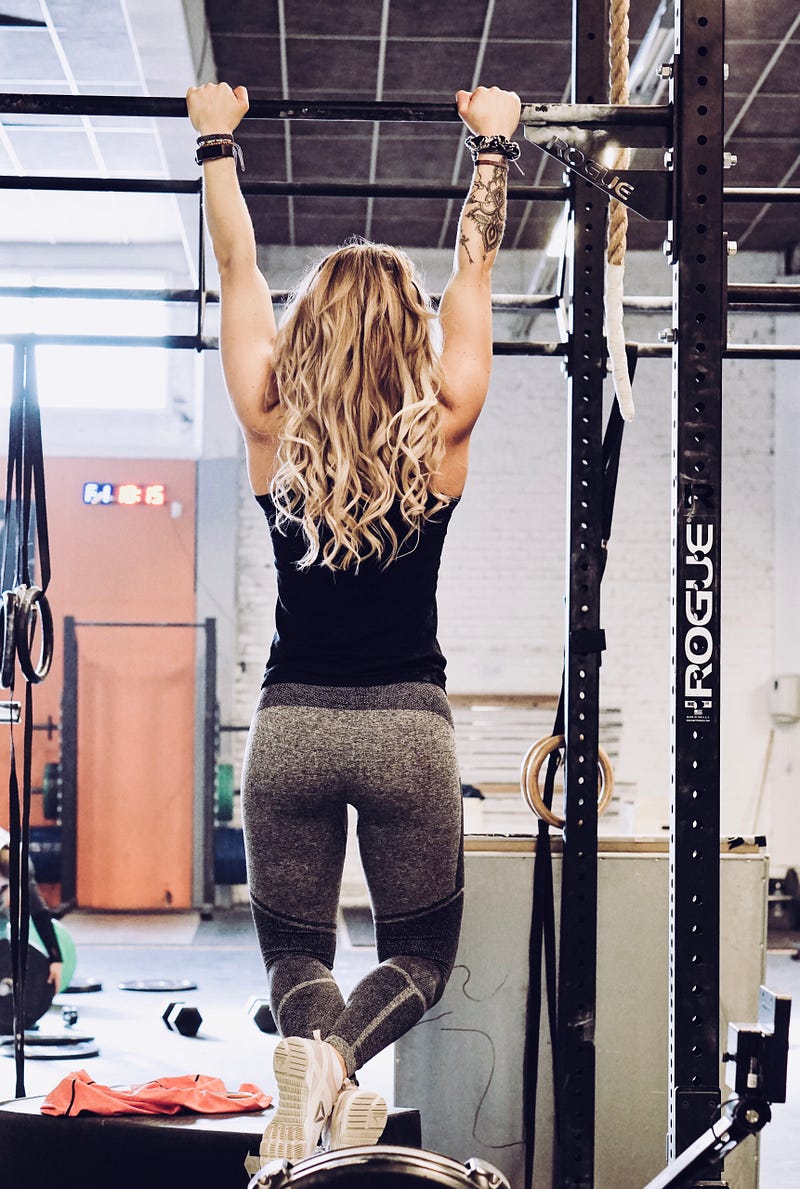
In the seventies Arnold Schwarzenegger built his legendary ‘cobra’ back with endless sets of chin ups, pull ups, and rows. Franco Columbo, who arguably had much thicker lats than Arnold, was able to perform strict sets of twenty five chin ups and pull ups with his body weight. In The Education of a Bodybuilder, Schwarzenegger advises bodybuilders to start their back training by working up to fifty repetitions of pull ups, in however many sets it takes. Chin ups are simply pull ups with the palms facing upwards. I prefer the chin up as it engages the biceps (eliminating the need for further bicep work) and allows for a full stretch of the lats. You can add other exercises later, suggests Schwarzenegger, but do your chin ups first.
A back building routine based primarily around chin ups has given me wider, thicker lats, a more detailed upper back, much bigger biceps, and forearms that have torn the sleeves on numerous shirts. I no longer perform any type of bicep curls and my arms are bigger and more peaked than they’ve ever been.
The Golden Era
In my opinion, the best bodybuilders are those from the 1970’s and 1980’s. They didn’t look ridiculous in suits. Muscles like Zane, Schwarzenegger, Mentzer, Columbo and other golden era bodybuilders sported in their heyday are unattainable without steroids. Frank Zane is seventy nine, Franco Columbo was seventy eight when he passed away and Schwarzenegger is still going strong in his seventies. Even Mike Mentzer, who spent time institutionalised following his retirement in 1980, smoked heavily and used methamphetamines, made it to forty nine. Compare that to modern day bodybuilders who are starting to drop dead in their twenties and thirties. Steer clear of steroids.
Without steroids you can’t just keep adding sets and exercises ad infinitum. A large volume of work will lead to overtraining, so you have to choose your exercises carefully. The magazines and influencers have to keep telling you about the latest, newest, most secret exercises to keep their tills ringing. Don’t be taken for a fool.
Your body has a limited reserve of energy it draws upon to fuel your workouts and to repair damaged cells. When it comes to exercise there is third demand placed on your energy reserves, the process of overcompensation, or building bigger muscles. At the outset, the more sets you perform, the more energy you will be using just to get through the workout. Productive bodybuilding is about quality, not quantity. By bodybuilding I mean any exercise you perform with the aim of increasing the size and strength of your muscles. Pick the most effective exercises, and perform the best quality sets you can.
The most effective exercise
The most effective exercises for building muscles are compound exercises as they allow you to move the most weight. Very few people can perform a strict pulldown with anything close to their bodyweight. Doing a pull up or chin up will do more for your back muscles than any variation of the pulldown. People sometimes curve their backs when doing pulldowns, when full activation of the upper back muscles requires the opposite; your chest needs to be out with your shoulders blades squeezed together.
What if you’re too weak to do a chin up?
If you can’t perform a single chin up, you can start by doing negative chin ups instead. A negative chin up requires you to jump or step up to the top position of the exercise, so your elbows are back and the top of the bar is touching your chest. Then you hold yourself in that position for as long as your can. Squeeze!
Eventually you’ll be forced down by gravity. Hold on. The lowering portion of the exercise, the ‘negative’, is the most productive. Initially you may only manage a five second negative (use a watch or a timer on your phone). Don’t let go of the bar. Keep fighting against the descent until your arms are straight and you are at the bottom of the chin up, with a full stretch in your lats. From the fully stretched bottom position, immediately jump or step back up to the top position and repeat. Keep going until you can no longer slow the descent. A beginner might only get three to five repetitions. Stick at it and you’ll be able to increase the number of reps your perform each time you work out.
When you can make a negative repetition take thirty seconds or more, you’re probably strong enough to perform a few normal repetitions. Exercise is more beneficial when you use a full range of motion. A lot of people doing pull ups or chin ups never go all the way to the bottom of the movement. Their arms only get to a ninety degree angle before they reverse the movement. Something similar happens with squats. Performing full negatives will train you to work the full range of motion, and you’ll enjoy the benefits of improved range of motion, better muscle stimulation, and more flexibility.
As negatives do more to stimulate growth than the lifting part of a movement, you should take full advantage of them, even when performing normal repetitions. Don’t make the mistake of wrestling a weight to the top position with poor form and letting it drop down to the bottom position. Take a look at any of the ego lifters in your gym doing bicep curls and you’ll see what I’m talking about. When you lift with momentum and let gravity take over on the way down, you are inviting injury. Bodybuilding is about lifting and lowering weights, not throwing and dropping them.
Depending on your level of experience, you should rest for at least a day between workouts, exercising every other day. Remember the limited energy reserve? Contrary to popular belief, the stronger you get, the less often you should train. That’s because the stronger you get, the more damage you can do to your muscles in a single workout. Whilst you can increase your strength enormously, your recovery ability (without steroids), never really increases significantly.
Always do your chin ups first, except for when….
Schwarzenegger was right, chin ups should form the basis of any back building routine. Many bodybuilders (Schwarzenegger included) espoused a wider grip for developing a wider back. On this point, a simple study of human anatomy suggests that a shoulder width grip is best. With your arms shoulder width apart, you get a full stretch in the lats, and you do not put your shoulders in a vulnerable position.
As you advance, there may be reason not to do your chin ups first. Lets say you are very weak on barbell rows; in that case you might want to do those before your chin ups, so you can perform the exercise you are weaker on whilst your have more energy. Another useful technique for stronger athletes is pre exhaustion. Here, you perform an isolation exercise for your lats (like dumbell pull overs or stiff arm pulldowns), immediately before your perform your chin ups. Because the chin up is a compound movement, even with your lats exhausted by the isolation exercise, you will still be able to perform at least a few repetitions because your biceps and other supporting muscles will still be fresh. As well as providing a fantastic back workout, pre exhausting your lats in this manner will totally fry your forearms and biceps.
Pre exhaustion is extremely demanding. I’ve seen experienced bodybuilders, used to performing up to twenty sets for their back, lying on the floor gasping for breath after performing a pre exhaustion set for the first time. A less brutal way to keep growing is simply to add weight to your chin ups with the aid of a dipping belt. Once you can perform 12 strict chin ups with your bodyweight, add some weight, start with 5kg. Keep at it until you can perform 12 strict repetitions, then add more weight. Anybody who can do chin ups with 10kg strapped to their body is going to have an impressive back and an impressive set of arms.
If you perform full body workouts (which I recommend), exercise order is extremely important. I was reminded of this last month when I cut my daily calorie intake by over 50% to lose weight. I had been performing chin ups at the end of my workout. After losing around 5kg, my repetitions were cut in half. I was not suddenly much weaker, but having trained legs (the most demanding bodypart), and chest before getting to chin ups, I was totally exhausted. Now I start my workout with chin ups and the problem has been remedied. My back, legs, and chest are all getting stronger again.
If you’ve enjoyed reading this article and you’re not a Medium member, you might notice you can only read 3 articles per month. If you create an account, you can read 5 articles a month without charge. But if you become a member ( only $5/month or $50/year) you can read as many articles as you want, ad-free. You can become a member here and if you use my link I retain a small portion of your fee. Thanks for your support!


