
Do You Really Need to Record That? Unpacking the Compulsion to Record Every Live Event
Artists, phones, and the battle for live experiences
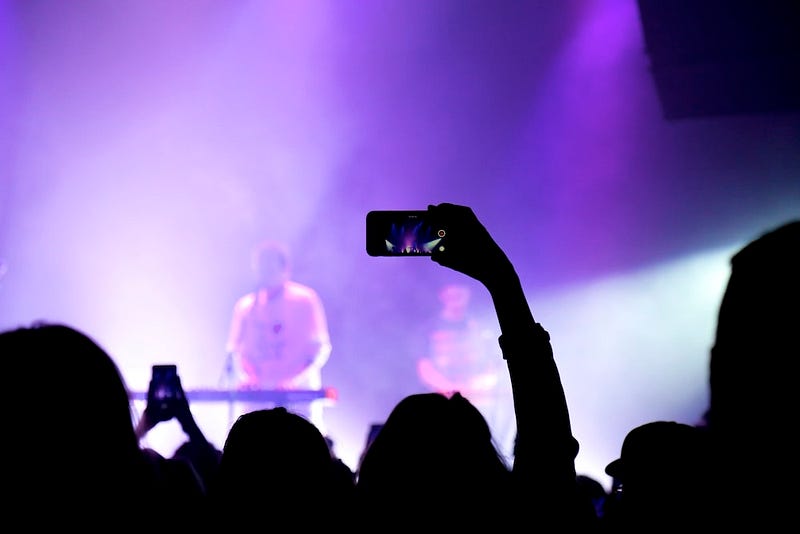
We’ve all been there: trying to enjoy a concert, and all you can see are phone screens instead of the actual performance.
Even Adele called out a fan for recording a show, urging them to experience the moment instead of through a screen.
If you’re a live-in-the-moment person, it’s really frustrating. You almost end up experiencing the concert through these fans’ tiny screens instead of the live thing. It would’ve been better to stay home, for all you know.
Will these people even watch this shaky, underwhelming recording later?
But what’s behind this need to record everything you set your eyes on?
The phone chronicles of an epic concert
Let’s step into the shoes of the phone concert documentarians for a moment.
What do you gain from this practice?
First, it creates instant nostalgia. Sure, the sound might be off, and the shaky camera work could give you motion sickness, but you’ve created a time capsule of that epic concert. You get the chance to relive the moment whenever they want. You have a multi-sensory souvenir for the rest of your life. Future you will thank you.
Second, it gives you social currency. In the age of digital validation, if you didn’t Instagram, TikTok, or Facebook Live that concert, did it even happen? The recording is your virtual ticket to the cool kid’s table.
Third, it’s the modern-day lighter. Back in the day, people would hold up lighters to show support for their artists. So how do you do it now? The phone is the 21st-century version of showing your appreciation.
Now let’s see what science says.
Does it benefit the one recording it?
The data shows mixed results.
In a series of studies, three American researchers delved into the question of whether taking photos increases or decreases enjoyment experiences. They had participants do a series of activities. A bus tour in Philly, foodie photos in a farmer’s market, concerts, you name it. One group was allowed to take pictures while the other wasn’t.
What did they find?
Those who could snap pics on the bus tour, take foodie photos, and capture their best moments at a concert had a better time; it made them happier, and this lasted even after the experience was over. It also turned out that the type of experience doesn’t change the game. All these experiences led to the same bump in enjoyment.
In these studies, capturing the moment through the lens seemed to add an extra layer of engagement, boosting the fun.
However, a more recent series of studies combining field surveys and laboratory experiments revealed the opposite. This one aimed to understand how different photo-taking goals (e.g., taking photos to share with others vs. taking photos for oneself) affect people’s enjoyment of experiences.
After deep diving into five different studies, researchers found that taking photos to share with others tends to make people enjoy their experiences less. This is true whether it’s a real-life adventure like a vacation or a more controlled lab experiment with virtual experiences. This happens whether people naturally choose to focus on sharing their photos or if it’s forced upon them in an experiment.
When you’re aiming to capture moments for sharing, it spikes the anxiety meter. You start worrying about how you’ll look in those photos and what others might think of them. And that takes away from the pure enjoyment of the experience.
But it also affects you differently whether you want to share them with friends or a broader audience. Your enjoyment isn't as affected if it’s just your close buddies. But if it’s for the masses, then your joy decreases. You forget to enjoy the moment when you’re too focused on impressing your followers.
The lesson here?
If you take pics for your own memories, it can be the perfect balance between enjoyment and sharing. But if you obsess over them and need to share them publicly, it diminishes the quality of that experience.
It’s an annoying practice.
For everyone else trying to enjoy the concert, it’s annoying.
First, we have the artists. They’re blinded by all those flashes, and frankly, they can’t connect with their audience. Musicians want to engage with their fans, read their expressions, and feel their energy, but when faced with a sea of phones, they feel they’re serenading a robot army.
Then we have other fans attending the concert. First, your visuals are contaminated. You paid to see the thing live, but you end up looking through someone else’s phone. The collective experience turns into a screen-fest, overshadowing the live magic. They want to immerse in the real-time music, not experience it through the pixelated window of a handheld device.
And then you have a maestro of disruption: the person recording the damn thing. They record it, but they don’t live it. According to the researcher Alixandra Barasch, associate professor of Marketing at the University of Colorado Boulder, seeking the ideal photo can reduce your capacity to perceive the music you attended the event for.
We have finite attentional resources, so focusing on the visuals (i.e., capturing photos) distracts you from the sound dimension of a concert.
Artists are already taking measures against this
Prince prohibited attendees from capturing videos during his live shows.
Childish Gambino, Guns ‘N Roses, Alicia Keys, The Lumineers, and others have taken more severe measures. In their concerts, fans have to temporarily give up using their mobile devices by placing them in locked pouches during their concerts.
What are these phone lock-ups?
After your bag is inspected at the entrance, the guard gives you a pouch and locks your phone inside, but it stays with you throughout the concert. Once you leave, the guard unlocks it, and you return to minding your business. In case of an emergency call, you can go into a lobby, and a guard will unlock it rapidly.
Apple has also taken measures into its own hands. They patented a technology that will essentially turn off your iPhone camera during live shows.
It works like this: the artist sets up a device emitting coded infrared signals on stage. Your iPhone, acting as the receiver, then decodes it, rendering your screen useless for recording.
Apple’s patent might be music to the ears of both performers and annoyed concertgoers.
Final thoughts
Experiences are the spice of life.
But we live in the age of photos, where every moment seems Instagram-worthy. People desperately want to capture experiences and share them as much as they can.
And that gets you out of the experience itself. For instance, participants in one of the abovementioned studies remembered the photo recording experiences in the third person. Like it wasn’t even happening to them!
So next time you go to a concert, let’s be present, respect the artists, and spare ourselves and others from subpar recordings.
A concert will always be a live, immersive experience that no phone recording could faithfully replicate.
Be present in the moment; you can only truly live when you’re in the now!
Want to learn more about the sound verse?
Join my newsletter to explore everything related to music and sound, from the effects on our psyche to the technologies that use sound to improve our lives.


