
Stop Listening With Your Eyes! The Recurring Bias Towards Female Musicians
Let’s focus on the melody over appearances
Abbie Conant started her professional music career playing the trombone at the Royal Theater in Turin. In 1980, she sent eleven applications to several orchestras across Europe. She only received one answer from the Munich Philharmonic Orchestra.
The letter started with “Dear Mr. Abbie Conant.”
Looking back, that should have rang the first alarm in Conant’s mind.
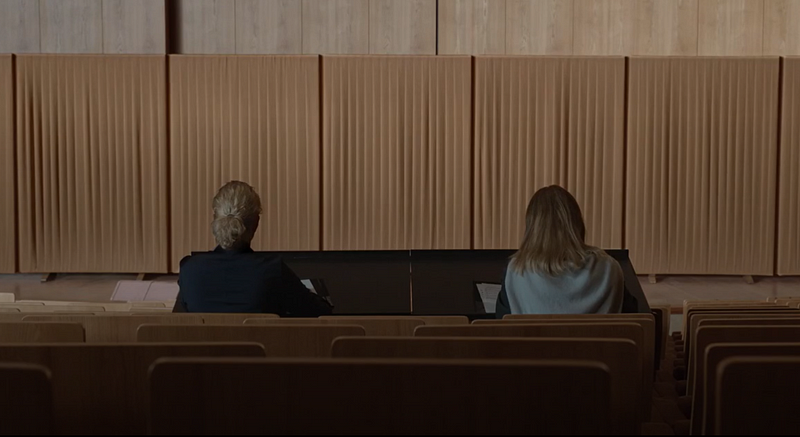
She had an audition behind curtains alongside thirty-three other candidates so that jury members wouldn’t see them. It was a strange method and very rare in Europe at the time. However, since one of the candidates was the son of an orchestra member in Munich, the Philharmonic decided to implement this method to avoid any bias in their assessment.
Conant played the Concertino for Trombone from Ferdinand David but she went off-key on one note. She thought that was over for her. But the jury thought differently. After she abandoned the audition room, the musical director from the Philharmonic, Sergiu Celibidache, shouted:
“This is just what we wanted!”
Someone went to get Conant, and when she faced the jury, she heard them say, “What’s this?”
They had expected a Mr. Conant, but they saw a Mrs. Conant.
The music director, Celibidache was from the old school. He thought a woman couldn’t play the trombone. Yes, the Munich Philharmonic had some women on the violin and oboe, but those were “female instruments.” The trombone was masculine. It used to be played by men in military marching bands. Opera composers used it to symbolize hell.
Despite that, Conant got the gig, but this was just the beginning of many more challenges. A year later, she was informed in a meeting she would be demoted to being the second trombone. No one told her why. Another year passed, and Celibidache told her they needed a man for the trombone solo.
She sued them.
The orchestra said she didn’t have the physical strength to be the first trombone. Conant got a physical exam, and her tests showed that she was in peak physical condition, comparable to that of a professional athlete. Then, the orchestra said she lacked the melodic touch in her performances. A special audition with an expert trombone player confessed she was an amazing player.
After eight years of legal battles, she returned to her position as first trombone. But then, the orchestra didn’t want to pay her the same as her male colleagues.
Conant won that case as well.
What Celibidache, the music director who initially doubted her abilities, heard during the first audition was the musicality he had been seeking. But then his eyes revealed his strong biases.
Conant’s only line of defense in the beginning was that curtain.
This is her playing.
A major shift in the world of classical music
Until recently, men dominated the scene.
It was thought that women couldn’t play as men. They didn’t have the strength, the display, or the resistance to play certain music pieces. Their lips, lungs, and hands were different (and weaker).
Not surprisingly, the jury would always prefer men in open auditions.
Nobody paid attention to how these auditions were held. Men thought that no matter the circumstances in which you performed music, the music expert could instantly and objectively assess the performance's quality.
Music is music, right?
The confidence in the purity of their assessments was even more astonishing. Rainer Kuchl, concertmaster of the Vienna Philharmonic, once said he could easily distinguish between a male and a female violinist.
But in the last decades, the world of classical music changed.
Unions have been formed worldwide to fight for better work conditions and a more just hiring process. Many musicians assume there’s an abuse of power in this industry, but instead of having just the orchestra director decide on new hires, a jury would now conduct the auditions.
Some norms could include not talking between jurors between auditions to avoid influencing each other, musicians being identified just by a number, and putting curtains or screens between musician and jury to make the process more impartial.
Hiring women in orchestras blossomed. Their likelihood of being hired by orchestras all around the world with this new system increased several times.
Additional biases emerge when you can visually assess the musician. You might assume that their posture influences their sound quality, and some musicians may not seem visually pleasing (e.g., make silly faces while playing), potentially affecting your judgment of their overall performance quality. There can always be a conflict between what you see and what you hear.
People have to stop listening with their eyes.
And our eyes influence our judgment whether we like it or not.
Picture the following. Would someone hire a small woman playing a big instrument? They would probably judge before even listening to her. The instrument is too big for her. She won’t have the strength to get a powerful sound out of it. And so many other “reasons” would pop into our minds.
What someone sees can contradict what they hear. The only way to make a fair instantaneous judgment of this person is for them to be behind a curtain.
Final thoughts
We trust our first impressions too much, but we don’t know where they come from.
We’re not aware of how fragile they might be. What we see especially can be tainted by our prejudices without realizing it. Judging the music can seem a simple task, but it’s not. Without a curtain in between the jury and the candidate, many would’ve been disqualified even before playing the first note. But with a curtain now, people like Conant had a fighting chance.
While we may not have complete control over these quick first impressions, we can alter the environment where they occur to mitigate their influence. We can refrain from judging people prematurely before they demonstrate their competence. Instead, we can evaluate their skills and disregard factors (like their appearance) irrelevant to the specific job.
When a curtain allows for the purest intuition to come forth, the outcomes can change drastically.
We can see something by what it is, not by what it seems.


