
FUTURE
Do We Need to Believe in Angels?
Is There Hope for the Future of Mankind?
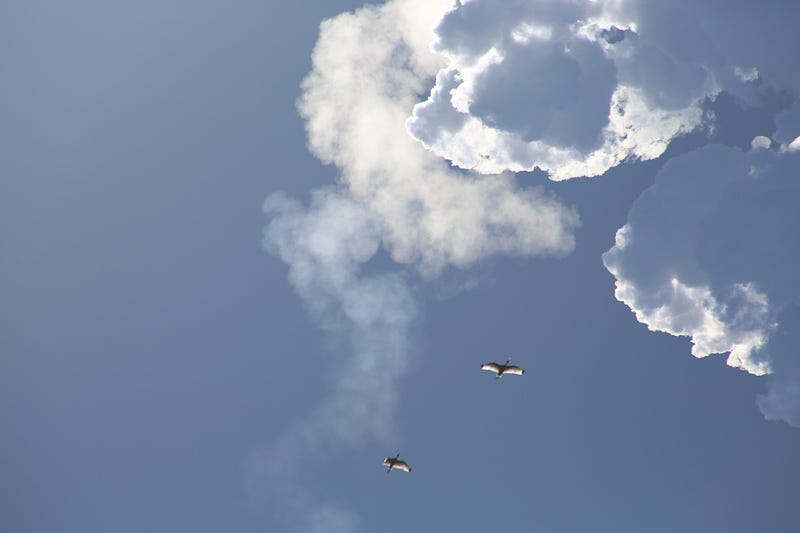
Angels — do they exist?
One often goes uphill. You see me, I’m going uphill. I see you; you’re going uphill. You’re having a hard time, I’m having a hard time, but we are not giving up. We must think positively, we must try to help the world move forward, small steps forward.
It is man who creates the future, we own the future. We stand on the shoulders of the generations before us, and thousands of generations come after us. We will deliver what is needed, positive energy is what we get, people who support you; man, who gives without conditions.
There are people who affect you negatively and who suck energy and power out of you. On the other hand, there are people who you experience give you energy and who strengthen you in the belief that it works, there are positive forces. The positive is something that can occur unexpectedly, and it is something that can grow and become strong, become something that makes your life richer.
What promotes the positive between human beings and helps us to achieve positive goals?
Some call it karma, the fact that actions I take against others have consequences for myself, and that there is a close connection between an action and the result of an action; others call it angels or good helpers.
For me, it’s about thinking positively, thinking about possibilities, good thoughts about good things.
Good thoughts that are followed up by good actions are what promise man forward.
We must acknowledge and accept the fact that we influence others. We can influence others positively or negatively. We can give energy to others, or we can steal energy from other people. How we do this and how we act in different situations is crucial both for our own well-being and life and for others’ well-being and life.
Is it the case that the consciousness of a human being can live on after one has died?
Does man have a soul? If so, does the soul die with the body, or does the soul live on in one way or another?
Or does not the soul exist? Does man not have a soul, but instead a consciousness, and a life of feelings and thoughts, which is found in man as long as one lives?
To think this way about man, that everything is time-limited and nothing lives after death — to settle down with this is known to most people as unsatisfactory.
Is it conceivable that what we say, what we do today, lives on independently of us, as a force, as a context, or as words and meaning content that can continue to influence other people when we ourselves are dead?
What is consciousness?
Can an animal have consciousness, or is this reserved for man?
Man’s consciousness can be something else, something more than what is connected to us sensing and experiencing cold and heat, light and darkness, joy or irritation, fear, and anger, etc.
Man’s consciousness is also linked to thought life, to conceptual activity, to interpret and process emotions, to develop reasoning, to describe, to tell stories, and much more. Man’s consciousness is linked to many other such qualities and cognitive skills that man has, and which most other living creatures probably do not have.
Where can we look for evidence — or at least a sign — that man’s consciousness exists independently of man? We know that man’s consciousness exists in the time when man lives. We also know that we can develop a higher level of consciousness that includes, for example, intuition, insight, and compassion. We know that man can express this consciousness, this intuition, this insight, and compassion — all this we can let come forth and become visible to other human beings. We know that we can express this through words, through speech, through writing, and not least through different art forms.
Art provides many good examples of how people can express themselves and can convey things that are not purely conceptual. However, there is no scientific evidence that consciousness exists independently of man. We do not know that human consciousness can be “stored” and conveyed outside of human consciousness. Of course, we can store texts in books and we can create visual and plastic works of art that express something that man (the artist) has experienced, felt, thought.
Man’s consciousness is part of being human. Consciousness arises and exists in man, and we have become accustomed to thinking that consciousness dies when a man dies. We have become accustomed to thinking that when life is over, it is as if a light is being blown out. Everything goes out.
When we light candles for the dead in the graveyard, and when we light candles in the living room, it is an expression of something of the same. I know someone who lights small candles inside the rooms in the house every afternoon when darkness comes. She has, like so many others, experienced the loss of close relatives due to a serious illness so far too soon. I’ve seen the candles she lights and I’ve always thought it’s a nice activity to do. But I have not reflected so much on it. I have known that burning candles have to do with the dead. I have thought that lighting such small, vulnerable candles that flicker and shine — affects our mind, it is something nice and beautiful, even if it only exists in her thoughts and feelings and in me.
Those who have lived before us
I think that the phrase “There is more between heaven and earth than we see” is an expression of something that is real; it really is. If we want to understand the world and ourselves — if we want to understand life and what our possibilities are, then we must not reject the intuitive tool that we have in our senses and in our power of thought.
Life and the world — all this is very complex. I am tempted to try to turn some stones and look at the relationships I have had with some of my closest ones. For example, has the relationship I had with my father had anything to say to me my life, and if so, what has my father had to say to me in my life — what have I after my father?
My father was an industrial worker. He had his youth in the early 1930s, and he never received an education due to social conditions at the time and the Second World War. My mother always spoke positively about my father, so I was encouraged to look at him in a positive way. I think back to my youth when I spent a lot of time with my father out at sea in a boat. Dad and I set fishing nets and rowed out again the next day and pulled up nets where there was usually some fish, which my father could sell in addition to the meager factory worker salary.
My father thought and acted positively to solve the tasks he faced, which was to provide income and food on the family table. When I think back to my father, I think of a man who stood near me. He was a faithful toil, a patient worker who went into the challenges with his whole being, and I know that it cost him a lot in the form of poor health in the last years of life. He was a man with a positive approach to the challenges and he was enterprising and fearless, as I remember him. And maybe this is part of that legacy, the consciousness that lives on after him. If we see it this way, we will be left with, if not my father’s consciousness, then at least the memory of him. His reputation, the words he said, the thoughts he shared that live inside me and in the others who knew my father well. This is perhaps the closest I come to the fact that the consciousness of a human being lives on after death.
The digital age
But there are also other things that live on after man in our time. Especially today, in the time we live in, it is possible for everyone to leave traces behind and let words and actions live on. We can write and publish on digital platforms and websites that are freely available. In return for paying a small sum, we can even get a sum of money back, and we can publish and even make money on what we write.
Similarly, we can publish audio recordings (podcasts) and videos with the content we may wish to pass on to the generations that come after us. This provides good opportunities to pass on something personal to posterity. But it also provides huge amounts of material that is stored digitally and thus made available to future generations. We do not know today whether in the future, with the enormous amounts of data that are posted, it will still be possible to store safely and to easily find the texts, audio files, and video recordings that we post
We do not know what the future will be like, but what we can think of today is that people are facing some important choices and some challenges. Scientists who have looked closely at what the future may be, have come to the conclusion that man can come to live his life on earth as long as the earth exists about as the globe is now, that is to say maybe 1 million years ahead if we do not destroy everything in the next ten years.
According to the same scientists, the probability that the earth will be destroyed by an asteroid is disappearing small. The future can also be ruined for other reasons, such as a nuclear war where all life is wiped out. According to the researchers, the chance of this is very small.
The future for humans looks good, as long as we tackle some important challenges, including climate challenges, in a good way in the coming ten years.
For more insight into these issues, I recommend Sam Harris’ podcasts, such as one or more of these:
#257 — THE STATE OF THE WORLD A Conversation with Dambisa Moyo
#259 — THE RECKONING TO COME A Conversation with Balaji Srinivasan
#264 — CONSCIOUSNESS AND SELF (REBROADCAST) A Conversation with Anil Seth
(Other relevant episodes: # 238, # 252, # 255)
Closing words
It is very exciting, very challenging to be present in life and to take in all that life and the world have to offer. Human life can be a static state, but also a journey or an activity, for example, a struggle between different forces that will pull man in one or the other direction.
Human life and the world are filled with positive and negative forces. This is how it has always been. Man has seen goodness and evil come and go; positive and good forces, and the opposite, the negative forces. Negative and evil forces have always existed, and man has always had to live with this duality, these opposites. Many have pointed out that it is necessary to have a set of values and norms in their lives and build on these to promote the positive.
One can often have the feeling that there is pretty little the individual can do to save the world. But it helps, in any case, to try to think positively about possibilities that involve limiting the spread of evil and harmful actions.
Everyone can, from where they stand, work for peace between people close to them and between people. We can all take responsibility for promoting positive development of social conditions that provide all the rights and the material and intangible benefits that everyone is entitled to.
I wrote this essay after reading Why Do I Believe in Angels? written by Dr Mehmet Yildiz. Thank you for the inspiration!
I also owe a lot of thanks to Sam Harris and his podcast, Making Sense, Making Sense is a podcast that is definitely worth listening to for those who are interested in finding out about important issues in our time.
11/2021© Øivind H. Solheim —
Øivind H. Solheim is a novel author and a nature photographer from Norway who loves writing fiction, essays, and articles helping others understand life, other humans, and themselves. He has published six novels, two non-fiction books, and a poetry book.
Visit Øivind H. Solheim’s profile
Become a Medium member, read thousands of writers and support my writing.
“Make Your Dream Be Your Future”