ng term. Therefore, you need to master it.</p><p id="dd3e">Exponential changes are hard to grasp, and our biological minds are not well equipped to deal with such changes. That is why we have a hard time understanding how compounding works over time. It is also the same reason how our minds cannot grasp the wealth of Jeff Bezos explained through the metaphor of rice:</p>
<figure id="7b17">
<div>
<div>
<img class="ratio" src="http://placehold.it/16x9">
<iframe class="" src="https://cdn.embedly.com/widgets/media.html?src=https%3A%2F%2Fwww.youtube.com%2Fembed%2FqSOVBiEotaw%3Ffeature%3Doembed&display_name=YouTube&url=https%3A%2F%2Fwww.youtube.com%2Fwatch%3Fv%3DqSOVBiEotaw&image=https%3A%2F%2Fi.ytimg.com%2Fvi%2FqSOVBiEotaw%2Fhqdefault.jpg&key=a19fcc184b9711e1b4764040d3dc5c07&type=text%2Fhtml&schema=youtube" allowfullscreen="" frameborder="0" height="480" width="640">
</div>
</div>
</figure></iframe></div></div></figure><p id="d7ac">You remember the story of the inventor who talked to the emperor of China and had a request of 1 grain of rice on the 1st square of the chessboard, 2 grains on the 2nd square, 4 grains on the 3rd square, and so on. So, the quantity of rice needed on the 64th square is more than the amount needed to cover the entire surface of the earth. Such is the power of exponential thinking.</p><p id="dcae">The power of compounding illustrates the power of exponential change. For example, a penny doubling every day for 31 days will become $10,737,418.24.</p><p id="06a9">Similar principles apply when you start incorporating positive habits in your life. If you make small positive changes in your life every day, your life will be significantly better in one year. It will be so much better in 3 years. Similarly, if you make a few poor choices in your life every day, the quality of your life will go down significantly in six months. You will go bankrupt (financially or healthwise or emotionally) in just one or two years. So, small habits make a big difference when they are repeated or as they accumulate over the long term.</p><p id="6d90">James Clear explains this beautifully through the power of maths:</p><p id="afb8">“Here’s how the math works out: if you can get 1 percent better each day for one year, you’ll end up thirty-seven times better by the time you’re done. Conversely, if you get 1 percent worse each day for one year, you’ll decline nearly down to zero. What starts as a small win or a minor setback accumulates into something much more.” <i>James Clear</i></p><p id="6d94">“Habits are the compound interest of self-improvement. The same way that money multiplies through compound interest, the effects of your habits multiply as you repeat them. They seem to make little difference on any given day and yet the impact they deliver over the months and years can be enormous. It is only when looking back two, five, or perhaps ten years later that the value of good habits and the cost of bad ones becomes strikingly apparent.” <i>James Clear</i></p><figure id="82c0"><img src="https://cdn-images-1.readmedium.com/v2/resize:fit:800/0*Ka6Tt01zeyEsg9xQ.png"><figcaption>Image Credit: James Clear, Image <a href="https://jamesclear.com/continuous-improvement">Source</a></figcaption></figure><p id="e25f">So, what is the big lesson? Keep creating work you are proud of and keep compounding yourself and your assets. You will be surprised how much you will achieve in just a decade. Tap into the power of exponential returns over the long term. Although your mind is wired to think linearly about the future, you need to learn to think exponentially about the value of your creations.</p><p id="f979">You can kickstart your own journey through very small actions that you can easily implement in your life. These positive habits, however small they are, will compound over time. The processes of life and nature are not linear — they are non-linear. Therefore, you need to be wild in your radical learning, experimentation, and creativity. Set small and realistic goals you can achieve every day — just 15 minutes of creative work is fine. Practice every day, and do not break the chain — no matter what.</p><h1 id="a44a">Tap Into The Power of Crowdfunding</h1><p id="2fef">Let’s say you have some amazing and fascinating ideas. You want to bring something exciting and fresh to the world. However, you do not have enough money to make it happen. So, you can use crowdfunding to bring your ideas to the world.</p><p id="ff78">Crowdfunding is the practice of funding a project by raising many small amounts of money from crowds of people or supporters on the Internet. There are crowdfunding platforms that support creators, musicians, designers, entrepreneurs, journalists, writers, and inventors. Kickstarter is one of them:</p><div id="cbc9" class="link-block">
<a href="https://www.kickstarter.com/">
<div>
<div>
<h2>Kickstarter</h2>
<div><h3>Kickstarter exists to help bring creative projects to life. A home for film, music, art, theater, games, comics…</h3></div>
<div><p>www.kickstarter.com</p></div>
</div>
<div>
<div style="background-image: url(https://miro.readmedium.com/v2/resize:fit:320/0*pkzbHWbeTb16Ae06)"></div>
</div>
</div>
</a>
</div><p id="4094">These crowdfunding platforms take a percentage of the donations as their fee. Kickstarter enforces the ‘all or nothing’ criterion. This means that if the amount of the campaign is not funded within the deadline, then the person running the campaign gets nothing, and donations or contributions are returned.</p><p id="98b1">Patreon is another platform where you let your fans support you on a monthly basis through a membership. You give them access to exclusive content for their monthly donations, and these donations contribute to your salary. So, Patreon helps you develop a recurring income stream:</p><div id="a28f" class="link-block">
<a href="https://www.patreon.com/">
<div>
<div>
<h2>Patreon</h2>
<div><h3>Edit description</h3></div>
<div><p>www.patreon.com</p></div>
</div>
<div>
<div style="background-image: url(https://miro.readmedium.com/v2/resize:fit:320/0*SVpJs91hEr3-lfIx)"></div>
</div>
</div>
</a>
</div><p id="15f4">Capital C is a fascinating documentary that shows how crowdfunding works through examples. Capital C explores how creators, geeks, and artists reach out to crowds and how this crowdfunding revolution democratizes innovation:</p>
<figure id="f8cb">
<div>
<div>
<img class="ratio" src="http://placehold.it/16x9">
<iframe class="" src="https://cdn.embedly.com/widgets/media.html?src=https%3A%2F%2Fwww.youtube.com%2Fembed%2F_9Nuk1Ym_n0%3Ffeature%3Doembed&display_name=YouTube&url=https%3A%2F%2Fwww.youtube.com%2Fwatch%3Fv%3D_9Nuk1Ym_n0&image=https%3A%2F%2Fi.ytimg.com%2Fvi%2F_9Nuk1Ym_n0%2Fhqdefault.jpg&key=a19fcc184b9711e1b4764040d3dc5c07&type=text%2Fhtml&schema=youtube" allowfullscreen="" frameborder="0" height="480" width="854">
</div>
</div>
</figure></iframe></div></div></figure><p id="d3a7">So I share the following activity with my students:</p><p id="78e1">Imagine that you want to use Kickstarter to raise funds for your next project.</p><ul><li>What would you like to bring to the world that is fresh, original, and exciting?</li><li>How will you build on your strengths, passion, and hobbies?</li><li>What do you want to create? What could be potential projects?</li><li>Brainstorm and write down your ideas.</li></ul><figure id="dec6"><img src="https://cdn-images-1.readmedium.com/v2/resize:fit:800/1*be_PKjbgrqJTCegPcrxGGA.png"><figcaption>Image created by Author</figcaption></figure><h1 id="2bb7">Tap into the Power of Your Creativity and Inventiveness</h1><p id="b85c">The world needs more renaissance people like Bill Gates or Elon Musk who pursue innovation with bold ambition, an insane focus, and a broad cross-disciplinary mindset. The world needs your creativity, imagination, and curiosity. You can create breakthrough value by:</p><ul><li>creating new worlds and universes,</li><li>acting like a super-hero and amplifying your unique strengths into super-powers,</li><li>creating your own adventures and games you wish to play,</li><li>pursuing pure-play and fantasy,</li><li>cultivating fierce and fearless imagination,</li><li>finding and expressing your own quirkiness, weirdness, and originality,</li><li>connecting unlikely fields and domains,</li><li>using your imagination to create your own creative assets (blogs, books, music, fashion, videos, podcasts, online courses, etc.) and sharing them with the world,</li><li>using your imagination to bring things that are fresh and exciting to the world,</li><li>creating your own brands, products, services, and even avatars, and</li><li>reclaiming your childhood creativity.</li></ul><p id="7f0a">I share the following visual examples of creativity with my students:</p><ol><li>Retropatents.com (where you can find visual patent drawings)</li></ol><div id="f323" class="link-block">
<a href="https://retropatents.com/">
<div>
<div>
<h2>Retro Patents - Beautiful Patent Prints</h2>
<div><h3>Bring inspiration into your favorite room or setting with patent art that masterfully communicates who you are. We have…</h3></div>
<div><p>retropatents.com</p></div>
</div>
<div>
<div style="background-image: url(https://miro.readmedium.com/v2/resize:fit:320/0*Hti6_sb0kIEgrGX4)"></div>
</div>
</div>
</a>
</div><figure id="ca64"><img src="https://cdn-images-1.readmedium.com/v2/resize:fit:800/1*Z4G35nbCeM8ovPF96tVzWA.png"><figcaption>Image <a href="https://retropatents.com/">Source</a></figcaption></figure><p id="d311">2. Artist/Painter Elif Karadayi and Her Artwork:</p>
<figure id="9f8b">
<div>
<div>
<img class="ratio" src="http://placehold.it/16x9">
<iframe class="" src="https://cdn.embedly.com/widgets/media.html?src=https%3A%2F%2Fwww.youtube.com%2Fembed%2F5AlDAZ236Zw%3Ffeature%3Doembed&display_name=YouTube&url=https%3A%2F%2Fwww.youtube.com%2Fwatch%3Fv%3D5AlDAZ236Zw&image=https%3A%2F%2Fi.ytimg.com%2Fvi%2F5AlDAZ236Zw%2Fhqdefault.jpg&key=a19fcc184b9711e1b4764040d3dc5c07&type=text%2Fhtml&schema=youtube" allowfullscreen="" frameborder="0" height="480" width="854">
</div>
</div>
</figure></iframe></div></div></figure><figure id="f498"><img src="https://cdn-images-1.readmedium.com/v2/resize:fit:800/1*rc-xqF1ZoPyrydGQxVeL1g.png"><figcaption>Image courtesy of Artist Elif Karadayi, <a href="https://tr.pinterest.com/eliffkaradayi/">Source</a></figcaption></figure><p id="7f0e">3. Novelist Elif Shafak:</p><div id="ff0d" class="link-block">
<a href="https://www.elifsafak.com.tr/home">
<div>
<div>
<h2>Elif Şafak * Home</h2>
<div><h3>Elif Shafak is an award-winning British-Turkish novelist. She writes in both Turkish and English, and has published 18…</h3></div>
<div><p>www.elifsafak.com.tr</p></div>
</div>
<div>
<div style="background-image: url(https://miro.readmedium.com/v2/resize:fit:320/0*wfHGCJRmsjOMdibf)"></div>
</div>
</div>
</a>
</div><figure id="d7fb"><img src="https://cdn-images-1.readmedium.com/v2/resize:fit:800/1*Bq9Z_V08GkbNo5fCL5AWfw.png"><figcaption></figcaption></figure>
<figure id="c76b">
<div>
<div>
<img class="ratio" src="http://placehold.it/16x9">
<iframe class="" src="https://cdn.embedly.com/widgets/media.html?src=https%3A%2F%2Fembed.ted.com%2Ftalks%2Felif_shafak_the_politics_of_fiction&display_name=TED&url=https%3A%2F%2Fwww.ted.com%2Ftalks%2Felif_shafak_the_politics_of_fiction&image=https%3A%2F%2Fpi.tedcdn.com%2Fr%2Fpe.tedcdn.com%2Fimages%2Fted%2F184238_800x600.jpg%3Fh%3D316%26w%3D560&key=a19fcc184b9711e1b4764040d3dc5c07&type=text%2Fhtml&schema=ted" allowfullscreen="" frameborder="0" height="316" width="560">
</div>
</div>
</figure></iframe></div></div></figure><h1 id="ba84">Tap into Your Strengths and Desires</h1><p id="703e">For this exercise, please make a list of all what you love. Get a blank page and a pencil. Draw or doodle or write down a list of all the things that you love.</p><p id="8902">These might include activities that you love doing, food that you love eating, or places you love going to. Please also include your hobbies, interests, music, arts, films, strengths, or any other things/places/people that bring you joy and excitement.</p><p id="a965">You can see my sample page below. Now, please create yours in the next 10–15 minutes.</p><figure id="dbd7"><img src="https://cdn-images-1.readmedium.com/v2/resize:fit:800/1*5hkViuigMmi9gk8-rAFJtA.png"><figcaption>Image created by Author</figcaption></figure><h1 id="8b19">Tap Into Your Childhood</h1><p id="d3b0">Remember the times you felt excited when you were a child. You were playing, exploring, and learning all the time, and all these activities brought you joy. However, you lost that sense of wonder, play, and creativity when you grew up. Life got serious, and you have got too ma
Options
ny responsibilities and busywork, and you are just trying to keep your head above water. So, you need to go back to your childhood.</p><p id="1692">For example, I remembered that I was always creating, playing, daydreaming, drawing, imagining, and doodling when I was a kid. I remembered these when I found my childhood diaries. I created my own theatre and performance events when I was 12. I had created my own logo when I was 13 (you can see below). I created my own cartoon and comic magazine titled “Kazikci Zipcik” when I was 14. I created four imaginary TV channels and their programming when I was 15. If you think about your own childhood, you will also find activities like these. Think about it: What did you love doing?</p><figure id="19e7"><img src="https://cdn-images-1.readmedium.com/v2/resize:fit:800/1*4ZzRSNkuthSx65sflCowSg.png"><figcaption></figcaption></figure><p id="a43c">The moral of the lesson is: You need to reclaim your childhood and creativity. You can do this by exposing yourself to novel experiences and playful activities. Try getting lost, traveling to new cities, learning a new language, writing a story, or playing an instrument. Do things just because you want to do them. This means getting a break from endless goals, worries, anxieties, busywork, and responsibilities. You can learn for the sake of learning if you are following your curiosity. When you are involved in creative activities, immerse yourself in the present moment, and truly experience the joys and wonders of exploration.</p><p id="c422">Think of 5 activities that you can reclaim from your childhood. Write them down. Apply each of them next week.</p><h1 id="446c">Tap Into The Sheer Volume of Ideas You Create</h1><p id="b9b3">Creativity starts with a simple decision and some small actions that you can take in your daily life. You will not automatically receive inspiration in your work or life. Therefore, you should not wait for inspiration for great ideas.</p><p id="8f1d">Creating great ideas is a function of creating lots of ideas and connecting them together. It is not magic — it is just a lot of hard work. To avoid mediocrity, you need to go beyond obvious and conventional answers. You need to practice generative thinking and open up the solution space as far as you can. To do this, you need to approach a problem from at least 6 to 7 different angles and perspectives:</p><ul><li>Can you reframe or restructure or redefine the problem you are trying to solve? In how many unique ways can we solve it?</li><li>How can you go outside the box? How can you get free of your bias towards what is familiar and conventional?</li><li>What are some of the less obvious alternatives?</li><li>How can you deepen your understanding and get to the essence of the problem?</li><li>How can you connect different perspectives to arrive at a holistic solution?</li><li>How can you draw or visualize your solutions? Can you put it together in a diagram or concept map?</li></ul><p id="0a5b">In generating ideas, we should not think in terms of feasibility or usefulness. It is pure play and adventure we are seeking. We are in search of varied and rich perspectives. We are searching for what is non-linear, interesting, and novel. We should be searching for a huge volume of ideas because originality emerges from the sheer quantity of ideas.</p><p id="13ef">Thomas Edison was immensely productive and he held more than a thousand patents. He tried to come up with a minor invention every week. Mozart composed more than 600 pieces of music. If you want to be innovative, you should make it a habit of creating at least 50 ideas every day. Most of your ideas can be crap — it is totally fine. In order to create a diamond idea, you need to deal with hundreds, thousands of charcoal ideas.</p><figure id="275d"><img src="https://cdn-images-1.readmedium.com/v2/resize:fit:800/1*NplXviEsIDrDU7oi9TK8FA.png"><figcaption>Image Created by Author</figcaption></figure><p id="a499">Massive quantity means more chances for cross-fertilizations and novel combinations. You just randomly combine lots of ideas with other ideas. It is pure probability theory, and you are increasing your chances.</p><h1 id="23ee">Exercise: Turn 5 Dollars to 5000 Dollars</h1><p id="38df">I give my students the following challenge: You will start at 5 dollars or pounds as your capital. Using this capital, you want to generate 5000 dollars. Think of 20 ideas to make this happen.</p><figure id="03f3"><img src="https://cdn-images-1.readmedium.com/v2/resize:fit:800/1*snC_z8EfH_q-Yq9yc6kZ3Q.png"><figcaption>Image Created by Author</figcaption></figure><p id="5803">This challenge looks impossible to accomplish, but it is actually possible. Many entrepreneurs have already done something similar. They all have started with a zero and they have turned it into a hero.</p><p id="cc27">Successful entrepreneurship is not a function of large investments. We can start with small investments. We are living in times where everyone should consider themselves as an entrepreneur. Starting your own business has never been easier. You only need a laptop, a cell phone, and an Internet connection. You can create enormous value if you build a system and help other people solve their problems.</p><p id="3f94">Your starting point is your passions, curiosities, and interests. You need to tap into your natural talents and strengths. You will share your art, craft, or practice with the world and start building your audience. You will start creating your own creative assets such as a book, a portfolio of artwork, a podcast, a YouTube channel, a portfolio of Medium articles, an online course, or else.</p><p id="40c0">We live in disruptive times where an active income is not sufficient as salary addiction makes you fragile and risk-averse in the long term. To be anti-fragile and financially flexible in the long term, you need to diversify your streams of income. This means establishing multiple sources of passive income such as royalties, investing, book sales, real estate, webinars, online courses, or e-commerce. Building your own business allows you to establish a sustainable system of wealth generation that will continue to accrue income, reputation, and rewards.</p><p id="1244">One of the mistakes we fall into when we consider entrepreneurship is that we view it as a heroic, monumental, and high-risk act. However, entrepreneurship does not have to be grand — you can start with small experiments, break your big vision into small everyday steps, and establish your own game through incremental and gradual actions. For example, writing on Medium is an entrepreneurial experiment. Each article is a small exercise in asset creation. Your business then involves a series of acts in writing and content creation.</p><p id="e131">Entrepreneurship is all about establishing your own game where you will excel. It also means you need to create your own category where you can be a monopoly. Ask yourself: What are the fresh, exciting, and original things only you can bring to the world? Ideally, you should focus on these things to amplify your contribution and impact.</p><p id="b4a9">A great example of entrepreneurship that I love is “I want to draw a cat for you”. This guy draws cat cartoons for about 10a piece, and he has sold more than 22,000 of these cartoons. The great majority of this220,000 income is profit, as the costs are almost negligible (paper, envelope, and posting costs). So, this guy was able to turn 5 to 5000.</p><div id="c981" class="link-block">
<a href="http://iwanttodrawacatforyou.com/">
<div>
<div>
<h2>I Want To Draw a Cat For You!</h2>
<div><h3>Edit description</h3></div>
<div><p>iwanttodrawacatforyou.com</p></div>
</div>
<div>
<div style="background-image: url(https://miro.readmedium.com/v2/resize:fit:320/0*M9UAdAcv0hLHqhUe)"></div>
</div>
</div>
</a>
</div><p id="6e7e">It is important that you start very small and make this practical for yourself. Even if you are a student or a full-time employee, you can build a small operation as a side hustle. You can view this as an experiment and an investment you will build over time. Spending a few hours in the evenings or in the weekends is all you need to do.</p><p id="951a">Entrepreneurship involves building a sustainable system of creating value by leveraging your unique skills and knowledge. You can get the ball rolling when you spot opportunities to solve problems out there to make money. You can start small and take easy actions to create a minimum viable digital product or service. You iterate, keep learning and experiment with a series of strategies and behaviors. You get better in your art and craft every day. You improve and improvise constantly until you have a secret sauce that cannot be duplicated.</p><h2 id="f9c0">My Entrepreneurial and Artistic Story</h2><p id="c770">I created my idea of “Self-Making” in 2017. I have just used pencils and notebooks for my craft and art. I can argue that I have just started at £5, as the notebook is about £4.5 and the pencil costs £0.5. I then applied for the UEA Enterprise Fund of £5000, and I have got this award. So, this is another example of how you can create something worthwhile and promising out of nothing.</p><figure id="0780"><img src="https://cdn-images-1.readmedium.com/v2/resize:fit:800/1*qCSFNTguYJiM99M78bJHxg.png"><figcaption>Image Created by Author</figcaption></figure><p id="8b98">My story is not finished yet, as it is still evolving. I have established a company and a brand titled “Self-Making Studio”. With my friend Emre’s help, we have established our web site:</p><div id="b037" class="link-block">
<a href="https://selfmakingstudio.com/">
<div>
<div>
<h2>Self-Making Studio</h2>
<div><h3>Self-making is tough. Drawings can be used to bring out fresh possibilities for capturing your imagined future selves…</h3></div>
<div><p>selfmakingstudio.com</p></div>
</div>
<div>
<div style="background-image: url(https://miro.readmedium.com/v2/resize:fit:320/0*6kKNcv7KWLck4GRr)"></div>
</div>
</div>
</a>
</div><p id="dd50">I have created the book titled “<a href="https://www.amazon.co.uk/Self-Making-Studio-Inspirational-Self-Discovery-Employability/dp/173077282">Self-Making Studio</a>”, and the book is now sold across 14 countries. In addition, I have published nearly 200 articles on Medium, many of which are related to this book. So, the journey is far from over — it is still evolving.</p><p id="4398">I would like to continue this section with a great quote from Daniel DePiazza on how to make one million dollars a year:</p><p id="d361">“ You have to help a lot of people to make a lot of money. To make 1 million in a year, you have to help so many people that your work generates just about 2,700 every day (1,000,000 / 365 days = 2,739.73)</p><ul><li>That might seem impossible but think again. What if every person you helped gave you 1? You’d need to help ~2,700 people.</li><li>If everyone you helped gave you 2…now you only need to help ~1,400 people.</li><li>Imagine if they gave you 5….or 10! The number of people you’d need to help would go down.</li><li>So here’s the deal: you want to be a millionaire? You’ll need $2,740 today, tomorrow and 363 days after that.</li><li>How can you help many people? How can you reach people who need your help?</li></ul><p id="7e28">Anything you want in the world can be yours, if only you’d break it down into tiny little chunks.”</p><p id="b706">Finally, here is a fascinating article by Benjamin P. Hardy titled “Want To Become A Multi-Millionaire? Do These 15 Things Immediately”:</p><div id="582d" class="link-block">
<a href="https://benjaminhardy.com/want-to-become-a-multi-millionaire-do-these-15-things-immediately/">
<div>
<div>
<h2>Want To Become A Multi-Millionaire? Do These 15 Things Immediately. - Benjamin P. Hardy</h2>
<div><h3>"The greatest reward in becoming a millionaire is not the amount of money that you earn. It is the kind of person that…</h3></div>
<div><p>benjaminhardy.com</p></div>
</div>
<div>
<div style="background-image: url(https://miro.readmedium.com/v2/resize:fit:320/0*LZGAy_QyoW8hyA14)"></div>
</div>
</div>
</a>
</div><p id="89ef">Please read it and reflect on how you will apply each principle in your life. Write down small actions to implement each principle. These principles will help you tremendously in your journey of asset creation.</p><h2 id="861f">Take-aways</h2><ul><li>You cannot trust and leave your well-being and career to institutions (corporations in particular).</li><li>There is a dark side to human nature and we need to be aware of it.</li><li>How you can stay positive and hopeful amidst all negativity is one of the greatest skills that you can have in your life.</li><li>We live in the era of crowdfunding — use it to bring your fresh and creative ideas to life.</li><li>Your small everyday habits RIGHT NOW shape and determine the quality of life you will have in the long term. Habits compound over time. That is why you need to develop positive habits and improve yourself and aspire to new heights of performance and learning every day.</li><li>Develop a positive system of productivity, creativity, and well-being that works for you. It is your job to develop this and design your life.</li></ul><h2 id="2940">Fahri Karakas is the author of Self-making Studio. You can explore more here.</h2></article></body>
Do Not Trust The System, Establish Your Own System
In this workshop, I have just told the truth, only the truth to my students. Here is the core message: You cannot trust the system. You cannot trust institutions. You need to create your own system to design your life and be independent. This means taking control of your own life, career, and money.
The world is crazy and full of shit out there. The earlier you realize this, the less you will get disappointed.
The world is changing fast, but our systems, governments, universities, and institutions are unfortunately slow in adapting to these changes. That is why you need to assume full responsibility for your own learning, development, and asset creation.
Even though many things look very bleak, you can still survive and thrive in this environment. You need to think and act like an entrepreneur.
You need to learn about personal finance and investments to achieve financial independence in your life. This involves creating multiple income streams, creating assets, and creating a path to financial freedom.
The lecture includes the following contents:
The Eye-Opening Pessimist Workshop: Thinking Critically and Questioning the System
Disrupting Education and University of the Future
Award-Winning Documentaries
£111 Exercise, Personal Finance, and Compounding
Crowdfunding Platforms and Kickstarter Exercise
Workshop: Self-Making Studio
Turning £5 to£5000 Exercise
In this post, I would like to share a lecture/workshop from my module “Employability, Creativity, and Personal Development”. It provides a lot of exercises and perspectives on developing your independence and power in your life. I have recently taught this online lecture, and I thought it might be a good resource for young individuals interested in developing their own independence and creative and entrepreneurial capabilities. Below are the slides of this lecture:
This composite lecture addresses the following questions:
Can we trust the global system? Can we trust capitalism? Can we trust corporations? (The Answer is: No)
Can we trust our educational systems? (No)
How can we build and design educational systems and universities of the future?
Why is it critical to question the system and everything in it?
How can we develop our own independence and power in a world or a system that cannot be trusted?
Why is personal finance the most important ingredient in achieving your independence?
How can you achieve financial freedom in your life?
How can you think and act like an entrepreneur? Where do you start if you have fresh and exciting ideas you want to bring to the world?
Why is compounding indispensable for achieving long term success, richness, freedom, and contribution?
The overall thread that connects this lecture is to question the systems that you find yourself embedded into, whether these might be economic, social, educational, or organizational systems. You need to question everything so that you can create your own independent thinking, agency, and independence in your life. Below, you will find a multidisciplinary visual tour that includes videos, slides, exercises, articles, and suggestions on how to achieve this.
The video of the session
You can find video segments from the recording of this lecture session below. It is a bit long, but it is relevant and rewarding if you are interested in achieving your personal agency and independence early on in your life.
Create a Zone of Sanity, Creativity, and Well-being for Yourself
You can see the overall message of this lecture in the doodle below. We are living in a world of great uncertainty, complexity, and adversity. A deep economic crisis and a worldwide pandemic are still ongoing, leaving us vulnerable and anxious.
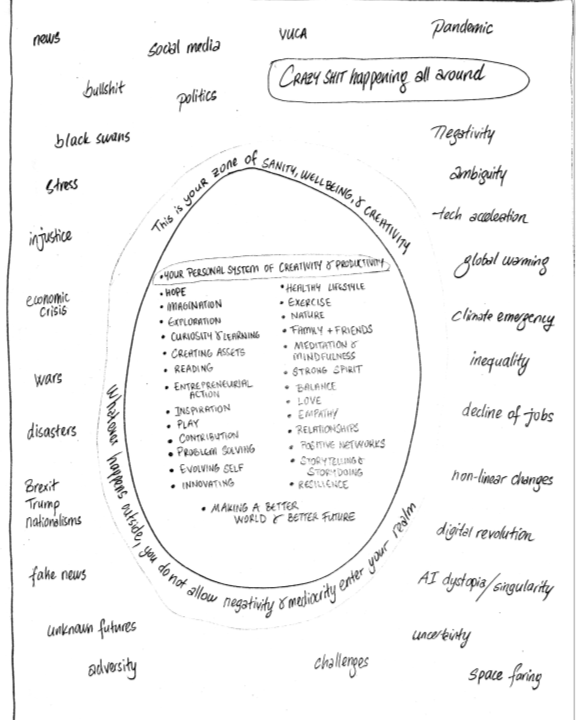
Image created by Author
In the midst of all this madness, you can still survive and thrive as individuals. In order to do this, you need to create a zone of sanity, wellbeing, and creativity for yourself. This will be your cacoon and sacred zone (represented by the egg above) where you leave out all the negativity and problems and flourish your own creativity and positivity. I have written an article on how to achieve this, and you can read it below:
The economic crisis caused by the pandemic is now influencing all of us. Unemployment is rising, businesses are going bankrupt, and individuals are struggling in these hard times.
It is too easy to lose hope and give up during these times. We need to do better. We, humans, are an incredibly creative and adaptive species. We have survived, even thrived in uncertainty. We can also survive this pandemic. We can even emerge stronger. We now need to tap into our imagination and develop our entrepreneurial skills.
Survive and Thrive as an Entrepreneur
Entrepreneurs are incredibly resilient and resourceful. They solve problems that are worth trying. They think and act with an abundance mindset. They are the ultimate optimists and they have a lot of confidence in their own agentic powers. Moreover, they act quickly — they iterate, adjust, pivot, and improvise all the time. We can develop this mentality in our lives.
You need to change our inner conversations and create a positive mindset for making progress. You need to start with small positive actions and you need to do them consistently over the long term. Sometimes, a positive trigger or a prompt is all you need. In this lecture, I have provided such a trigger exercise for my students. You can easily apply this exercise yourself in 15 minutes.
£111 Exercise: How Can You Create Extra Income for Yourself Every Week?
You will create lots of ideas to make an extra of $111 every week (or £111 if you are in the UK).
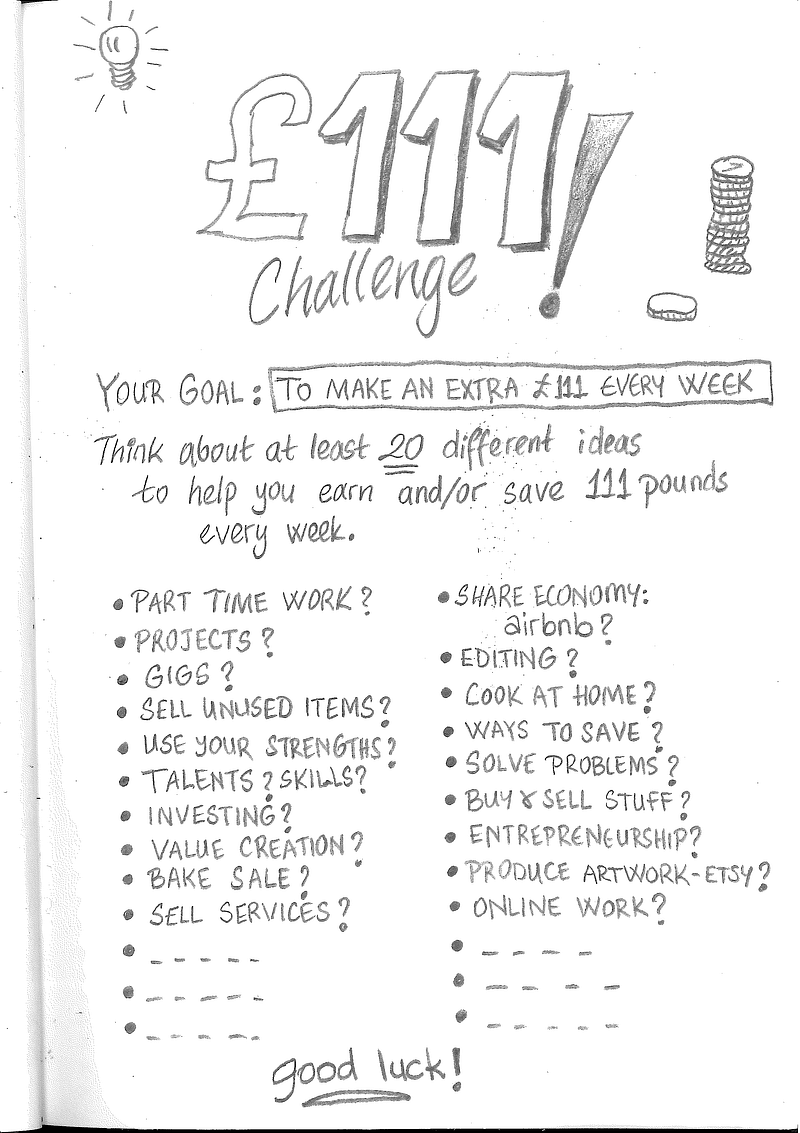
£111 Challenge, Image created by Author
Your brain works much better when you give it a specific challenge or puzzle to solve. So, this is your puzzle: Making an extra of $111 every week. You will create at least 20 ideas to make this happen. Consider as many options as you can: Part-time, consulting, teaching, online work options, entrepreneurial pursuits, Airbnb, Uber, Patreon, writing, creating assets, investing, ways of saving more…
The idea is — you need to start somewhere and take an action — however small that action might be. You need to be open to fresh possibilities and experimentation. Also, it helps not to expect immediate returns, and go for the long term. This £111 exercise will help you to start creating creative assets for your future and building your personal systems for creativity, productivity, and entrepreneurship. Your goal is to maximize the number of ideas. Originality emerges from the sheer volume of ideas.
Create Multiple Streams of Income
Here are some further ideas on making extra money:
Albert Einstein has a famous quote: “Compound interest is the eighth wonder of the world. He who understands it earns it. He who doesn’t pays it.”
Understanding how compounding works is one of the most crucial things you can learn and internalize in your life. You can apply compounding principles in your investments, learning, knowledge, and skill development. Compounding is essentially a virtuous cycle that keeps on giving you more and more in the long term. Therefore, you need to master it.
Exponential changes are hard to grasp, and our biological minds are not well equipped to deal with such changes. That is why we have a hard time understanding how compounding works over time. It is also the same reason how our minds cannot grasp the wealth of Jeff Bezos explained through the metaphor of rice:
You remember the story of the inventor who talked to the emperor of China and had a request of 1 grain of rice on the 1st square of the chessboard, 2 grains on the 2nd square, 4 grains on the 3rd square, and so on. So, the quantity of rice needed on the 64th square is more than the amount needed to cover the entire surface of the earth. Such is the power of exponential thinking.
The power of compounding illustrates the power of exponential change. For example, a penny doubling every day for 31 days will become $10,737,418.24.
Similar principles apply when you start incorporating positive habits in your life. If you make small positive changes in your life every day, your life will be significantly better in one year. It will be so much better in 3 years. Similarly, if you make a few poor choices in your life every day, the quality of your life will go down significantly in six months. You will go bankrupt (financially or healthwise or emotionally) in just one or two years. So, small habits make a big difference when they are repeated or as they accumulate over the long term.
James Clear explains this beautifully through the power of maths:
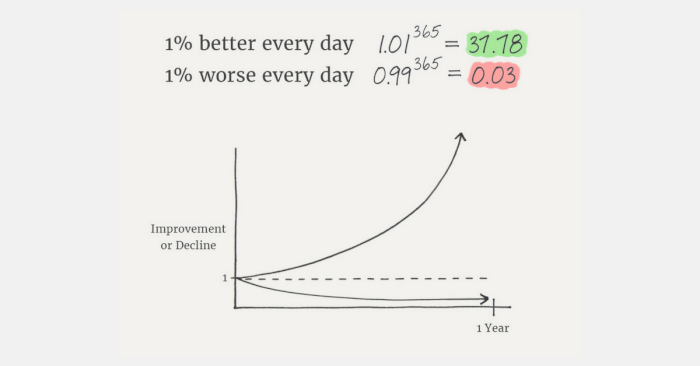
“Here’s how the math works out: if you can get 1 percent better each day for one year, you’ll end up thirty-seven times better by the time you’re done. Conversely, if you get 1 percent worse each day for one year, you’ll decline nearly down to zero. What starts as a small win or a minor setback accumulates into something much more.” James Clear
“Habits are the compound interest of self-improvement. The same way that money multiplies through compound interest, the effects of your habits multiply as you repeat them. They seem to make little difference on any given day and yet the impact they deliver over the months and years can be enormous. It is only when looking back two, five, or perhaps ten years later that the value of good habits and the cost of bad ones becomes strikingly apparent.” James Clear
So, what is the big lesson? Keep creating work you are proud of and keep compounding yourself and your assets. You will be surprised how much you will achieve in just a decade. Tap into the power of exponential returns over the long term. Although your mind is wired to think linearly about the future, you need to learn to think exponentially about the value of your creations.
You can kickstart your own journey through very small actions that you can easily implement in your life. These positive habits, however small they are, will compound over time. The processes of life and nature are not linear — they are non-linear. Therefore, you need to be wild in your radical learning, experimentation, and creativity. Set small and realistic goals you can achieve every day — just 15 minutes of creative work is fine. Practice every day, and do not break the chain — no matter what.
Tap Into The Power of Crowdfunding
Let’s say you have some amazing and fascinating ideas. You want to bring something exciting and fresh to the world. However, you do not have enough money to make it happen. So, you can use crowdfunding to bring your ideas to the world.
Crowdfunding is the practice of funding a project by raising many small amounts of money from crowds of people or supporters on the Internet. There are crowdfunding platforms that support creators, musicians, designers, entrepreneurs, journalists, writers, and inventors. Kickstarter is one of them:
These crowdfunding platforms take a percentage of the donations as their fee. Kickstarter enforces the ‘all or nothing’ criterion. This means that if the amount of the campaign is not funded within the deadline, then the person running the campaign gets nothing, and donations or contributions are returned.
Patreon is another platform where you let your fans support you on a monthly basis through a membership. You give them access to exclusive content for their monthly donations, and these donations contribute to your salary. So, Patreon helps you develop a recurring income stream:
Capital C is a fascinating documentary that shows how crowdfunding works through examples. Capital C explores how creators, geeks, and artists reach out to crowds and how this crowdfunding revolution democratizes innovation:
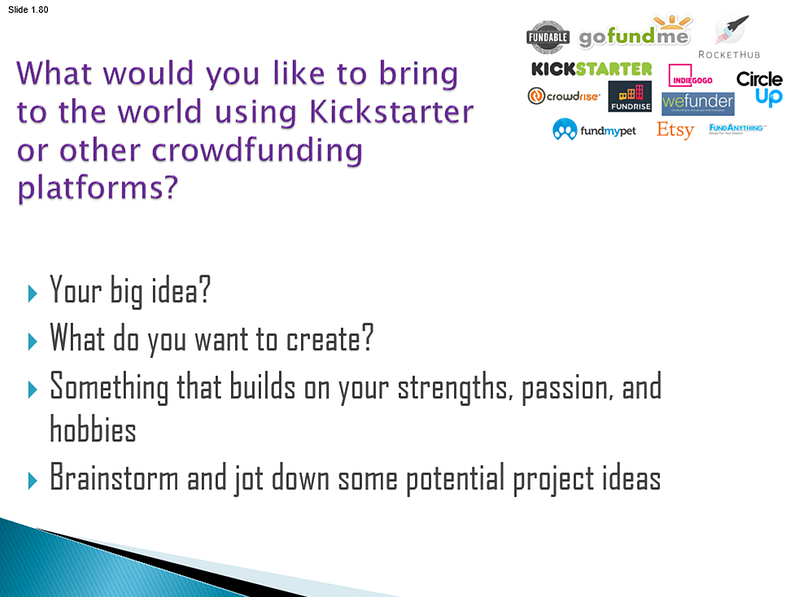
So I share the following activity with my students:
Imagine that you want to use Kickstarter to raise funds for your next project.
What would you like to bring to the world that is fresh, original, and exciting?
How will you build on your strengths, passion, and hobbies?
What do you want to create? What could be potential projects?
Brainstorm and write down your ideas.
Image created by Author
Tap into the Power of Your Creativity and Inventiveness
The world needs more renaissance people like Bill Gates or Elon Musk who pursue innovation with bold ambition, an insane focus, and a broad cross-disciplinary mindset. The world needs your creativity, imagination, and curiosity. You can create breakthrough value by:
creating new worlds and universes,
acting like a super-hero and amplifying your unique strengths into super-powers,
creating your own adventures and games you wish to play,
pursuing pure-play and fantasy,
cultivating fierce and fearless imagination,
finding and expressing your own quirkiness, weirdness, and originality,
connecting unlikely fields and domains,
using your imagination to create your own creative assets (blogs, books, music, fashion, videos, podcasts, online courses, etc.) and sharing them with the world,
using your imagination to bring things that are fresh and exciting to the world,
creating your own brands, products, services, and even avatars, and
reclaiming your childhood creativity.
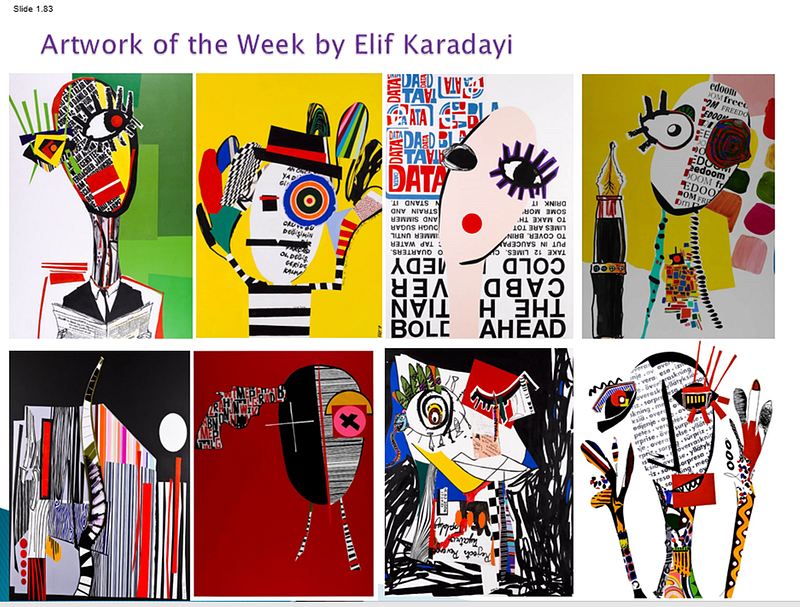
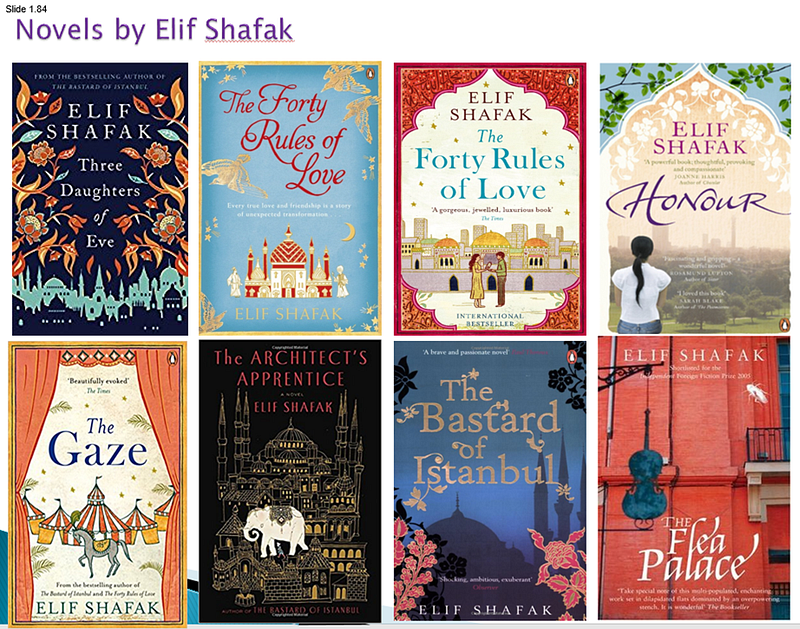
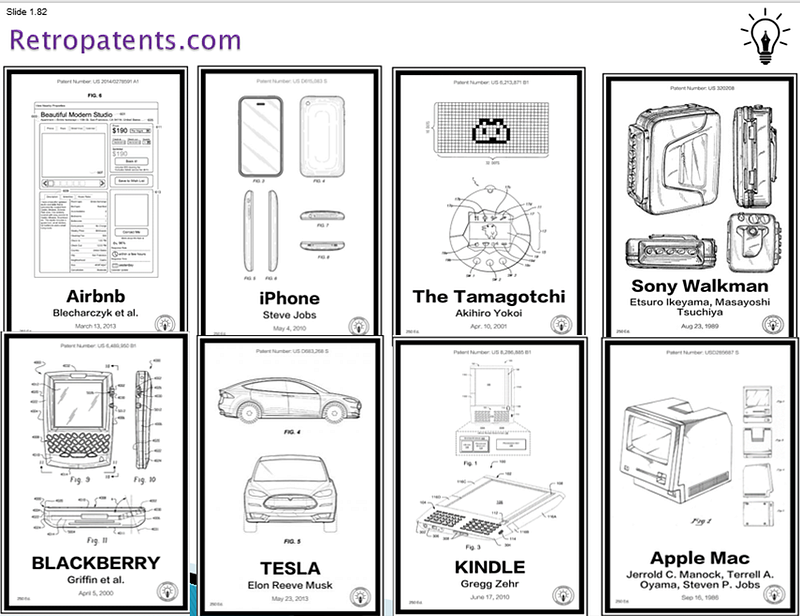
I share the following visual examples of creativity with my students:
Retropatents.com (where you can find visual patent drawings)
For this exercise, please make a list of all what you love. Get a blank page and a pencil. Draw or doodle or write down a list of all the things that you love.
These might include activities that you love doing, food that you love eating, or places you love going to. Please also include your hobbies, interests, music, arts, films, strengths, or any other things/places/people that bring you joy and excitement.
You can see my sample page below. Now, please create yours in the next 10–15 minutes.
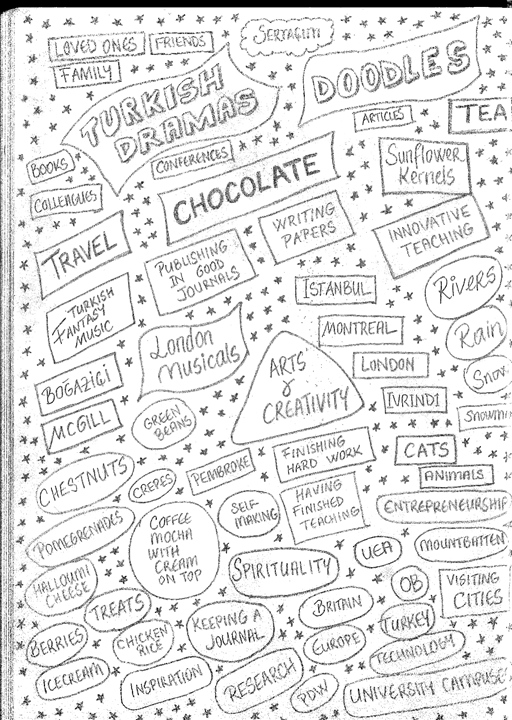
Image created by Author
Tap Into Your Childhood
Remember the times you felt excited when you were a child. You were playing, exploring, and learning all the time, and all these activities brought you joy. However, you lost that sense of wonder, play, and creativity when you grew up. Life got serious, and you have got too many responsibilities and busywork, and you are just trying to keep your head above water. So, you need to go back to your childhood.
For example, I remembered that I was always creating, playing, daydreaming, drawing, imagining, and doodling when I was a kid. I remembered these when I found my childhood diaries. I created my own theatre and performance events when I was 12. I had created my own logo when I was 13 (you can see below). I created my own cartoon and comic magazine titled “Kazikci Zipcik” when I was 14. I created four imaginary TV channels and their programming when I was 15. If you think about your own childhood, you will also find activities like these. Think about it: What did you love doing?
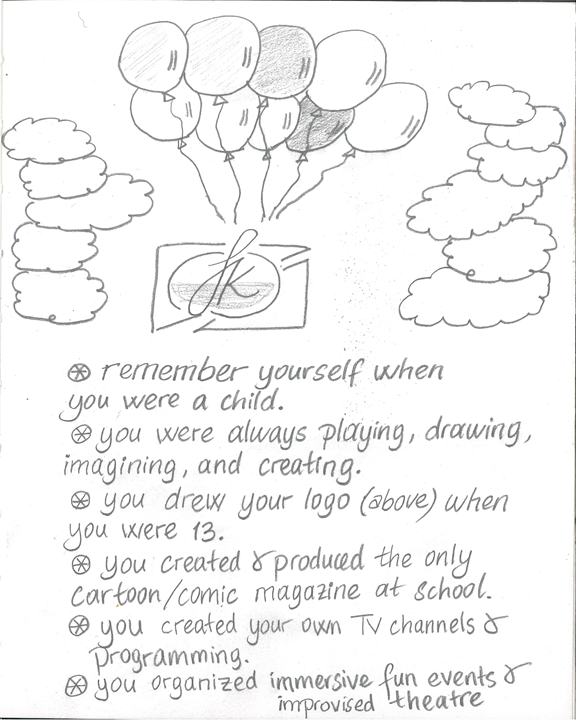
The moral of the lesson is: You need to reclaim your childhood and creativity. You can do this by exposing yourself to novel experiences and playful activities. Try getting lost, traveling to new cities, learning a new language, writing a story, or playing an instrument. Do things just because you want to do them. This means getting a break from endless goals, worries, anxieties, busywork, and responsibilities. You can learn for the sake of learning if you are following your curiosity. When you are involved in creative activities, immerse yourself in the present moment, and truly experience the joys and wonders of exploration.
Think of 5 activities that you can reclaim from your childhood. Write them down. Apply each of them next week.
Tap Into The Sheer Volume of Ideas You Create
Creativity starts with a simple decision and some small actions that you can take in your daily life. You will not automatically receive inspiration in your work or life. Therefore, you should not wait for inspiration for great ideas.
Creating great ideas is a function of creating lots of ideas and connecting them together. It is not magic — it is just a lot of hard work. To avoid mediocrity, you need to go beyond obvious and conventional answers. You need to practice generative thinking and open up the solution space as far as you can. To do this, you need to approach a problem from at least 6 to 7 different angles and perspectives:
Can you reframe or restructure or redefine the problem you are trying to solve? In how many unique ways can we solve it?
How can you go outside the box? How can you get free of your bias towards what is familiar and conventional?
What are some of the less obvious alternatives?
How can you deepen your understanding and get to the essence of the problem?
How can you connect different perspectives to arrive at a holistic solution?
How can you draw or visualize your solutions? Can you put it together in a diagram or concept map?
In generating ideas, we should not think in terms of feasibility or usefulness. It is pure play and adventure we are seeking. We are in search of varied and rich perspectives. We are searching for what is non-linear, interesting, and novel. We should be searching for a huge volume of ideas because originality emerges from the sheer quantity of ideas.
Thomas Edison was immensely productive and he held more than a thousand patents. He tried to come up with a minor invention every week. Mozart composed more than 600 pieces of music. If you want to be innovative, you should make it a habit of creating at least 50 ideas every day. Most of your ideas can be crap — it is totally fine. In order to create a diamond idea, you need to deal with hundreds, thousands of charcoal ideas.
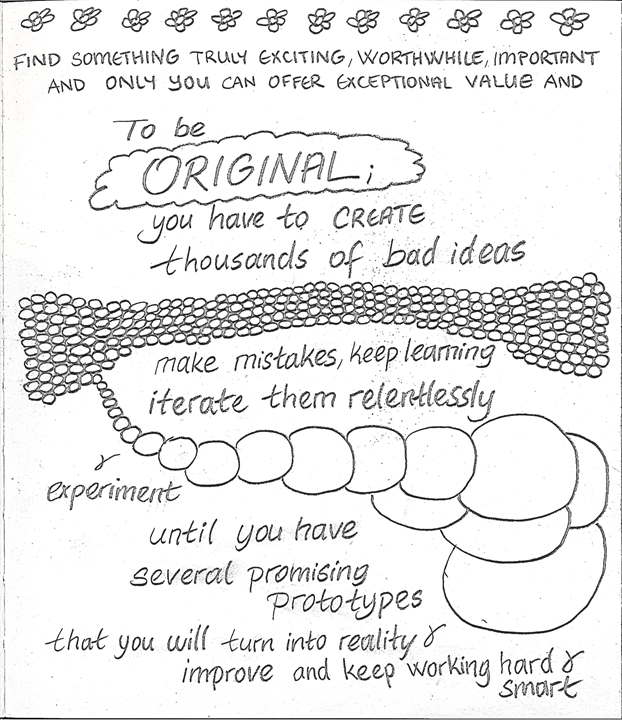
Image Created by Author
Massive quantity means more chances for cross-fertilizations and novel combinations. You just randomly combine lots of ideas with other ideas. It is pure probability theory, and you are increasing your chances.
Exercise: Turn 5 Dollars to 5000 Dollars
I give my students the following challenge: You will start at 5 dollars or pounds as your capital. Using this capital, you want to generate 5000 dollars. Think of 20 ideas to make this happen.
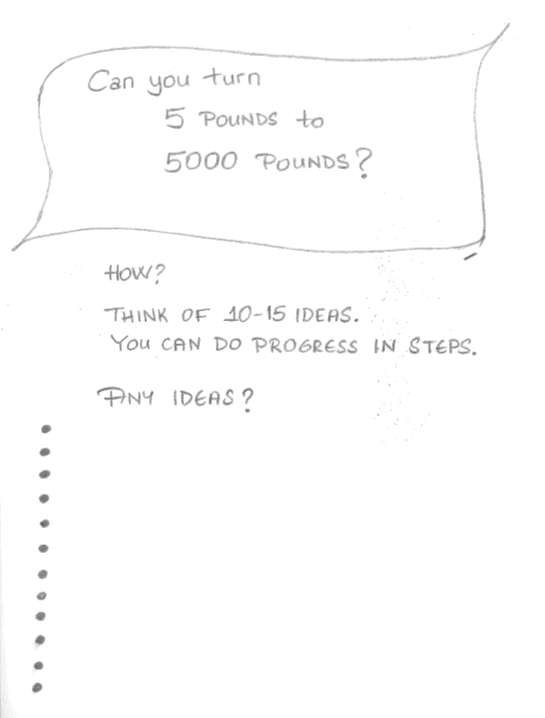
Image Created by Author
This challenge looks impossible to accomplish, but it is actually possible. Many entrepreneurs have already done something similar. They all have started with a zero and they have turned it into a hero.
Successful entrepreneurship is not a function of large investments. We can start with small investments. We are living in times where everyone should consider themselves as an entrepreneur. Starting your own business has never been easier. You only need a laptop, a cell phone, and an Internet connection. You can create enormous value if you build a system and help other people solve their problems.
Your starting point is your passions, curiosities, and interests. You need to tap into your natural talents and strengths. You will share your art, craft, or practice with the world and start building your audience. You will start creating your own creative assets such as a book, a portfolio of artwork, a podcast, a YouTube channel, a portfolio of Medium articles, an online course, or else.
We live in disruptive times where an active income is not sufficient as salary addiction makes you fragile and risk-averse in the long term. To be anti-fragile and financially flexible in the long term, you need to diversify your streams of income. This means establishing multiple sources of passive income such as royalties, investing, book sales, real estate, webinars, online courses, or e-commerce. Building your own business allows you to establish a sustainable system of wealth generation that will continue to accrue income, reputation, and rewards.
One of the mistakes we fall into when we consider entrepreneurship is that we view it as a heroic, monumental, and high-risk act. However, entrepreneurship does not have to be grand — you can start with small experiments, break your big vision into small everyday steps, and establish your own game through incremental and gradual actions. For example, writing on Medium is an entrepreneurial experiment. Each article is a small exercise in asset creation. Your business then involves a series of acts in writing and content creation.
Entrepreneurship is all about establishing your own game where you will excel. It also means you need to create your own category where you can be a monopoly. Ask yourself: What are the fresh, exciting, and original things only you can bring to the world? Ideally, you should focus on these things to amplify your contribution and impact.
A great example of entrepreneurship that I love is “I want to draw a cat for you”. This guy draws cat cartoons for about 10$ a piece, and he has sold more than 22,000 of these cartoons. The great majority of this $220,000 income is profit, as the costs are almost negligible (paper, envelope, and posting costs). So, this guy was able to turn $5 to $5000.
It is important that you start very small and make this practical for yourself. Even if you are a student or a full-time employee, you can build a small operation as a side hustle. You can view this as an experiment and an investment you will build over time. Spending a few hours in the evenings or in the weekends is all you need to do.
Entrepreneurship involves building a sustainable system of creating value by leveraging your unique skills and knowledge. You can get the ball rolling when you spot opportunities to solve problems out there to make money. You can start small and take easy actions to create a minimum viable digital product or service. You iterate, keep learning and experiment with a series of strategies and behaviors. You get better in your art and craft every day. You improve and improvise constantly until you have a secret sauce that cannot be duplicated.
My Entrepreneurial and Artistic Story
I created my idea of “Self-Making” in 2017. I have just used pencils and notebooks for my craft and art. I can argue that I have just started at £5, as the notebook is about £4.5 and the pencil costs £0.5. I then applied for the UEA Enterprise Fund of £5000, and I have got this award. So, this is another example of how you can create something worthwhile and promising out of nothing.
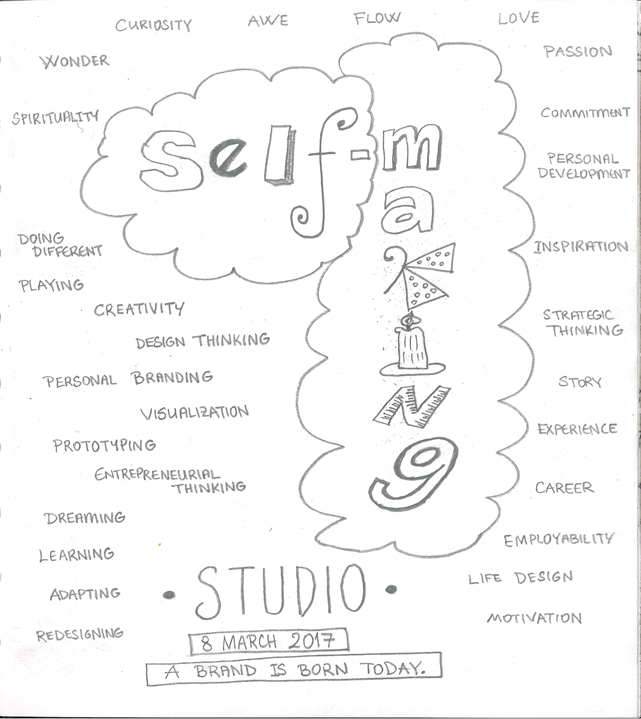
Image Created by Author
My story is not finished yet, as it is still evolving. I have established a company and a brand titled “Self-Making Studio”. With my friend Emre’s help, we have established our web site:
I have created the book titled “Self-Making Studio”, and the book is now sold across 14 countries. In addition, I have published nearly 200 articles on Medium, many of which are related to this book. So, the journey is far from over — it is still evolving.
I would like to continue this section with a great quote from Daniel DePiazza on how to make one million dollars a year:
“ You have to help a lot of people to make a lot of money. To make $1 million in a year, you have to help so many people that your work generates just about $2,700 every day ($1,000,000 / 365 days = $2,739.73)
That might seem impossible but think again. What if every person you helped gave you $1? You’d need to help ~2,700 people.
If everyone you helped gave you $2…now you only need to help ~1,400 people.
Imagine if they gave you $5….or $10! The number of people you’d need to help would go down.
So here’s the deal: you want to be a millionaire? You’ll need $2,740 today, tomorrow and 363 days after that.
How can you help many people? How can you reach people who need your help?
Anything you want in the world can be yours, if only you’d break it down into tiny little chunks.”
Finally, here is a fascinating article by Benjamin P. Hardy titled “Want To Become A Multi-Millionaire? Do These 15 Things Immediately”:
Please read it and reflect on how you will apply each principle in your life. Write down small actions to implement each principle. These principles will help you tremendously in your journey of asset creation.
Take-aways
You cannot trust and leave your well-being and career to institutions (corporations in particular).
There is a dark side to human nature and we need to be aware of it.
How you can stay positive and hopeful amidst all negativity is one of the greatest skills that you can have in your life.
We live in the era of crowdfunding — use it to bring your fresh and creative ideas to life.
Your small everyday habits RIGHT NOW shape and determine the quality of life you will have in the long term. Habits compound over time. That is why you need to develop positive habits and improve yourself and aspire to new heights of performance and learning every day.
Develop a positive system of productivity, creativity, and well-being that works for you. It is your job to develop this and design your life.
Fahri Karakas is the author of Self-making Studio. You can explore more here.