avatarS M Mamunur Rahman

Free AI web copilot to create summaries, insights and extended knowledge, download it at here

2429

Abstract

tm_medium=referral&utm_campaign=image&utm_content=1445440">Pixabay</a></figcaption></figure><h1 id="1bc1">Is it for sex, food, or something else?</h1><p id="6eaa">You find many articles and choose to read some of them. You cannot believe your eyes seeing the number of frogs die every year across the world during the road-cross.</p><p id="c158">You read an <a href="https://www.dw.com/en/why-did-the-toad-cross-the-road/a-37918498">article </a>published in <i>Deutsche Welle (DW)</i> that says -When the temperature rises, toads start to wander the streets in search of their spawning grounds. They do it in the nighttime when the temperature is relatively low and has adequate moisture. They migrate from dry place to wetlands, and on their way — they die under our tires.</p><p id="684b">But you wonder — why do they do that? This migration is for what? An article of <i>Daily Jstor</i> helps you understand the reason. It <a href="https://daily.jstor.org/why-did-the-amphibian-cross-the-road/">says</a>, For an amphibian to successfully find a mate, first, they need to get to the breeding ground. And the wetlands/ponds/lakes are the perfect place for that.</p><p id="fe23">It explains further<a href="https://daily.jstor.org/why-did-the-amphibian-cross-the-road/"> saying</a>, American toads and many salamanders spend their days in dank, dark areas, underneath leaf litter, or beneath dead trees. Others, like the tiny Spring Peeper, spend most of their lives in trees. But all amphibians must breed in water.</p><p id="8f11">Now you found a good reason and understand why so many frogs were crossing the road you were walking on and trying hard to reach the other-side-pond.</p><p id="9b0b">Now it makes sense. It is one of the fundamentals of life — sex — an urge that must be satisfied to bring new generations to keep their world functional. It’s a universal design. Death seems so insignificant in front of it.</p><p id="1b92">You feel sad when you come to know that preventing such death is very difficult. Where wetlands (especially in rural areas) are less than 100 meters from a road, the death rates are significantly higher. But it’s lower near major roads and in areas where foods are abundant.</p><p id="7c53">You feel sad knowing how the innocent amphibians are being cruelly killed by us — under our proud tires.</p><p id="b9fd">But you see a ray of hope when you hear the news that some conscious p

Options

eople of Germany made about <a href="https://www.dw.com/en/why-did-the-toad-cross-the-road/a-37918498">800 special-amphibian-fences</a> along the roads in Germany to protect the frogs and toads from being killed.</p><p id="9ca8">They put some buskets under the french where the amphibians fall during a failed jump. Later, these lovely people free the captivated toads and frogs on the other side of the roads.</p><h1 id="3903">To Conclude</h1><p id="338b">After reading about the amphibians, you feel strange. And when you go to bed, you think — everyone is struggling for survival, not just us, human beings. Every living being is taking risks to spread their genes and create a new generation.</p><p id="9f06">You feel sad thinking how fragile this thing called life. It starts with pain and ends in pain as well. But, of course, the in-between time is so lovely, ugly, and diverse that it compensates for everything else.</p><p id="4e07">You close your eyes. You think about the amphibians, birds, trees, and nature. And you don’t know — exactly when — you are taken by a deep goodnight sleep.</p><p id="abb9"><b><i>Thank you for reading.</i></b></p><p id="af06"><i>If you are a lover of the environment, nature, and wildlife, you may enjoy the following articles published in <a href="https://medium.com/the-environment"><b>The Environment</b></a>.</i></p><ul><li><a href="https://readmedium.com/the-school-of-nature-4c3d052149ce"><i>The School of Nature</i></a></li><li><a href="https://readmedium.com/where-have-all-the-birds-gone-395a4a3910ab"><i>Where Have All the Birds Gone?</i></a></li><li><a href="https://readmedium.com/color-your-life-with-some-birds-ffae4fddde2"><i>Color Your Life With Some Birds</i></a></li><li><a href="https://readmedium.com/i-saw-my-darlings-on-a-dye-fig-tree-a9440a9aa3fd"><i>I Saw My Darlings on a Dye-Fig Tree</i></a></li><li><a href="https://readmedium.com/global-warming-is-going-to-destroy-your-childrens-life-bb77df1a7f74"><i>Global Warming Is Going to Destroy Your Children’s Life</i></a></li></ul><p id="e83d"><i>You can also share your love and concerns for this lovely planet. Just<b> click the below image</b> and be a <b>writer</b> for <a href="https://medium.com/the-environment"><b>The Environment</b></a></i></p><figure id="54f4"><img src="https://cdn-images-1.readmedium.com/v2/resize:fit:800/1*AZ0e8awj74i-geupQWoUqQ.png"><figcaption></figcaption></figure></article></body>

Do Frogs Cross the Roads for Sex?

Why amphibians cross the roads and very often face a terrible death
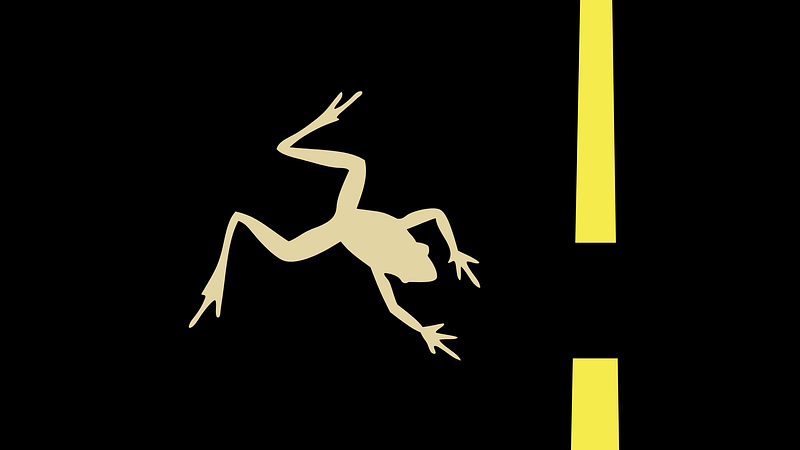
Photo created by the author using Canva

It’s springtime. But you can feel the heat as the sun is shining brightly above your head, escalating the temperature to 30ºC. The tender leaves of the surrounding trees are whispering the story of a passing winter.

In the evening, when you go for a walk along the street, you still feel the touch of some cold breeze. Darkness is more enjoyable now than daylight. You hit the road, see the beauty of darkness despite the cruel light pollution.

In your mind, you remind the days when you experienced the complete darkness with all its beauty and mystery. But those days are long gone. You take a deep breath and walk gently through the side-walk as you have no hurry to reach any milestone.

It’s your own time — free from continuous modern disturbance and chaos for success. You walk and look around you — on the right: long grasses are nodding their heads saying you hello, — on the left: an asphalt road lying dead after a day-long depression.

You smile and think — people make noises to become civilized, but the peace still remains in nature where silence prevails.

Your night-walk continues. Suddenly, you hear a roar of an engine coming towards you. It breaks the silence and passes you swiftly. You look at the way it fades away and saw something unusual.

A cruel death. A life gets flattened on the asphalt. It pours your heart in melancholy.

You quit your walk and come home seeing a fresh death. Then, being curious, you search on google — why frogs cross the roads and die.
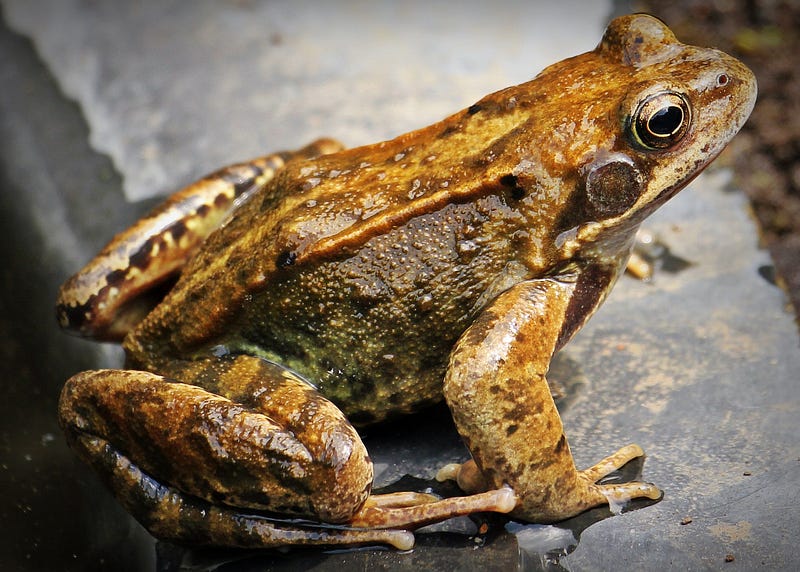
Image by S. Hermann & F. Richter from Pixabay

Is it for sex, food, or something else?

You find many articles and choose to read some of them. You cannot believe your eyes seeing the number of frogs die every year across the world during the road-cross.

You read an article published in Deutsche Welle (DW) that says -When the temperature rises, toads start to wander the streets in search of their spawning grounds. They do it in the nighttime when the temperature is relatively low and has adequate moisture. They migrate from dry place to wetlands, and on their way — they die under our tires.

But you wonder — why do they do that? This migration is for what? An article of Daily Jstor helps you understand the reason. It says, For an amphibian to successfully find a mate, first, they need to get to the breeding ground. And the wetlands/ponds/lakes are the perfect place for that.

It explains further saying, American toads and many salamanders spend their days in dank, dark areas, underneath leaf litter, or beneath dead trees. Others, like the tiny Spring Peeper, spend most of their lives in trees. But all amphibians must breed in water.

Now you found a good reason and understand why so many frogs were crossing the road you were walking on and trying hard to reach the other-side-pond.

Now it makes sense. It is one of the fundamentals of life — sex — an urge that must be satisfied to bring new generations to keep their world functional. It’s a universal design. Death seems so insignificant in front of it.

You feel sad when you come to know that preventing such death is very difficult. Where wetlands (especially in rural areas) are less than 100 meters from a road, the death rates are significantly higher. But it’s lower near major roads and in areas where foods are abundant.

You feel sad knowing how the innocent amphibians are being cruelly killed by us — under our proud tires.

But you see a ray of hope when you hear the news that some conscious people of Germany made about 800 special-amphibian-fences along the roads in Germany to protect the frogs and toads from being killed.

They put some buskets under the french where the amphibians fall during a failed jump. Later, these lovely people free the captivated toads and frogs on the other side of the roads.

To Conclude

After reading about the amphibians, you feel strange. And when you go to bed, you think — everyone is struggling for survival, not just us, human beings. Every living being is taking risks to spread their genes and create a new generation.

You feel sad thinking how fragile this thing called life. It starts with pain and ends in pain as well. But, of course, the in-between time is so lovely, ugly, and diverse that it compensates for everything else.

You close your eyes. You think about the amphibians, birds, trees, and nature. And you don’t know — exactly when — you are taken by a deep goodnight sleep.

Thank you for reading.

If you are a lover of the environment, nature, and wildlife, you may enjoy the following articles published in The Environment.

You can also share your love and concerns for this lovely planet. Just click the below image and be a writer for The Environment

Frog
Amphibians
Nature
Wildlife
The Environment
Recommended from ReadMedium