
Do-do-do-do, Do-do-do-do
Know where this is going?

Presented for your consideration, a man who works earnestly at his craft. He has operated under many different names past and present. We have known him as Paddy or Rod, Norman, Alan, and Aaron., and he arrives at his place of employment each day to feed little boxes.
Our friend takes great care to nourish these boxes with layered morsels, rich in flavour, nuanced and complex. He will rarely have physical contact with his charges, but they will reward his dutiful practice with an unlikely result.
These boxes come in various shapes and sizes, large enough to hang on a wall, and small enough for the palm of one’s hand. These innocuous little creatures control the daily lives of millions.
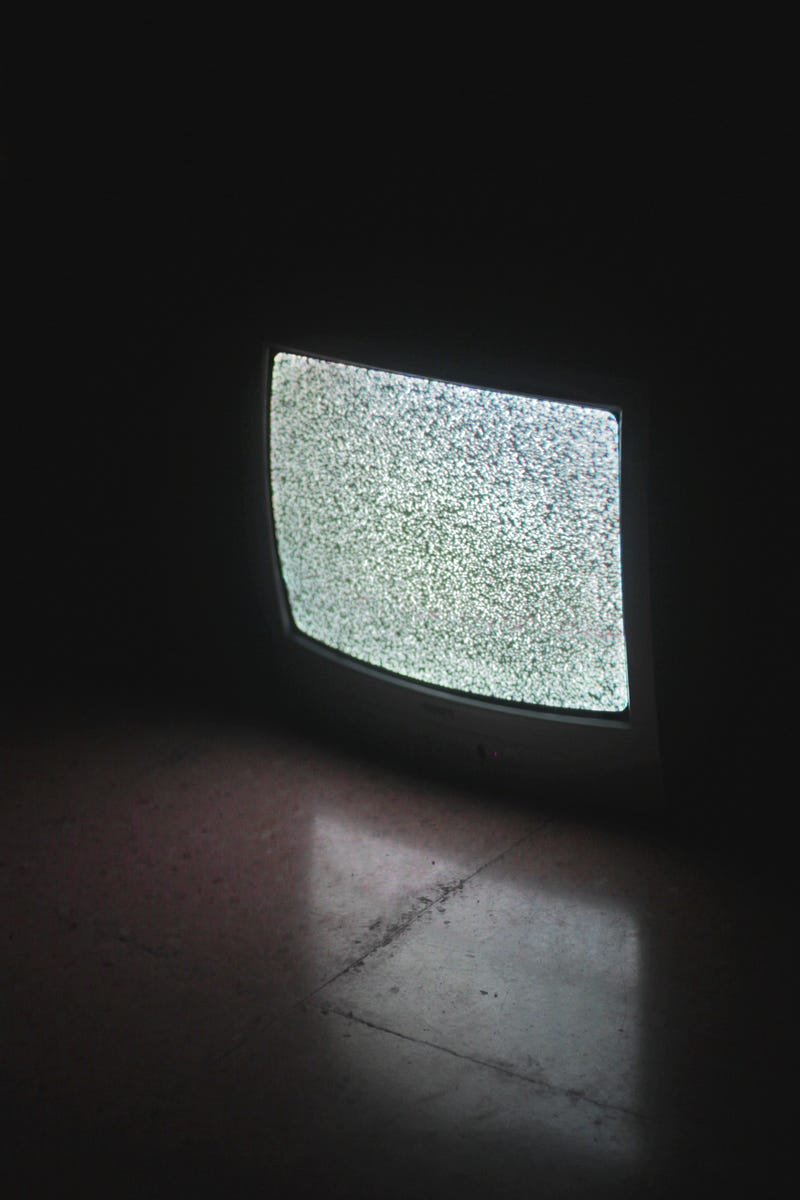
It sits quietly in a chosen place of prominence, waiting to emit the result of its daily feeding. A kind of gas if you will, conducted through both sound and vision, mesmerizing the minds of its masters.
This device; this little box; will display everything from the depths of our despair, to the heights of our ecstasy.
It is a little box which we call…
The TV set.
In the year 1959, a creative genius left his job writing sales copy for advertisers to become one of the most prominent creators in a new form; the television writer.
Rod Serling’s ideas expanded beyond the small screen, eventually becoming landmark motion picture scripts. The Twilight Zone and later, Night Gallery, would become benchmark productions of the early TV era. As Steven King is to book publishing, Rod Serling was to broadcast media.
At first, I considered writing the above as pure fiction, taking our ‘little box’ story to the places where Serling himself might have gone. But then…
Yesterday morning, I woke with a clear idea of the above story rattling around in my head. I opened Medium first, to discover an article that Dr. Mehmet Yildiz had just published, relating to the struggle for fair prominence of fiction writing on this platform.
After reading the good doctor’s article, I began to wonder whether there was something more fundamental at play in my original musings. As a filmmaker and a cinema historian of sorts, fiction has always been my first creative love.
I marvel at the skill and imagination of my favourite writers on Medium and hope to emulate their prowess with the written word. One particular story that I had the pleasure to read recently, was one penned by friend and colleague, Liam Ireland.
After reading this brilliant piece of fiction inspired by personal experience, I thought it would almost instantly go viral. Maybe you won’t agree, after all, fiction is highly subjective. That’s okay.
What concerns me most though and to Dr. Yildiz’s point, how can an achievement like this story take its rightful place among the best the platform has to offer, if it never sees the full light of day?
I don’t have to wonder how Mr. Serling would respond to an obstacle such as this. He would simply charge, full steam ahead. Any writer worth his words knows that little is achieved without the will to take a risk.
Television was in its infancy when Serling came along with his proposal for The Twilight Zone, and Science Fiction was a genre yet to be tried on the little box. That, and the issues he would have with censors of the day, never deterred him from realizing his goal.
During its run over a span of four years, The Twilight Zone in television terms was a mild success for the times. The legacy left behind for the following half-century and more is an undeniable masterpiece.
In the following years, many have tried to copy Serling’s stylizing, and have failed miserably by comparison. And, where would the likes of the Star Trek franchise and more Sci-Fi television to follow be, if not for the trailblazing efforts of one Rod Serling?
The difference in Serling's manner of Science Fiction writing is that his stories focus on the humanity of the times he lived in first. The science was merely a vehicle for telling the stories he felt strongly about, and if nothing else, Rod Serling was a great humanitarian.
It may have taken a longer amount of time than expected for writing such as Rod Serling’s to reach the status it deserved, but what a loss to us all it would have been if he never took the risk.
I believe Medium, and ILLUMINATION, in particular, can become the impetus for a renewed love of the fiction form. To that end, I would like to propose perhaps with the leadership of Dr. Yildiz, that we create a fiction-based entity of some kind that will propel good fiction writing forward.
This enterprise must have far more substance to offer than “How to…” and “Three reasons why…”
If you are a fiction writer and have any thoughts on how we might create a sustainable and growing interest in fiction among our readers, I would welcome your replies.
For now, I’ll leave you with links to some of my own work in fiction. I too hope to improve my craft here and receive more readership in the genre that I love.
As always, my thanks to you for taking the time.


