
DNA-Based Digital Data Storage vs. “Gene banks”
If you’ve been keeping up with recent developments in biotechnology, you might have come across discussions about DNA being hailed as a potential medium for storing digital data (link). While DNA traditionally serves as the blueprint for life, encoding genetic information in living organisms, the notion of it also being capable of storing non-genetic, or “abiological”, information might be a novel concept for many.
For those who’ve been following my writings, you may have noticed that I’ve written a few articles on the emerging field of DNA-based digital data storage. Interestingly, I’ve received some inquiries regarding how this differs from what people often call “gene banks”, i.e., companies like Ancestry DNA or 23andME. Although both can be considered as DNA archives or storage systems, they actually are quite different things, and serve distinct purposes.
It’s crucial to understand these disparities to prevent any confusion, especially as DNA-based digital data storage edges closer to commercial availability for the general public.
Let’s briefly recap and unpack each application before delving into their dissimilarities.
DNA-Based Digital Data Storage
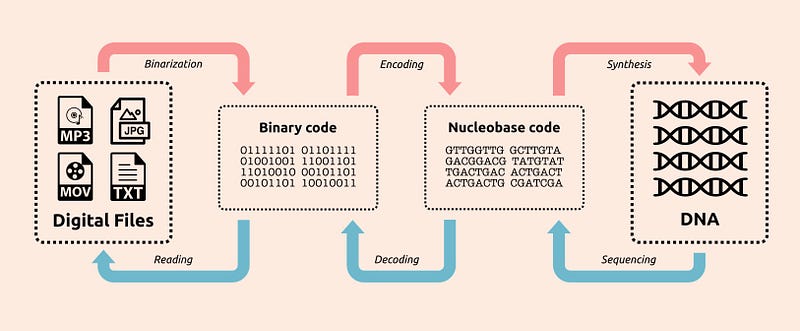
Imagine a future where your family photo album or the entire Library of Congress can be stored within a droplet of DNA. This futuristic concept is becoming a reality through DNA-based digital data storage. DNA, with its remarkable data density and long-term stability, presents a promising alternative to traditional storage mediums like hard drives or tapes.
The process of encoding data into DNA involves translating digital information into nucleotide sequences, the building blocks of DNA. Sophisticated synthesis and sequencing techniques are then employed to store and retrieve this data. This approach offers advantages such as high data density, enabling vast amounts of information to be packed into tiny spaces, and long-term stability, potentially preserving data for thousands of years.
Applications of DNA-based digital data storage span from archival preservation to data backup solutions and even environmental data preservation for future generations. The potential scalability of this technology holds promise for addressing the growing challenge of digital data storage in the age of big data.
DNA Data in Genebanks and Ancestry Testing

On the other hand, genebanks and ancestry testing services primarily deal with genetic data extracted from human samples. Genebanks serve as repositories of genetic information, preserving biodiversity and aiding scientific research. They store genetic data from various organisms, facilitating studies on genetic diversity, evolution, and conservation.
Ancestry testing services, such as those offered by companies like 23andMe and AncestryDNA, analyze individuals’ DNA to provide insights into their genetic heritage and ancestry. These services typically involve collecting DNA samples from users, analyzing them, and generating reports detailing ancestral origins, genetic traits, and potential health predispositions.
Ethical considerations loom large in the realm of DNA data, especially regarding privacy concerns, ownership of genetic information, and the potential misuse of data for discriminatory or commercial purposes. As more individuals entrust their genetic data to genebanks and ancestry testing services, questions surrounding data security and consent become increasingly pertinent.
Distinguishing Between DNA-Based Digital Storage and Genebanks
While both DNA-based digital storage and DNA data in genebanks and ancestry testing services involve DNA, they serve vastly different purposes and operate on distinct principles.
DNA-based digital storage focuses on encoding digital data into DNA for long-term preservation and data storage applications, offering unparalleled data density and stability.
In contrast, DNA data in genebanks and ancestry testing services revolves around genetic information extracted from human samples, serving purposes ranging from biodiversity preservation to personal ancestry exploration, albeit with significant ethical considerations.
Understanding the differences between these two approaches is crucial for making informed decisions about genetic data utilization, storage, and privacy. As technology continues to push the boundaries of what’s possible, navigating the genetic data maze requires careful consideration of the implications and ethical ramifications associated with each approach.
If you’re intrigued to learn more about the basics of DNA data storage, I recommend checking out this book*. It serves as a valuable manual that prompts you to reconsider the role of DNA, particularly synthetic DNA, and how it transforms from merely carrying genetic information to serving as a vessel for digital data.
(*an affiliate link)


