DIY Vitamin C Serum
Fresh, potent, and priced right!
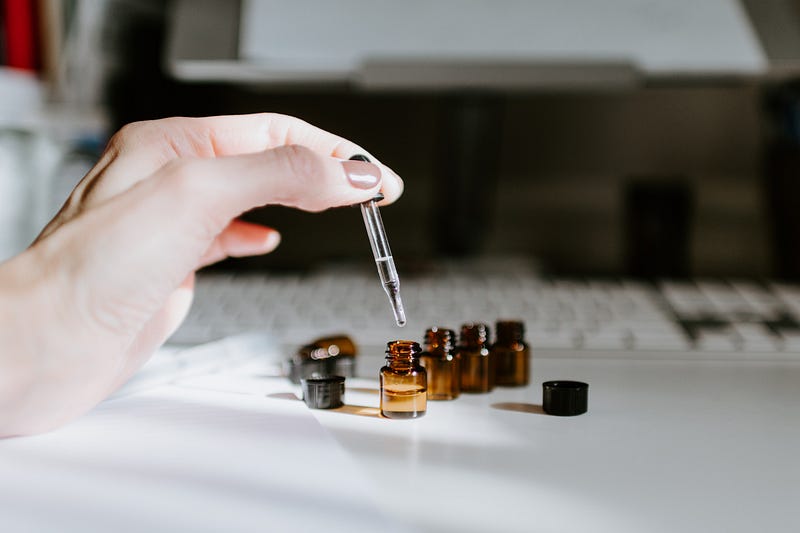
Kat Kou already published a wonderful piece on the benefits of Vitamin C. It was quite comprehensive, so I’ll just hit the high points, here.
We know how vital Vitamin C is to our overall well-being. In fact, to reap the most health benefits, we need to consume it every day as Vitamin C is water soluble, meaning our bodies can’t store it.
Oranges. Goji berries. Broccoli. Brussels sprouts. Green and red peppers. All are excellent sources of Vitamin C.
So, eat your sprouts, people! And your papaya, pineapple and watermelon. Your body will applaud you.
Vitamin C is quite the superstar in the beauty biz, too. Check out all the ways your skin can benefit from this most basic of supplements:
Boosts collagen production. Who the hell wants lines and wrinkles if we can do something to prevent them? Or, help fade the ones we already have? Because Vitamin C is antioxidant-rich, it helps to promote collagen, which naturally ebbs as we age. As a result, lines and wrinkles are “filled in” and smoother.
Reduces dark, under-eye circles. Ugh, right? Put down the concealer and pick up your homemade Vitamin C serum (which I will tell you how to concoct in a minute). You’ll be left with a more even skin tone and a reduction in those awful “half moons.”
Protects skin from sun damage. Studies show that topical Vitamin C protects skin from the sun’s harmful rays, especially UVA and UVB.
Improves skin hydration. If you’ve tried nearly every moisturize on the planet and still suffer from dry, flaky skin, give Vitamin C a try. In a very short time, you’ll notice an overall improvement and your skin’s moisture and hydration.
Helps skin to appear brighter and healthier. There’s no reason to put up with dull-looking skin when regular use of topical Vitamin C can create a vibrant, healthy appearance. Strong concentrations equal revitalization.
Helps skin look younger, and longer. The Holy Grail. More even-toned skin with fewer wrinkles and sagging. Vitamin C also increases elastin formation, which thickens, protects, and heals skin cells.

Topical Vitamin C? Hell, yeah! Now, let me tell you how you can make it yourself for a fraction of what you’d pay in a department store, or even, a drug store.
Here’s the thing about store-bought, Vitamin C products: They lose potency very quickly. Liquid Vitamin C, especially, is particularly unstable and prone to oxidation, meaning it reacts to the environment. So, by the time you’ve popped the top on your expensive serum, its potency has already diminished. At the end of the day, that comes down to a waste of good money.
You can search online and find a plethora of recipes for homemade Vitamin C serum. In fact, I encourage you to do just that. Because I’ve done quite a bit of researching and tweaking, I’d like to share the DIY magic that works for me. It’s so easy, it’s crazy
DIY VITAMIN C SERUM
This is what you’ll need:
Distilled water
Vitamin C crystals or powder (I use the crystals.)
A dark-colored glass bottle with a dropper
Vegetable glycerin (or glycerin with rose water, for a heavenly smell)
A teensy funnel
Plastic spoon for mixing
Measuring spoons
All of these ingredients are inexpensive and easy to find. These are the Vitamin C crystals I use, but I’m sure there are comparable brands. You can find glycerin in any drug store, even the kind with rose water. The glass bottles can also be found on Amazon or, in many health food stores. I believe even Whole Foods carries them. The funnels can be found in cheap, multi-packs in discount stores or dollar stores.
This is how you make it:
Put 3 teaspoons of the distilled water into a small glass.
Add one teaspoon of the Vitamin C crystals and mix with the spoon until completely absorbed. That’s very important.
Here’s my trick to help the crystals absorb faster. Fill a larger glass (one that the small glass can fit into), with regular tap water. Nuke it so the water is hot. Put the small glass containing the crystals into the larger glass and mix away. The heat from the nuked water will help the crystals “melt.”
Side note: The reason for using a plastic spoon to mix ingredients: Stainless steel will promote oxidation, which we don’t want. You can also use a glass mixer.
Once the crystals are fully absorbed, add two teaspoons of the glycerin and mix everything together.
Voila! That’s it.

Now you use your cute little funnel to decant the mixture into the glass bottle. Tip: Wrap the bottle itself in aluminum foil to help keep light out and promote a fresher brew for longer.
Store in the fridge. You can make a fresh batch every week or so. Mine seems to last at least two weeks. Plus, a little goes a long way.
I apply my serum to my face and neck, at night, usually after a bath or shower when my pores are open. I’m also a huge fan of exfoliation, first, to rid the skin of dead, dulling cells. That said, my skin isn’t particularly sensitive, so if yours is, skip that step.
After the serum has had time to absorb into my skin, I apply moisturizer. That’s just my routine. Use whatever works for you.
Also, and I want to stress this: You may have to play around with the ingredients in order to get the amount of Vitamin C that works for you. For example, if you experience uncomfortable stinging, reduce the amount of C to a half teaspoon and work your way up.
There will be a little bit of a sting, but I personally like it as I feel that my serum is doing its thing for me.
Give DIY Vitamin C a try. Fresh. Potent. And, it works. My skin tone is even. I have very few wrinkles and overall, my complexion looks “refreshed.” And, I haven’t spent a fortune on a product that’s not half as effective.
Enjoy! And, thanks for reading.
Sherry McGuinn is a longtime Chicago-area writer and award-winning screenwriter. Her work has appeared in The Chicago Tribune, Chicago Sun-Times, and numerous other publications. Sherry’s manager is currently pitching her newest screenplay, a drama with dark, comedic overtones inspired by a true story.
Even more from The Glossary: