
DIY Natural Adhesive Remover
Make your own organic and natural adhesive remover and cut out all the harmful chemicals in the store-bought brands
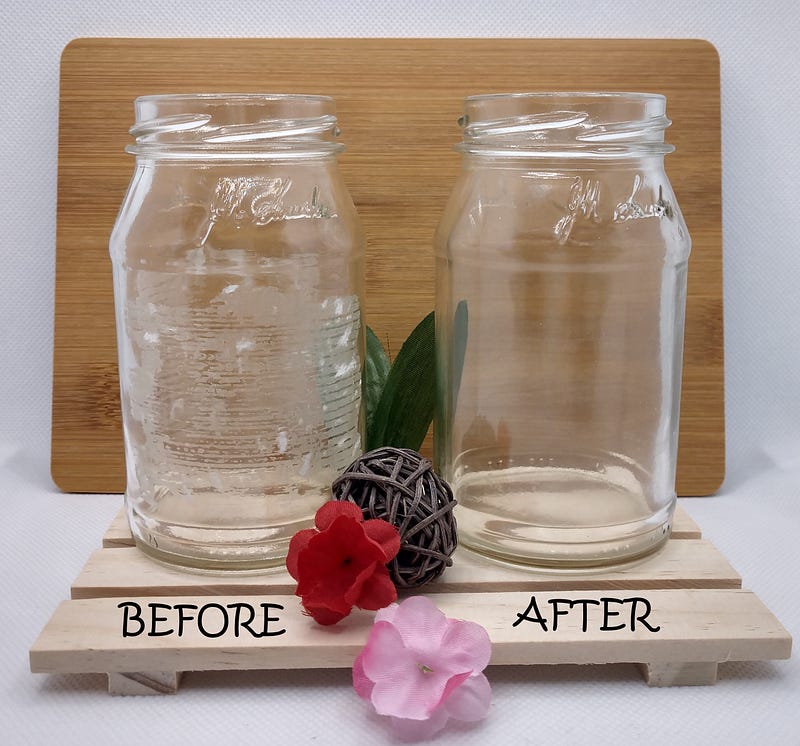
Repurpose Glass Jars
We buy a bunch of olives, pickles, and mayonnaise. They all come in glass jars, which is great because I can recycle the glass.
Sometimes I save a jar for an art project or a DIY storage solution. I’ll take off the label and start the pain in the neck task of soaking and scrubbing until I get all the glue off the glass.
That stuff sticks like its life depends on it. Then, to add insult to injury, after I get all the glue off, I’m left with ghostly glue stripes.
I’ve scraped at it with my fingernails. I’ve used a scourer. I’ve soaked the bottles in hot soapy water. Yep, none of it exorcises the ghost glue residue.
I’ve purchased commercial adhesive removers like Goo Gone and Goo Off. They work well, but I’m not comfortable with the ingredients. After researching them, I found that the ingredients were a little scary to me.
I preferred to make my own goo-fighting concoction.
Commercial Adhesive Removers Are a Bit Scary
The EWG (Environmental Working Group) does not rate commercial glue removers favorably. In their view, the product doesn’t satisfy the group’s ingredient transparency standards and is concerned with their potential health risks.
Who Are The EWG?
Quote from their About Us page:
“We are a non-profit, non-partisan organization dedicated to protecting human health and the environment.”
Why Should You Make Your Own Adhesive Remover?
- It’s inexpensive.
- You are in charge of your health and safety, because you are in control of the ingredient list.
- It’s safer around children.
- Since you only need two ingredients, you can make the adhesive remover as needed.
- On demand mixing ensures that you never have an expired or rancid adhesive remover product in your home.
You Will Need:
- 1 tbsp coconut oil
- 1 tbsp baking soda
- Small bowl
- Measuring spoon
- Spatula
- Table salt (option)
How To Mix It All Together
Mix the coconut oil and baking soda in a bowl until it forms a smooth paste.
Get That Goo Off
Remove as much of the label as possible. The adhesive remover works best without the paper present.
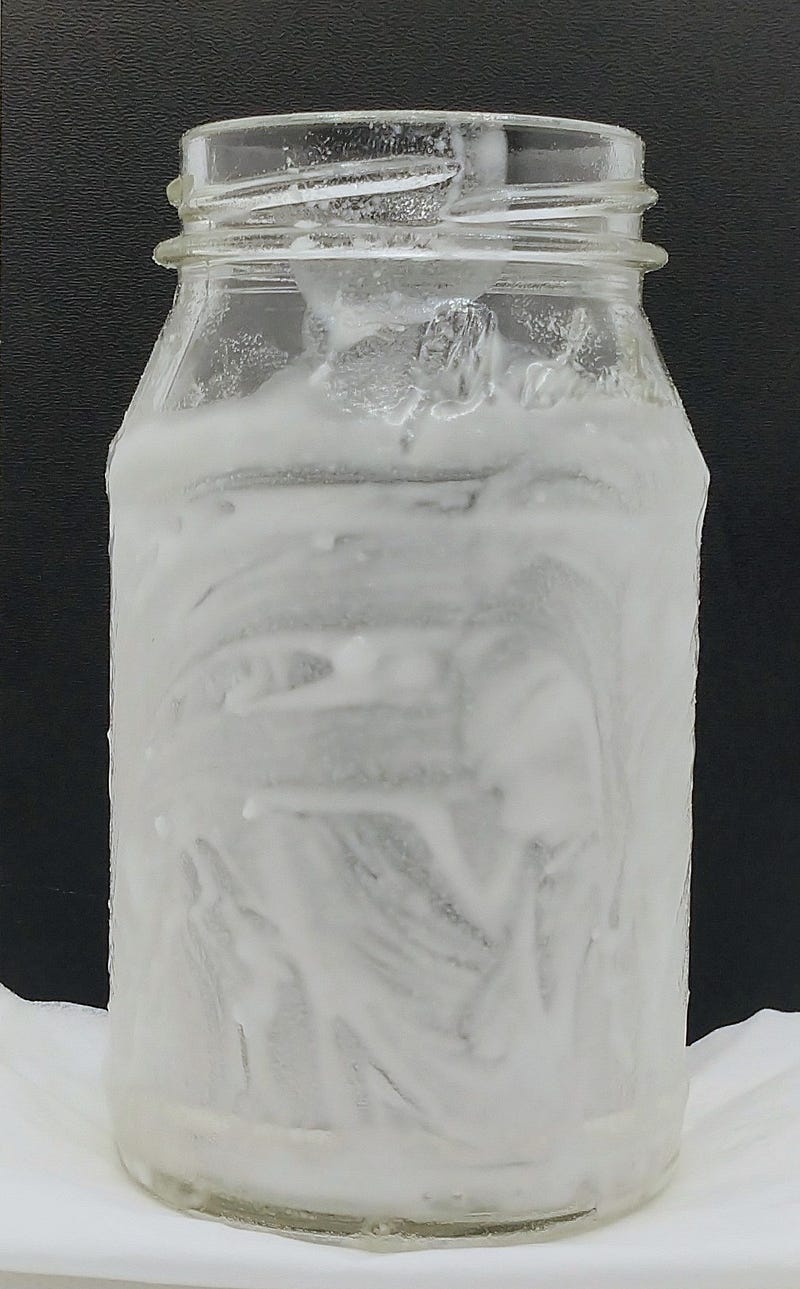
Apply the paste onto the sticky area of your bottle or jar. This will work on plastic containers as well. Be generous.
Massage it in for a few minutes to make sure the sticky area is saturated.
Leave the paste to soak on the glue for about fifteen minutes.
Rub the paste a little more. You can use your fingers, an old toothbrush or my favorite, a nail brush.
If you find that the glue is being stubborn, add some table salt (or cane sugar) to boost the baking soda’s abrasion. Don’t rub too hard. You could scratch the glass.
Use a paper towel to wipe the paste off.
The glue and any sticker residue will wipe away.
Wash the bottle or jar in soapy water to remove any oiliness.
You can store your adhesive remover in a sealed container and keep it for later use. I store mine in the refrigerator.
Why Does Oil Remove Sticker or Label Glue?
If you ask a chemist, they will tell you that like dissolves like.
Most glues on the market today are oil based which is why an oily ingredient like coconut oil will dissolve oil-based glue.
Why Should You Add Baking Soda To A Natural Adhesive Remover
There are two main reasons for adding baking soda to the DIY adhesive remover recipe.
- Oil on its own will work fine but the abrasive nature of the baking soda helps to loosen the glue. It acts as your scourer.
- The baking soda binds the oil into a paste which is far easier to work with than runny oil.
What Will The Adhesive Remover Work On?
- Crayons on washable surfaces. If you have crayon on your walls, please make sure that the paint is washable. The baking soda is a little abrasive and the oil could leave a stain.
2. Sticker residue on glass, ceramic, stainless steel or plastic.
3. Cooked on grease in a frying pan.
Alternatives To Coconut Oil
If you don’t have coconut oil, you could also use oils like olive, canola, almond, or grapeseed oil.
In an absolute pinch, you could even use nut butter. There is enough oil in the nut butter to cut through the adhesive. You may have to use a little extra soap when washing the container afterward to remove any nut butter aroma.
Lemon Juice Will Soften Stubborn Superglue
Lemon juice is a great option to pretreat a sticky surface, because the citrus acid in the lemon juice will soften the glue. It will even soften superglue. Just apply some of the juice to the sticky surface and leave it to soak for about 10 minutes before you wipe it off with a paper towel.
If you have ever glued fingers together while using superglue, try soaking the fingers in a little lemon juice for a few minutes. The acidity will soften the glue enough to allow you to pull your fingers apart.
I’m not talking from experience. Nope. I would never glue my fingers together. LOL. The struggle is real.
Please Use Caution:
Oil can damage porous surfaces like grout or some granite surfaces.
Make sure that any painted surface is washable.
Always do a spot test before use.
Avoid using an extra abrasive agent like table salt on some surfaces like vinyl. It may scratch them.
Never leave lemon juice to soak on any porous surface like marble. The acid may damage it.
Join Medium and Support Writers
Please consider joining Medium for $5 a month to get full access to all the incredible writers on the platform. Your membership supports writers like myself to continue doing what we love most. To write and entertain.
Click here to join via my referral link.


