
WOMEN EMPOWERMENT
Diverse Women and The MeToo Movement — Part Two
Why it’s harder to point the finger in a collectivist society
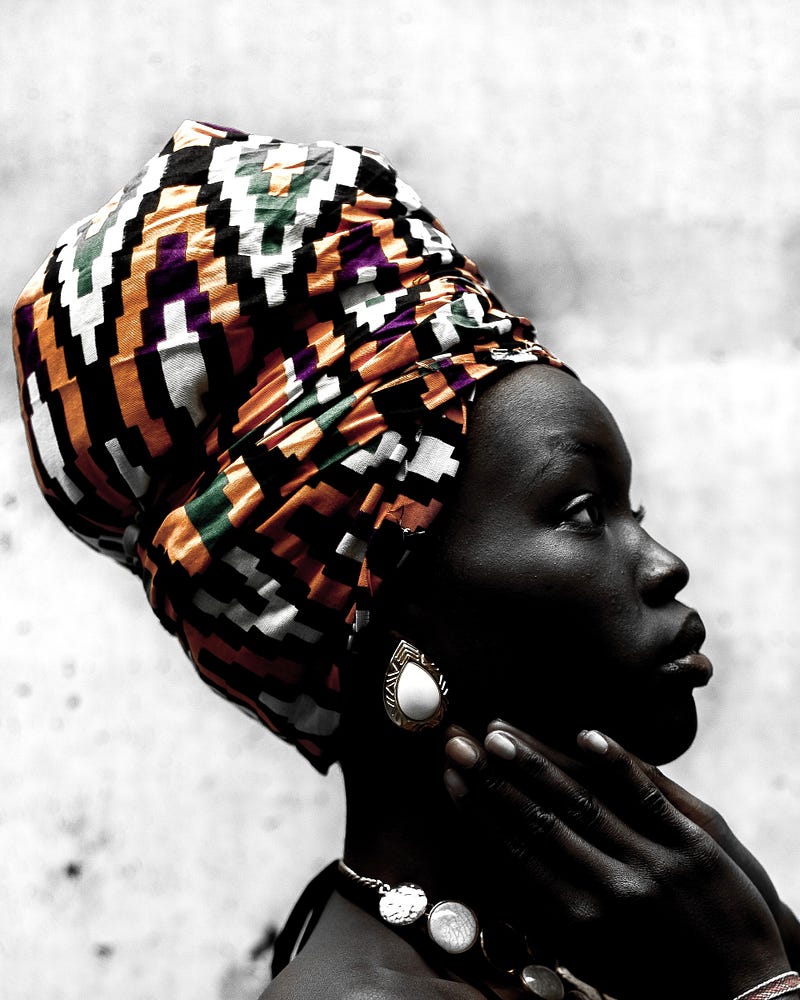
Women in minority cultures have more than sexual harassment or assault to confront when attempting to participate in the Me Too Movement. There’s also social pressure to provide only positive representations of their culture to the outside world. For people living in a collectivist society, the repercussions of shaming a member can be profound. But it’s important to remember that there’s no perfect social system, and each has pros and cons. Let’s take a moment to consider two popular social systems and how they influence participation in Me Too.
What it’s like to live in a collectivist society
The belief that the group is much more important than the person is widely shared in many collectivist cultures. Part of what makes collectivist societies strong is the connection between individuals and communities and the way they help each other in times of need, and this can be constructive in many ways.
The downside of this model is that it can also mean a lack of individual liberty for self-expression. This lack can stifle possibilities as to how one goes about fulfilling one’s life purpose. Also, collectivist societies dictate what’s good for all, without regard for how it may affect individuals.
Another downside is when you stay within the bounds of your cultural comfort, you don’t stretch to connect with those who have different cultural customs or views.
I grew up in the collectivist model, and it continues to affect my decision-making. Even when publishing my first book, Evolving Through Adversity, a true account of my life journey, I was inhibited and reluctant to share many personal details with the world, especially concerning my family dynamics.
“Oh, no you didn’t! Why would you want to put yourself out there? That’s not how your collectivist society does it.” A constant and nagging voice told me I was sharing way too much!
But I decided that, at least for me, it was important to reflect and heal my wounds because I knew if I waited for my community to give me permission to share my story, I would never get it.
The belief that the group is much more important than the person is widely shared in many collectivist cultures.
The other thing about collectivist societies is they often lack a sense of personal accountability when dealing with issues that affect individuals, such as domestic violence and or sexual harassment.
As Constance Wu shared in her interview I mentioned in part one of this article, the fact that the Asian-American community remained silent when she shared her story goes to show that collectivist cultures don’t focus on the importance of personal accountability. And that’s how aggressors get to walk free. Our cultural communities are often mute when it comes to protecting the women in their communities and opt for the status quo instead, for fear of not appearing perfect to other communities.
This was the case when the first stories of sexual assaults by Bill Cosby started being known. Because he had done good work in the black community, many didn’t believe the women who spoke out. That’s because as humans, we think in unidimensional ways. But just because someone can do good in some areas doesn’t mean when they do bad in other areas, they should not be held accountable.
The day we ran home happy and free
I can still remember when I was a little girl in elementary school in my native country of Burundi, some boys bullied my girlfriends and me every single day after school. We couldn’t report them to our parents or the school authorities because we were girls, and they were boys. Our parents and the school authorities would have assumed we were fooling around with them. In my culture, girls and women were always the ones in trouble because we were told to avoid boys or men, and, especially, not to “provoke” them.
As a girl, whenever you reported being harassed by a man or boy, your parents said something like, “What were you doing with him? It’s your fault. Why were you with him in the first place?” Our parents rarely took a girl’s side or questioned the boy’s or man’s motives. According to my culture, it was the girl’s fault if a boy harassed her.
If my friends and I had reported those bullies, no one would have taken our side or defended us. And so, my two friends and I stayed silent and endured the harassment for many months.
Finally, I could no longer take the harassment, so I told my friends, “Hey, girls, we need to stand up for ourselves and stop the bullies from harassing us.” My friends thought I was crazy since I was the tiniest of us three. But I insisted that we had to do something if we wanted to stay in school and alive!
The next day, the bullies started following us. As soon as we saw them, my friends started running. So much for standing up for ourselves. But I refused to run. I stood there and faced the bullies. When one of the boys started touching my hand, I pushed him. Then I said, “I am going to report you to my parents, who will tell my school and the school will tell your parents. You guys are going to get in BIG trouble!”
How I thought about saying that I don’t know. It was an empty threat of course because I wasn’t planning on telling my parents, and it would have been a waste of time anyway. After a couple of minutes of confrontation, the boys gave up and ran, calling me names as they left, which didn’t bother me that much.
My friends had been watching the whole confrontation from their hiding place. They looked like frightened chickens and were amazed I had not been killed. They couldn’t believe that tiny me had saved them from the bullies. That day, we ran home, happy and free. We never saw the bullies again. We later learned that they were school dropouts who certainly had too much time on their hands. They were also teenagers with brains rushing with hormones. Our parents and the school authorities never found out about our boy trouble because we dealt with it.
The challenge of changing expectations
Today, at least in some Western countries, we are seeing a shift in the culture of sexual harassment, and what it means to consent or not. I am not sure other cultures and subcultures know how to deal with this shift yet.
Things like the Time’s Up or the Me Too movement happening in the Western world can be confusing for many collectivist societies. The main reason is that for a long time, women in those cultures have learned to deal with it, according to their cultural norms, for the sake of their collective well-being. Women were not supposed to voice their opinions or objections, especially against men in their communities.
I know it is still a gray area in my culture of origin. I met a woman who told me about an incident where she was sexually harassed in an office setting. I asked her: “Why didn’t you tell your husband?”
She replied: “Because if I did, he would say I was seducing the man, so it would still be my fault.”
In many cases, staying silent is how women have had to deal with sexual harassment because they fear upsetting their husbands, fathers, and all the other male authority figures in their communities.
Among first-generation female Americans — the daughters of immigrants — the confusion is even greater. The upside for most immigrants who come from collectivist societies and form their communities in the United States is they have a sense of shared culture and togetherness. It is easier to retain one’s cultural habits and feel connected to those with similar origins. Even children of immigrants come to rely on this sense of community to learn about their parents’ origins and feel connected to their motherland.
Immigrant parents like myself have taught our children to consider the females of their mothers’ generation as their aunties, and the men as their uncles, and to respect and trust them as such.
However, what we didn’t teach our younger generation was how to discern when an uncle was starting to act weird and making sexual innuendos, and what to do in that instance. Should they tell their parents? Yes, they can come to us and tell us about the situation. But that may not fix the problem because parents might be afraid of confronting the transgressor for the sake of the community.
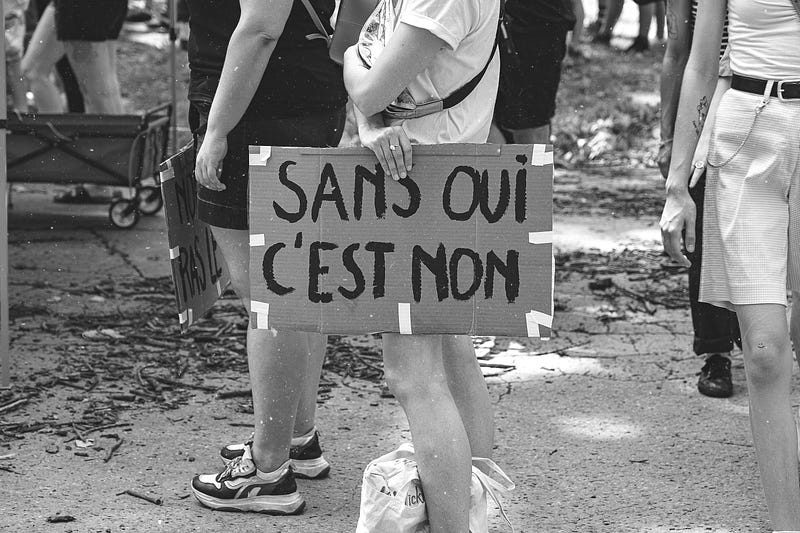
I have heard some men complain about the Me Too movement, saying things like: “The Me Too movement is a women’s exaggeration and unnecessary.”
I couldn’t even articulate how disconcerted I was by that remark. I guess that is why I’m writing about it. When people question why women do not report sexual harassment cases or report them when it’s too late to be believed, it is partly because in many cultures, society does not take the woman’s side.
In most cases, women end up being ostracized by their community, so that’s why they prefer to stay silent. And to be honest, that is how women in general have dealt with abuse, sexual harassment, and domestic violence for generations. Even in non-collectivist societies, women still face these challenges, despite standing up for themselves. This is a deep societal issue that needs the attention of not only women, but men as well, and from diverse cultures.
The benefits and drawbacks of individualist societies
The opposite of a collectivist society is an individualistic society. One of the upsides of this social system is that the individual controls their destiny. It gives people leeway to share their gifts in a freer environment without having to consult the group.
The downside of this model is that the individual is only valued by society for certain accomplishments they can show outwardly. There is also the lack of connections when you need them most. Although this reality is on a per-case basis, there is a higher risk for individualistic communities to have high levels of mental health issues and other negative signs of social isolation.
What can we do to balance cultural expectations?
My experiences from living in different parts of the world have allowed me to come to this realization: All of us from diverse communities can still honor our cultures of origin while learning to let go of cultural practices that don’t honor who we are. This article is my sort of wink to multicultural communities. Before we expect someone else to fix the problems in our communities, we should first look inward and fix the issues ourselves.
All of us from diverse communities can still honor our cultures of origin while learning to let go of cultural practices that don’t honor who we are.
Issues related to sexual harassment, domestic violence, and other women’s rights violations are problems that we can work on and solve both individually and collectively. In addition, we need to reach out to other community stakeholders, form alliances to share what works and doesn’t work, learn from our mistakes, and practice some course correcting.
So, what’s your take on this? How can these two social models coexist? Do you know any country or culture where they have a coexistence of collectivist and individualist systems? Please share.
Here’s Part One:
To be notified when I publish new stories, Subscribe here Check out my other stories here.
For more of the good stuff, follow Fourth Wave. Have you got a story, essay, or poem that focuses on women or other challenged groups? Submit to the Wave!