avatarSeconde Nimenya

Free AI web copilot to create summaries, insights and extended knowledge, download it at here

1574

Abstract

ew that stuck with me was that she experienced sexual harassment at the hands of a man from the Asian-American community.</p><blockquote id="4bea"><p>She said: “…He was always respectful of white and black women all around me. It was just to Asian women who weren’t in positions of power that he sort of exercised his power.”</p></blockquote><p id="fc06">According to Wu, that man felt he could abuse a woman from his community and respected the women of the other communities. As much as I was saddened by what Wu shared, I wasn’t that surprised.</p><p id="46e9">The disconnect in how women are treated by the men from their communities is something that is found in many cultures, especially in collectivistic societies where the group is considered more important than the individuals that make up the group. Sometimes, the men in those communities might be less abusive to the women who are not part of their community because they fear serious repercussions.</p><p id="b329">Wu also talked about how the Asian-American community remained silent when she shared her story because (in her words), “they were hyper-focused on this idea of positive representation.”</p><p id="0b23">And I like what she added: “We need a whole human representation…”</p><p id="d9f1" type="7">We need a whole human representation.</p><p id="9896">When a man harasses a woman from the shared community, they are usually covered by their fellow men, and some women to some extent prefer to judge other women rather than encourage them to speak out. This makes it easier for the harasser to get

Options

away with the offense and makes him feel entitled to abuse women in that community, worry-free.</p><p id="5cdf">In part two of this article, I will share some perspectives on how we can balance cultural expectations and support women in diverse societies.</p><p id="a4f2">Here is the link to the mentioned <a href="https://youtu.be/amDXe1wM0NM?feature=shared"><b>interview</b></a><b> </b>on YouTube.</p><p id="830d"><b>Here’s Part Two:</b></p><div id="c08e" class="link-block"> <a href="https://readmedium.com/diverse-women-and-the-me-too-movement-part-two-8b9569d359b3"> <div> <div> <h2>Diverse Women and The Me Too Movement — Part Two</h2> <div><h3>Living in a collectivistic society versus an individualistic one</h3></div> <div><p>medium.com</p></div> </div> <div> <div style="background-image: url(https://miro.readmedium.com/v2/resize:fit:320/1*bJZ0qx9OGfC4zdDFidJO3w.jpeg)"></div> </div> </div> </a> </div><p id="e939"><i>Want to be in the know when I publish a new story? Subscribe to receive email. </i>Find my other stories <a href="https://medium.com/me/stories/public">here</a></p><p id="6d33"><i>For more of the good stuff, follow <a href="https://medium.com/fourth-wave">Fourth Wave</a>. Have you got a story, essay, or poem that focuses on women or other challenged groups? <a href="https://readmedium.com/submit-to-the-wave-7c92f095e86f">Submit to the Wave!</a></i></p></article></body>

WOMEN EMPOWERMENT

Diverse Women and The Me Too Movement

Balancing Cultural Expectations in Diverse Societies — Part One
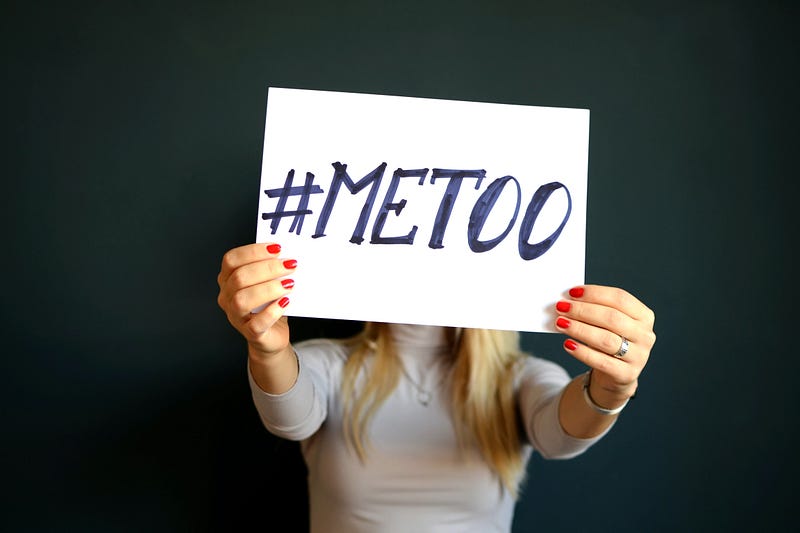
Photo by Mihai Surdu on Unsplash
  • Are diverse cultures on the same page when it comes to issues of sexual harassment?
  • Why has the MeToo Movement become the battle of the sexes in diverse cultures?
  • What can we do to balance cultural expectations in diverse societies?

These and more are some of the questions I often ask myself, especially when I’m talking about how different cultures perceive the women’s liberation movement.

In an interview on The Daily Show with Trevor Noah in 2022, Asian-American Actress Constance Wu shared her experiences of being sexually harassed by one of the producers of the TV show, Fresh Off the Boat in which she starred as Jessica Huang, the wife of Asian immigrant Louis Huang (played by Randall Park). I enjoyed that show so much that I never missed an episode when it was airing on the ABC channel.

One of the things Wu said in that interview that stuck with me was that she experienced sexual harassment at the hands of a man from the Asian-American community.

She said: “…He was always respectful of white and black women all around me. It was just to Asian women who weren’t in positions of power that he sort of exercised his power.”

According to Wu, that man felt he could abuse a woman from his community and respected the women of the other communities. As much as I was saddened by what Wu shared, I wasn’t that surprised.

The disconnect in how women are treated by the men from their communities is something that is found in many cultures, especially in collectivistic societies where the group is considered more important than the individuals that make up the group. Sometimes, the men in those communities might be less abusive to the women who are not part of their community because they fear serious repercussions.

Wu also talked about how the Asian-American community remained silent when she shared her story because (in her words), “they were hyper-focused on this idea of positive representation.”

And I like what she added: “We need a whole human representation…”

We need a whole human representation.

When a man harasses a woman from the shared community, they are usually covered by their fellow men, and some women to some extent prefer to judge other women rather than encourage them to speak out. This makes it easier for the harasser to get away with the offense and makes him feel entitled to abuse women in that community, worry-free.

In part two of this article, I will share some perspectives on how we can balance cultural expectations and support women in diverse societies.

Here is the link to the mentioned interview on YouTube.

Here’s Part Two:

Want to be in the know when I publish a new story? Subscribe to receive email. Find my other stories here

For more of the good stuff, follow Fourth Wave. Have you got a story, essay, or poem that focuses on women or other challenged groups? Submit to the Wave!

Women
Feminism
Metoo
Womens Rights
Gender Equality
Recommended from ReadMedium