
Did You Know You Dance during Tea Ceremony?
In response to Dancing Elephants prompt 15 of 52
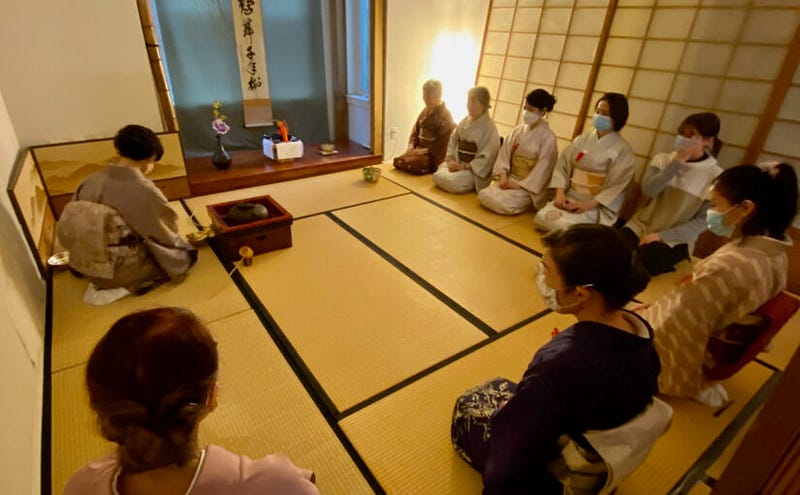
Can you guess what I had to learn first to practice the Japanese tea ceremony?
No, it’s not how to make Matcha. No, it’s not how to drink Matcha.
The very first thing I had to learn was how to sit, stand, and walk on tatami mats properly.
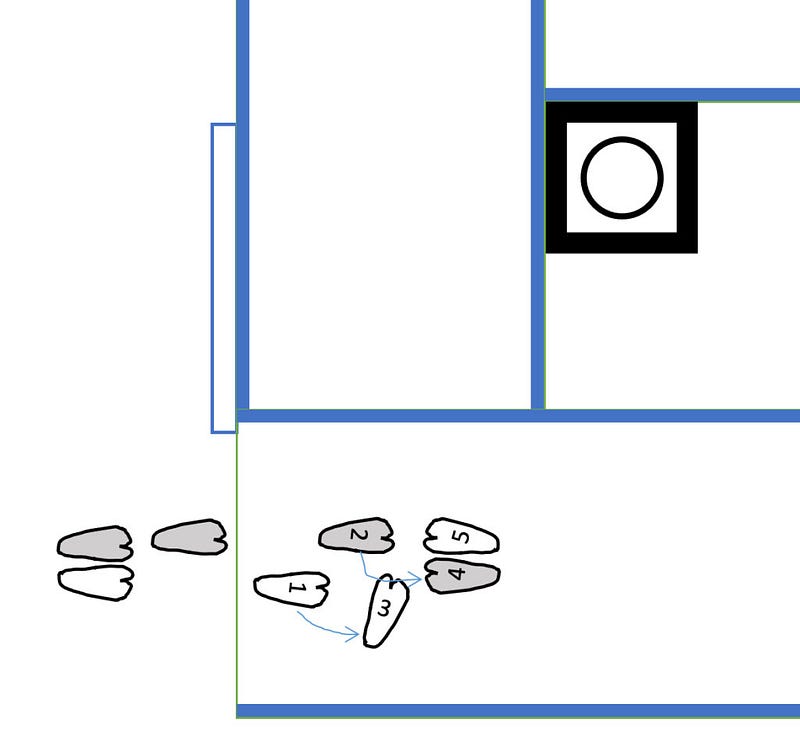
The image above is a part of the 4-and-a-half tatami-mat tea room, a typical size. In the center of the room, there is a kettle for hot water.
Before you enter the room, you sit down on your knees in front of the closed sliding door. You slide it open, bow to the guests, stand up straight, and place your left foot just outside the tatami mat.
The first step you enter into the tatami mat should always be your right foot (1).
You place your left foot a little forward (2), turn around with your right foot (3), put both feet together (4 and 5), sit down, and close the sliding door.
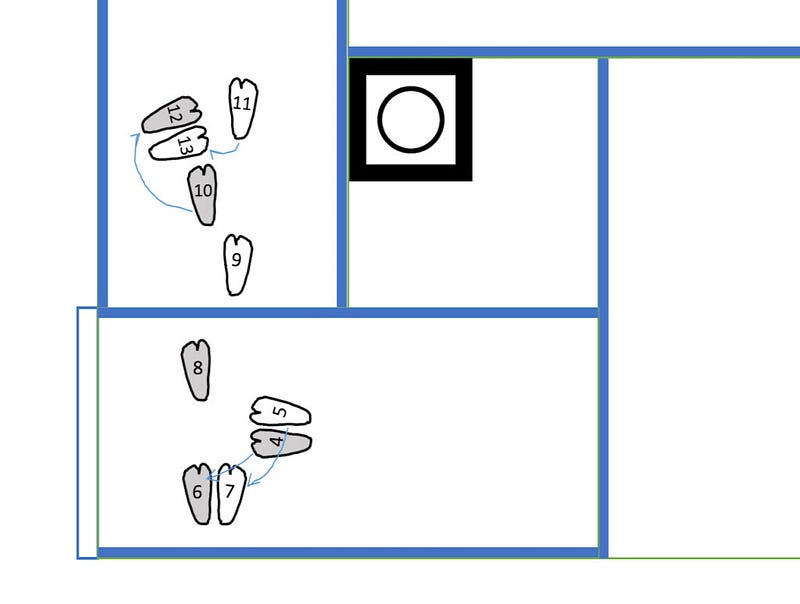
Once you close the sliding door, you stand up, step your feet so that you move your body 90 degrees (6 and 7), step forward with your left foot (8), and step into the next tatami with your right foot (9).
Walk forward, left (10), and right (11), then move back diagonally and put together your feet (12 and 13), and sit down.
In Urasenke School, the general rule for walking in the tatami mat room is:
- When you come in, always step on the next tatami mat with your right foot.
- When you go out, always step on the next tatami mat with your left foot.
- In order to walk on half a tatami mat, you take four steps.
At first, I didn’t understand why we have to be so strict about our footsteps. How tedious! What does it have to do with serving tea?
After practicing tea ceremony for several years, I came to realize the importance of keeping our body movement smooth, as well as rhythmical. The movement is not always at the same tempo. Sometimes we make a swift move, sometimes we move rather slowly. Overall, each movement has to look beautiful.
You move your body beautifully, with certain rhythms, and tempos. Isn’t it what dancing is?
When I realized this simple fact, my tea ceremony practice was stepped up one notch. When I serve tea, I’m performing dancing!
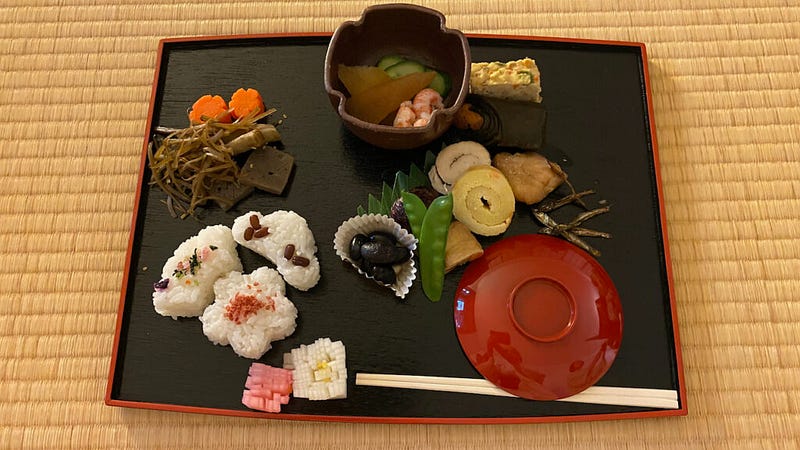
At Hatsugama 初釜, the New Year tea gathering, my teacher served this beautiful and delicious meal for every one of us students. She spent hours preparing for it the day before. Thank you very much, Mrs. Takemura, my dear teacher!
Many thanks to Dr. Preeti Singh for this fun writing prompt!
Originally published at https://akemisagawa.com on January 9, 2023.


