
Did John Roberts Save the Tax Code?
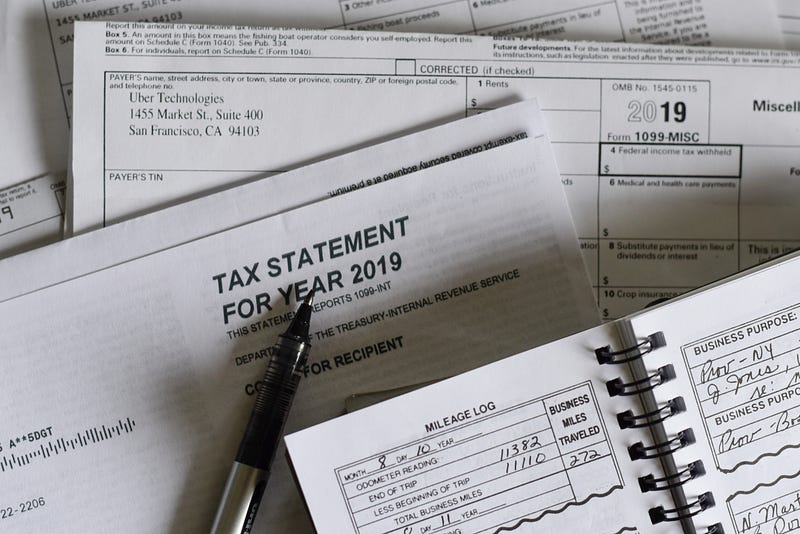
If the individual mandate wasn’t a tax, 2nd order effects might have rocked our revenue system.
If the Roberts court had ruled that the individual mandate was not covered under the taxing power of the government, the ruling could have eventually been used as a precedent to overturn every deduction and tax credit in the tax code. First to go would be mortgage interest deductions and the child tax credits, then everything else.
The tenth anniversary of the Patient Protection and Affordable Care Act, known as the ACA, passed by in March nearly unremarked. The eighth anniversary of the National Federation of Independent Business (NFIB) v. Sebelius decision approaches in June, and America is in a weird tax pause with filing extended from April 15th to July 15th. Now is the perfect time to reflect on what could have happened with a different decision.
The most contentious part of the case concerned whether Congress could impose on citizens an ‘individual mandate’ to either buy a private product, health insurance, or face a $2,000 penalty when filing taxes. Also unclear was whether if the mandate was struck down, the entire law would be struck down, or if the mandate was ‘severable’ from the main legislation.
The case and Robert’s dilemma
NFIB v. Sebelius consolidated and continued several cases between the federal government and Florida. Liberal justices viewed the mandate as permissible under the Commerce Clause, while conservative justices felt it was a bridge too far. In the end, Roberts wrote the final ruling with which the liberal branch mostly dissented, but found one point of agreement on the use of Congress’ taxing power. The four conservatives agreed that the Commerce Clause did not apply, but disagreed about the taxing power.
Broken down into the absolute simplest way, these main points came out of the ruling:
- While tax cases are typically argued after going into effect, this case could be decided before the law took effect
- The individual mandate of the ACA was not permissible under the federal government’s authority to regulate interstate commerce
- The individual mandate was permissible under Congress’ taxing powers
- The Medicaid expansion was an unconstitutional overreach
The late conservative icon Charles Krauthammer argued that Roberts was trying to balance his conservative judicial philosophy against the legitimacy and reputation of the court. Joining the liberal wing of the court allowed him to write and shape the final opinion, while still salvaging the law. He threaded the needle to dispose of the Commerce Clause argument while finding a fig leaf to keep the mandate and the ACA as a whole.
By many accounts, Roberts vacillated, first taking a position against the mandate. Reports describe him as searching for some way to keep ACA but still limit the government’s power. Later headlines screamed that Roberts “invented” the taxation argument to escape his trap. Critics rightly point out that the government denied that the individual mandate in the ACA was a tax for purposes of the Origination Clause, but saying that the argument was invented by Roberts is unfair.
The government argued the tax gambit in Virginia vs Sebelius in front of the Fourth Circuit, the as well as Florida v. HHS at the Eleventh Circuit. Oral arguments at the Supreme Court explicitly discussed the theory. The court had an obligation to dispose of the tax argument one way or another.
Is it impossible that Roberts believes the tax argument? As others have noted, this was not the path of least resistance. Chasing only expediency, he could have voted against the Commerce Clause argument, the taxing power argument, and the Medicaid expansion and still salvaged the law by voting that the individual mandate was severable from the rest of the legislation. Faced with a bleak alternative, the liberal wing might have supported him and the conservative wing might have acquiesced in a horse-trade.
In the end, there is no evidence to theorize that Roberts did not believe his opinion as written. Even Scalia’s dissent does not disagree that Congress has the power to shape behavior through taxation:
It is important to bear this in mind in evaluating the tax argument of the Government and of those who support it: The issue is not whether Congress had the power to frame the minimum-coverage provision as a tax, but whether it did so. — Scalia’s dissent
The algebra of taxation
Putting aside Scalia’s textual argument for the moment, what if the Roberts court or a future court decided that Congress could not impose a tax penalty for inactivity? It would disrupt the entire system of taxation in the United States.
To illustrate, consider if instead of taxing inactivity Congress had given a credit for an activity. This raises no argument because the tax code already contains credits for activities, like having children or going to school.
Under the US system, Congress could create a new tax bracket of 100% on the first $1,000 of income. Regressive and politically suicidal, but legal. At the same time, Congress could give a $1,000 credit to every taxpayer with a gym membership. From an accounting perspective, raising taxes and giving credit for action is precisely the same as a penalty for inaction.
Taking $1,000 of income and then giving it back for the performance of action exactly equals a penalty for not performing an action. Credit for an activity is just the negative of a penalty for inactivity. Giving tax credit per child to families for each offspring is a penalty for each child not born. Tax credits for tuition are penalties for those who chose not to go to school.
To illustrate further, take away the specific $1,000 increase from our gym membership example. What do you have? Non-gym members still paying at a higher level to offset others’ healthy lifestyle choices.
The tax code routinely penalizes failure to perform activities. Every single deduction and credit, whether for buying a house, adopting a child, buying solar panels, or whatever else falls into this category. Overturn a tax penalty on inaction, and every deduction and credit becomes null and void.
Tax to the future
If such a scenario seems improbable, look at the evolution of Lawrence v. Texas. In the majority opinion, Kennedy wrote of the current case that “It does not involve whether the government must give formal recognition to any relationship that homosexual persons seek to enter.” While true, in the dissent Scalia saw no reason that the same logic could not be applied elsewhere.
State laws against bigamy, same-sex marriage, adult incest, prostitution, masturbation, adultery, fornication, bestiality, and obscenity…Every single one of these laws is called into question by today’s decision…- Scalia’s dissent
Obergefell v. Hodges confirmed Scalia’s prescience when Kennedy cited Lawrence numerous times in support of same-sex marriage. Apparently, much of the same logic and support for the Texas case was transferable after all.
Even if the Supreme Court had decided that the individual mandate penalty stood outside of the government’s taxing power on a very narrow reading of how the law was written, a future court could build on that as Obergefell did with Lawrence to find other credits and penalties as outside the taxing power.
Scalia’s dissent disputed that what Congress had written was not a tax, but Scalia is known for rigorous textualism; his legacy is a focus on what the law says, not what justices think that the legislature meant. A future court might not read the decision the same way, or could incorporate some of the arguments as building blocks as with Lawrence. A coalition of conservatives, libertarians, and even liberals might advocate for such an outcome.
Why should I pay more in taxes because my neighbor chose to have kids? Why did the nation subsidize the wealthy to buy mansions for so many years? If you need to deduct property taxes to afford a ten million dollar house, buy a nine million dollar house instead.
You may also enjoy:
Brian E. Wish works as a quality engineer in the aerospace industry. He has spent 29 years active and reserve in the US Air Force, where he holds the rank of Colonel. He has a bachelor’s from the US Air Force Academy, a master’s from Bowie State, and a Ph.D. in Public and Urban Administration from UT Arlington. The opinions expressed here are his own. Sign up be alerted to his new articles and analysis at brianewish.com.


