
Is John MacArthur a lifelong plagiarist?
A superstar Evangelical pastor’s books seem to be written by others
His books have guided Evangelicalism for years. His study Bible alone has sold near two million copies. But how much was John MacArthur writing?
There’s been talk of the pastor of Grace Community Church, the apparent leader of the Evangelical world, using ghostwriters. The Bible scholar Michael F. Bird noted in 2014: “It’s a well known fact that John MacArthur’s books are not written by John MacArthur, but by Philip R. Johnson at GCC.”
But some more details having been coming out.

MacArthur’s story doesn’t seem to be one about a man who is theological whiz.
Growing up he was mostly notable for being a footback jock. A biography in 2011, Iain Hamish Murray’s John MacArthur: Servant of the Word and Flock, reads like a comedy about an athlete and his ambitious father.
When Jack MacArthur, a noted pastor, went to get his son into a seminary, he introduced him by saying: “He’s basically a football player.”
John MacArthur is quoted saying of his college years:
“I didn’t want to read. I was a typical athletic guy who was usually outdoors, and I preferred not to be indoors reading.”
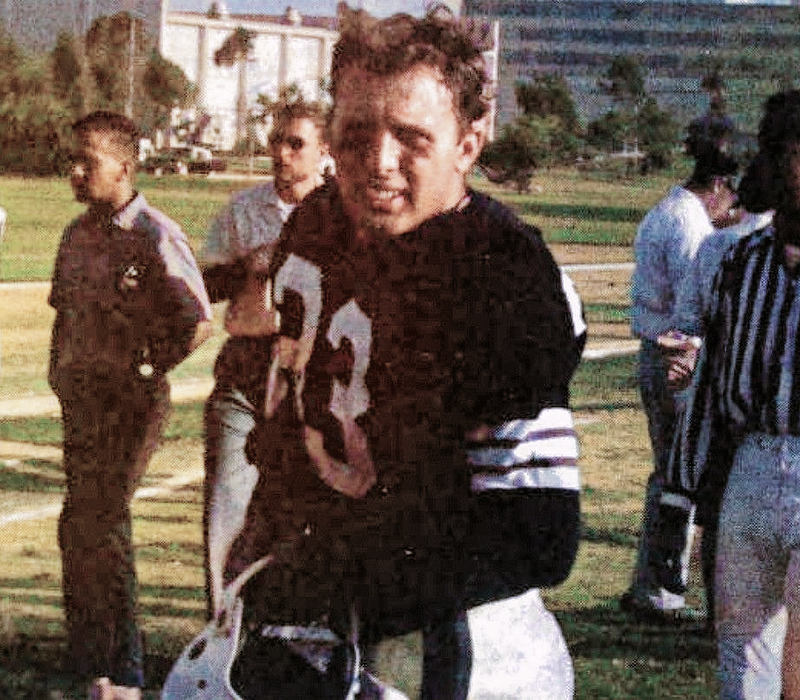
MacArthur did look the part of ‘Evangelical pastor’.
The religion likes tall, burly men, and a football player fit the bill. In time he learned the act. In 1963, he got a Masters of Divinity from a low-level seminary.
He got his first pastor gig from his dad. Evangelicals love nepotism and the idea of clerical dynasty. By 1969, MacArthur was head pastor of Grace Community Church in Sun Valley, California.
He turned from football jock to shock jock, becoming known in the Los Angeles area for his anti-feminist and anti-gay riffs. In January 1979, he’d made a splash in local media with a sermon that said mothers weren’t to work outside the home.
He didn’t strike anyone as a theological superstar.
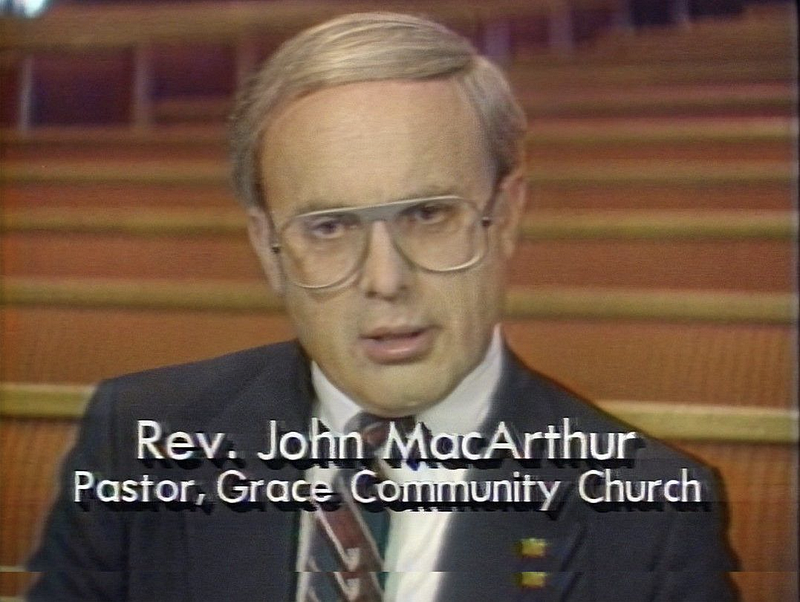
In 1988, MacArthur published a blockbuster book.
The religion was riveted by The Gospel According to Jesus. It called into question whether anyone was really “saved.” Defining the concept of ‘Lordship Salvation’, he suggested that good behavior was the test. If you’re not showing the good behavior, maybe you’re not “saved.”
The faithful were then to examine themselves—and everyone they knew. The book prompted a renewed dedication to a culture of judgment, theological surveillance and attack, and Evangelicals fell in love with John MacArthur.
But some observers noticed the book didn’t really sound like him. The voice was harsh, with a spirit of inquisition. That hadn’t been him.
Many books followed, as MacArthur became an industry.
He released a small library of books, including, in 1997, the mega-selling John MacArthur Study Bible. It sealed his leadership of the Evangelical world.
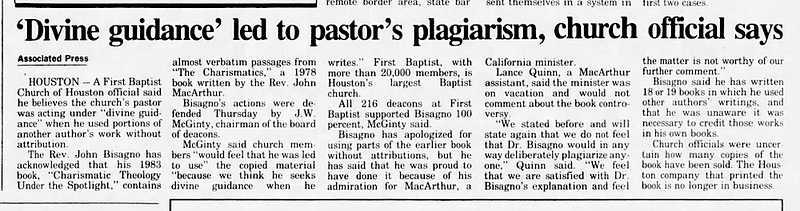
In 1989, a news story noted that another Christian author had lifted sections from a MacArthur book. In his defense, the guy said he’d done so with “divine guidance.” His church let the matter go.
Evangelicalism in general is ghostwritten.
As periodically noted, the whole religion seemed to be scripted by staffers. Back in 2002, Randy Alcorn, a stalwart of the faith, wrote in a blog post: “I believe Christian ghostwriting is a scandal waiting to explode.”
That badly misunderstands the interests Evangelicals bring to the religion, which is a total delight in clerical theater. MacArthur presided over The Master’s Seminary, an Evangelical pastor training center. He seemed to be the scholar-pastor confidently leading the people of God. Few cared if he generated his material himself.
Last year, however, a former staffer gave an interview. Talking to Evangelical journalist Julie Roys, Dennis Swanson said that MacArthur hadn’t written any of his books, including the MacArthur Study Bible.
What did John MacArthur do?
Swanson was never sure: “In terms of being in the office, no, he was never there,” he said. He added:
“I know who the ghost writers are. And I know who wrote even the earliest books. He was an English professor. He was — I can’t remember his name. He was a reformed Episcopal minister, but he wrote the early books…”
I queried Swanson on the name of the original ghostwriter. He replied to me that he couldn’t remember the name, but that the man had been a reformed Episcopal minister who taught at Los Angeles Bible College.
To Julie Roys, Swanson had named the later MacArthur ghostwriters as Phil Johnson and Nathan Busenitz. He said they might say they were working off MacArthur’s sermons, but they wrote everything themselves.
Roys asked both men for comment, but neither replied.
Swanson had an interesting example.
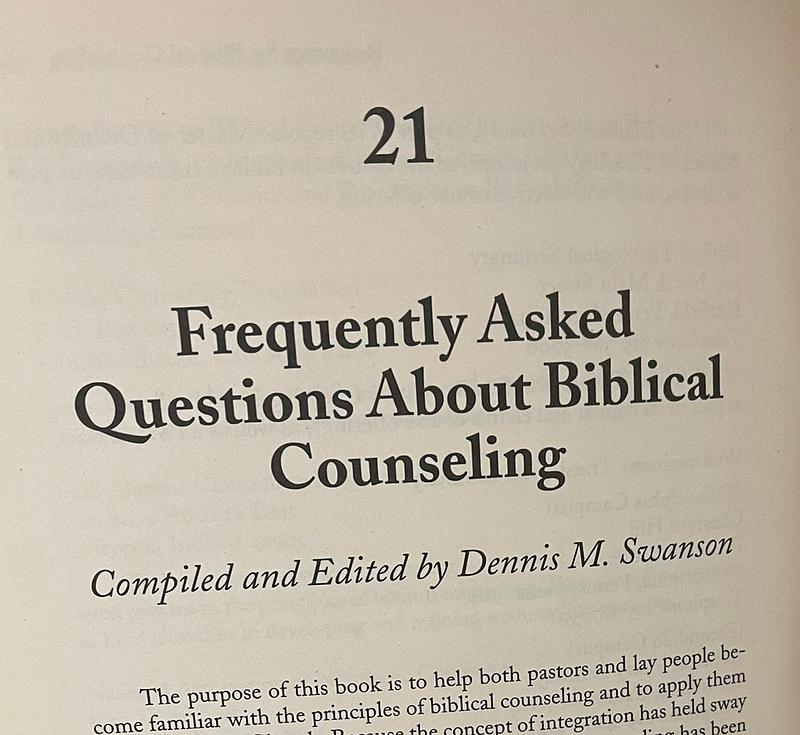
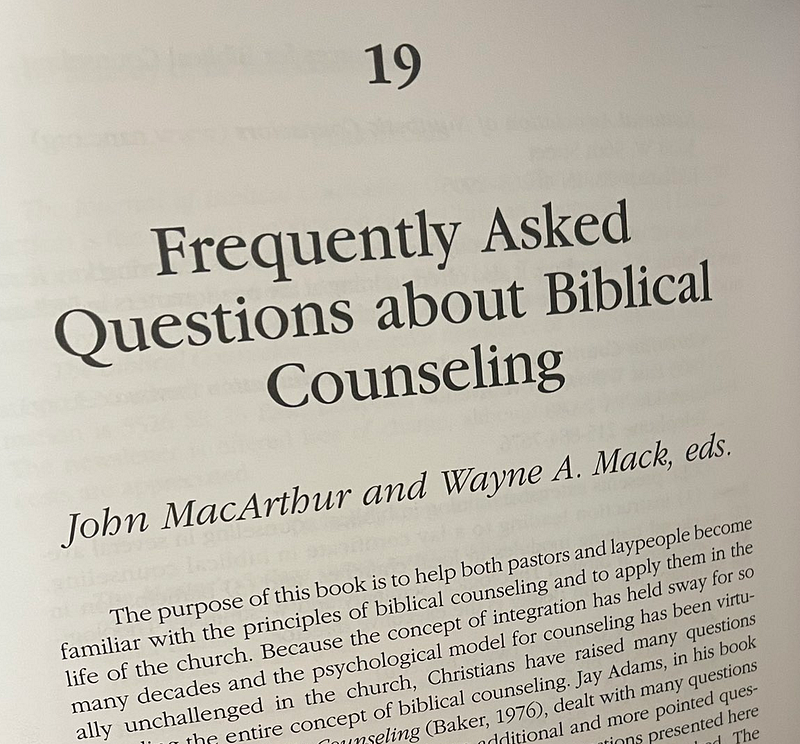
A chapter Swanson had written in Introduction to Biblical Counseling, he noted, had later been republished with a different byline, without even asking his permission, in another book, How to Counsel Biblically.
It was a window into a world where authorship was switched at will.
Evangelicals are told MacArthur is a “man of God.”
As the talk would go, he was called by God to be a pastor, then trained by the religion and ‘ordained’ as an act of spiritual empowerment. The insights coming from him are seen as especially infused.
And then there’s the reality. Since he was a child, MacArthur was pushed ahead by a system. His books were written by men who might have no advanced Christian education at all — as with Phil Johnson, had only a bachelor’s degree and had never been to seminary.
They were not scholars, and appear to have been passing off MacArthur as someone he wasn’t.


It’s not much of an Evangelical scandal.
To look over social media commentary is to see relative disinterest. A plagiarism scandal can rivet the ‘secular’ world, but Evangelicals being told their chief cleric is a fraud gets a yawn.
So long as he keeps assuring them they’re a special, holy, chosen people, which is to say, better than everyone else—he’s a ‘man of God’. 🔶


