
Writing & Content Creation
5 Techniques to Become a Descriptive Visual Writer
“Write as though nobody’s watching because nobody’s watching.” — Dan Brown
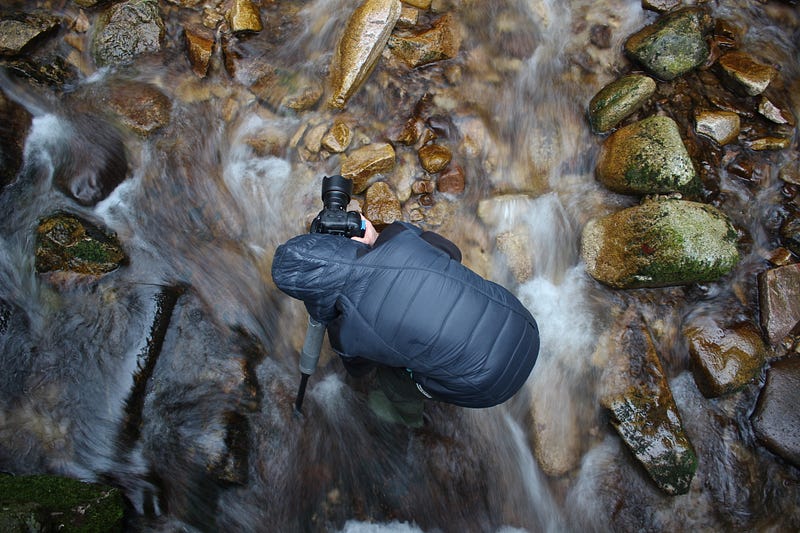
As a writer, you want your reader to picture the scene. You want to make your story tap into his emotion and suck him. Being descriptive is a key to achieving this goal, and within the term of descriptive writing, there is also visual writing. There are five grammatical tips to remember when writing visually and descriptively:
- The participle
- The absolute
- The appositive
- Adjectives shifted out of order
- Action verbs
Below are an explanation and 10 examples at least of how to use each technique.
The participle
A participle is a verb that is used as an adjective. There are two types of participles.
- Past participles end in -ed, -en, -d, -t, or -n. Examples: I’m interested in classical medicine. I’m bored with my job.
- Present participles end in -ing. It could be placed at the beginning or end of a sentence and evokes action and gives motion to the scene.
Generally, the past participle (-ed) is used to describe how someone feels, while the present participle (-ing) is used to describe what made them feel that way.
Let’s practice. We’ll start with a simple sentence then give more flavor:
- The record isn’t worth keeping. → Soiled and broken, the record isn’t worth keeping.
- Caring and vibrant, he looked more handsome than I would expect him.
- Whistling and smiling, he touched the front of his cap with his forefinger.
- Washing and polishing cars, he developed sore muscles.
- Fascinating and interesting, the story made a compelling point.
- Hardworking and tired, the mother deserves a break.
- Frustrating and boring, my experience at the restaurant made me angry.
- Shaken, he walked away from the wrecked car.
- Carrying a heavy pile of books, his foot caught on a step.
- Watching an old movie, Alex drifted in and out of sleep.
The absolute
It adds a description to a noun, a subject, or phrase acting as a noun by adding a two-word phrase that creates more vivid descriptions. Some absolutes explain reasons or conditions for the action described in the main clause; others describe the manner in which the action of the main clause is performed.
Let’s see 10 examples:
- The boy climbed the high mountain. → The boy climbed the high mountain hands bleeding, feet shaking.
- Roy circles the bases like a Mississippi steamboat, lights lit, flags fluttering, whistle banging, coming round the bend. (Bernard Malamud, The Natural, 1952)
- Bolenciecwcz was staring at the floor now, trying to think, his great brow furrowed, his huge hands rubbing together, his face red. (“Education: Ends and Means” by Julius Sigler)
- The spider skins lie on their sides, translucent and ragged, their legs drying in knots. (Annie Dillard, Holy the Firm, 1977)
- His bare legs cooled by sprinklers, his bare feet on the feathery and succulent grass, and his mobile phone in his hand, Des took a turn round the grounds. (“Lionel Asbo: State of England” by Martin Amis)
- Six boys came over the hill half an hour early that afternoon, running hard, their heads down, their forearms working, their breath whistling. (“The Red Pony” by John Steinbeck)
- Still, he came on, shoulders hunched, face twisted, wringing his hands, looking more like an old woman. (James Jones, The Thin Red Line, 1962)
- Hundreds and hundreds of frogs were sitting down that pipe, and they were all honking, all of them, not in unison but constantly, their little throats going, their mouths open, their eyes staring up with curiosity at Karel and Frances and their large human shadows. (Margaret Drabble, The Realms of Gold, 1975)
- Two middle-aged men with jogging disease lumber past me, their faces purple, their bellies slopping, their running shoes huge and costly. (“Mustn’t Grumble” by Joe Bennett)
- One by one, down the hill, come the mothers of the neighborhood, their kids running beside them. (“Making Toast” by Roger Rosenblatt)
The appositive
It’s a noun or a noun phrase that adds a second description, image, or idea to a previous noun. Examples:
- The toddler left alone in the room. → The toddler, a 3-year-old boy with curly hair, left alone in the room.
- John, an old man with a hairy chest, is teetering around the room.
- The worm, a tiny, hairy-legged creature, is crawling across a tree branch.
- During the dinner, Alex, the youngest eater at the table, threw spaghetti like an erupting volcano.
- Mr. Peterson, the principal at my school, wears a tie every day.
- Rayan, a stringy soccer player, tried to hit the poor man’s face.
- I like spaghetti, an Italian dish with noodles and sauce.
- Kiel, a city in northern Germany, is famous for its international sailing event, the “Kieler Woche”.
- During our vacation, we went fishing in Kerkennah, an island in Tunisia.
- Mr. Hole’s class, Honors Biology, is so hard.
Adjectives shifted out of order
They are adjectives placed out of order. Meaning, they come before the noun rather than after. When you want to stack an image with three adjectives, you can avoid a three-in-a-row string by leaving one adjective in its original place, and shift two others after the noun. The effect creates a spotlight and emphasis on the description.
Shifting the adjectives out of order is a writer’s technique to call attention to the details of an image while adding a professional rhythm without overloading the sentence.
Examples with 2 adjectives
- Time seemed to drag. → Dreary time, endless and empty, seemed to drag.
- The angry one-eyed man broke into the house. → The man, one-eyed and angry, broke into the house.
- The player hurled the vibrant, blue ball across the field. → The player hurled the ball, blue and vibrant, across the field.
- The Pavilion was a simple city, long and rectangular. (Caleb Carr)
- The woman, old and wrinkled, smiled upon her newborn grandson with pride. (Stephanie Schwallie)
- The boxer, twisted and tormented, felt no compassion for his contender. (Chris Hloros)
- The cheetah, tired and hungry, stared at the gazelle, which would soon become his dinner. (Zach Vesoloulis)
- The swan, beautiful and graceful, glided across the water.
- The young man, distant and unnoticed, always liked living here on the edge of everything.
- The sun, bright and golden, warmed the baby’s skin.
Examples with 3 adjectives
- The beautiful girl, stunning and brown-eyed, took my breath away.
- The thunderous rains, unceasing and merciless, filled the rivers.
- The large bull moose, red-eyed and angry, charged the intruder.
- The blue water, clear and sparkling, beckoned the athletic swimmers.
- The stony mountain, lofty and forbidding, stood before us.
- The old house, decayed and abandoned, surrendered to the fire.
- The shrewd businessman, calculating but optimistic, considered the opportunity
- Tiny stars, gentle and twinkling, appeared in the sky.
Action verbs
The key here is to focus away from the passive voice. Verbs that focus on passive voice, are most easily recognized as “be” verbs. These are: am, are, is, was, were, be, being, been. Instead of using these “to be verbs”, use verbs that connote actions instead of a state of being.
- He was shocked → He raised an eyebrow.
- I’m very hungry → I could eat a horse.
- He was angry → He grew hustle.
- We were on the edge of the cliff, waiting desperately for the overdue rescue team. → We clung desperately to the edge of the cliff, waiting on the overdue rescue team.
- The woman was confident. → She strode into the room and everyone turned their heads to notice her.
- He was careful. → He put a finger to his lips to signal silence and placed his favorite book in the top drawer of his cabinet.
- The bird on the branch was red. → The red bird perched on the branch.
- The eyes are wide and alert. → The eyes appear, wide and alert, at once.
- He is baffled/muddled. → He appears shaking and disoriented.
- The crowd was shouting. → The crowd erupted into cheers.
- I was writing on the keyboard. → My fingers have flown over the keyboard.
Final Thought
Do you see what those techniques do for the original text?
They add a description to the original blind sentences. They change the way the reader pictures the scene. These word choices awake a completely different mood and help pay attention to the details within your story. This makes your writing vivid, visual, and more compelling.
Paint the picture, communicate the experience, and best of luck with your next story.
This article was inspired by the video “How to be a Descriptive and Visual Writer”.
🧠💡 I write about engineering, technology, and leadership for a community of smart, curious people. Join my free email newsletter for exclusive access or sign up for Medium here.


