
Demi Lovato Doesn’t Speak for All Diet Culture Critics
There are healthier ways to advocate for food freedom than yelling at a frozen yogurt shop.
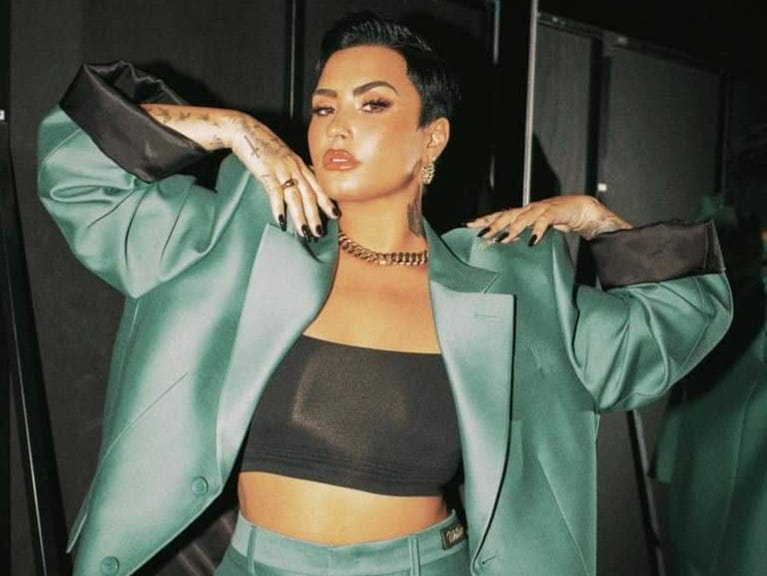
You might have heard about singer Demi Lovato recently getting into a kerfuffle with a Los Angeles froyo shop, The Bigg Chill.
Basically, Demi went in to buy some frozen yogurt, became upset about some marketing she saw as pervasive diet-culture shit, and then took to social media to chew the business out with the hashtag “diet culture vultures.” In particular, she was triggered by the presence of diet foods like sugar-free snacks and cookies, along with some marketing that said “guiltless” or “guilt-free.”
The whole thing got messy real quick with lots of people slamming the singer for acting like an entitled brat, and sadly, it led to a lot of undue cruelty toward and criticism of those who are battling an eating disorder or recovering from one.
Demi took to Instagram to issue a fauxpology that was really more about her explaining and defending herself, and it clearly left a bad taste in people’s mouths. Particularly when she offered to work with the froyo shop on their messaging.
After reading a few articles about the situation, I decided to slowly back away and try not to read too many more of the comments. Like Demi, I’m in the middle of my own eating disorder recovery and try to limit my exposure to certain triggers. Still, the way Demi handled her frustration was not great and frankly, she hurt the cause she says she’s fighting for.
While I obviously didn’t read all the comments on any conversation about the debacle, I got the impression that most of them went something like this:
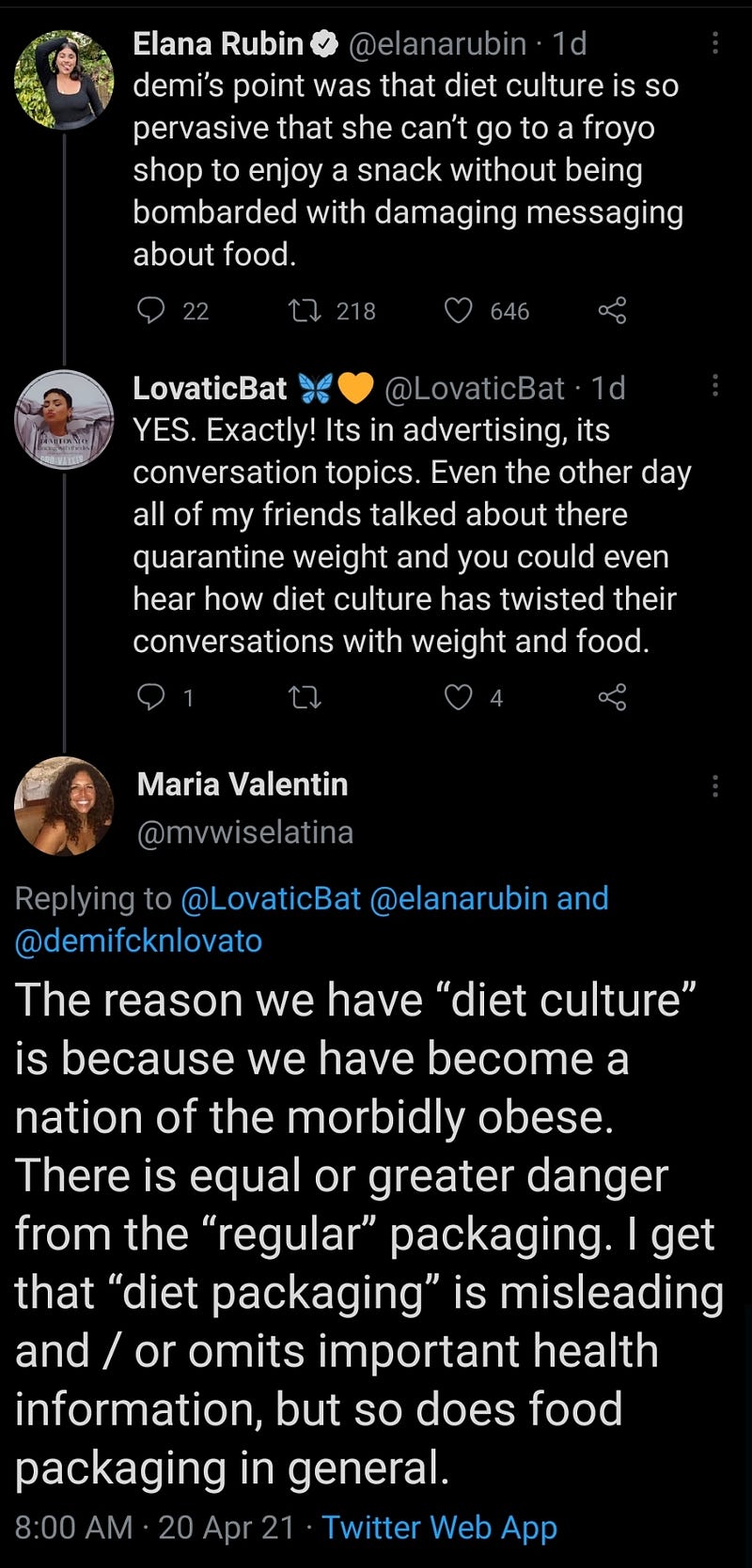
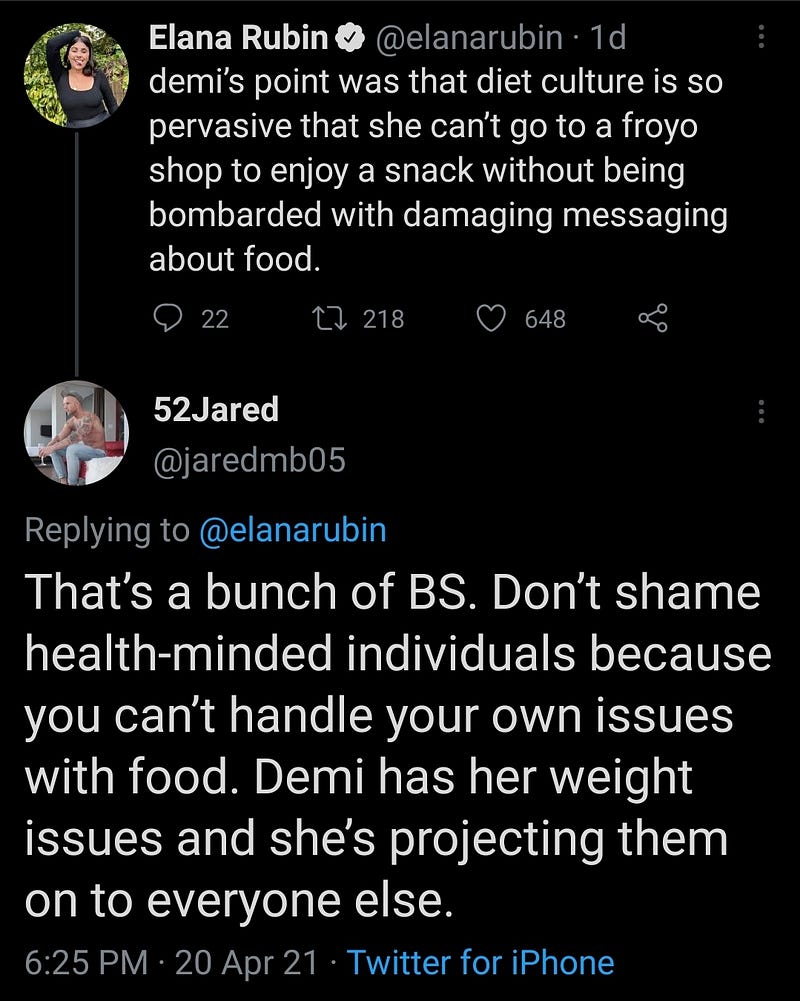
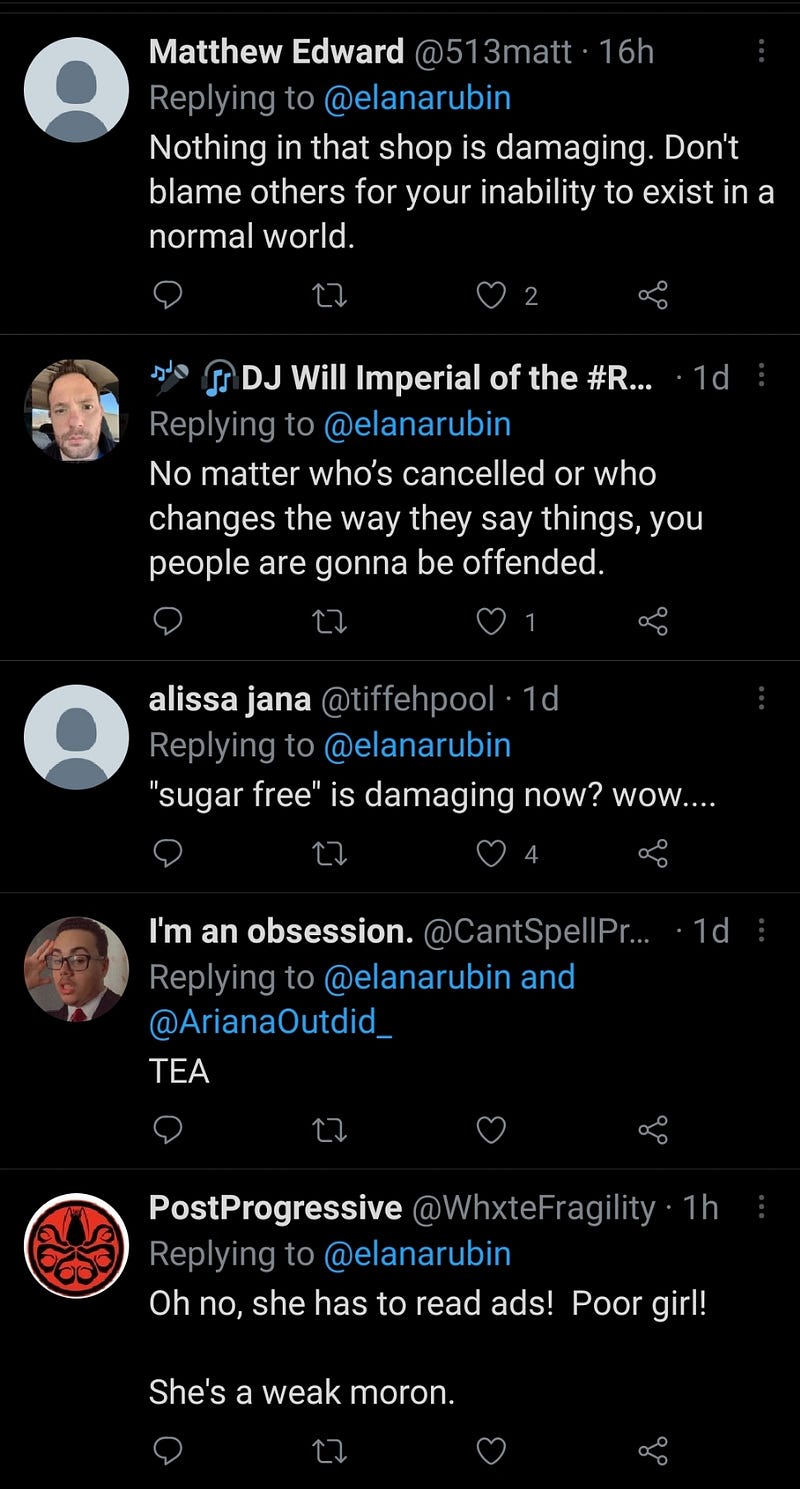
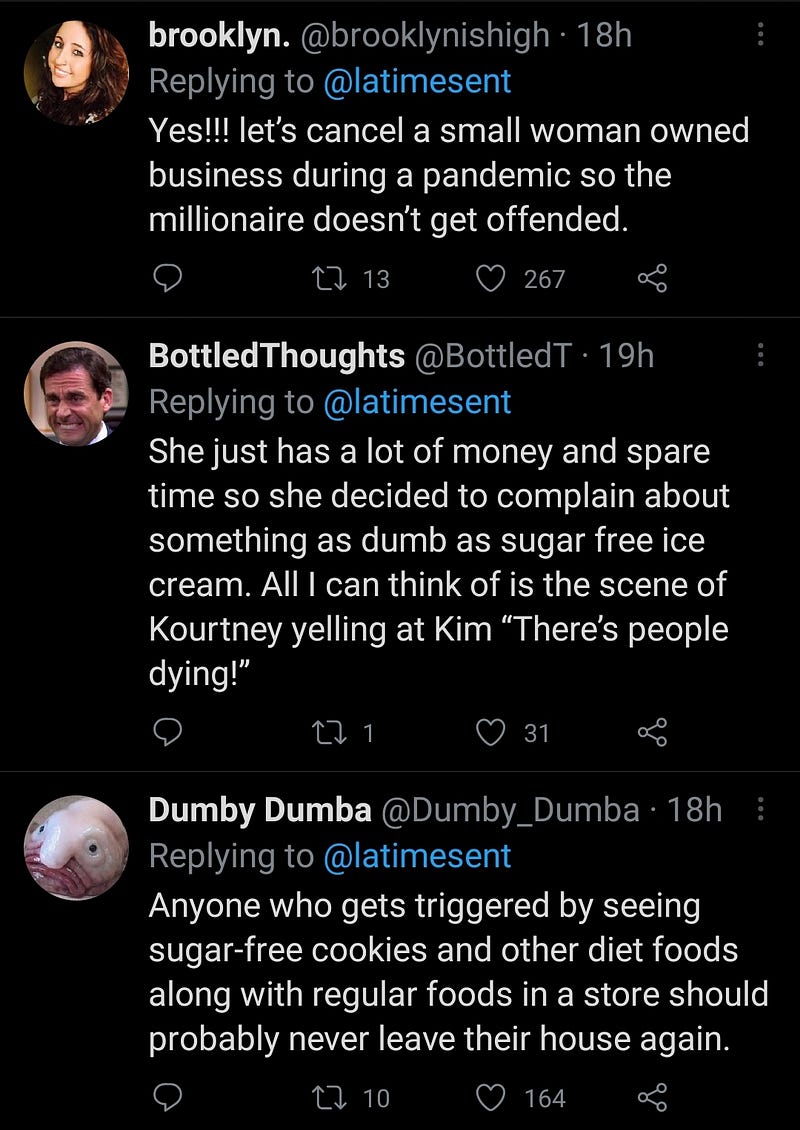
See what I mean? There’s been a whole lot of shaming going on. Shaming fat people and shaming people with eating disorders is not what Demi Lovato intended, but that was still the impact of her actions. Eating disorder recovery is hard enough as it is, but she acted impulsively — and selfishly, which created a wave of backlash and made people see us as a bunch of wackos.
The truth is that Demi wasn’t wrong on all counts, but she was wrong on enough of them that the entire exchange never should have happened. I’m serious. There is a thing in life called choosing your battles wisely and this is one of those scenarios where Demi appears to have leaped without considering the consequences.
It’s worth noting that eating disorders are serious mental health issues. They are some of the deadliest mental illnesses, yet we probably take them less seriously than most other health issues. One of the biggest obstacles to eating disorder recovery is the reality that diet culture is everywhere. It really is prevalent — and that’s one of the facts that Demi Lovato gets right.
Sadly, disordered eating has long been encouraged and even applauded, not just in Hollywood but in doctors' offices and schools, and most certainly, online. Skipping meals, cutting calories, avoiding entire food groups, and obsessing over food are disordered behaviors that have been normalized.
That means diet culture messaging is everywhere, and the triggers are everywhere too. When I go grocery shopping, I will undoubtedly run into products that call themselves “guiltless,” “sinless” or “better” choices, and with that messaging there’s the unspoken statement that eating other foods is “bad.” People like to think that at the heart of every eating disorder is a hunger for power. I disagree. Sure, most of us want to exert greater control over our bodies. But a lack of control isn’t what makes us feel so awful.
At the heart of most eating disorders is a twisted sense of morality. We want to be good. We don’t want to feel bad. It’s very much about shame, and unfortunately, our pervasive diet culture loves to take advantage of that sense of shame. Shame for eating the “wrong” things. Shame for being “bad.” Shame for being fat or curvy and “too this” or “too that.”
This means that recovering from an eating disorder is even more exhausting than it has to be, because the morality messaging about food is everywhere. And that’s why, if I write about my recovery, there will always be some well-meaning person who pops in to suggest I eat like this or that. Because people don’t take eating disorders seriously, they feel compelled to interrupt someone’s recovery with even more diet culture shame.
People don’t see it that way, of course. Usually, they’re simply speaking from their own fear or shame. It’s exhausting nonetheless. And that’s the part of me that feels empathy for Demi Lovato right now. Like, look girl, I get it. It’s such a bitch to constantly have these messages in our faces in the middle of our recoveries. Really, it sucks.
That said?
We should not be demonizing any foods! Not even the diet stuff.
Stay with me here, folks. There are lots of different reasons for people to eat the way they do. Food freedom is not about telling people what they can and cannot eat. Doing that is seriously hypocritical.
Some people eat sugar-free foods because they need to eat a sugar-free diet for certain health conditions. Other people prefer sugar-free choices for matters of taste. I still drink some “diet” sodas, actually, like Vernor’s Ginger Soda. I’ve had their regular version and I just don’t like it as much. Plus, I’m sort of picky about what I drink because I really hate that “fuzzy slippers” feeling on my teeth that happens with sugary drinks.
There’s nothing wrong with that.
Similarly, I sometimes eat French Onion Sun Chips or Baked Lay’s potato chips. I don’t eat them because I think they’re a better (as in, moral) choice. It’s not about the calories or the fat. It’s about what I enjoy.
I also like a lot of veggies and fruit. In fact, if you’ve visited me on Instagram lately, you’ve probably noticed my daughter’s lunches have lots of fruits or vegetables. Honestly, it never occurred to me that saying my daughter has food freedom would lead to people assuming that she doesn’t eat from the produce section of the grocery store. Until folks began making such weird and offhand remarks.
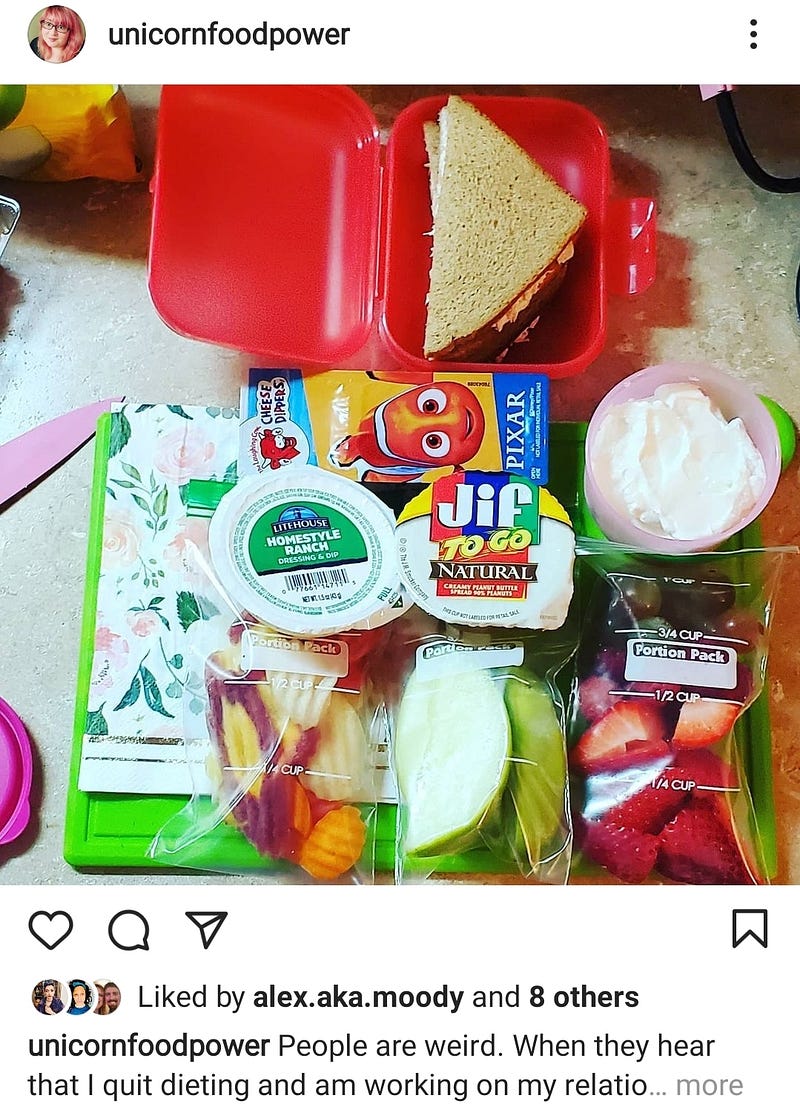
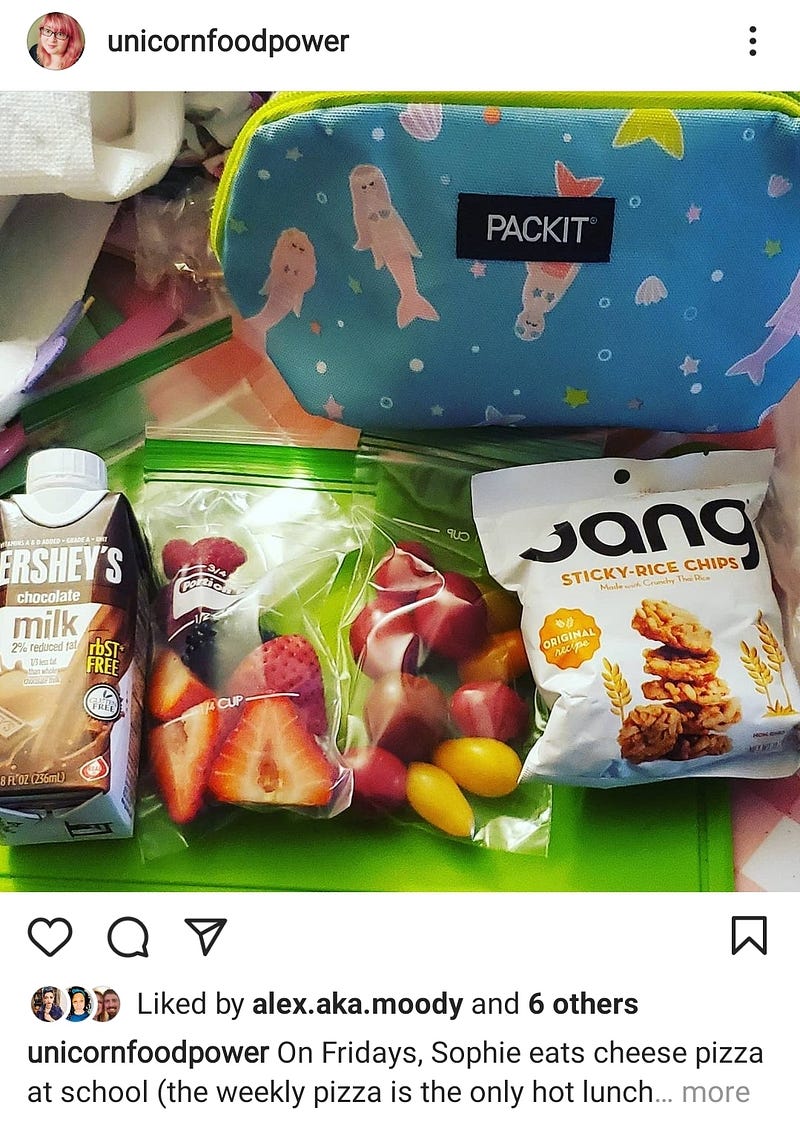
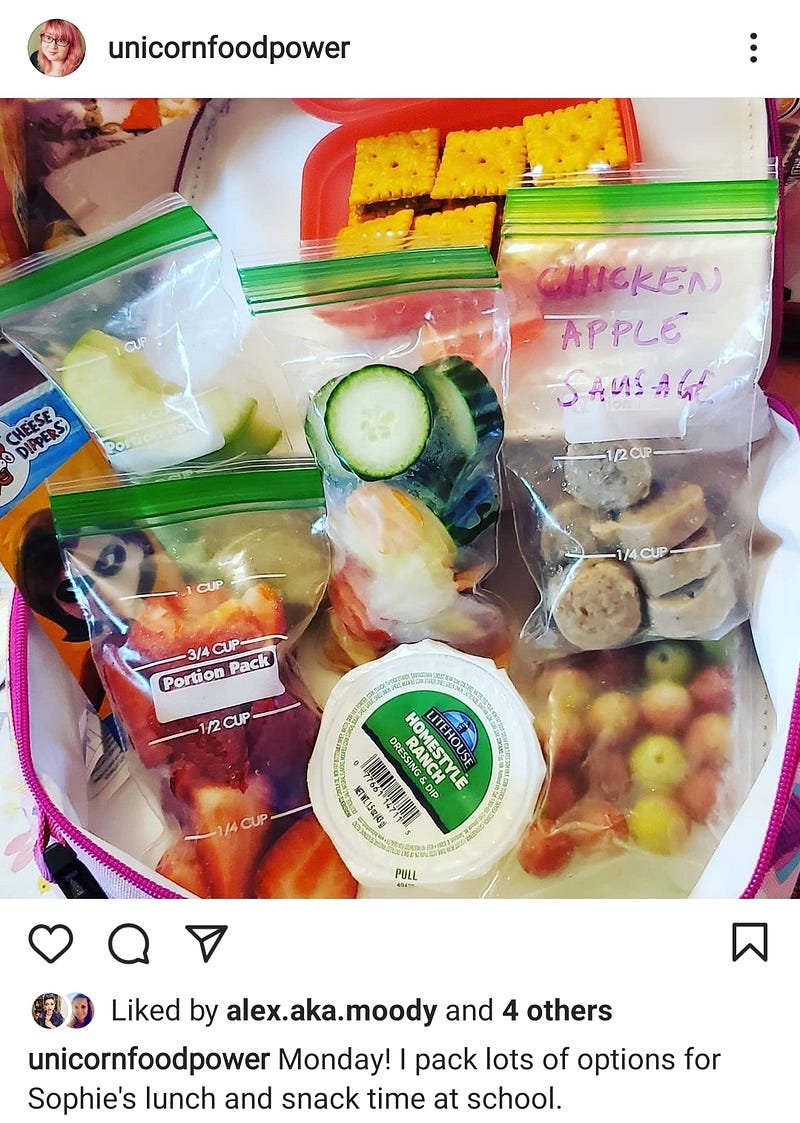
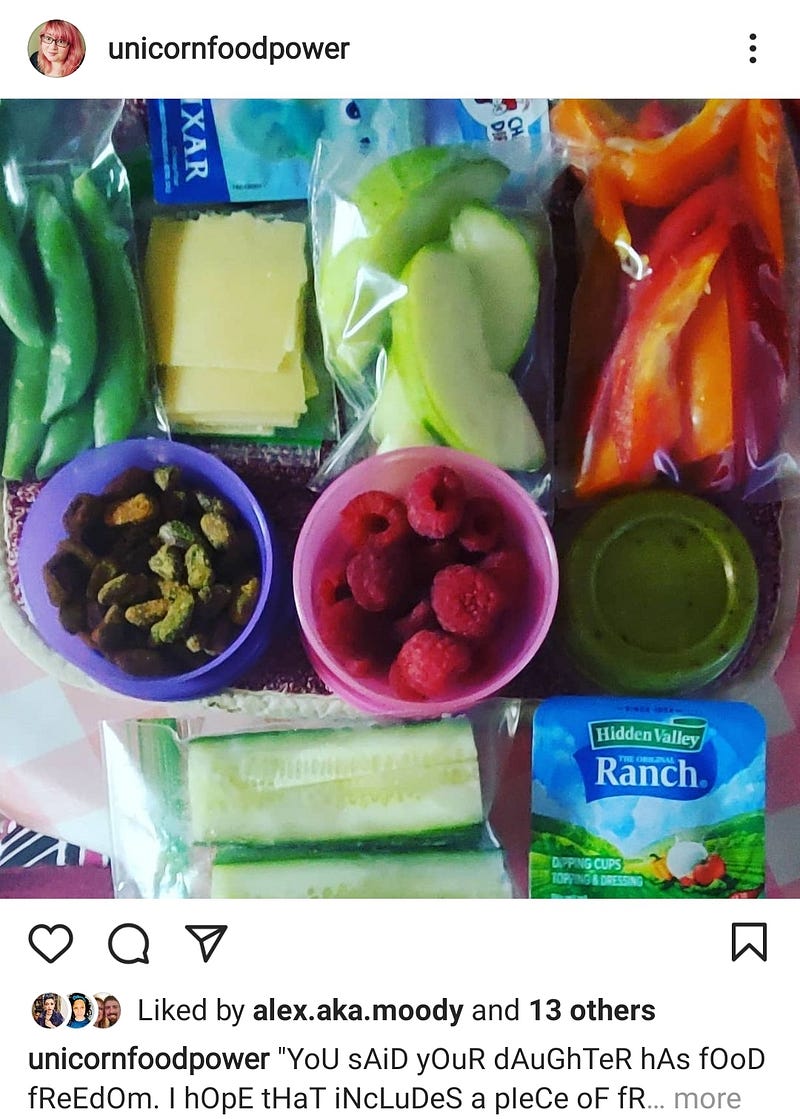
I don’t know what you’ve been told about food freedom, but please allow me to inform you that it isn’t about eating whatever “junk food” all of the time! It’s about making peace with food, our bodies, and our choices. We strive to eat in a way that feels good for our mental, emotional, and physical health.
That’s why I sometimes have a Panera salad for breakfast. I’m choosing to eat in a way that works for me as I move further and further away from shame-based eating.
My hope for Demi Lovato is that she’s learning to do the same thing, but it sounds like she’s still hung up on labels. That’s okay, I mean, that’s completely natural. She needs to move away from that mentality, though. Labels like sugar-free or no sugar added are informative and some folks need those labels even when they’re not participating in diet culture. The same thing goes for vegan or gluten-free.
Of course, the reality is for a person who’s going through recovery from an eating disorder, they might want to avoid certain things. But true healing actually allows for the inclusion of certain foods you used to see as “guiltless” or “diet” foods. Just like it allows for the inclusion of the foods you swore off forever during your disordered eating days.
All of these choices come down to intentions. Food freedom and intuitive eating are simply intentional ways to live. And Demi Lovato happens to have the privilege, wealth, and luxury to eat with intention in ways that most people can’t afford. Most people still have to balance budget and availability.
I suspect that some of Demi’s recent behavior isn’t as much about her recovery as it is about some of her privileges, and perhaps some of her coexisting mental illness that can lead to impulsivity.
It’s important to note, however, that having an eating disorder or recovering from an eating disorder doesn’t make you weak, selfish, out-of-touch, or over-sensitive. Unfortunately, that’s the sort of message she sent over the past few days.
I was disappointed to see this story about Demi Lovato and the froyo shop because, right away, I felt there were much healthier ways to deal with those thoughts and feelings she had about the diet foods. It would have been much more effective for everyone — including her and for her recovery — if she’d approached the issue with more balance.
There’s definitely a lesson here for all of us about being more mindful and intentional before we react.
Clearly, there’s no one way to fight diet culture. It takes a multifaceted approach. Even so, it helps to be angry with the right people — or the right entities. I don’t know The Big Chill. I don’t live in LA. I do know that LA is pretty ubiquitous for the whole diet culture scene and an independent froyo shop is most likely just trying to cater to its customers’ requests.
I think if Demi thought the shop’s marketing was problematic, she could have approached them privately and asked them how they felt about the diet culture messaging while explaining how it impacted her. And I think she should have left it at that.
Now, if she wanted to get on social media and talk about how diet culture is so pervasive that even grabbing a frozen yogurt can be exhausting with all of the diet buzzwords and all of that… no one was stopping her. I don’t believe there was any good reason to name the yogurt shop, however.
The reality about diet culture is that it exists because it’s profitable. A better way to fight it is to educate others about intuitive eating and the extent of disordered eating in the health and wellness industry. As more people demand change, industries and businesses shift. Sometimes, it’s incremental. And sometimes it’s simply not enough. But as those shifts happen, new businesses and industries pop up in response to consumers’ evolving mindsets.
None of these shifts happen overnight, however, and we have to recognize that food freedom and intuitive eating will probably never be as “big” as diet culture simply because it’s not some industry built upon selling us something to meet our shortcomings.
Sad but true.
You can buy a few books. You can do group coaching or hire a trainer and nutritionist who specialize in food freedom and intuitive eating. But there won’t be countless products like supplements, pills, and gummies to target your issues. That’s not how it works. Intuitive eating is more about curating a lifestyle you love, but there’s no unifying shame-based message to sell you a certain product.
To a certain extent, we sort of just have to rise above and beyond marketing. Celebrate our positive and guilt-free choices. Celebrate and love our unique and individual paths.
If we want to get mad at anyone about the current diet culture climate, get mad at the biggest offenders. Push back on harmful fat biases and fatphobia. Speak out about predatory products like detox skinny teas and self-proclaimed nutritionists who give out unilateral advice as if they’re actual experts.
We can leave the froyo shops alone, though. And honestly, even their messaging will shift as more people embrace food freedom. Still, it’s important to make sure we’re not demonizing certain foods that other people might legitimately want or need.
Food Freedom means food freedom from the food police and morality police for every body.
For further reading: