
Delete 9 Things to Create a Stunning Article (Tips that Tripled My Views)
The incredible impact of removing these 9 when I edit
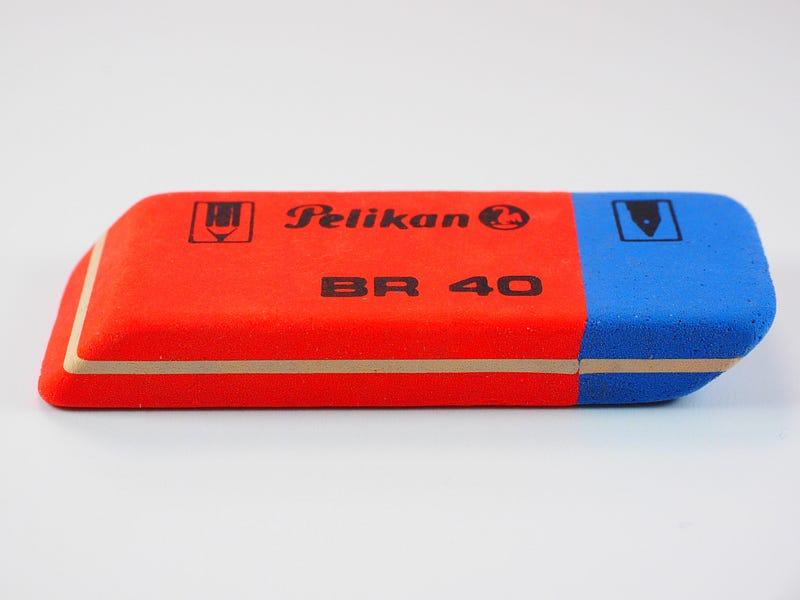
I’ve spent 100 hours improving my writing. I’ve completed courses. Devoured books. Studied articles.
And it’s finally working.
This month I tripled my Medium views from 1529 to 4842.
To grow your audience and build an income, you need stronger writing skills. An early mistake I made was to focus on adding more. To improve something, we tend to add habits, activities, or smoothies.
But we rarely think about removing things. A 2021 article in Nature reveals we have this bias in all areas of life. It’s hard work adding something new. Deleting is easier and quicker.
So I’ve developed a 9-point checklist to remove things from my writing. I use this when editing. Having a clear process is essential and makes editing quicker. Giving me powerful articles with loads of comments.
Remove these nine things to enhance your writing.
Adverbs
Adverbs weaken your writing and clutter your sentences:
- Very
- Really
- Probably
All need deleting.
Swap an adverb for a stronger verb to power up your writing.
He ran quickly becomes he dashed
She spoke softy better as she whispered or she mumbled
If you struggle to notice adverbs. Hemingway will help.
Once you spot one remove it.
Cliches
Cliches are ideas losing their power through overuse.
It’s crucial to recognise when this is happening. You can stand out with fresher words. Don’t abandon the idea. Update the language.
I help writers grow online. And people talk about ‘building an audience.’ But it’s overdone so I’ve started using other phrases.
Key your eyes peeled for cliches.
Update them to capture attention.
Weak words
Most writers need to make their words more powerful.
I look for weak or ordinary words as part of my editing process. Then use a thesaurus to find stronger alternatives.
Instead of ‘improving’ your writing. I have these alternatives:
- strengthen
- upgrade
- develop
- explode
- expand
- refine
- enrich
- boost
Notice how these strengthen a sentence.
Time invested in upgrading your words pays dividends.
Long paragraphs
A UK government department can help you boost your writing.
The nudge unit (set up in 2010) discovered a tiny bit of friction changes behaviour.
For example:
- Remove one line from an online form means more people complete it
- Putting information in an email rather than attaching a pdf causes more people to respond.
What’s the lesson for your writing?
Remove friction.
Long paragraphs are a classic mistake. They cause people to stop reading. A wall of text is exactly that: a wall. Split your paragraph in half or transform it into 1/3/1 line sentences.
I limit my paragraphs to four lines with plenty of one-sentence paragraphs to help the reader.
Easy to read gets read.
Big words
Simple words make your writing compelling.
This is hard to believe. We assume complicated words are a sign of intelligence. But the evidence proves simple is more persuasive.
Princeton University researched the effect of complex words. They discovered reports with simple language were more persuasive. And their authors are seen as intelligent.
Big words make you sound stupid. Easy-to-read words increase the trust of the reader. I use Hemingway to spot complex words for me.
Simplify your words to magnify your power
Fluff or filler
Make your writing dynamic by making it shorter.
That sentence used to be: You can make your writing more dynamic if you make it shorter
8 words have more fizz than 12.
Look for ways to shorten sentences. Rephrase to use fewer words.
Delete fluff phrases that add nothing:
- in my opinion
- on reflection
- it seems to me
Watch out for sentences that paraphrase each other. Simplify to one.
Unclutter your sentence to let your meaning out.
Clickbait titles
Clickbait titles gain a click but lose respect.
They overpromise offering grand claims. They are irresistible. Readers click articles about losing 30kgs in 3 days (whilst eating as much as you want).
But they don’t deliver. Readers won’t engage with your wider writing or get excited when your next article pops up on their feed. Your read rates will be low costing you money. Clickbait lets your reader down and you’ll pay the cost.
Offer benefits your article provides.
Resist short-term clicks to build long-term connections.
Unclear titles
I made a big mistake with this one:
You’ll Get More Readers If You Tell Them These 4 Things
The read rate was low. And the cause was the unclear title.
What do you think the article is about?
It explained how to write an effective headline. But you wouldn’t know that from the title (I get the irony). Some readers clicked but didn’t want to learn about headlines. So stopped reading.
Don’t be cryptic with your headline. Be crystal clear.
Remove (nearly) all your CTAs
A CTA (call to action) is where you point readers at the end of the article.
Marketing research shows offering more choices gets fewer buyers. At the end of your article (if your reader gets that far) — they are on the verge of clicking off. You have a split second to get more from them.
So you need to:
- Delete every CTA except one.
- Delete every CTA sentence except one.
Yes that’s all you’re allowed. One CTA and one sentence.
Focus attention on one thing to get another click.
Pick the CTA with the highest value to you. A good tactic is to embed a link to your previous article. Do this every time to direct your reader through all your articles. Through a ladder of links.
I often promote my newsletter because that’s how I best help writers. Promote what matters to you.
Removing these nine things will make your writing crisper. And your reader will fall in love with your writing.
If you want an endless flow of writing ideas — you need to read this: