
The Reflective Eclectic
Defamiliarization
See with new eyes what you thought you knew
One of the advantages of being a reflective eclectic is I can borrow techniques from other fields and apply them to my own, psychotherapy. Some of these techniques come from surprising sources. Today I’d like to talk about something I learned from being a photographer: defamiliarization.
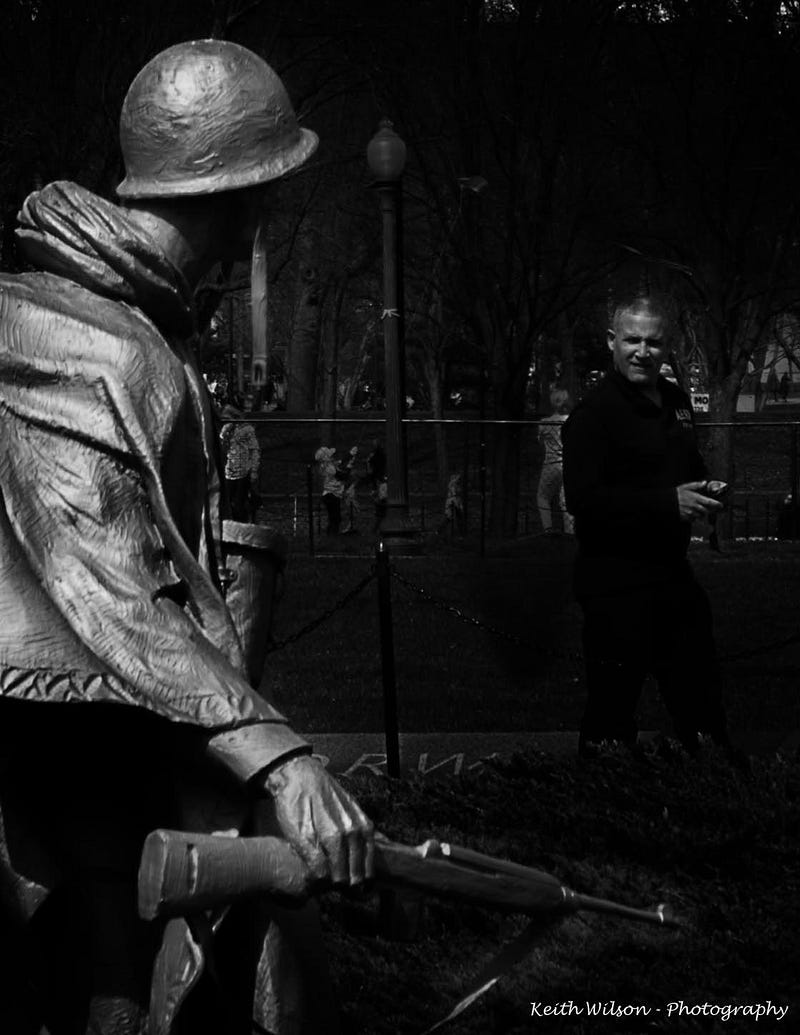
Photography can be a simple reproduction of the object photographed, or it can be art. When I get all artsy-fartsy with my pictures, I’m trying to enable the viewer to see something in an object that belongs to the object but she has never seen before. I‘m trying to cut through an overfamiliarity with the world that numbs us of delight and creativity.
The easiest way to do this in photography is often to shoot in black and white. When you look at a black and white photo of a familiar colored object, you can usually recognize the object, but it’s presented in a new way. This unforeseen appearance causes you to look closer and become more mindful of seeing. Suddenly new possibilities come to view. You might enjoy the play of shadows, the gradations of gray, and the stark contrasts that a black and white photo bring out. It’s funny how stripping things down to basics can enrich them.
Unfortunately, if you have seen a lot of black and white photos you can become immune to them. Black and white can become too familiar. Photographers have always got to come up with something new to stop people in their tracks. They crank up the saturation levels, adjust the tint, blow out the background, make something fuzzy or sharp, or find a new camera angle and frame things in a different way. However, they can’t make the new images so strange that the viewer cannot understand them. The art photographer has got to fit into a small window: familiar enough to be understood and strange enough to be intriguing.
It’s not hard to see defamiliarization at work in all the arts. The term itself comes from literature. The plot of a typical novel can be summed up in a few lines: boy meets girl, they fall in love, boy loses girl, they make up, and live happily ever after; so ordinary, you can see it happening every day. You’ll read a novel with that plot for 363 pages because the novelist has made it original. He’s added sparkling dialogue, unexpected twists, and quirky characters, all to keep you guessing. When you finish a good novel, you will have gained an understanding of the course of love as you have never understood it before.
Poetry and song do the same thing by putting in meter, verse, and startling vocabulary, thoughts you’ve had a million times before. This is why the same song is better in concert than it was when you heard it in your CD. The concert experience adds something new. For that matter, have you ever wondered why a singer or a musical instrumentalist doesn’t sing or play a well-known piece straight up, as it was originally written? He’s trying to make it fresh, so you can hear it as people first heard it when it just came out.
Have you ever wondered why some people, like me, prefer to live in a place like Rochester, New York, where the weather changes every day, from one extreme to another? There’s nothing like a new blanket of snow to make the world refreshed. Then we get sick of the same snow in February that we enjoyed in December. It’s gotten so familiar that we can no longer find the joy we once had in it.
Did you ever wonder why this person who you once fell in love with can do nothing but annoy you now? She’s gotten too familiar. Did you ever wonder why you get along so well when you’re on vacation? Just enough changes then that the relationship is renewed.
When you come to therapy and tell me something you’ve been thinking a million times before, you might think that going over it once more might not do you much good. Oh, but it does. Just hearing your voice say it, rather than your thoughts think it, may be just defamiliarizing enough to you that it enables you to look at the situation a whole new way. Then when I respond, you get another shot of defamiliarization. You see how that happens? The whole purpose is to wake you up.
To understand how defamiliarization works, you have to understand what’s happening when the opposite occurs. When you are familiarizing yourself with something, you’re taking it in and making it your own, making it part of the family. You’re fitting it in comfortably in your schema or world view. Once you have familiarized yourself, you no longer can do anything more with it. It’s become too close to you. You’ve lost objectivity. Defamiliarization gives you some distance, so you can see it more clearly and notice things you have not noticed before or have forgotten. When familiarization happens all over again, perhaps you fit it in a new place or have allowed it to change your schema. Generally, your world view becomes a little bigger then. You have more choices and more ways you can look at things.
There’s a saying in medicine: the thicker the chart, the worse the prognosis. That’s often true in therapy, too. The longer the person has been in therapy, the less likely a single session will do him much good. Therapy also can get too familiar. That’s another reason I’m a reflective eclectic. I have a big bag of tricks, so that when one method starts to get old, I can try another.
In the interest of defamiliarization, let me conclude in a way I don’t usually. I’d like to quote from the master of making the familiar fresh, J.R.R. Tolkien, from his lecture titled: On Fairy-Stories. You probably know Tolkien as the author of the Lord of the Rings trilogy. In this lecture, he surprisingly talked about recovery.
Recovery (which includes return and renewal of health) is a re-gaining — regaining of a clear view… as things apart from ourselves. We need, in any case, to clean our windows; so that the things seen clearly may be freed from the drab blur of triteness or familiarity — from possessiveness…This triteness is really the penalty of “appropriation”: the things that are trite, or (in a bad sense) familiar, are the things that we have appropriated, legally or mentally. We say we know them. They have become like the things which once attracted us by their glitter, or their colour, or their shape, and we laid hands on them, and then locked them in our hoard, acquired them, and acquiring ceased to look at them.
Since Tolkien’s thing was building fantasy worlds, he puts in a plug for his way of writing as the best defamiliarizing agent since sliced bread.
Creative fantasy, because it is mainly trying to do something else (make something new), may open your hoard and let all the locked things fly away like cage-birds. The gems all turn into flowers or flames, and you will be warned that all you had (or knew) was dangerous and potent, not really effectively chained, free and wild; no more yours than they were you.
Keith R Wilson is a mental health counselor in private practice and the author of three self-help books, two novels, and innumerable articles. A third novel, Who Killed the Lisping Barista of the Epiphany Café? is currently being published one chapter at a time in Medium.


