
Decoding ‘Hotel California’: The Eagles’ Haunting Ballad in an Era of Dark Glamour
‘You Can Check Out Anytime You Like, But You Can Never Leave.’
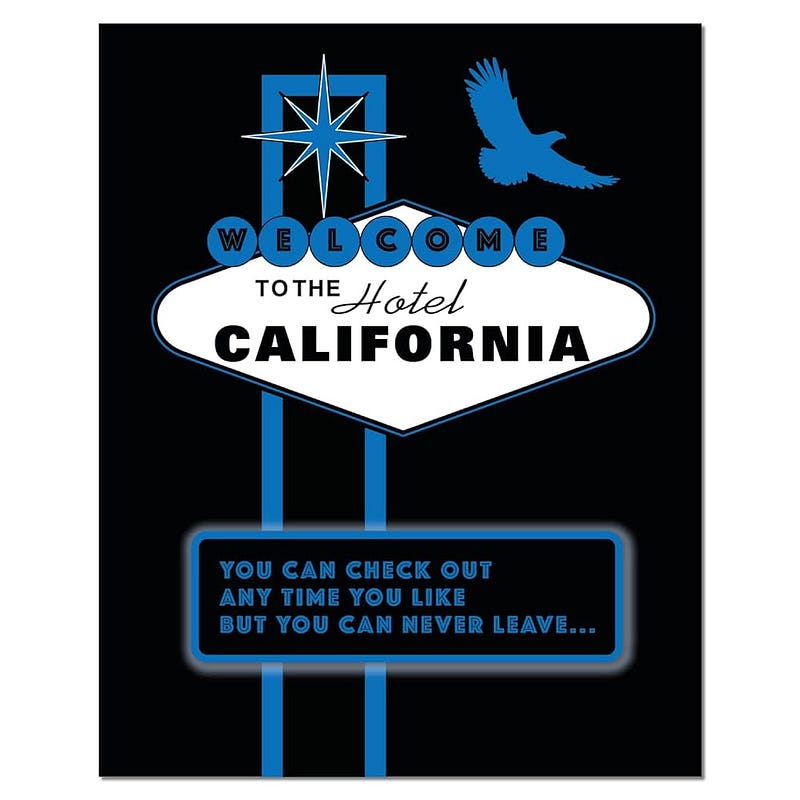
Prelude to a Masterpiece
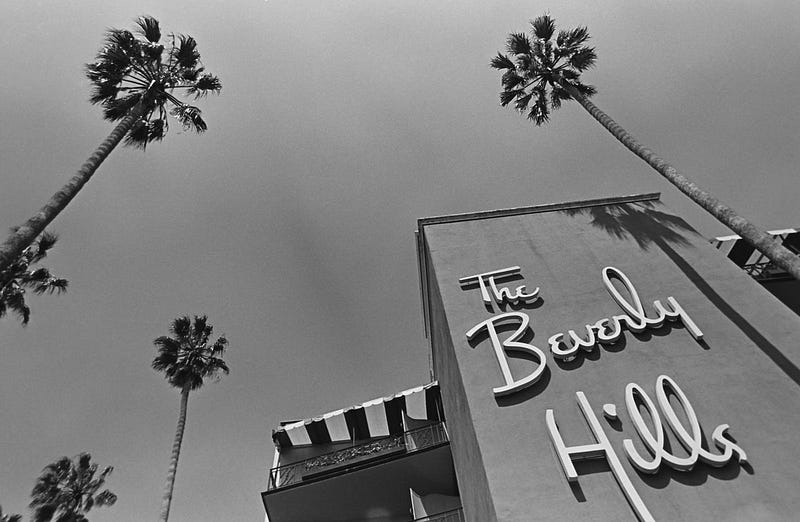
In the sweltering summer of 1976, as the golden state basked in the shimmering sun, guitarist Don Felder sat in a rented Malibu beach house, an acoustic 12-string in hand. As the gentle breeze swayed, the chords of what would become ‘Hotel California’ oozed out, paving the way for a song that starkly mirrored the era’s clash between glittering glamour and dark, insidious excess. The Beverly Hills Hotel had become a literal and symbolic focus of their lives at that time, embodying the end of their innocence and the essence of LA’s allure and lifestyle.
We were all middle-class kids from the Midwest. Hotel California’ was our interpretation of the high life in Los Angeles.
— Don Henley
The Melodic Metaphor, “On a Dark Desert Highway”
‘Hotel California’, with its haunting harmony and evocative lyrics, delved into the American dream’s dark underbelly. Don Henley reflected, “It’s a song about the dark underbelly of the American Dream, and about excess in America, which was something we knew about.” He further elaborated, “It’s a song about a journey from innocence to experience”. The phrase “they stab it with their steely knives, but they just can’t kill the beast” is a playful nod to Steely Dan, who had referenced the Eagles in their song “Everything You Did”.
Frey came up with a cinematic scenario of a person who, tired from driving a long distance in a desert, saw a place for a rest and pulled in for the night. But entered a “weird world populated by freaky characters”
He envisioned the song to “open like an episode of the Twilight Zone” where each door opened reveals a new version of reality. Frey continued: We decided to create something strange, just to see if we could do it. Henley wrote most of the lyrics based on Frey’s idea and sought inspiration for the writing by driving out into the desert as well as from films and theater.
Meanwhile, some lyrics, such as “Her mind is Tiffany-twisted, she got the Mercedes-Benz / She got a lot of pretty, pretty boys she calls friends”, were based on Henley’s break-up with girlfriend Loree Rodkin.
How Vietnam’s Ghosts Linger: “We Haven’t Had That Spirit Here Since 1969”
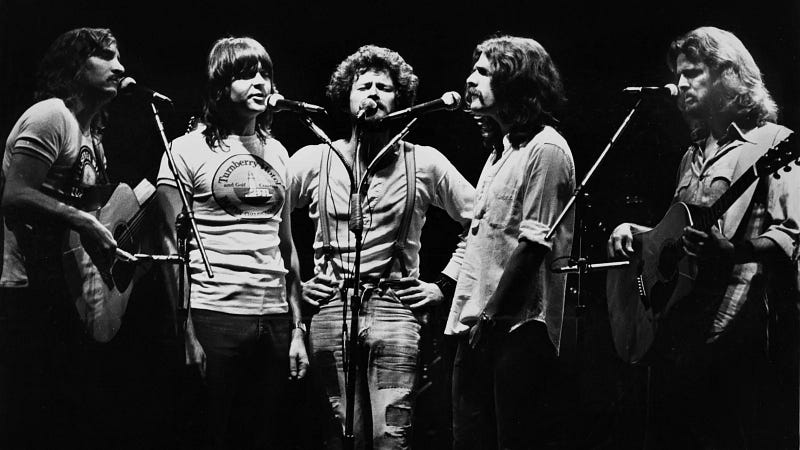
Hotel California came close to being a concept album, with songs sharing themes of paradise lost or squandered. It’s a reflection of a generation navigating through societal change during a tumultuous period in American history.
Drawing parallels with the Vietnam War, the lines “Such a lovely place, Such a lovely face” are often seen as dripping with irony. They hint at the deceptive invitation, that lured young soldiers into a treacherous warfare, where many met tragic fates or returned bearing lifelong traumas.
In the same way, the soldiers could “check out” — they could leave Vietnam — but if they left alive, they would be haunted by the experience for the rest of their lives. In other words, they could never “leave.”
“The illusion of freedom will continue as long as it’s profitable to continue the illusion. At the point where the illusion becomes too expensive to maintain, they will just take down the scenery, they will pull back the curtains, they will move the tables and chairs out of the way, and you will see the brick wall at the back of the theater.” — Frank Zappa
Behind the Scenes: “Mirrors On The Ceiling, The Pink Champagne On Ice”
The song, lauded for its intricate guitar work, also hinted at a rivalry with contemporary band Steely Dan, adding a layer of love affair to its lyrical narrative. The opening riff by Felder set a compelling stage, with Frey and Henley filling in the narrative spaces with a tale of disillusionment.
The final section features a “Guitar Battle” between Joe Walsh and Felder, which took the two of them sitting together, working for around three days to achieve the necessary precision. The iconic electric guitar solo, recorded with a Gibson EDS-1275 double neck and a Fender Telecaster, lasts for 2 minutes and 12 seconds, with them taking turns playing the lead before harmonizing and playing arpeggios together.
The whole ending was Don and me playing the twin harmony guitar parts, and we just sat there with headphones and went over and over and over until we got it right.
— Joe Walsh
The recording sessions were intense, with the band members pushing each other to extract the best performance possible. The result was a song that was both technically brilliant and emotionally resonant.
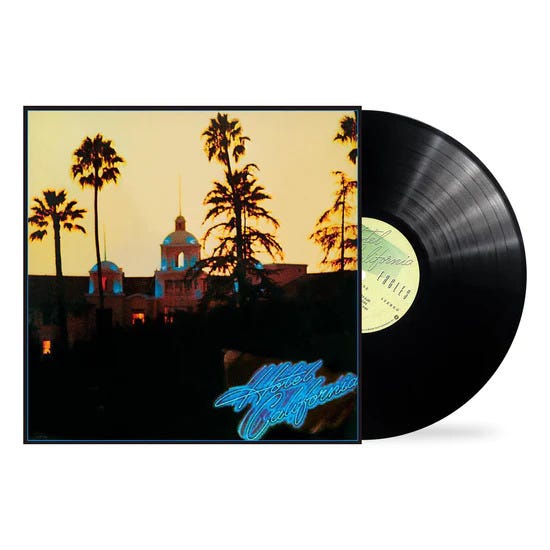
The Iconic Album Cover: A Picture’s Worth
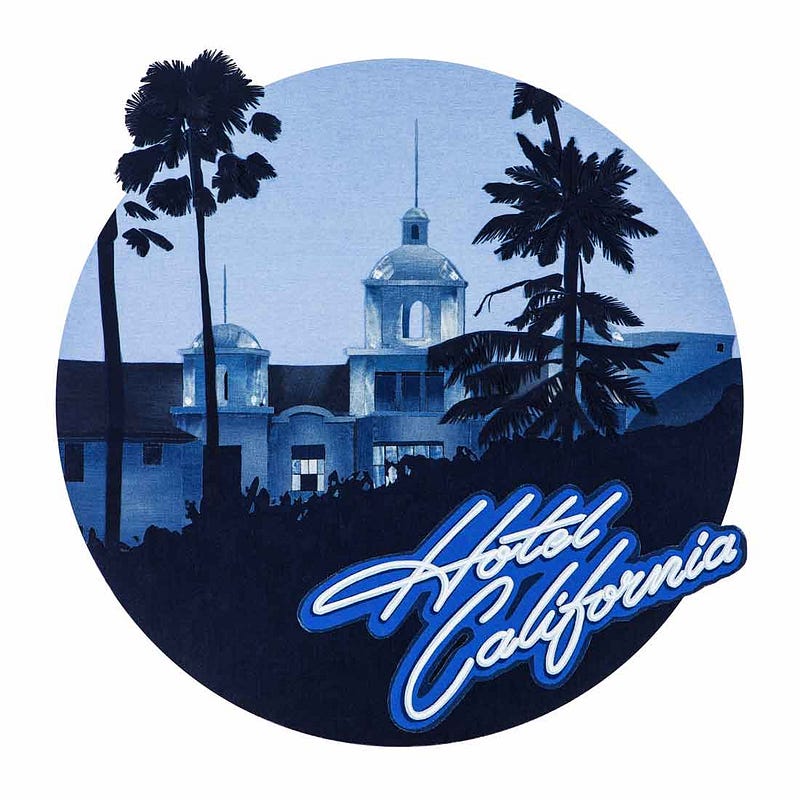
The ‘Hotel California’ album cover, featuring a photograph of the Beverly Hills Hotel at sunset, is as iconic as the title track. Shot by David Alexander, the cover art encapsulates the song’s themes of allure and entrapment. The hotel, bathed in a dusky glow, appears inviting, yet the ominous sky hints at the darker themes explored in the song. This placement of glamour and foreboding perfectly encapsulates the duality present in much of the Eagles’ work during this period.
The Success of Hotel California
“Hotel California,” since its release, has been nothing short of a musical phenomenon. The title track from the Eagles’ fifth studio album, it quickly soared to the top of the Billboard Hot 100 chart, holding its position for a week in May 1977. The song’s intricate guitar solos, haunting lyrics, and memorable melody made it an instant classic, resonating with fans and critics alike.
The album itself was a massive success, selling over 32 million copies worldwide and becoming one of the best-selling albums of all time. It won two Grammy Awards in 1978: one for “Record of the Year” and another for “Best Arrangement of Voices” for “New Kid in Town.” The song “Hotel California” was also nominated for “Song of the Year.”
Hey, I didn’t make a big deal out of “Hotel California.” The 18 million people that bought it did.
— Glenn Frey
Epilogue:
‘Hotel California’ is more than just a song; it’s a reflection of a time and place, a microcosm of the broader cultural shifts of the 1970s. Through its haunting melodies and evocative lyrics, it captures the tension between the promise of the American Dream and the reality of its unattainable nature. As we look back, it serves as a poignant reminder of the power of music to capture the essence of an era, resonating with each new generation in unique and powerful ways.
What are the lyrics?
- On a dark desert highway Cool wind in my hair Warm smell of colitas Rising up through the air
- Up ahead in the distance I saw a shimmering light My head grew heavy and my sight grew dim I had to stop for the night
- There she stood in the doorway I heard the mission bell And I was thinkin’ to myself ‘This could be heaven or this could be hell
- Then she lit up a candle And she showed me the way There were voices down the corridor I thought I heard them say
- Welcome to the Hotel California Such a lovely place (such a lovely place) Such a lovely face Plenty of room at the Hotel California Any time of year (any time of year) You can find it here
- Her mind is Tiffany-twisted She got the Mercedes-Benz, uh She got a lot of pretty, pretty boys That she calls friends
- How they dance in the courtyard Sweet summer sweat Some dance to remember Some dance to forget
- So I called up the Captain “Please bring me my wine” He said, “We haven’t had that spirit here since 1969”
- And still those voices are calling from far away Wake you up in the middle of the night Just to hear them say
- Welcome to the Hotel California Such a lovely place (such a lovely place) Such a lovely face They livin’ it up at the Hotel California What a nice surprise (what a nice surprise) Bring your alibis
- Mirrors on the ceiling The pink champagne on ice And she said, “We are all just prisoners here of our own device”
- And in the master’s chambers They gathered for the feast They stab it with their steely knives But they just can’t kill the beast
- Last thing I remember I was running for the door I had to find the passage back To the place I was before
- “Relax”, said the night man “We are programmed to receive You can check out any time you like But you can never leave”
Fuel Your Curiosity, Ignite Your Inspiration: Subscribe to My Newsletter Today!
👉 Why Subscribe?
Exclusive Content: Gain access to new and uncensored articles about fascinating subjects you won’t find anywhere else. Delve deeper into the realms of music, coding, and mindful musings.
- Mindful Musings: Dive into thoughtful explorations on topics designed to stir your intellect. 🪐
- Code Unveiled: As a web developer, I am thrilled to share tips and tricks to smooth out your coding ventures. 🏆
- Rhythmic Resonance: Journey through the profound impact of music, one beat at a time. 🥁
🌟 Be the First to Know: Subscribers are the first to receive fresh content, ensuring you’re always at the forefront of insightful discussions.
Your engagement propels this journey forward! Discover more insights in the articles to come by staying connected. 🗣️
- Subscribe to My Newsletter 📝
- Follow on Medium 🧠
- YouTube 🚀
- Instagram 🍒


