
Decoding Joni Mitchell’s ‘Blue’: Feminist Echoes

Joni Mitchell, a beacon of lyrical profundity, embarks on a transcendental musical journey in her album “Blue.” Through the hues of melancholy and joy, Mitchell’s tunes reverberate with feminist undertones, echoing the societal gender dialogues of her epoch.
This article aims to traverse the feminist discourse interwoven in Mitchell’s songwriting, shedding light on how her lyrical narratives have contributed to the gender equality dialogue, particularly through a meticulous examination of her iconic album “Blue.”
“Joni Mitchell is probably the best singer-songwriter of the last 50 years.” — David Crosby
Musical Journey and Influences
Joni Mitchell’s musical odyssey is a rich tapestry of genre exploration and authentic expression. With roots in folk, branches stretching towards pop, and leaves rustling in the jazz breeze, Mitchell’s sound transcends conventional boundaries.
Her album “Blue” epitomizes this voyage, each chord resonating with the essence of her eclectic influences, painting a sonorous picture of her personal and artistic evolution.
“I was really lost for a while in my teens. I was angry. But when I found music — Bob Dylan, Neil Young, Joni Mitchell — it was a new discovery. It was a door to this other world where I wanted to be.” — Ray LaMontagne
Literary Analysis of Select Songs
In the album “Blue,” Mitchell crafts a lyrical landscape rich with feminist discourse. Through a meticulous exploration of the songs “Carey,” “River,” and “A Case of You,” we unravel the threads of feminist narratives intertwined in her musical fabric.
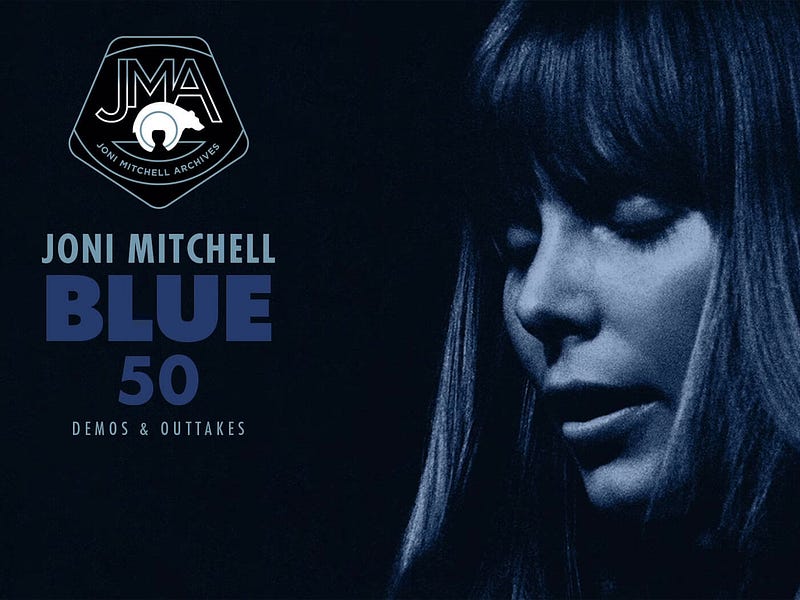
Blue: A Lyrical Tapestry of Feminism and Emotional Resonance
- Acclaimed as one of the greatest albums ever, “Blue” is a testament to Joni Mitchell’s songwriting, composition, and vocal prowess.
- Noted by The New York Times and Rolling Stone for its pivotal role in 20th-century music, especially for a female artist.
- The album’s introspective and emotional narratives are set against the backdrop of Mitchell’s personal relationships and societal norms of the time.
- Its impact reverberates across the music industry, setting a high bar for lyrical and emotional authenticity.
Carey: A Journey of Self-Discovery and Feminist Narratives
In “Carey,” Joni Mitchell narrates a tale of adventure and self-discovery, set against the backdrop of a free-spirited sojourn in Crete. The song opens with a playful yet defiant stance against patriarchal figures, as seen in the lyrics, “Oh, you’re a mean old Daddy, but I like you.” This spirited declaration reflects Joni’s newfound sense of independence and her willingness to challenge societal norms.
The story behind “Carey” is as captivating as the song itself. During her time in Crete, Joni Mitchell met Carey Raditz, the man who would inspire the song. Their meeting was serendipitous, sparked by a moment of fire and intrigue. Joni first noticed Carey when he lit a fire inside a restaurant, creating a metaphorical spark that ignited their connection.
As fate would have it, Joni’s friend left Crete, but Joni chose to stay behind for two months with Carey. Their relationship blossomed, and the lyrics of “Carey” reflect the freedom and joy they found in each other’s company. Yet, beneath the surface of this love story lies a deeper narrative of feminist exploration.
River: Navigating Emotional Icebergs
“River” is a poignant voyage through Joni Mitchell’s emotional landscape, where the chilly terrains of loss and self-blame are explored. The line, “Oh, I wish I had a river I could skate away on,” encapsulates a yearning for escape, a desire to glide away from the emotional entanglements that tether her to pain. It’s a metaphor that embodies the cold, hard reality of facing oneself amidst emotional turmoil, yet also carries a fleeting hope for freedom carried by the river’s fluidity.
A Case of You: Mapping the Heart’s Geography
“A Case of You” unfolds a narrative where love is both a journey and a destination. The opening lines, “I am as constant as a northern star,” and “Constantly in the darkness. Where’s that at?” set a tone of contrast and quest for understanding. The imagery of sketching a lover’s face on a map of Canada ties love to a sense of place and memory.
The chorus, “You taste so bitter and so sweet,” encapsulates love’s dual nature, while lines like “Love is touching souls, Surely you touched mine ’Cause part of you pours out of me In these lines from time to time”…depict love’s enduring imprint, intertwined with personal experiences, possibly reflecting Joni Mitchell’s relationship with Leonard Cohen.
“You could write a song about some kind of emotional problem you are having, but it would not be a good song, in my eyes, until it went through a period of sensitivity to a moment of clarity. Without that moment of clarity to contribute to the song, it’s just complaining.” — Joni Mitchell

The Resounding Success of ‘Blue
The album “Blue” earned a plethora of accolades, like being ranked among the greatest albums ever by multiple publications, and achieved commercial success by peaking on various national charts.
It was certified platinum in the US for over a million sales, and double platinum in the UK with over 600,000 sales. The album’s single “Carey” reached number 93 on the Billboard Hot 100 chart. Furthermore, on its 50th anniversary, “Blue” peaked at number 1 on iTunes and became the number 1 Audio CD on Amazon.
Joni Mitchell, a beacon of lyrical profundity, embarks on a transcendental musical journey in her album “Blue.” Through the hues of melancholy and joy, Mitchell’s tunes reverberate with feminist undertones, echoing the societal gender dialogues of her epoch.
This article aims to traverse the feminist discourse interwoven in Mitchell’s songwriting, shedding light on how her lyrical narratives have contributed to the gender equality dialogue, particularly through a meticulous examination of her iconic album “Blue.”
“You wake up one day and suddenly realize that your youth is behind you, even though you’re still young at heart.” — Joni Mitchell
Musical Journey and Influences
Joni Mitchell’s musical odyssey is a rich tapestry of genre exploration and authentic expression. With roots in folk, branches stretching towards pop, and leaves rustling in the jazz breeze, Mitchell’s sound transcends conventional boundaries. Her album “Blue” epitomizes this voyage, each chord resonating with the essence of her eclectic influences, painting a sonorous picture of her personal and artistic evolution.
“My childhood was very difficult. I had every childhood disease and then some, but my parents didn’t mollycoddle me. They left me to fight those battles on my own. I guess that was very Canadian, very stoic. But it’s good. I had to become a warrior. I had to give up hope and find a substitute for hope that would be far more stable.” — Joni Mitchell
Comparative Analysis
When juxtaposed with her contemporaries, Mitchell’s “Blue” stands as a beacon of feminist lyrical narrative. The album’s thematic depth and musical innovation often draw comparisons with other iconic artists of the time.
“Blue” resonates with listeners for its emotional depth and feminist undertones, providing a cathartic space for audiences to navigate their experiences through Mitchell’s lyrical explorations.
Sociopolitical Context
During the era of Joni Mitchell’s active years, the world was embroiled in sociopolitical upheavals that reverberated across every corner of society. One of the most prominent movements of the time was the feminist movement, which was gaining unprecedented momentum.
This movement challenged long-standing traditional gender norms and advocated vigorously for women’s rights. Women were demanding recognition, equality, and autonomy in a society that had been largely patriarchal for centuries.
Joni Mitchell’s music and lyrics, particularly in her album “Blue,” resonated deeply with these feminist discourses. Her songs provided a unique and powerful musical platform for exploring the complexities of gender dynamics. In an era marked by societal introspection and change, Mitchell’s work encapsulated the spirit of this transformative time.
Her lyrics were not just songs; they were anthems that spoke to the hearts and minds of those seeking change and equality. Through her music, Mitchell became a voice for the feminist movement, a troubadour of change, and a champion for the empowerment of women.
Impact and Legacy
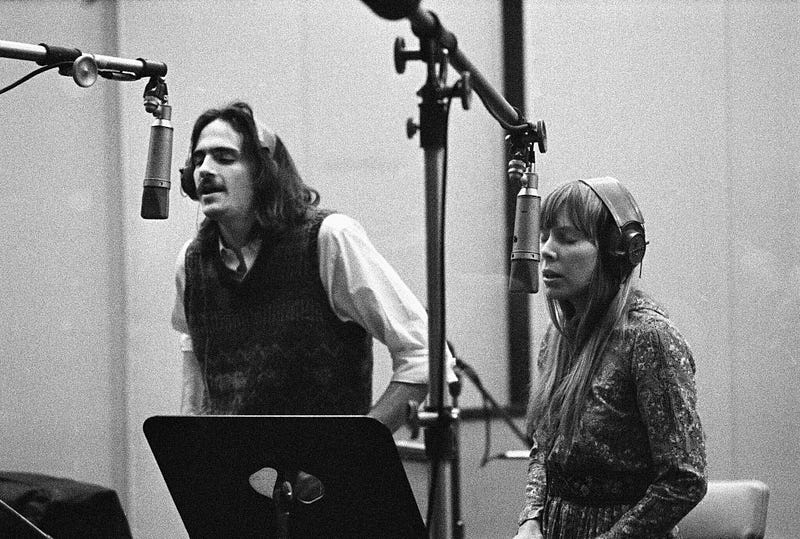
Mitchell’s album “Blue” didn’t just make waves during its release; it set a profound legacy in motion that continues to influence and inspire generations of songwriters. Mitchell’s ability to combine personal and societal themes through a feminist lens left an indelible mark on the music industry. Her candid exploration of love, loss, identity, and the evolving roles of women in society was revolutionary. She shattered stereotypes and challenged conventions through her artistry, inspiring countless artists to follow in her footsteps.
The legacy of “Blue” extends beyond the music itself. It symbolizes a moment in history when an artist used their platform to amplify the voices of those advocating for change. It stands as a testament to the power of music to transcend its time and continue to resonate with new generations. Mitchell’s impact on the feminist movement and her influence on the art of songwriting is immeasurable, and her work continues to be a source of inspiration and introspection for artists and listeners alike.
Explore More Decoding Stories and Lists:
Conclusion
In the lyrical tapestry of “Blue,” Joni Mitchell has etched a narrative that not only defined an era but continues to reverberate through time. Her exploration of feminist themes amidst a turbulent sociopolitical era encapsulates a timeless resonance. “Blue” isn’t just an album; it’s a monumental testament to Mitchell’s musical genius and her unwavering commitment to feminist narrative. It’s a reminder that music can be a catalyst for change, a mirror reflecting the complexities of society, and a timeless work of art that continues to inspire, challenge, and uplift. Joni Mitchell’s journey through “Blue” is a journey through the evolution of feminism, and it remains an enduring source of empowerment and inspiration for all who listen.
My Secrets On How To Write on Medium, And Make Money.
This article beautifully weaves together Joni Mitchell’s musical journey, her feminist narratives, and the impact of her iconic album “Blue.” The inclusion of quotes from David Crosby and Joni Mitchell herself adds depth to the narrative, showcasing the profound influence of Mitchell’s work.
The analysis of select songs and the contextualization of the album within the sociopolitical landscape of its time provide a comprehensive understanding of its significance. The article effectively conveys the enduring legacy of Joni Mitchell and her contribution to both music and feminism.
I’m truly humbled by the support from each one of you. Being part of such a compassionate community is a blessing beyond words. I firmly believe that with perseverance and faith, every hurdle can be crossed, and every aspiration can be achieved. Remember, amidst the twists and turns of life, divine guidance is always within reach. 🪐
Fuel Your Curiosity, Ignite Your Inspiration: Subscribe to My Newsletter Today!
👉 Why Subscribe?
Exclusive Content: Gain access to new and uncensored articles about fascinating subjects you won’t find anywhere else. Delve deeper into the realms of music, coding, and mindful musings.
Mindful Musings: Dive into thoughtful explorations on topics designed to stir your intellect. 🪐
- Code Unveiled: As a web developer, I am thrilled to share tips and tricks to smooth out your coding ventures. 🏆
- Rhythmic Resonance: Journey through the profound impact of music, one beat at a time. 🥁
🌟 Be the First to Know: Subscribers are the first to receive fresh content, ensuring you’re always at the forefront of insightful discussions.
Your engagement propels this journey forward! Discover more insights in the articles to come by staying connected. 🗣️
- Subscribe to My Newsletter 📝
- Follow on Medium 🧠
- YouTube 🚀
- Instagram 🍒


