
Impressions of India
Decisions That Made the Difference
Trips to Puri and Konark ensured a perfect end to my Indian sojourn. Odisha was a pleasant surprise, in more ways than one
I began discovering India’s Best Kept Secret (I quite like the tagline) from its headquarters. The very compact and uniquely planned city of Bhubaneswar happened to be my base for the entire duration of my trip to the eastern state of Odisha.
However, I also ventured out of the capital city as often as I could, and tried to cover as much as it was practically possible in three weeks. While I touched upon some of the impressive periphery areas in my previous post, here I will focus on some of the most significant places of Odisha.
Puri and Konark, together with Bhubaneswar, are referred to as the Swarna Tribhuja (Golden Triangle) in the local Odia language. Each of the three destinations has its own unique identity and offers an inquisitive traveler a lot in terms of variety. Even before I embarked on this trip, the idea was to explore each of the three corners of this unique triangle.
I prefer region over religion
At a distance of less than 40 miles from the state capital, between 60 and 65 kilometers, lies Puri. It is a relatively small city of about 200,000 people that is famous for two things in particular. First, it is an important pilgrimage site for the followers of Hindu religion — India’s largest religious group, and is home to the Jagannath Temple, a 12th-century shrine located at the heart of the city.
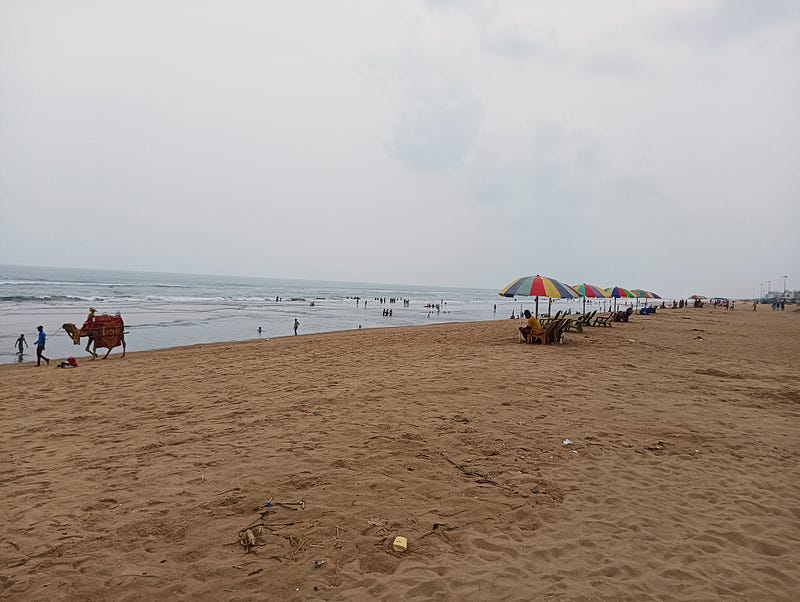
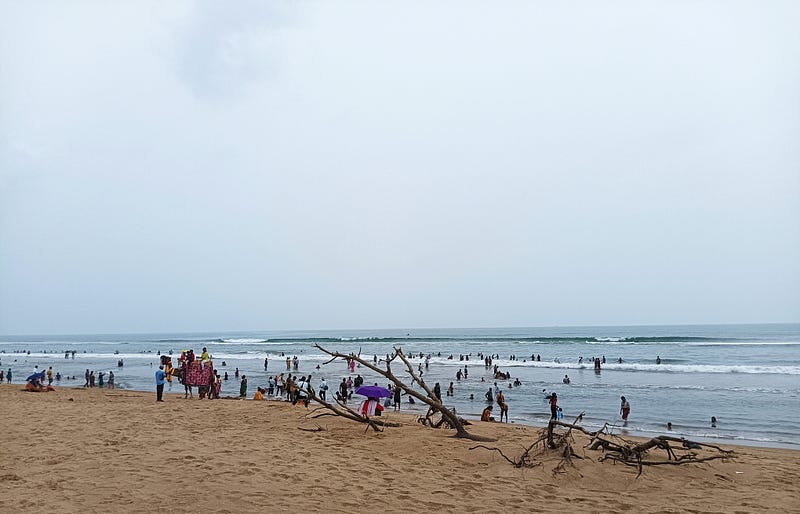
Then, there is a world-famous beach. Not being a very religious person I headed straight towards the sands. The one good aspect is the fact that you do not need to enter the city. The beach, which avoids the city entirely, is a long stretch, a couple of kilometers in the least.
Besides, it was a hub of activities, full of people. From camel rides to water sports, and from a variety of food stalls to people simply enjoying the view of the sea, the Puri Beach offers a gamut of sights to the prying eyes. I have been to many different beaches across six continents, and what makes Puri distinctly different is the plethora of options that it offers.
The beach is kind of divided into parts to cater to people with different mindsets. Not far from the main beach is what is called Blue Flag Beach. By paying a small fee you can enjoy moments of solitude in a cleaner (and a lot less crowded) beach that also offers facilities like changing rooms and washrooms. It is worth more than the minimal fee they charge.
A journey to remember
After spending considerable time in the beach area I hit Marine Drive. It is a picturesque road, about 35 km in length, connecting Puri and Konark. With trees lined up on both sides of a well-maintained road, it soon became one of those instances when you really enjoy the driving experience. The Marine Drive has the sea on one side, and forests on another, giving a traveler another opportunity to hit a virgin beach or savor the cuisine in a forest resort. I palpably did both.
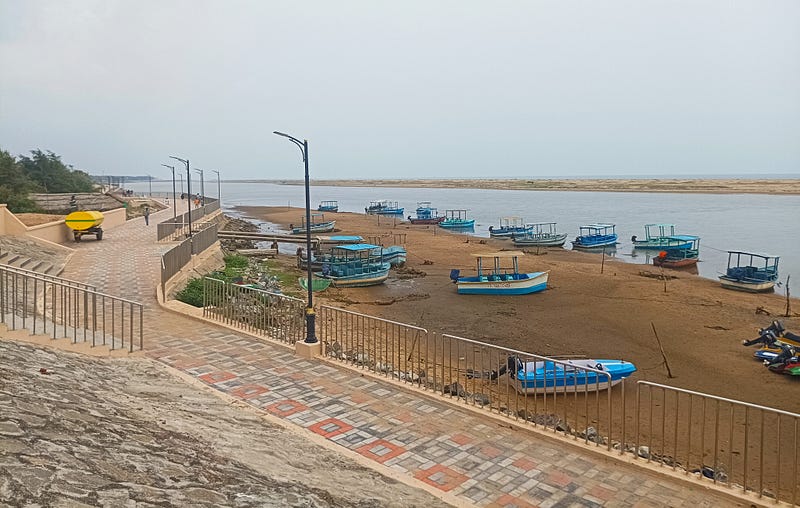
My favorite spot in this stretch happened to be an idyllic place named Ramachandi. It represents an interesting confluence of the river and the sea, with an interesting promenade that also doubles up as a viewing platform. Even as I tried to capture on camera this confluence as best as I could, suffice to say I am not entirely satisfied with my efforts.
That being said, I thoroughly enjoyed the brief time I spent at Ramachandi. It is one of the places that reiterates the importance of doing nothing, and the positive impact this detoxification process can have to your overall being. It is little experiences like these that you end up cherishing the most while travelling.
Even as I neared Konark, I made a brief stopover at another hidden beach. This was a small stretch of sand with limited tourists, and unlimited beauty. It was just a couple of kilometers away from my intended destination, and in hindsight, I believe it was a smart decision to stop by the Chandrabhaga Beach.
Where concept meets class
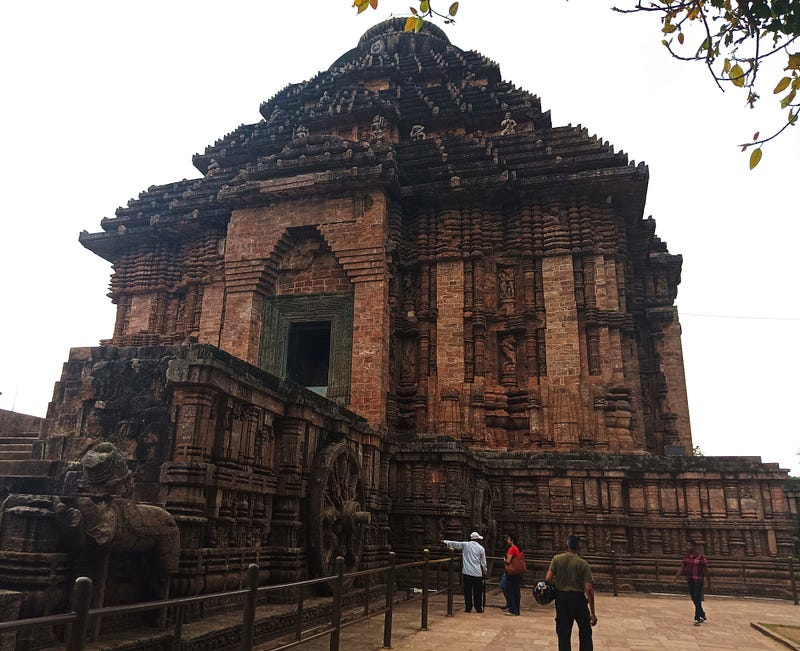
Towards the end of a memorable period along Marine Drive, I finally reached Konark, the site of the world renowned Sun Temple. This 13th-century architectural masterpiece is unlike any other conventional temple, considering it is not a place where devotees throng to pay obeisance. On the contrary, it serves as a bucket list destination, and a mandatory photo opportunity, for the millions of tourists that it welcomes every year.
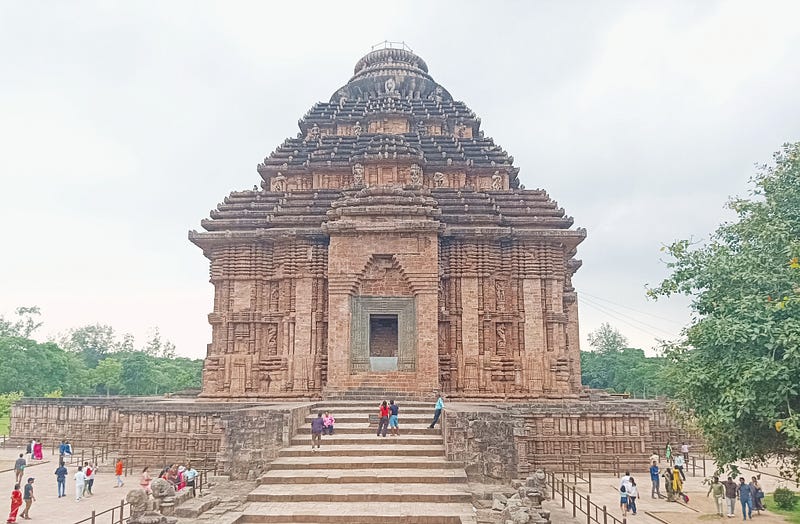
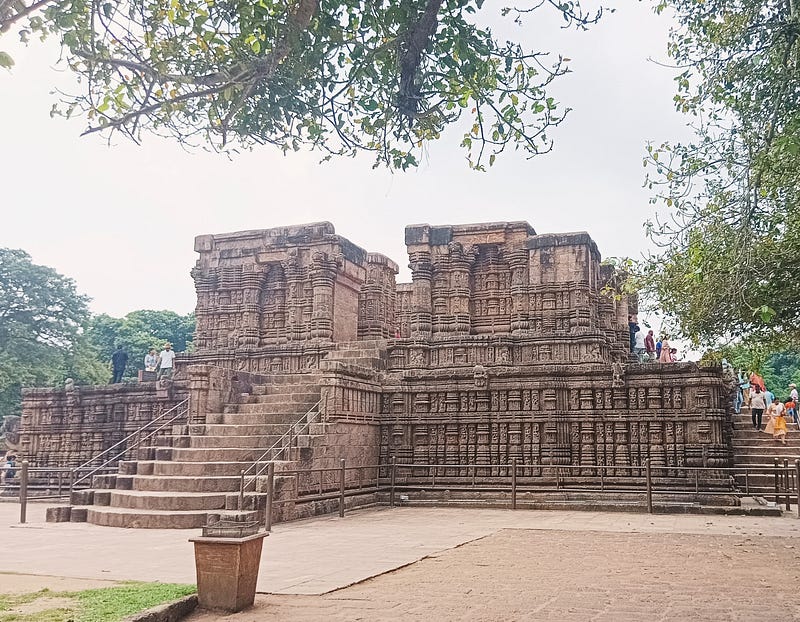
The word Konark is a combination of two words, Kona (meaning corner) and Arka (meaning Sun). The temple per se, as the name indicates, is dedicated to the Sun God. In fact, it is said that this wonderfully carved structure was designed as a chariot for the Sun God, in a manner that the rising sun’s first rays illuminate the inner sanctum and the three deities dedicated to god.
The lavishly decorated chariot was mounted on 24 wheels — 12 pairs signifying 12 months of the year, and drawn by seven horses. While time ensured the destruction of much of the original structure, the ruins clearly indicate the magnitude of the project. The largest structure that remains (pictured at the top) is actually the assembly hall of the temple. The iconic wheels, each about 10 feet in diameter, can still be used as sundials to tell the time.
The region hosts the Konark Dance Festival every year, which attempts to showcase the rich culture of the state. No points for guessing, the Konark Sun Temple is a UNESCO World Heritage Site. It is a place where concept meets class, and it is this combination that makes it a class apart. Konark is distinctly different from many other places in the world, and any traveler must visit it at least once. If I ever get a chance again, I would love to revisit the magnificent place and relive the ambience.
Comparatively less but…
While I had unintentionally reserved the best for the last, I also found the area in and around Konark to be the quietest of them all, which brings to something that left me disappointed to an extent. Many years prior when I was busy exploring the countries in South and Southeast Asia, I had got used to the fact that though most of them are beautiful, almost all the region is overcrowded and chaotic to the core.
Considering they are comparatively cheaper, tourists also throng these countries and tourist traps are a norm. Add to it the fact that India is the world’s most populous country. Get the drift…
That being said, I had done my research about the part of India weeks before embarking on my trip. I was aware that while Odisha is India’s eighth-largest state in terms of India, it does not feature in the Top 12 when it comes to population. I was expecting things to be a bit more organized. Well, suffice to say I expected a bit too much.
As is the case with most of India, there is absolutely no control over either the population growth or the chaos that accompanies it. A friendly local explained that despite being relatively less populated, Odisha suffers from the fact that the adjoining states have a lot of people. Besides, Bangladesh is not very far, and it need not be stated its citizens love heading westwards.
As such, the authorities haven’t been able to control the excessive migration, and that has ensured Bhubaneswar, a city that was designed for a few thousand people only, now houses over a million people. All these factors combined made the roads, markets and places of interests a bit too crowded and unorganized for my comfort. It is a fact that no travel experience is perfect. As such, I got used to this lack of organization over the course of my stay.
It makes more sense to…
… Try the local cuisine. As mentioned previously, the best aspect of most countries in South and Southeast Asia is the fact that they boast of some diverse food options. Indian cuisine, with the plethora of alternatives on offer, is among the best in the world. What I ended up trying in the recent weeks has since become a personal favorite.
The Odia cuisine, while low-profile like the state per se, caters to all taste buds. From a variety of curries to a plethora of options in both bitter and sweet, to something I fell in love with over the course of my stay. From Chilika to Puri the seafood available is of top quality and leaves an unforgettable taste.
While I happened to notice quite a few of the budget options that most tourists usually prefer — KFC, Burger King, Subway, I definitely suggest giving the local cuisine a try. I also need to mention that I could not spot a McDonald’s outlet during my stay in Odisha. I found it surprising especially considering the fact that I have seen overcrowded Big Mac outlets in other Indian cities like Delhi and Mumbai.
There are a number of good hotels that provide accommodation catering to all categories of visitors. There are a number of cafés and interesting dining options, as well as many shops selling local handicrafts. Unfortunately, I am not in a position to comment on public transport. Based on my previous experiences in India, I had a chauffeur-driven car at my disposal for all the local travel.
It’s about applying common sense
It was additional expenditure no doubt, but made perfect sense for three reasons. First, considering the size of the population, finding public transport that is not packed, and also ensures a comfortable ride, is quite a task. Secondly, the weather makes it all the more difficult to make multiple changes while traveling. Even though it was October, the heat combined with high humidity made things miserable.
Finally, and with all due respect, the otherwise affable Indians have scant regard when it comes to rules. Nowhere it’s more obvious than the daily traffic. Over-speeding, driving and overtaking on the wrong side and changing lanes without a warning comes naturally. Then, there is the habit of opening the door and spitting on the road (many love their tobacco). Talking on the cellphone while driving is perfectly alright.
I also witnessed a couple of instances of people shouting at the traffic police from inside their vehicles. Besides, the people love honking the horn. In fact, the manner in which some intercity buses have designed their horns can serve as an inspiration to the makers of The Conjuring universe, and this is by no means an exaggeration.
Mismanaged traffic is a way of life. Any complaints or opposition leads to endless arguments right there in the middle of the road, some even resorting to fights. I dare you argue with an… The chances of that argument leading to anything remotely sensible is as good as the countries of the world achieving the climate goals by 2030 (Apologies, Greta).
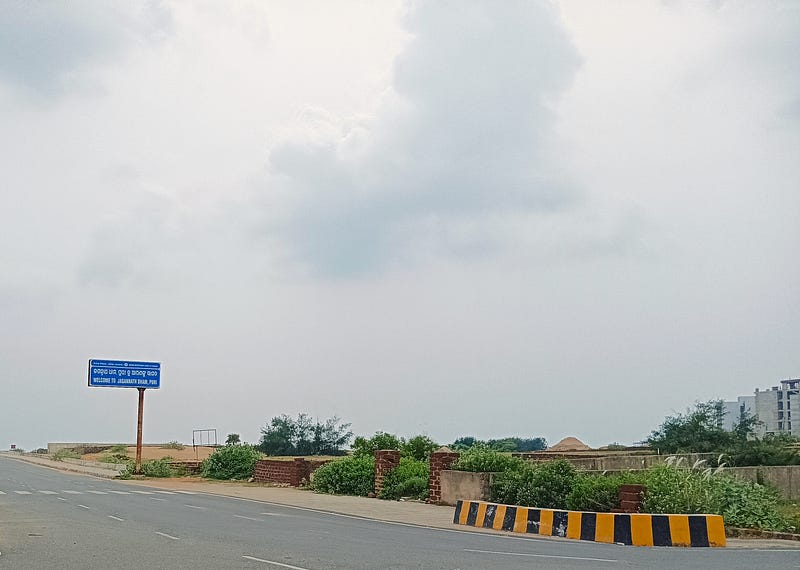
A local may over time acquire the expertise to drive in such a setting, but for a visitor there is always an element of risk. As such, it is not worth risking your life (and comfort) for a few dollars more. Having a vehicle (and chauffeur) at your disposal makes things a lot more convenient. It is about applying common sense and finding a smart solution.
We ended up helping each other
My decision to hire a vehicle for the entire period turned out to be a smart one. The chauffeur was a well-educated, well-mannered man. In him, I had a local guide at my disposal, without having had to look for one. The lack of opportunities has made the Indian diaspora the world’s largest. However, here’s a guy who loved his country a bit too much to consider leaving.
On the contrary, during our many conversations, he revealed that he is keen on writing a book about the history and culture of Odisha, his home state. While the book is still in the early stages, he is determined to do everything to ensure a comprehensive account. I shared with him the little research I had done before my trip. He found the German angle, as also the Scottish inspiration, to be fascinating and promised he would do more research on the information that I provided him with.
It is thanks to a reliable Man Friday like him that I was able to begin and end my sojourn to Eastern India on a high. Three weeks are never enough to explore everything. As such, I kept my program to a minimum, focusing instead on exploring the vivid details about the destinations I ventured into. Keeping it less while traveling in a country of excess turned out to be a smart move.
In fact, like every other aspect in life, it is your decisions that make the difference to your travel experiences. My decision of not going down the beaten track, avoiding a predictable destination and charting a new territory altogether was a tactical masterstroke. It helped me to discover a fresh facet of the varied country that India is, and to make a significant little addition to my list of favorites.
Odisha was a pleasant surprise in more ways than one, and definitely a lot more than I had expected.


