
Decision Paralysis: Confronting the Overchoice Crisis
Achieving Decisiveness Despite Endless Options

Introduction
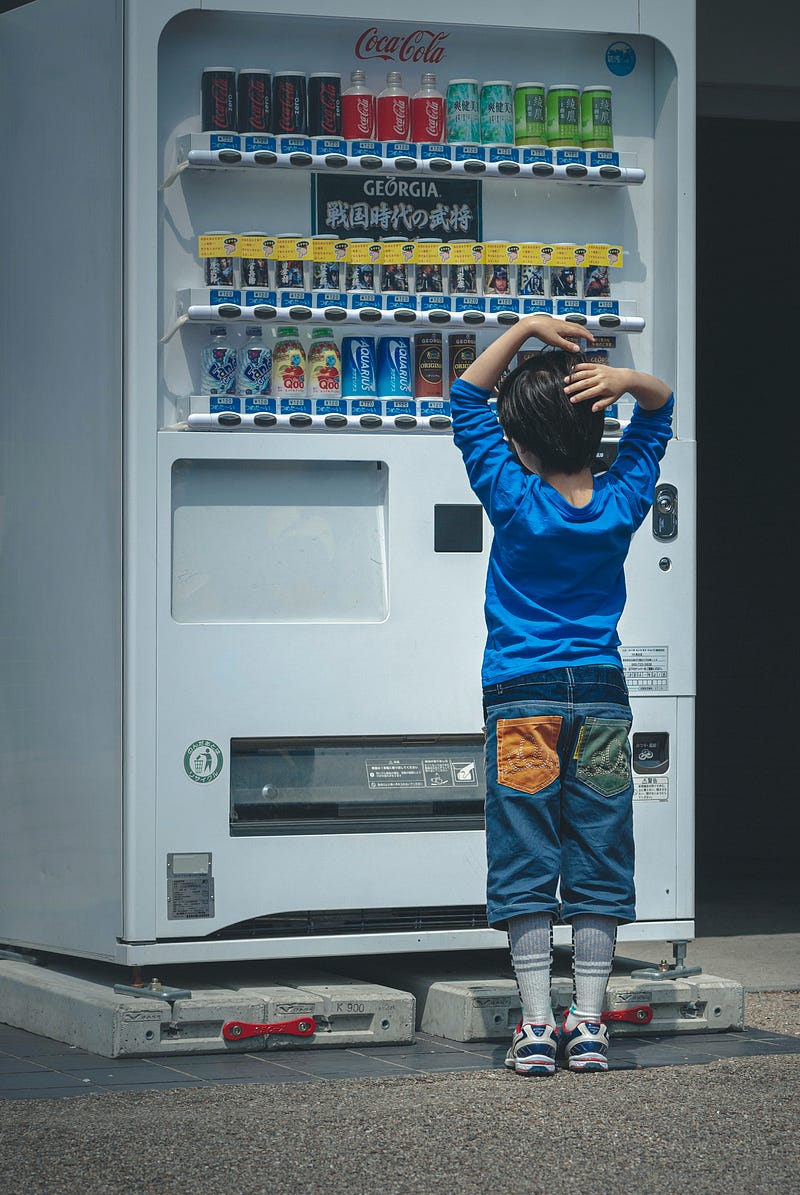
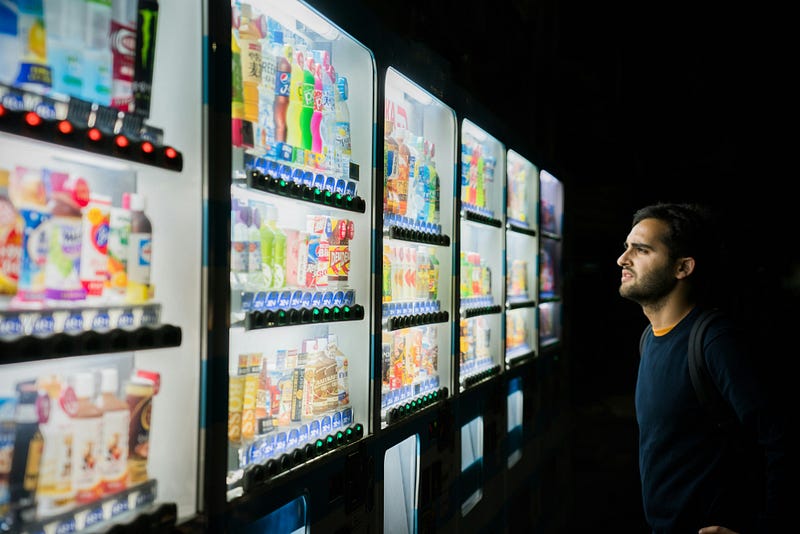
We live in an age of unprecedented choice. Supermarkets carry over 40,000 products, streaming platforms offer thousands of shows and movies, and even choosing a restaurant for dinner can feel overwhelming with countless cuisine options.
This endless array of choices represents the pinnacle of freedom and self-determination. However, recent research suggests that overchoice can also lead to negative consequences like decision fatigue, regret, and missed opportunities.
This phenomenon, labeled the “paradox of choice,” reveals how an overabundance of options can ironically undermine the very freedom it represents.
By understanding the mechanisms behind overchoice, we can regulate decisions with more clarity and confidence.
The Heavy Burden of Decision-Making
The abundance of choice has led to an explosion in daily decision-making. Researchers estimate that we make around 35,000 conscious decisions per day about everything from what to wear to what route to take (Schwartz, 2020).
This consumes a tremendous amount of mental energy. In fact, a recent study found that people spend an average of 2 to 3 hours per day on inconsequential decisions alone, equating to over 100 days per year (Lieberman, 2022).
Making even trivial choices draws on our limited cognitive resources, leading to decision fatigue over time. A landmark study showed that judges made more conservative parole decisions as their cognitive resources were depleted throughout the day (Thaler, 2021).
The more choices we face, the harder each decision becomes. This explains why selecting what cereal to buy can feel agonizing after a long day of mentally strenuous decisions.
The Mechanisms Behind Choice Overload
The counterintuitive problems arising from overchoice illustrate what psychologists call choice overload.
Traditional economic theory assumes that more choice allows people to select precisely what they want, maximizing freedom and satisfaction (Wang et al., 2020).
However, empirical research shows that once the number of choices reaches a high enough threshold, generally around six options, people start experiencing paralysis and dissatisfaction (Schwartz et al., 2022).
Several key factors underpin this. Firstly, evaluating more choices requires greater cognitive effort and time investment. With limited mental bandwidth, our brains struggle to assess all options thoroughly.
Secondly, having more choices raises expectations about finding the “perfect” match for our preferences. However, absolute perfection rarely exists. By setting unrealistic expectations, we undermine satisfaction.
Lastly, a richness of nearly identical choices activates a psychological trap called Fredkin’s paradox, where people obsess over negligible differences instead of obvious similarities (Wang et al., 2020). This leads to chronic overthinking and indecision.
Individual Differences in Choice Overload Susceptibility
While too much choice overwhelms most people, some individuals cope better than others in high-choice environments.
Several personal characteristics influence sensitivity to overchoice. For example, maximizers who seek the absolute best option tend to experience greater decision angst compared to satisficers who readily settle for “good enough” choices.
Moreover, individuals with an internal locus of control believe outcomes depend on their own actions. This empowers them to narrow down options confidently. However, those with an external locus of control think external forces determine outcomes, making decisions seem futile (Chernev et al., 2021).
Additionally, age impacts choice overload susceptibility. A meta-analysis found that older people tend to consider fewer options yet make equally good or better decisions. They leverage their greater life experience to evaluate choices intuitively.
Meanwhile, young people with limited experience struggle to differentiate between the nuances of plentiful, near-identical options. (Reed et al., 2022).

The Pitfalls of Choice: Procrastination, Paralysis, and Regret
The wealth of choices, once perceived as a privilege, can easily transform into a burden that hinders both decision-making and overall well-being. As choices multiply, so too do the opportunities to fall victim to biases and comparisons that derail our judgment (Kidd & Wilson, 2023).
One major obstruction is temporal discounting—overrating immediate rewards while underappreciating future benefits. For example, we might choose watching TV over going to the gym due to the instant gratification of relaxation, despite understanding the long-term health impacts.
Researchers found that people offered $100 now or $120 in a month usually chose the immediate $100, whereas they were willing to wait when offered $100 in twelve months or $120 in thirteen months. We irrationally discount future outcomes, often against our own interests (Wang et al., 2021).
This shortsightedness encourages procrastination and delays. We postpone decisions to avoid complex deliberations and emotions like fear of failure, even when putting things off for later limits opportunities.
Surveys show approximately 90% of Americans consider themselves procrastinators in some domain and 25% chronically avoid difficult decisions, impeding goal achievement (Gustavson et al., 2022).
Another common decision-making trap is FOMO—the fear of missing out. Having limitless possibilities constantly reminds us of chances we will inevitably miss, provoking anxiety (Sharot, 2023).
In an attempt to shield themselves from future regret, individuals are increasingly making defensive decisions, swayed by external influences rather than aligning with their true interests or values.
Strategies for Making Decisive Choices
Thankfully in the face of overchoice, evaluated and applied strategies empower us to make informed decisions, overcome our mental obstacles, and make clear-minded choices.
· A proven approach is adopting the perspective of our future selves and looking back at today’s options. Researchers found that envisioning how our future selves will view current opportunities increases patience in financial decisions by reducing shortsightedness (Scheibe et al., 2022).
· Additionally, retrospective reflections on our choices allow us to forecast potential future regret, highlighting the options most aligned with long-term well-being.
· Another helpful tactic for making decisive choices is setting firm deadlines. Imposed time constraints counteract endless deliberation and procrastination tendencies by forcing action.
· Arbitrary time limits also improve engagement, motivation, and decision outcomes (Caza et al., 2020). To avoid missing opportunities by waiting too long, we can set milestones, schedule decision meetings on our calendars, and establish choice implementation plans.
The strategies above help individuals address overchoice pitfalls. However, collective approaches also matter.
Some psychologists argue that the responsibility should not fall entirely on individuals to deal with the negative impacts of overchoice. Rather, in domains where research shows more than six options do not improve decision quality or satisfaction, society and companies should consider streamlining choices to alleviate the cognitive burden (Chernev, Böckenholt, & Goodman, 2015).
For instance, having 300 television streaming platforms creates an overchoice that research reveals does not enhance viewer satisfaction or decision quality compared to offering dozens of strategically differentiated options catering to mainstream interests and niches.
Consolidating the streaming landscape based on actual consumer demand and impact rather than exponentially expanding identical services could reduce subscription paralysis from an overload of functionally redundant choices (Johnson, 2022).
However, categories like medical decisions warrant maintaining a multitude of complex options with improved trade-offs. Balancing choice, curation, and flexibility remains contextual.
Through smart choice planning, we can eliminate extraneous choices that primarily enable decision paralysis (Chernev et al., 2021). This liberates our mental resources for life’s more important and complex decisions.

Balancing Maximizing With Satisfaction
In chasing the best possible choice, we often fail to realize that absolute perfection rarely exists outside our imaginations.
Our brains play psychological tricks, convincing us that somewhere among the multitudes of options lies a flawless decision fulfilling our every desire if only we search long enough and hard enough. We become maximal optimizers, constantly comparing options against inflated notions of perfection that guarantee disappointment.
This maximalist tunnel vision also blinds us to the opportunities directly before us. Business legend Patrick Lencioni coined the term “good enough” decision-making, referring to choices that meet key criteria and provide the most upside compared to effort exerted without worrying about theoretical perfection (Lencioni, 2022).
Elite athletes like Olympic gold medalist Simone Biles similarly discuss making choices that are “good enough” rather than demanding the impossible from themselves and spiraling.
To combat maximalist illusions, psychologists advocate balancing optimizing with satisficing—a term combining satisfy and suffice to describe accepting choices that meet satisfactory standards without fixating on imaginary perfection (Turner, 2022).
The 80/20 rule captures this concept — 80% of outcomes come from 20% of causes. We gain most of the benefit with a fraction of the effort once we meet the vital 20%.
This satisfying approach also helps to confine common overthinking traps, like fixating on negligible differences between nearly identical choices. Excessive deliberation over minute details often leads to increased anxiety without significantly improving the outcome.
Implementing a structured framework that distinguishes between major and minor factors, coupled with a predetermined decision deadline, can effectively combat the inertia of overanalysis. (Sirovich & Eyal, 2023).
Objective evaluations also require recognizing our own biases and emotions that distort logic. Researchers found that writing about decisions from a 3rd person’s perspective, using our own name rather than I/me pronouns, reduced biased instantly gratifying choices by 15% compared to a normal 1st person’s viewpoint (Moore & Obhi, 2021).
For example, John is deciding whether to spend his weekend working on an important project deadline coming up next Friday or going out of town on a fun trip with friends. From a first-person perspective focused on his immediate exhaustion and need for a break, John feels tempted to choose the getaway to relax and restore.
However, taking a step back and envisioning what an objective observer might recommend “John” do, the importance of using the weekend to make headway on his deadline comes into focus more than short-term recreation.
This self-distanced 3rd-person view makes John substantially more likely to opt to work on the project than if guided solely by his temporary desire to take a break from responsibilities.
Once equipped with the above strategies for mitigating overchoice impacts, we can reframe decisions as gateways of possibility rather than sources of anxiety. Through purposeful, informed choice arrangements, both personally and societally, we can fortify freedom.

Conclusion
The proliferation of choices undoubtedly symbolizes progress and independence. However, cognitive science reveals that humans did not evolve to effectively navigate endless opportunity sets.
Too much choice overwhelms our limited mental bandwidth, leading to decision paralysis and dissatisfaction—the central paradox of overchoice.
Recognizing the biases and traps undermining optimal decision-making allows us to be more intentional, disciplined, and decisive. By setting clear priorities aligned with values, imposing helpful constraints like deadlines, embracing a “good enough mindset," and adopting an outsider vantage point, we can access choice’s true power.
Sources are listed in the first comment.
I hope you enjoyed this story as much as I enjoyed writing it. If you want to read more of my stories, you can find them below:
They are all original and creative, and they will keep you informed and engaged. You can also clap, comment, or highlight. I appreciate your feedback and support.


