
Decentralized Government Will Arise from Self-Sovereign Identity
This piece explores a simple question. If we were to move out of the traditional nation-state, and into a new generation of decentralized government, what incentives enable a rise in the quality of life for all beings?

We believe at the core, decentralized government will start with self-sovereign identity¹, and emergent marketplaces for a wide array of services and goods formerly provided by the nation. This will create the incentives for people to opt-in to a wide spectrum of options for products formerly “provisioned” in a centralized, binary manner by the nation-state.
The model of centralized organizations being the sole provider for entire populations negates the inherent uniqueness of life, community, and their relative needs.
These emergent marketplaces for services and goods will likely have public offerings (an ICO is an excellent example of the test phase for public offerings and shared ownership²) to the public from private companies, communities, cooperatives and peers, providing people around the world with the ability to gain access to a dynamic set of services at higher rates of ubiquity, with faster speeds, at lower cost.
Services provided by new technologies like Blockchain would be verified (“enforced”) by networks of trust³.
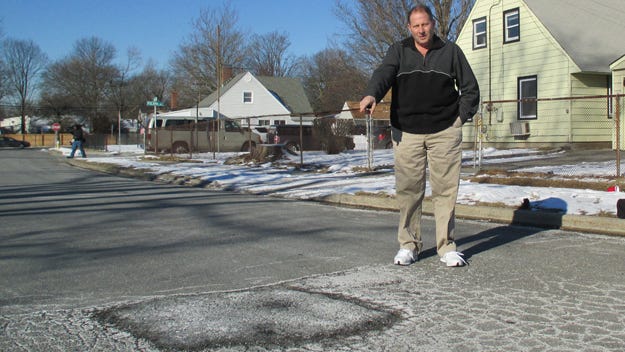
For an example of how we might incentivize the transition phase out of nations, consider a scenario where potholes become an economic opportunity for anyone.
When a pothole is seen as a nuisance to community members who have to deal with friction in the road, peers, private companies, communities, and cooperatives can set a bounty for the pothole to be filled. This bounty can be accomplished by anyone. Push notifications can be sent out to those near the geotagged area where the pothole is located. Notifications can be tailored to connect the opportunity to those with enough verified skill to accomplish the task, or, to anyone with a markedly expressed interest in training that particular skill.
Notifications can also be expressed to a person who has noted they would like access to any available economic opportunity. Those who set the bounty would also have the ability to decide boundaries for those who can fulfill the opportunity. Those boundaries should be established as considerate and humanizing. Everyone should have a chance. All those who fit the established profile for the task would be able to participate in the opportunity to obtain the prize bounty established for the task of filling the pothole.
Accepting the opportunity to fill the pothole would provide the participant with instant digital credits to obtain the materials necessary to complete the job, and step by step instructions for how to accomplish the work. Successful completion of the task for this bounty would provide the civic contributor with a verified credential for their skill. The verified credential⁴ obtained for accomplishing the task enables greater opportunities for that person to learn and grow in the future.
Remember, opportunities like these represent a transition phase and will inevitably be replaced with automation, robotic labor and AI. This will likely give people more free time to actualize their universal creative potential, and explore consciousness.
This transition out of the traditional nation-state is coming faster than you might think, as technology and innovation will accelerate the rate of velocity at which we pull ourselves out of our “state-oriented” society.
Why focus energy on the “faster horse” of “bettering government”, when we can shift the incentives to create more humane standards geared to benefit all life?

Do you know how recently the idea of the modern nation-state became the primary organizing force in our civilization? Nation-states were not verified as their current form until about four hundred years ago during the “Peace of Westphalia”⁵. Prior to this, we had complexly distributed city-states. These city-states allowed people to opt-in and opt-out of groups, giving them a different form of ownership over their right to consent (ownership is not the right model for our modern world, stewardship is!). Only recently did we develop and implement the idea of the nation-state, and it will not be long until we develop a new system to innovate past this current structure.
Force as the “rule of law” used to shape society will become outdated when we have a minimum viable product for the quality of life that does not require the exploitation of other humans to function. Automation will be an influencing force here, and artificial intelligence will support.
With open source standards and the distribution of technological consciousness (personalized AIs that do not share information without consent), these systems can function more fairly and cooperatively to solve problems.
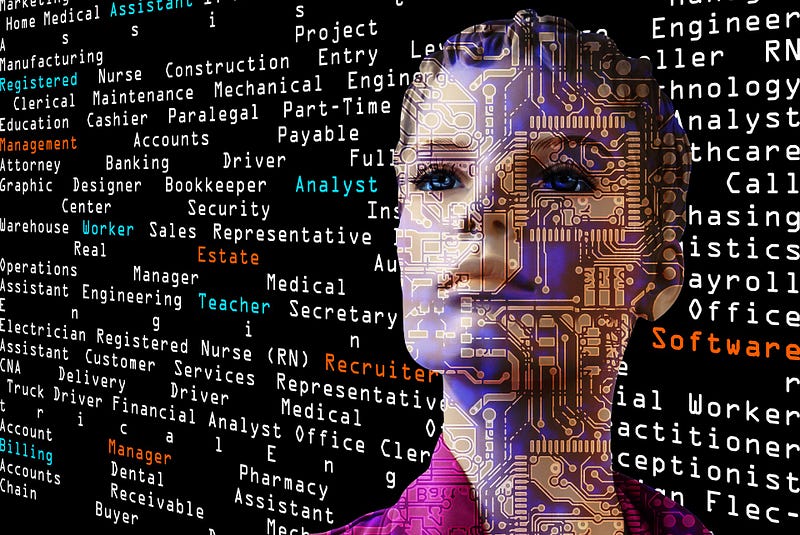
A virtual jurisdiction would begin at self-sovereign identity. Self-Sovereign Identity as a web of trust would use peers, the private sector, other communities, and cooperatives, to provide contract registration, dispute resolution, identity, insurance, security and so much more. All in a geographically unbounded, decentralized and voluntary way!
Thousands or millions of organizations can compete, or, in modern economic models with greater access for all, cooperate for customers by offering better services instead of using force to control “rule of law”. Need I remind readers, the consolidate and control mentality has inspired rules of law across our planet that have considered murder as the legal punishment for a person of gender heterogeneous partner preference⁶. We deserve a world where people have the freedom to choose.
If designed responsibly, freedom of choice is not owned by economic law alone, and prioritizes the well being of human life over all else. There are reasonable and logical ways to fulfill this incentive without the exploitation of wealth. They are explored in this post.
Do you know the original function of government? To provide jurisdiction! Keeping records of ownership, and providing services to resolve disputes. If the wary economists' concern of a post-national future is the provision of public goods, I recommend we take a step back from that argument to consider the current state of governments. More than 50% of our humanity in 2019 lives under a dictatorship⁷. In these stronghold governments, the provision of public goods is more closely related to extraction, exploitation, violence, and corruption than it is to our wary economists' theory.
For direct example, in Sierra Leone, homes that have been owned by families for seven generations are demolished overnight after being sold to the interest of The Peoples Republic of China. This happens with zero consent of the governed, as the forced will of the government takes precedence.
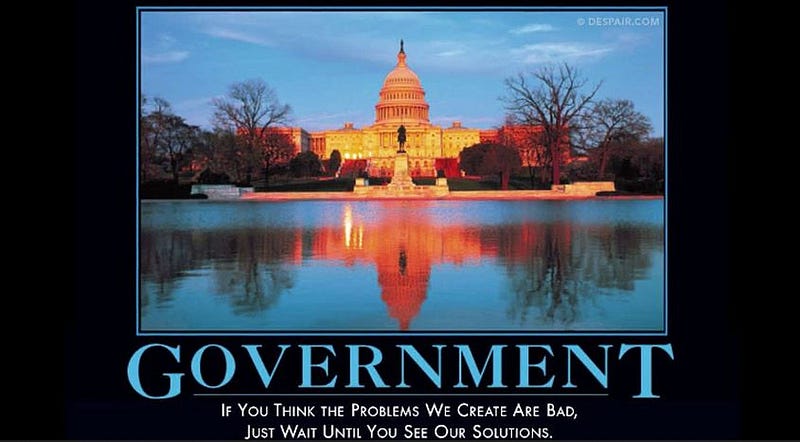
It is clear this present system, and these incentives, are not working. How do we cooperate effectively to build a better system? How do we eliminate rivalrous games to create omni-win-win scenarios and evolve incentives to eliminate fear-based relationships with other forms of life⁸?
We do not replace through destruction. Real liberation evolves through creation.
The evolution toward sovereignty for all people starts with universal identity. And in our work, trust.
Web of Trust is an open-source standard for self-sovereignty. This protocol is created by a global Blockchain Commons, and provides people around the world with ownership over their identity, with the potential to register stewardship of their basic legal rights, property and beyond.
Let’s give an example of how this technology works to change incentives away from ownership and exploitation, and toward collective stewardship of the common good.
Imagine you are a refugee. You could be a refugee from political crisis, you could be a refugee from climate devastation. Your passport and other forms of identity and record have been destroyed, or you’ve never had a need to own them at all. You have nothing except the clothes on your back, a knapsack with a cell phone, and your mother. With Web of Trust and self-sovereign identity systems⁹, you have the ability to steward, through your own registration and the verification and participation of your community, your record of life.
With this open-source standard from the Blockchain Commons, a person can take ownership over their experience through immutable record and consensus built on community stewardship.
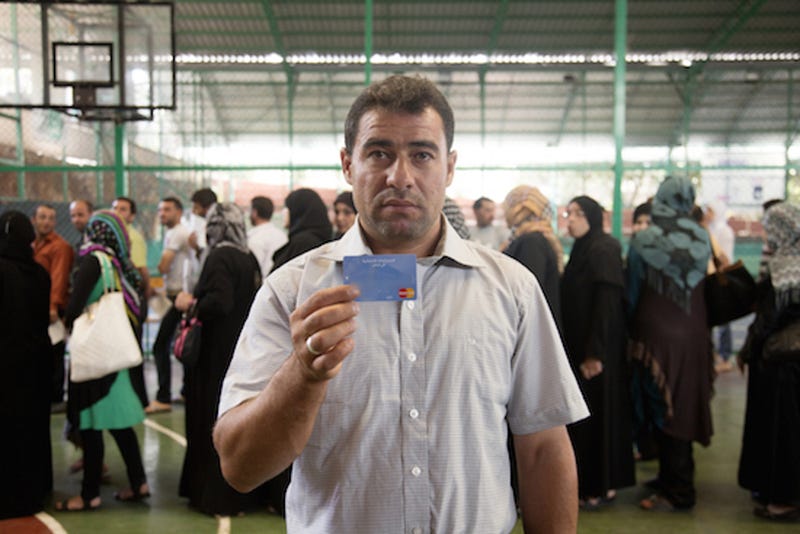
In a refugee climate, a mother can use Web of Trust to verify that her children are who they say they are, because she came with them to the refugee camp and has known them since birth. The mother can also create claims about what kind of children her children are, and what kind of character traits have developed as her children have evolved.
Two friends in the camp can create claims about each other's skills after they decide to build homes for the camp. One friend can verify the identity of the other, that they are who they say they are and they have known each other for seven months. Additional verification of their skills happens when they prove their competency as carpenters after building homes together. These verified credentials can later help these friends obtain a job in construction, or, provide them with the credentials needed to begin gaining a future degree in urban planning.
Let’s say an English speaking refugee meets a group of kids in the camp. The children see this person reading a book in English, and all of the children become curious. They are seeking out play, and they want to learn. The literate English speaker agrees to teach them and proceeds to read different stories aloud every day, showing the children words and pictures and teaching them basic English. The children and their parents can verify their teacher has the skills to speak and educate in English. The children can also show their ability to perform as verified English speakers.
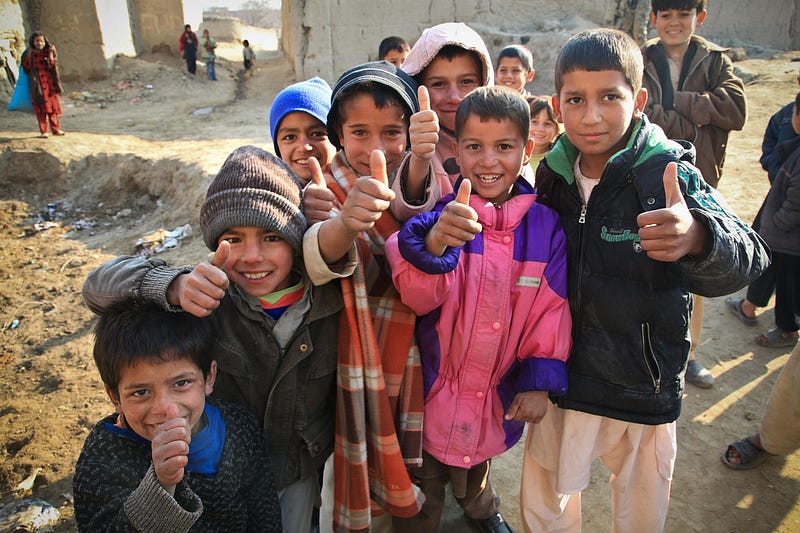
When we begin to understand identity as a tapestry of experiences, instead of a stamp from a central authority, neutral or political, we generate more opportunity for people to grow dimensionally as human beings, and hopefully in turn, create more freedom. We are naturally transitioning in this direction.
In shifting the model past centralized control and into human-to-human connection, we begin moving out of human ownership into human stewardship. When we create open source standards for collaboration throughout these different systems, we have the opportunity to enable change without violence. Models of leadership will change. Incentives will change. The quality of life will improve.
When people say, “bitcoin will eliminate banks and governments”, they are not insinuating anarchy. They’re actualizing the potential of responsible innovation.
To replace a failing system, we must actualize the use of a new technology, whose impact will improve the quality of life at such a deep and fundamental level, that even those who benefit from outdated institutions will improve their quality of life from the optimization brought on by technology.
*Brief Bio on the Author: Toni Lane is an artrepreneur in Emerging Technologies | Digital Currencies, and well-respected leader in the movement for global sovereign unity. She works closely with Indigenous Nations, and is an early pioneer in Blockchain.
Miss Lane is currently an Integral Steward of the Blockchain Commons, and spends her time creating Cultu.re, a company working to evolve “government” into networks of transactions and communities beyond borders; a stateless global society. She is an empath, investor, artist, advisory board member, transformational evangelist and founder who has been affectionately entitled “The Joan of Arc of Blockchain” by her peers and various publications.
www.tonilane.com | Toni Lane, TLC- @tonilanec |https://t.me/cultureisfuture
[1]: Christopher Allen, The Path to Self Sovereign Identity http://www.lifewithalacrity.com/2016/04/the-path-to-self-soverereign-identity.html
[2]: Investopedia, Initial Coin Offering (ICO) https://www.investopedia.com/terms/i/initial-coin-offering-ico.asp
[3]: Wikipedia, Web of Trust (WoT) https://en.wikipedia.org/wiki/Web_of_trust
[4]: w3, Verifiable Claims Data Model 1.0 https://www.w3.org/TR/verifiable-claims-data-model/
[5]: Britannica, Peace of Westphalia https://www.britannica.com/event/Peace-of-Westphalia
[6]: Wikipedia, Uganda Anti-Homosexuality Act, 2014 https://en.wikipedia.org/wiki/Uganda_Anti-Homosexuality_Act,_2014
[7]: HRF, Political Regime Map: Geographic Reports on Authoritarianism Worldwide. https://hrf.org/research/political-regime-map/
[8]: Daniel Schmachtenberger (Civilization Emerging), The Transition https://civilizationemerging.com/the-transition/
[9]: Rebooting Web of Trust, Github Whitepapers www.github.com/weboftrustinfo


