
Fun Trans Voice Feminization Exercise (two magic words)
No way!
These two words are gonna change your voice. And your life. Because of your voice. And I’ve got something for you at the end even if it doesn’t.

TWO MAGIC WORDS
The key is to NOT focus on the words you’re saying.
Instead, focus on what you are communicating!
We only use words because they’re so often effective at telling people what we want to say. But what if it’s NOT telling people what we want to say? What if what we want to say requires us to think about HOW we speak more than WHAT we say?
We use words to communicate information. We use the SOUND of those words to communicate details that go beyond what we call “words.”
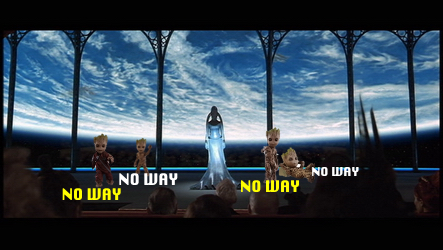
So let go of the words. Well, most of them. You are now the trans version of Groot. The only two words you can say are this:
No way.
THE MAGIC
For me, those two words are as magical as “heat from fire” (don’t miss that lesson from Zhea at Trans Voice Lessons).
I’ll show you what I mean in the video (you can listen to me here until it’s ready).
UPDATE: Here is the video!
It has to do with the consonants and vowels —starting on “N” and then a “W,” so you shift from a tight but bright ennnnnnn sound to the softly retracted whoosh of that fourth from last letter of the alphabet.
THE EXERCISE
For this exercise, practice ONLY those two words. But each time, don't focus on how you say the word. Focus on what emotion you are communicating.
Not just what emotion. The dynamic of that emotion. The experience of it. Make your listener (including yourself) feel what you’re trying to express. Show the listener your EMOTIONS.
Happy Sad Angry Frustrated Anxious Depressed Joyful Impressed In love Grateful
ANXIETY
You see that one in the middle? Yep, it’s spelled A-N-X-I-E-T-Y. Well, it’s spelled differently in the list, but…
That’s the emotional experience that’s common to all people with transgender experiences. Heck, it’s common to all people without them, too.
Since you’re reading this, I’m guessing some of your transgender experiences revolve around your voice. You’ve faced significant obstacles to making it sound the way you want it to sound.
Or rather, the sound isn’t so much the problem — it’s how the current sound affects the perception of YOU. Both how you perceive yourself and how you’re perceived by the people you encounter.
There are no true magic bullets to changing this, but you didn’t develop this internalized phobia of your own voice overnight. It took time — and practice.
Practice like waking up every day and telling yourself before anyone else could that your voice sucks. If you’re like me, you once or twice (or infinity) times heard yourself talk and said wow. I’m never going to practice speaking again.
That’s why we’re not going to practice. We’re going to do it live.

DAILY PRACTICE
Every morning, let out a long breath that utters your first phrase of the day: “No way.”
What do you feel when you open your eyes? Express that emotion with a good NO WAY.
What else are you feeling? Thinking? What do you think about what’s waiting for you today?
The phrase is a great way to practice the gendered sound you’re cultivating— and a great way to check in with yourself. Who knows? If you get past those first two words, you may even have something interesting to tell yourself (no way!).
Here’s me doing just that.
Final thoughts
Once you get a feel for expressing a dynamic emotion, you'll shift your understanding of your own voice and how you use it to express your gender. You’ll no longer speak merely for validation of your gender — you’ll speak to assert to others what you already know to be true.
My bigger hope is that it helps a lot of us feel more comfortable expressing our authentic emotions and authentic selves. We have been speaking for most of our lives with a fake voice, fake mannerisms, either hiding our true voices or never cultivating them in the early ages in which we deserved to do so.
The end (of the article)

If you like my work and want to support it, buy me a cup of coffee! To join the Translation Team, subscribe to my Substack newsletter: Translating Everything

