
Day Tripping: March 31
Surrender, Skyscraping, and Solidification
Welcome to my daily feature where each day on the calendar marks a part of our shared history.
End Of An Empire
Allied European forces of the Sixth Coalition complete their march into Paris and defeat Napolean’s defences in 1814. The Battle of Paris which began the day before in the city’s suburbs, culminated in the French surrender that signalled the end of French rule in Europe. The liberation of Paris forced Napolean into exile where he would muster an eventual return army, but it was the beginning of the end of a brutal world war.
Russian forces that had been beating the Emperor back since his failed invasion attempt, spearheaded the all-out offensive from the east. Rather than avenge the taking of Moscow, the Tsar spared Paris from destruction in exchange for a peaceful surrender.
Reaching Skyward
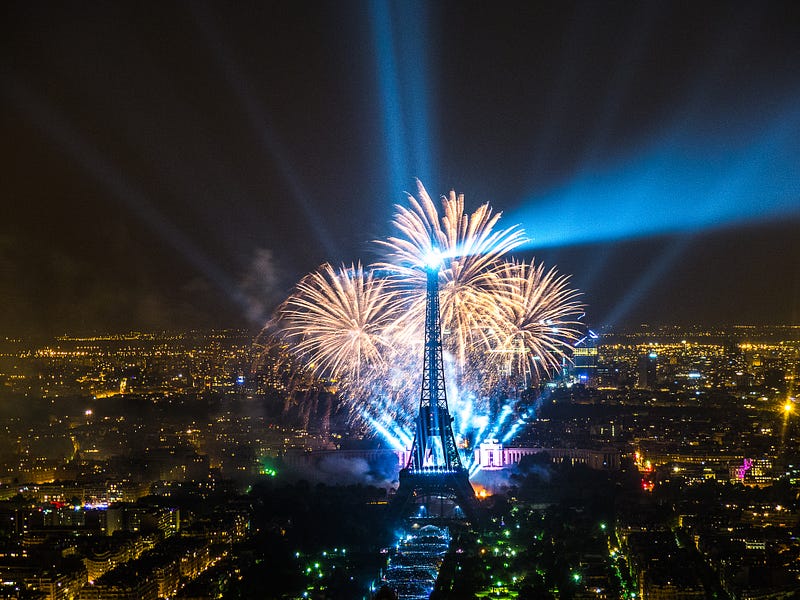
Built for the Paris World’s Fair of 1900, the Eiffel Tower officially opened on this day in 1889. Standing at 300 meters tall, it held the title as the world’s tallest man-made structure for over forty years until the completion of New York’s Chrysler Building.
Gustave Eiffel’s iconic structure in Paris, France remains the most visited paid-for monument in the world.
Welcoming ‘The Rock’
Originally a sovereign Dominion established in 1901, Newfoundland and Labrador officially became Canada’s 10th province on March 31, 1949. The island of Newfoundland and its mainland adjunct, Labrador, fell into insurmountable debt after building a cross-island railroad and an army to fight in World War I, eventually giving up self-rule to Britain in 1934.
The territory was headed by a six-member commission for fifteen years before joining the Dominion of Canada. The province’s unique flavour of Irish and Scottish settlements along with spectacular coastlines and inlets, have made Newfoundland-Labrador one the world’s most welcoming tourist attractions.
Musical Milestones
During a concert at the Astoria Theatre in London, Jimi Hendrix set his guitar on fire for the first time in 1967. Still a virtual unknown, Hendrix was the opening act for a bill including Cat Stevens and Engelbert Humperdink. Imagine that!
Jimi was later treated for minor burns after the show, and the charred remains of the Fender Stratocaster guitar fetched more than $500,000 at auction.
Narratives
In 1969, The New York Times published a review of Kurt Vonnegut’s Slaughterhouse-Five saying, “you’ll either love it or push it back in the science-fiction corner”.
Remembrance
In a show of athletic brilliance and in front of Chancellor Hitler, Jess Owens won four Gold Medals at the Berlin Olympics. He passed away in 1980.
Notable Births
1943 — ‘We need more cowbell’ for Christopher Walken
1948 — Former Vice President and Nobel laureate Al Gore
1955 — Forever cool in schoolboy shorts riffing a mean guitar, Angus Young
K. Barrett Katie Wallace Maria Rattray Maryam Merchant Dr Mehmet Yildiz Tree Langdon Myriam Ben Salem Phil Truman Chelsea Mandler MAT Terry Mansfield Hollie Petit, PhD. Terry Trueman Dr Preeti Singh John Gruber Bill Abbate James G Brennan ScienceDuuude Marcus Liam Ireland Claire Kelly Noorain Hassan, BMS Amy Pierovich
The Story Of Day Tripping Through History What’s Past Is Often Present


