
Daughter of Time
We can let grief suffuse our beings, or we can choose to steep ourselves in joy when we remember our loved ones.
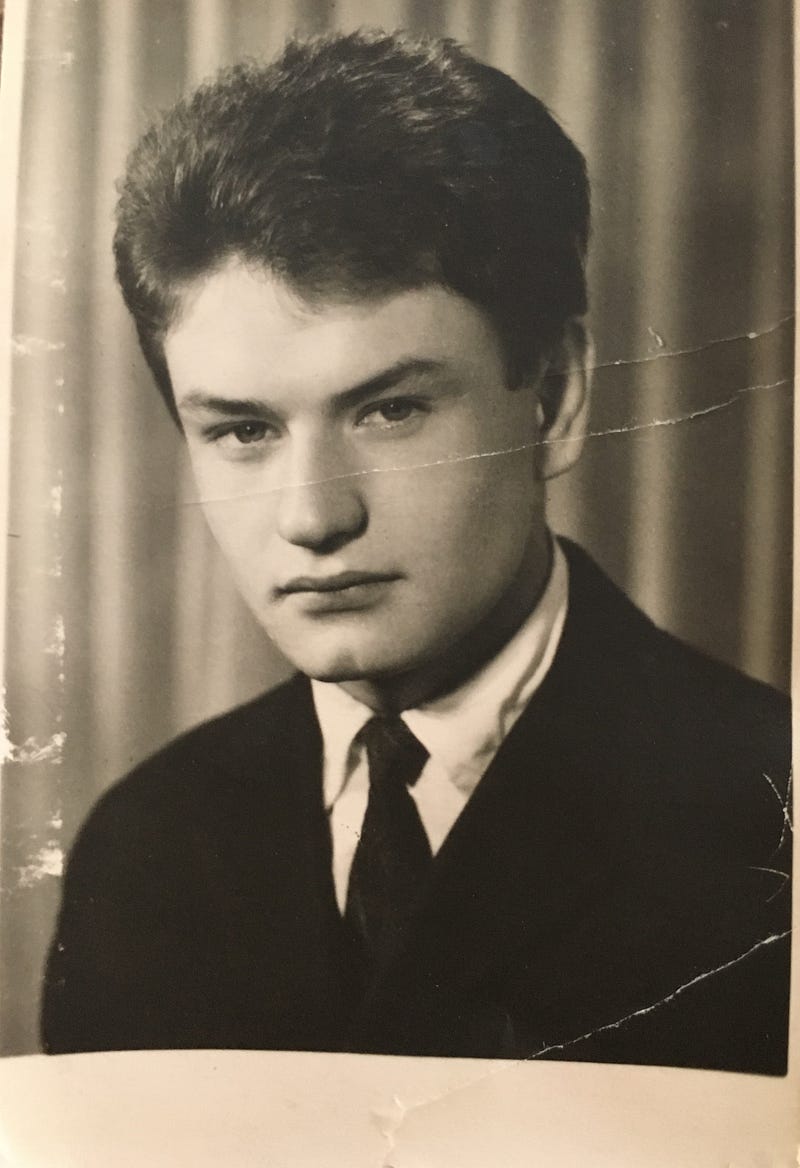
Maybe my father, who used to be a watchmaker, made a mistake in setting the time on the clock of his life when death found him at the young age of 53 — alone in his apartment — with a freezer full of vegetables, chicken, pork, turkey, and his favorite home-made sausages.
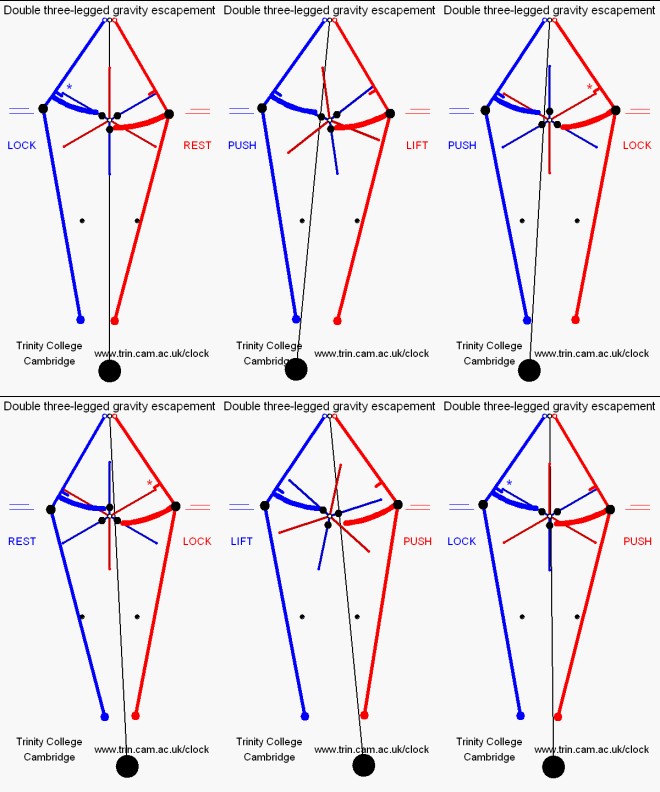
Unlike an escapement, a device that transfers energy to the timekeeping element, my father could not make his heart beat anymore. It stopped the “ticking” sound that the escapement made in watches and clocks. In the deadbeat, the pallets have a second curved “locking” face on them, but in my father’s case, the heart attack most likely brought on by his type one diabetes, left no route for escape. Deadbeat. Not beating death, which I found infuriating.
Not only did I feel robbed of my father, but I also thought it was unfair for him to leave me at 25. Although my parents were divorced, my mother’s pain was inconsolable. She cried and cried. Her tears never dried, as she refused to loosen the claws of death that choked her being and kept her ensconced in a state of unhappiness and depression many years after my father’s death.
Unlike my mom, I was stuck in America together with Catalin, my husband, waiting for our resident visas, and thus not able to go to my father’s funeral. I couldn’t risk leaving and not being able to return. How I wish I could have said good-bye to my dear father and kissed his wide forehead that I also inherited from him. I also longed to talk to him about watches the same way he used to teach me about them when I was little — his whole being animated and enthralled about sharing the secrets of time with me, the daughter of time:
“Look at this watch! What an intricate machine keeping time!”
“How do watches keep time, Daddy?” I would ask him, getting closer to the mechanism he held in between his thumb and his forefinger with delicacy and reverence.
“Through energy.”
“What?”
“Yes, energy fueled by its wearer either by manual winding or by the motion of one’s wrist.”
“Wow! Does this mean we’re all magical?”
“What?” my father asked with his usual light snort that grew louder depending on how hard he laughed.
“We can make the watch work by moving our hand, right?” I continued.
“Oh…Yeah, but we must not forget the maker of the watch.”
“Sure, Daddy! And now can we go outside for a sleigh ride?”
“Ten more minutes to finish repairing this watch.”
“Ten minutes is a long minute,” I replied, stomping my feet and making circular motions with my arms, as if jumping over an imaginary rope.
“No kidding!” my father would reply amused and enchanted by my impatience, even though he used to be the most patient man I have ever met. He could see how long minutes were the antithesis of being, doing, and living! Maybe short minutes simply pulsed more beats into life’s veins, he thought, but unlike children, adults were not as brave to protest against time and its tight schedules.
He continued his work, while I just stood in the small hallway located in between our apartment’s living room and bathroom that my father used as his work space. He had his own little watch repair business, which was not very common for communist Romania in the late 80s when its citizens had to conform. Be uniform. Don’t stand out like a pimple on a teenager’s face, and more importantly, retain their imaginary handcuffs and pretend they were just jewelry accessories. The Party as everyone called our rulers did not want us to have contact with the outside world, so traveling abroad was rare, or unheard of, but my parents managed to sneak to former Soviet Union on a few trips, where they loved visiting the Hermitage Museum in Leningrad, and other sights. They felt treated well there as tourists, for a change. Unshackled and loosened up by partial freedom. Trading communist smells that flared up their nostrils with hope and fear of the unknown.
I adored watching my father brush and bristle the hands of time. He polished and cleaned each watch mechanism by hand — no ultrasonic cleaning machines. Even his walking matched his unrushed brushing motions. His moves almost sluggish — resembled a slow motion, unfinished pirouette — relaxed and careless of the final landing. All that counted was his measurement of time in feet, inches, centimeters...
“You’ll make a fine watchmaker, Mit,” (a nickname he used for me, meaning kitten in Romanian), he used to tell me, while pinching my cheeks and stroking my hair.
“Dad, you know I wanna become a doctor, not a watchmaker!”
“Yes, I know, Mit, but I just love the way you help me dust time.”
“All right, Daddy! Time to go! You’ve been brushing that piece 100 times already! You promised! Now take me on that sleigh ride! No more waiting!”
“Yes, my dear,” he replied, taking off the small black eye loupe that he used to peer inside the miniscule and intricate pieces of the watches he repaired.
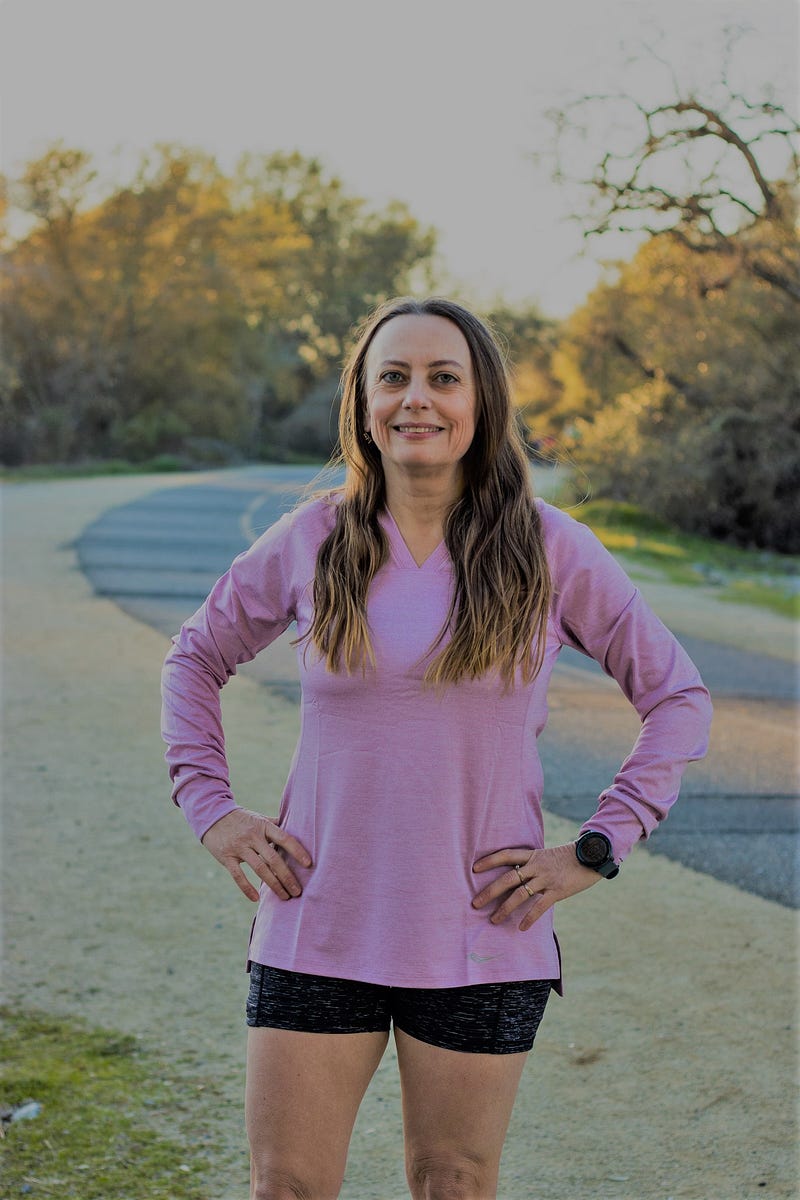
Ten years after my father passed away, I decided to chase death one mile at a time to break its shackles by wheeling my way into life and riding 100 miles for Diabetes Tour de Cure event held in the Sacramento area. Biking and raising money for diabetes used to be my yearly big event that brought me closer to my father — it made me laugh and cry at the memories of his deep blue eyes that had sparkles in them as bright as fireworks. Tour de Cure event organizers had a large white poster for us to write dedications to our loved ones. We had to keep things concise for everyone to have enough room to express their sorrows and joys. It was while writing down how much I loved my father that I remembered our conversations about him staying healthy for me. I constantly beseeched my father to stop drinking and smoking and take better care of himself, for I wanted him around to play tennis, backgammon, dominoes, cards, and just enjoy each other’s presence, while giggling at life’s transient gray clouds that covered the blue skies sometimes.
Thoughts of my father flooded my mind, breaking loose the hinges of memory. His serene, smooth, clean-shaven face matched his blue eyes. Maybe death thought my father’s contentment and peaceful way of life was dreadful and unacceptable, and so she rushed to eradicate the seed of a joyous life that my father bore in his heart at all times. Maybe death feared that my father could infect her with perennial joy that annihilated her pleasure in delivering rest to unperturbed souls with the swiftness of a newspaper delivery boy who had to meet his daily quota. And maybe…
Only my sweet and smart daughter Sophia could become the daughter of time if I was late taking her places, as she liked to remind me, so I had to manage and guard my time wisely, brushing off the smallest dust particles again and again, and remembering that as the daughter of TIME I could make my life chime and rhyme whenever I chose to do so.


