
Data Science Use Cases in Healthcare that Impact the Bottom line
EHR Moves the Healthcare Optimization to a New Level
EHR turns the healthcare industry into a new chapter. An Electronic Health Record (EHR) is an electronic version of a patient's medical history. The comprehensive data sources include patient demographics, provider orders, diagnoses, procedures, medications, lab values, vital signs, and flowsheet data. In addition to EHR, EHR software enables physicians and patients to track all events and interactions. EHR enables more machine learning models built to alert foreseeable deteriorating conditions of a patient for clinical intervention opportunities. Clinicians can incorporate predicted information for timely treatment. Rendering quality care and curbing the rising healthcare cost continue to be the ultimate goals. For those of you who want to understand more about EHR, you can click on this introductory video clip.
Clinical Optimization Comes In
However, EHR does not prove a “silver bullet” to achieving patient outcomes. While your doctors and clinical staff want to deliver the best care possible, overly complex workflows and technologies get in the way. We still have many IT-related questions to solve. For example, how to improve the utilization of the EHR system? How to reduce the number of steps to perform the essential processes? How to support timely reporting initiatives? How to leverage software and healthcare technologies? How to streamline the transition between care environments?
That’s where clinical optimization comes in. We need to identify the best way to use EHR to improve medical practice. We need to facilitate clinician collaboration and design the processes for effective outcomes.
Clinical optimization is an IT concept that typically falls on the shoulders of existing IT staff. But EHR advancement and technology enhancements are just one component of optimization. Close collaboration across the broad organization is still crucial to success. This demands a strong governance structure from various areas of the organization including clinicians, IT, finance, billing, patient access, and operational management.
From EHR to Data Science Models
How do we utilize the EHR data for medical interventions to achieve the best patient outcomes? Companies such as Google join the research to build better data science models for a variety of clinical problems. These models range from mortality rates to readmissions, or length of stay to emerging diagnoses. Later in this article, I highlight more high-impact machine learning models. In addition, the economies of scale in the curated EHR data are worth mentioning here. The rich data body allows for numerous developments of models with minimal additional data preparation. The curated EHR data provide the economies of scale for many quick modeling opportunities.
High-value Data Science Models in Healthcare Management
How can we harvest the data investment? Below I highlight the high-impact modeling practices that manage health quality, optimize resources, and control rising healthcare costs.
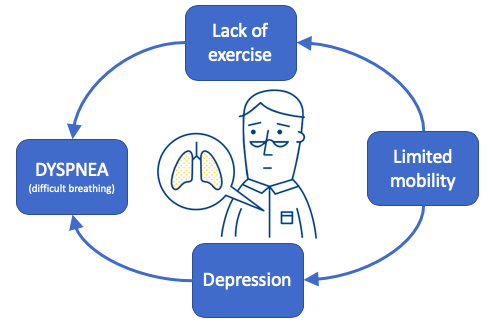
- Early Identification for Chronic Diseases: Many types of chronic diseases can be managed in the early stages to reduce costs. As my post “Cope with the Rising Costs of COPD” states, “Every year COPD costs U.S. billions of dollars. COPD is generally avoidable and should be managed in the early stages. To fight against the rising healthcare expenditure, COPD should be the first step.” An early identification model in the disease’s progression will have the best chance of helping patients avoid long-term health problems that are costly and difficult to treat.
- Poor Health Scores: The rich EHR data include biometric data, claims data, lab testing data, and other psycho-social characteristics. Multiple health risk models built based on the rich EHR data along the progression of a disease can identify which individuals can benefit from enhanced services or wellness activities. This helps clinicians proactively manage the health of high-risk patients.
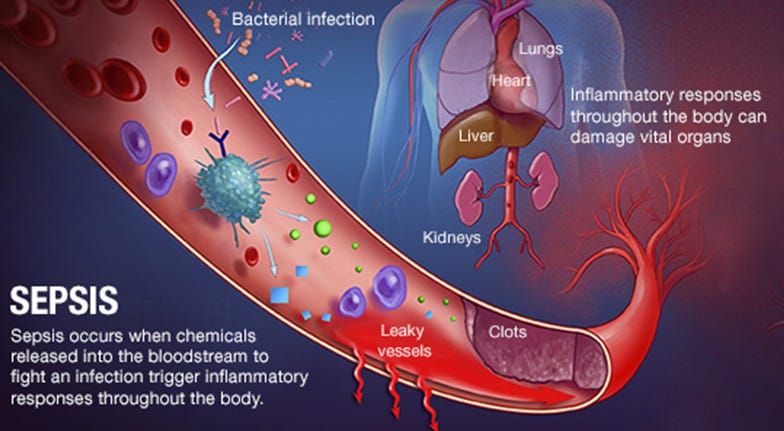
- Early Identification for Sepsis: Sepsis is a potentially life-threatening condition. In normal conditions, our bodies release chemicals into the bloodstream to fight against infection. Sepsis occurs when the body’s response to these chemicals is out of balance, triggering changes that can damage multiple organ systems. People who have weak immune systems including older adults, pregnant women, infants, or cancer patients are particularly vulnerable. Early intervention, including antibiotics and large amounts of intravenous fluids, can improve the probability of survival. The model can be built with key factors such as infection type, the need for medication to maintain blood pressure, and high levels of lactic acid in the blood. A high level of lactic acid in the blood could be a signal for sepsis. It usually means the body cells cannot consume oxygen properly.
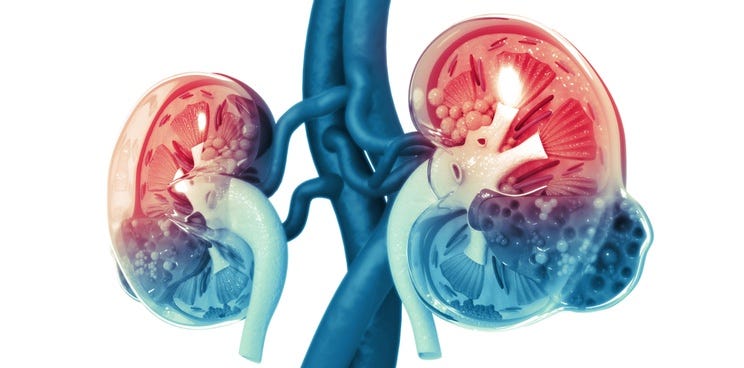
- Early Identification for Acute Kidney Injury (AKI): AKI causes a build-up of waste products in your blood and makes it hard for your kidneys to keep the right balance of fluid in your body. It can cause damage to other organs such as the brain, heart, and lungs. Patients who are old and in the intensive care units (ICU) are especially vulnerable. If you detect a patient has too little urine, swelling in the legs or around the eyes, shortness of breath, nausea, or tiredness, you need to check the possibility of AKI. EHR data including urine volume, urine testing data, blood testing data, and the Glomerular Filtration Rate (GFR) — a measure to estimate the decrease in kidney function can be used to build the predictive model for early intervention.
- Early Identification for Suicide: Patients who have a substance abuse history, previous suicide attempts, the use of psychiatric medications, attempts to cause harm to themselves, and high scores on the depression questionnaire show a much higher chance to commit suicide. Early identification of these individuals can ensure they receive mental healthcare treatments to avoid serious events.
- Preventable Hospital Readmission: A hospital readmission is an episode when a discharged patient is admitted again within a short period. A low readmission rate becomes a quality benchmark for value-based care. The Hospital Readmissions Reduction Program (HRRP) of the Centers for Medicare & Medicaid Services (CMS) imposes significant financial penalties if a hospital shows excess readmissions. Data science models will help clinicians in their discharge decisions. The models typically include high-risk readmission factors such as serious health conditions (heart failure, septicemia, pneumonia, COPD, and cardiac dysrhythmias), previous history, and Psycho-social factors. The models will also help hospitals to define clear strategies to manage the discharge process and engage patients.
- Identification for Appointment No-Shows: Patients who miss appointments not only disrupt the workflows of the physicians but also show their willingness to cooperate toward health recovery. There exist important opportunities to re-orient the patients to participate in better treatment paths. Using predictive models to identify patients likely to skip an appointment without advanced notice can increase their motivation for a better outcome. Medical providers can understand the various reasons for no-shows, and evaluate solutions such as additional reminders to patients, transportation, or other settings. On the managerial side, the models also can cut down the revenue losses due to no-shows, and allow organizations to allocate time slots more effectively.
- Medical Provider Waste & Abuse Detection: Most physicians strive to work ethically, render high-quality medical care to their patients, and submit proper claims for payment. However, as stated by the U.S. Department of health and human services, “the presence of some dishonest health care providers who exploit the health care system for illegal personal gain has created the need for laws that combat fraud and abuse and ensure appropriate quality medical care”. Healthcare expenditure accounts for about 20% of the U.S. GDP in 2019, or around $3.3 trillion. A 10% FWA means 330 million dollars wasted. Predictive models on fraud prevention become effective tools to attack FWA. I have written a series of articles addressing how to build data science models to detect Fraud, Waste, and Abuse (FWA) (see “Feature Engineering for Healthcare Fraud Detection” or “Anomaly Detection with PyOD”).
- Follow-up Patient Care Plan: Patient relationship management has become an integral part of both providers and insurance companies to promote wellness and manage long-term spending. Predictive models using behavioral data help to prioritize the patients who are receptive to taking action for their diets, nutrition, or exercises.

Methods to Measure Clinical Intervention Strategies
With all the above-mentioned use cases for intervention, there remains an important task: measuring the impact of the intervention strategies. We need to measure the causal effect of the intervention strategies ultimately in terms of ROI (rate of investment). This is not something the prevailing machine learning algorithms can do. We have to resort to traditional econometrics, as explained in my earlier post “Machine Learning or Econometrics”. Useful econometric methods to measure the impact of intervention strategies include Causal inference, Design of experiments, Difference in differences, and the popular A/B testing method.
So how do we conduct the design of experiments (DOE) to measure the impact of an intervention strategy? I delineate the following seven steps in another post “Design of Experiments for Your Change Management”:
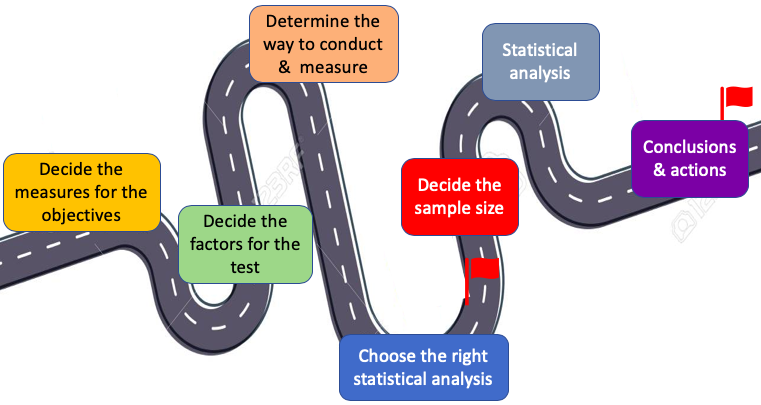
- What’s the goal? You shall determine the measurement for the objectives.
- What to test? You will identify the factors for the test.
- How to conduct? you will determine the way to conduct and measure.
- How to measure? You will choose the right statistical analysis.
- Will the results be credible? You will determine the required sample size.
- How to analyze the data? Apply the statistical analysis.
- What’s next? With the help of statistical analysis, you then make the conclusions and actionable items.
In the same article, I offer a DOE case study for a service operation in banking. Readers are encouraged to follow the procedure to design your DOEs.
For readers who want to know various forms of experimental designs, including Randomized designs and Matched Pairs, you can click this video clip.
A new report in the Journal of the American Medical Informatics Association has shown that unstructured clinical notes have far more information than the coded system. As my post “NLP for EHR? — Natural Language Processing for Electronic Health Records” described, sophisticated NLP techniques are used to capture and determine the meaning of information and summarize the information.
I have written articles on a variety of data science topics. For ease of use, you can bookmark my summary post “Dataman Learning Paths — Build Your Skills, Drive Your Career” which lists the links to all articles.


