Dans Le Silence De La Nuit Are French President Emmanuel Macron & Stellantis CEO Carlos Tavares During Electric Vehicle (EV) Revolution
The Weekend Brief (TWB) was initially inspired by legendary hard-rock band Whitesnake for the song Still of the Night with lead guitarist John Sykes. The band’s lead singer David Coverdale was one of the first musicians to appear on the latest THAT Rocks! podcast featuring That Metal Show hosts.
But then I found a French translation of the song’s title — Dans Le Silence De La Nuit — which was also the title of an amazing song by Chorale de Kigali. It couldn’t be any different from the Whitesnake song, so I would just like to share both of them this time.
Press play: https://www.youtube.com/watch?v=K9MBoZhvBts

The 2023 Consumer Electronics Show (CES) was held in Las Vegas, United States.
To get the show started Stellantis came out with a bang as it unveiled the concept for the company’s latest Dodge Ram electric pick-up truck, which is going to hit the market along with other full-size trucks competing for market share of electric vehicles (EV). This EV is called the Ram 1500 Revolution; it is a battery-powered production truck.
Under CEO Carlos Tavares’ leadership, Stellantis formed a new partnership emerged in the form of a joint-venture to design and produce electric vehicle (EV) batteries in 2020. Led by TotalEnergies and Stellantis, the Automotive Cells Company (ACC) brought on a new partner, Mercedes-Benz, in 2021 to become an equal shareholder in the venture. To produce top-grade battery cells and modules, they agreed to increase industrial capacity to approximately 120 GWh by 2030.
According to the CEO of Saft (a subsidiary of TotalEnergies),
ACC is a joint venture between TotalEnergies and Stellantis to design and produce automotive batteries, and to become a leader in Europe and an international groundbreaker in its field.
Prior to co-establishing ACC, TotalEnergies’ electric mobility (e-mobility) strategy was laid out in 2019 with the goal to operate more than 150,000 EV charge points throughout European cities by 2025 — including 22,000 in Amsterdam, 3,000 in Antwerp, 1,700 in London, and 2,300 in Paris.
In addition, TotalEnergies has taken its commitments outside of the European continent by establishing joint ventures with China’s largest clean energy company, China Three Gorges (CTG), operator of the China Three Gorges Dam, to expand on initiatives for e-mobility in Asia.
The ACC seeks to ensure that battery design is efficient and that battery demand is met for EVs as well as other transport modes such as satellites, trains and planes. Research and Development (R&D) centers have been set up Bruges, France, to design the latest battery cell technologies, while a pilot line at Nersac, France, is being launched as a battery production site.
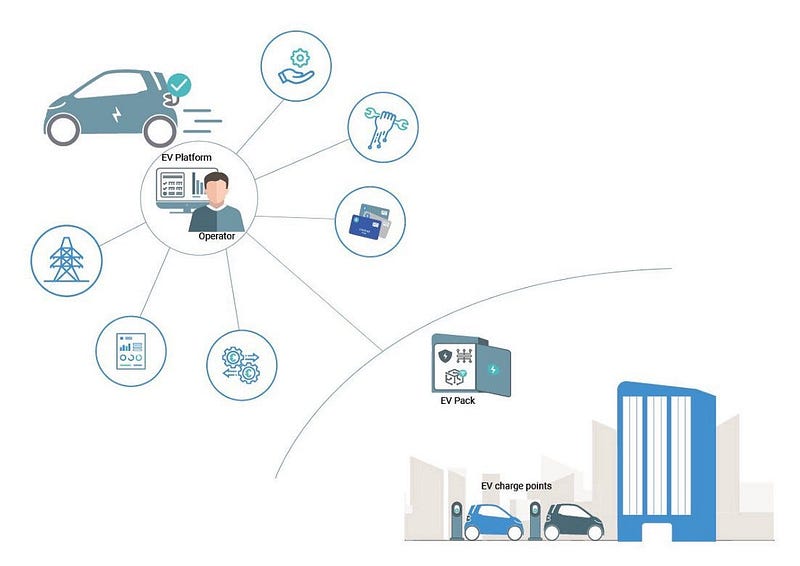
The ACC has been spearheaded under the backdrop of many automakers’ and energy companies’ push to become bigger players in EV markets by partnering with others for electric and sustainable mobility strategies.
This began in November 2020 with TotalEnergies’ acquisition of 2,000 EV charge points from Viessmann group of Charging Solution in Germany, giving it one of the most significant e-mobility markets in Europe.
The company then made a deal with Singapore’s Bollore Group in July 2021 to acquire more than 1,500 EV charge points, making TotalEnergies the owner and operator of Singapore’s largest EV charging network: Blue Charge.
After the deal was made, President of Marketing & Services at TotalEnergies said:
With this acquisition, TotalEnergies is pursuing its transformation and adds a new name on the list of global cities, such as Paris, Amsterdam, London and Brussels, where the Company is already developing its EV charge points installing and operating activities.

On 27 April 2022, ACC agreed to a supply agreement with Umicore — a Belgium-based global materials company — for the company’s offtake supply of next-generation high nickel cathode materials.
Upon signing the offtake agreement, ACC spokesperson, Yann Vincent, said:
With this important agreement, which secures the supply of a key component for the battery industry, ACC confirms its ambition to become a European leader for car batteries that allow clean and efficient mobility for all.
What’s more important is that the Umicore-supplied batteries will be recyled at the ACC’s testing facilities in France. This means that the companies are taking into consideration how to develop recycling methods and procedures for the future of EV batteries in manufacturing. This could have a positive effect on the future of EV market share and e-mobility trends.
Futhermore, the solid-state battery is a top concern for the future of EV production markets. ACC and ProLogium Technology signed a memorandum of understanding (MOU) to develop a solid-state battery for EVs on 19 October 2022.
This is another key agreement for ACC, as it seeks to overcome current obstables in the industrial supply chains of battery materials throughout Asia, Europe and the United States. The results of this partnership could lead to a potential breakthrough in how companies solve issues related to supply chain inefficiencies; therefore, getting EVs to market much faster.

It was a big week for Elon Musk and Emmanuel Macron as two events coincided for them. One was the Choose France Summit and the other was the Tesla annual shareholder meeting.
Elon Musk attended the Choose France Summit in Versailles on 15 May 2023, which shouldn’t be a surprise due to the event’s focus on Electric Vehicles (EVs). According to a Reuters report about the summit, Macron has been trying to woo Musk and others to invest in France.
This summit has been held consistenly since 2018. Yet this year’s summit was more significant than others since Macron’s controversial statements on foreign policy, and the domestic issues over the French retirement age, have somewhat overshadowed the international investment fervour.
EVs are very important to the French government.
French President Emmanuel Macron attended the 2022 Paris Auto Show, speaking with CEOs from Renault Group, Stellantis and others, about the developments in the EV market. One of the other standout moments of the 2022 Paris Auto Show was how Chinese EVs stole the show. Watch this video segment of the event about BYD’s latest EV for the European market.
Significantly, during the time of the Paris Auto Show, there was a deal made by a French lithium miner, Imerys, to develop a new mine located in Beauvoir, France. This mining project aims to make France one of the European Union’s (EU) top lithium suppliers under the backdrop of increasingly higher demand for EU domestic production of EVs.
The significance of this announcement comes during a time of higher geopolitical tensions with China and Russia over global commodities, raw materials supply chains and the effects from sanctions on industrial policies during the conflict in Ukraine.
On 24 October 2022, an announcement was made by the CEO of Imerys, Alessandro Dazza, to officially launch the “Exploitation de Mica LIthinifère par Imerys” (EMILI) which is a project concering the production standards for the Beauvoir lithium mine. According to the press release, the company intends to mine 34,000 tonnes of lithium hydroxide per year, until 2028, of which the production target of around 700,000 EVs per year would be possible.
According to Imerys CEO Alessandro Dazza, sustainable production at the Beavoir mine is key to the project’s success. For instance, he declared during the EMILI launch session that: “Forts de notre expertise en matière d’extraction et de transformation des minéraux, de notre excellence opérationnelle, et de notre capacité à le faire de manière responsable et durable, nous développerons ici, à Beauvoir, un des plus principaux projets européens de valorisation du lithium”.

Reuters reported on the day of the announcement that the French government already has plans to make mining of lithium and other critical metals an important part of the country’s strategy to develop its economy, such as the recycling scheme put forth by another French mining company called Eramet, with mining projects in Argentina, that is supposed to receive funds of 100 million euros.
The French news agency Sud Ouest reported that the EMILI project at the Beauvoir mine was critical for decreasing dependence on China’s lithium suppliers for the European EV marketplace. While also benefiting French domestically by providing up to 1,000 new jobs in the Auvergne-Rhône-Alpes areas of France.
French automakers stood out at the 2023 Consumer Electronics Show (CES).
As mentioned previously, Stellantis came out with a bang as it unveiled the concept for the company’s latest Dodge Ram electric pick-up truck, which is going to hit the market along with other full-size trucks competing for market share of EVs with the Ram 1500 Revolution; it is a battery-powered production truck.
On one of the most disputed topics related to EVs and the related marketplace, EV charging networks are redefining transportation and mobility — in this case, electric mobility (e-mobility) trends. That’s why everyone was happy to hear about Mercedes-Benz new plan to roll out an EV charging network for North American EV markets by 2027.
Another internationally-recognized French automobile brand, Peugot, announced its new concept car at the CES 2023 called Inception. The Peugot car brand is owned by Stellantis after the Fiat Chrysler and PSA Group brands merged in January 2021.
The name Inception was inspired from the Latin root word “Inceptio” and was built on one of Stellantis’ future battery electric vehicle (BEV) platforms. It will be powered by an 800-volt, 100kWh battery and comes with a four-wheel drive component that allows for induction — eliminating the need to recharge by electric power cables.
On 28 October 2022, the European Union’s (EU) European Council and European Parliament passed an agreement to cut down on the sale of new diesel and gasoline vehicles by 2035, as part of the “zero-emission road mobility by 2035” plan. The plan seeks to cut CO2 emissions from new diesel and gasoline vehicles by 100% compared with 2021 levels. This would effectively put a ban on new production and sales of diesel and gasoline vehicles that would reach such levels of CO2 emissions.
There are other regulations and exemptions in place to protect smaller automakers in the EU, though the agreement signaled a big win for large campaigning groups, such as Brussels-based Transport & Environment, who have been working toward a nations-wide ban on fossil-fuel vehicles in the EU.
According to Euronews, the deal to phase out diesel and gasoline vehicles by 2035 was made under the Fit for 55 framework to reduce green house gas (GHG) emissions by 55% by 2030.
After the deal was announced, many of the legislation’s biggest supporters within the EU establishment celebrated online with their own comments and praise.
Jan Huitema, a Dutch MEP, said:
With these targets, we create clarity for the car industry and stimulate innovation and investments for car manufacturers. In addition, purchasing and driving zero-emission cars will become cheaper for consumers.
Josef Síkela, minister of trade and industry of the Czech Republic, said:
The world is changing, and we must remain at the forefront of innovation. I believe we can take advantage of this technological transition. The envisaged timeline also makes the goals achievable for car manufacturers.
However, the most notable player in this scenario is the L’Association des constructeurs européens d’automobiles (ACEA) European Automobile Manufacturers’ Association (ACEA)
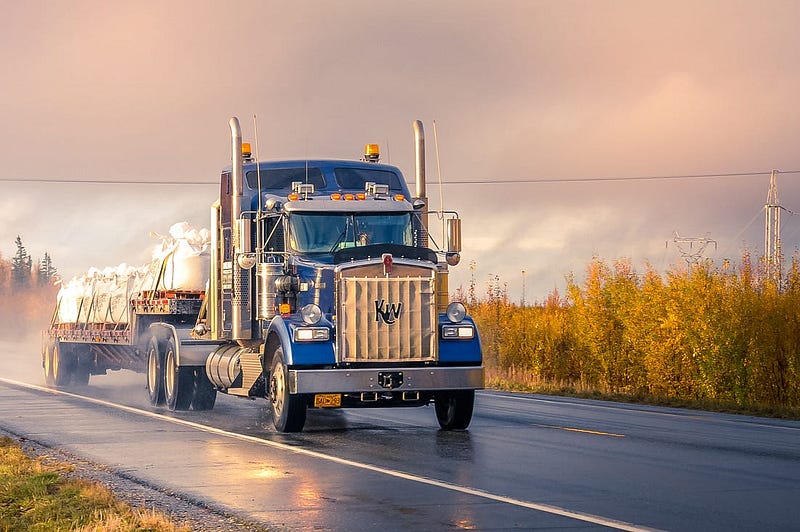
The ACEA has been striving to get more producers and suppliers on the right path towad reducing GHG emissions throughout their supply chains, by investing in more renewable sources of energy production that promote the concept of “climate-neutral road transport.” The association has called on transport manufacturers operators, particularly for heavy trucks (trucking), to embrace the future of Zero-Emission Trucks.
To understand the future direction of industrial policies under the backdrop of increasing market share for EVs, it’s critical to know how the geopolitical trends would have an effect on electric mobility (E-Mobility) in the future.
I offer three potential breakthroughs:
1.) EV Charging Networks are likely to redefine how transportation and mobility will be viewed as a mode of industrial production on a global scale ushering in the new era of Industry 4.0 at the consumer level;
2.) Raw Materials are already taking on a more prescient position in how EVs are produced as the regulatory environment puts a high degree of attention on when and if China and Russia seek to take market share for industrial prodution of critical metals;
3.) Battery Investments will force producers to ensure supply security in some of the world most vulnerable areas, as EV batteries are evolving into a large-scale industry putting an emphasis on miners’ Environment, Socal, Governance (ESG) frameworks as a means of carrying out corporate strategies in line with shareholder values.

Curious About Culture, Intellectual About The World. Discover this publication’s content writers explaining scenarios/shifts related to geopolitics, future industrial policies and advanced technologies.
Sign up for The Weekend Brief (TWB) newsletter to stay on top of what’s happening with publicly-traded companies operating in global markets (including stock markets) at the nexus of tech, industrials and global commodities.