
‘Daisugi’ — Japanese Art of Forestry
An age-old tradition that could help inspire a sustainable future…
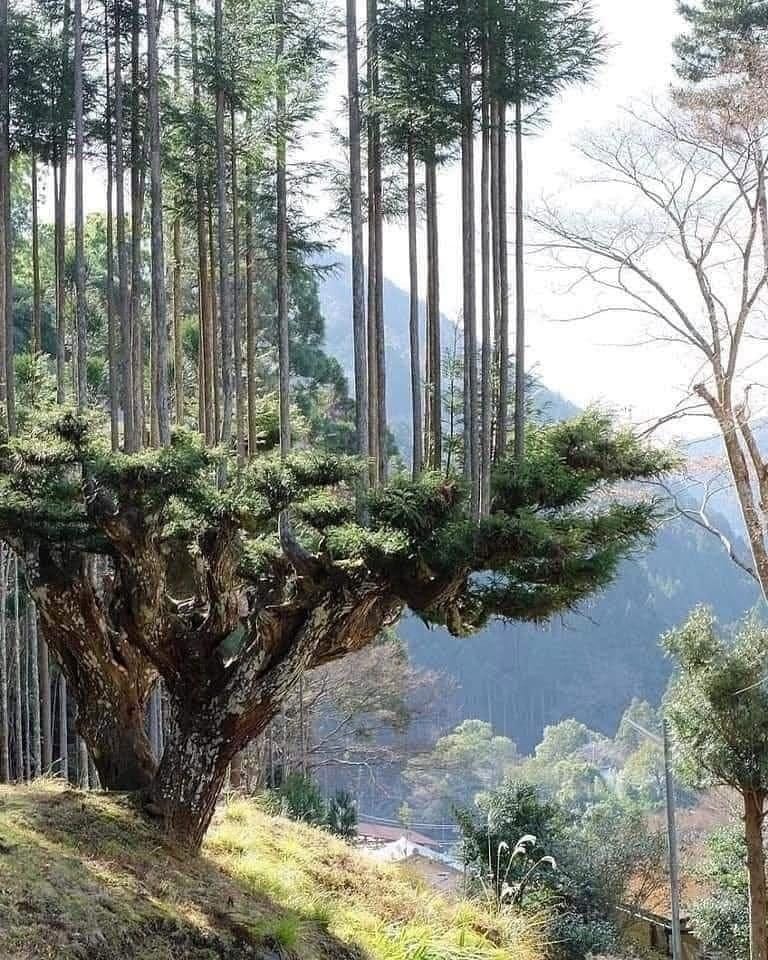
In the dense mountain forests surrounding the ancient city of Kyoto, Japan, rows of red Kitayama cedar trees tower silently over the sloping valleys and hillsides below. Their serene presence nods to the fast-fading practice of daisugi (台杉), a remarkable forestry tradition steeped in cultural history and unique to the region.
Daisugi, which translates roughly to “platform cedar”, is a method that dates back to the Muromachi empire of fourteenth-century Japan. Kyoto at the time was a flourishing cultural center, home to some of the country’s most esteemed temples, shrines and institutions. As the city rapidly expanded, however, foresters struggled to meet soaring demands for timber with limited access to flat land and seedlings.
Daisugi emerged as a resourceful solution to this challenge, similar to pollarding. Foresters began experimenting with extreme pruning that effectively stimulated the growth of new saplings on top of existing Kitamaya cedar trees, growing the new trees along the large lateral branches of a single parent tree. So, the saplings are like clones of the mother tree and can take advantage of its mature root system. Their efforts were rewarded: not only was the growth cycle of new offshoots faster than traditional methods, but the wood produced was of a higher quality.
Visually, the process makes for an otherworldly picture. The stout parent tree serves as a platform from which tall, slender saplings sprout, as straight as arrows. In all its aesthetic allure and detailed process, daisugi has blurred the lines between artistry and horticulture for centuries. What began as a practical solution to meet increasing demand for timber has also become appreciated for its sculptural beauty and structural role in gardens.
Like bonsai methods, daisugi forestry requires attentive pruning. Every three years or so, workers skillfully scale the cedar trunks in order to trim away any unrequired lateral branches that may begin to develop, guiding the thin saplings upwards in the process. These new cedars are ready for harvest in 20 years, and up to a hundred saplings can sprout from a single supporting mother tree.
The finished wood is more flexible and much denser than ‘wild’ cedar, smooth, straight with no tapering, and knot-free. Its sleek aesthetic was a key feature of traditional Japanese architecture during the Muromachi period (1336–1573), and has remained a recognisable feature of tea houses and home alcoves known as tokonoma throughout Japan. These days, the ultra-straight wood is primarily used for chopsticks, furniture and ceiling beams.

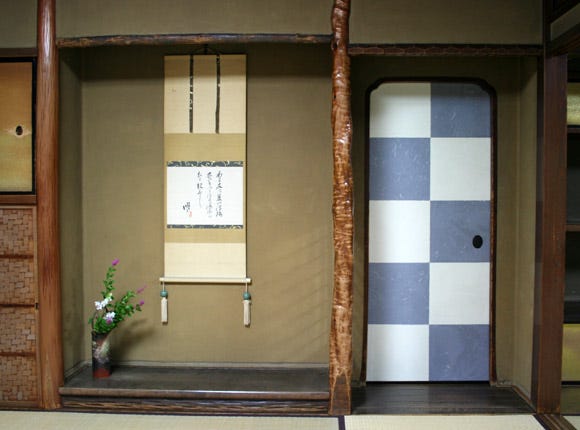
Daisugi is a time-honored custom, inherited and perfected across centuries and family lineages. The intensive process is a labour of love for future generations: workers plant trees that are eventually harvested by their own children and grandchildren. As knowledge of the tradition is passed down, so too is an intimate understanding of the trees and the environments they inhabit.
Today, however, daisugi is on its way to becoming a lost art. Production of Kitamaya timber has steadily declined since the fifteenth-century, replaced by international demand for industrial hardwoods. While the technique is still prized for its aesthetic value in ornamental gardens across Japan, many existing daisugi cedars — some of them centuries old — have now been abandoned.
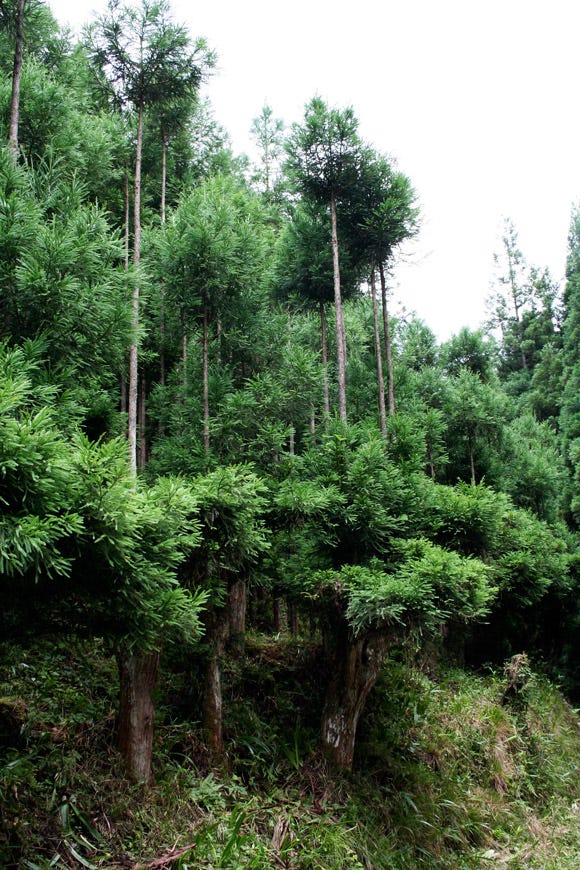
Yet in the face of pressing climate concerns like deforestation and habitat degradation, daisugi poses food for thought. Though traditionally used for logging and timber production, the technique can alternatively be used to repopulate depleted forest ecosystems: young shoots can be harvested, transported, and replanted to grow-on elsewhere. With a shorter growth cycle than normal cedars, daisugi is both time and cost efficient — a clear asset when one considers the drastic annual net loss (4.7 million hectares) of global forests since 2010.
It would be misleading to characterise daisugi forestry as a ‘cure-all’ for global deforestation. The method was developed specifically for the unique growth patterns of Kitamaya cedars, which struggle to grow outside of Japan’s climate. And while daisugi offers a high-yield approach to sustainable logging, other root causes of deforestation — agriculture, urbanization and climate change, for instance — must also be addressed.
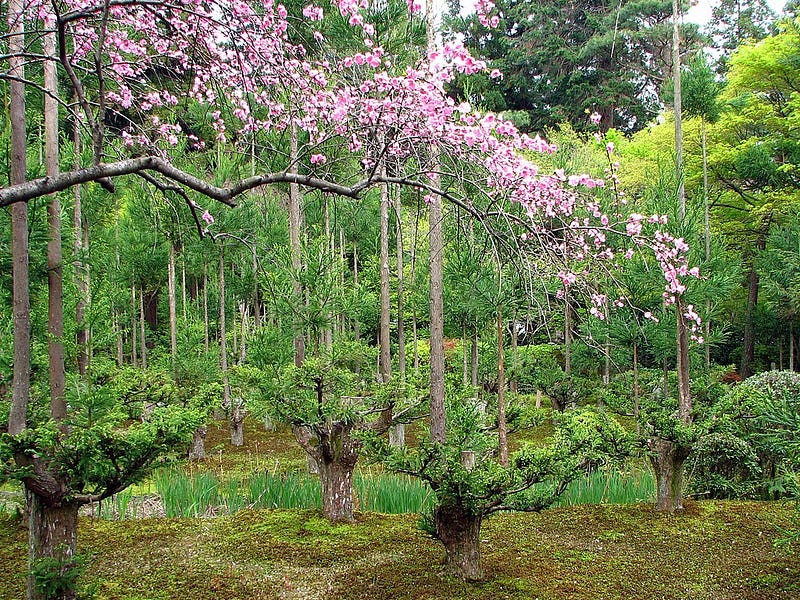
Lingering daisugi cedar trees across Japan’s Kyoto region serve as monuments to cultural memory and tradition. More recently, however, images and headlines celebrating the legacy of daisugi forestry have begun to resurface. This renewed interest points to a promising broader trend — one which recognises the deep value of traditional knowledge in contemporary conservation efforts. If land-use practices like daisugi are adapted to meet the demands of the present, it could be the start of something truly special: a network of sustainable solutions for the future nourished by the wisdom of the past.
* All images are used with permission or presented here for educational purposes under fair usage policy.


